What a 'What Is He Thinking?' Tarot Reading Actually Is
A 'what is he thinking?' tarot reading is a themed love spread that uses the 78-card deck to prompt reflection about a specific person's likely state of mind, feelings, and next move. The word 'likely' matters. Tarot is not a telephone line into someone else's skull. It is a symbolic system — 22 Major Arcana and 56 Minor Arcana cards — that gives your intuition, memory, and pattern recognition a structured surface to work on. Part of our tarot library library.
When you sit down with a free love tarot reading online or with a physical deck, you are essentially asking a very old question: 'What am I missing about this situation?' The cards that come up act as prompts. A Knight of Cups suggests one flavour of emotional energy; the Four of Pentacles suggests another. You do the interpretive work, ideally in a calm moment, with an honest heart. Part of our major arcana library. Try our 3 Card Tarot Spread guide. Try our Career Tarot Spread guide. Try our Celtic Cross Tarot Spread guide. Try our Decision Tarot Spread guide. Try our Horseshoe Tarot Spread guide. Try our Love Tarot Spread guide. Try our One Card Tarot Pull guide.
This distinction is what separates responsible tarot from fortune-telling theatre. Rachel Pollack, in the classic 'Seventy-Eight Degrees of Wisdom' (1980, revised 2019), described tarot as a wisdom text, not a prediction engine. Mary K. Greer, in 'Tarot for Your Self' (1984), built an entire practice around cards as reflective journaling tools. Both authors are the reason a modern, healthy 'what is he thinking?' spread frames its positions as questions to consider, not verdicts to deliver. Try our Pentagram Tarot Spread guide. Try our Relationship Tarot Spread guide. Try our Shadow Work Tarot Spread guide. Try our Situation Action Outcome Spread guide. Try our Tarot Spread For Anxiety guide.
So the honest one-sentence definition: a 'what is he thinking?' reading is a structured spread that helps you slow down, name your assumptions about him, and consider alternatives — not a psychic X-ray of his brain. Try our Tarot Spread For Beginners guide. Try our Tarot Spread For Clarity guide. Try our Tarot Spread For Grief guide. Try our Tarot Spread For Manifestation guide. Try our Tarot Spread For Self Love guide. Try our Yes No Tarot Spread guide.
Why This Question Is So Popular (and What It Really Means)
'What is he thinking about me?' is one of the most-searched tarot questions in English-speaking markets. That is not surprising. Ambiguity in early dating, silence after a breakup, a partner who has gone emotionally quiet — these are moments where the human nervous system will do almost anything for a scrap of information. Free tarot promises that scrap for zero cost and zero social risk. You do not have to text a friend at 1am or admit to a therapist that you are spiralling. You just click, draw, read.
In my experience working with clients, when someone types this query, they usually already know two things they are not admitting. First, the situation is more uncertain than they want it to be. Second, they are afraid of the answer they would give themselves if they stopped and thought clearly. The question 'what is he thinking?' is almost always a stand-in for 'am I safe here?' or 'is this going to hurt?'
That reframing changes what makes a reading useful. If the real question is about your safety and self-respect, then a good spread will not just guess at his mood. It will help you see your own position. Pew Research Center's 2023 report on online dating in America found that a majority of users describe the experience as stressful and frustrating rather than exciting; the emotional load these readings are catching is very real.
So popularity is not a mystery. It is grief, hope, hormones, hyper-vigilance, and the very human need to feel less alone at midnight, all funnelled into one search box.
How Tarot 'Reads' Another Person Energetically (An Honest Explanation)
Here is the part most sites will not say plainly: no reader, no app, no deck can read a third party's actual thoughts. Thoughts happen inside a private nervous system. What tarot can do, when practised responsibly, is help you triangulate — pulling together your existing observations of him, your intuition, and the archetypal images on the cards to arrive at a more honest working theory.
Think of it like this. You already have data: his recent texts, his tone, what he said on your last call, how he treats you when tired. Most of this data is stored below conscious awareness. A spread forces you to lay it out. When you flip the 'his current feelings' card and see the Two of Swords — a blindfolded figure holding two crossed blades — your mind fills in the blank with something you already suspected: he is avoiding a decision.
This is where responsible modern authors are careful. Lindsay Mack, in her Tarot for the Wild Soul work, calls the deck a 'mirror rather than a map.' Jessica Dore, author of 'Tarot for Change' (2021), pairs each card with concepts from behavioural science, emphasising that the value is in what the image helps you notice about yourself and your relational dynamics.
Energetically, then, a 'what is he thinking?' reading is really a mirror pointed at the space between you two, using him as the excuse. That is not a downgrade. That is where actual clarity lives.
Free vs Paid vs AI Love Readings: What You Actually Get
A free web tarot reading is usually a randomised card draw with pre-written text for each position. Quality varies wildly. The best ones (including well-designed apps like Raka) use full Rider-Waite-Smith interpretations, offer reversed meanings, and frame every position as reflective. The worst are thinly disguised funnels toward a paid 'psychic' who will 'complete' your reading for £39.99.

AI love readings are the newer category. A good AI reading combines a randomised draw with a language model that adapts interpretations to the specific question and card combination. Done well, this can be more useful than a generic keyword list, because the interpretation feels contextual. Done badly, it can hallucinate certainty ('He is definitely still in love with you') that no ethical human reader would offer.
Paid human readers, at their best, offer something neither free web tools nor AI can: attention. A skilled reader will hear the wobble in your voice, ask you the question you did not ask, and gently push back on a story you are telling yourself. Expect to pay £40-£150 for a serious 30-60 minute session with a reputable practitioner (Tarot Association of the British Isles and American Tarot Association both maintain member directories).
No format — free, paid, or AI — can ethically promise you certainty about another person's thoughts. Anyone who does is selling a fantasy. Use free readings for daily reflection and practice, AI for deeper contextual journaling, and a paid human reader when you need a real conversation about a real crossroads.
The Best Spreads for 'What Is He Thinking?' (With Positions Explained)
A three-card spread is usually the right starting point. It is small enough to interpret honestly and big enough to hold nuance. My default: card one — 'what he is feeling on the surface right now'; card two — 'what he is not saying out loud'; card three — 'his most likely next move, given who he is'. Notice each position is framed as a working theory, not a verdict. Try top tarot app 2026 to explore this in more depth.
For more depth, use a five-card 'his mind, his heart, his fear, his hope, his likely action' spread. This separates cognitive activity (mind) from emotional truth (heart), which is important because in most relationship dilemmas the two are contradicting each other. His mind might say 'this is too complicated'; his heart might say 'I miss her'. Both can be true.
A seven-card relationship crossroads spread adds two positions for you: 'what you are projecting onto him' and 'the honest action available to you.' This is my favourite spread for anyone who has been stuck ruminating for weeks. It refuses to let the entire reading be about him.
Whichever spread you use, write the positions down before you shuffle. Committing them in ink prevents the very human temptation to shift positions after seeing the cards so the story reads more favourably. Tarot is at its most useful when you cannot cheat yourself.
How to Do a Free Love Tarot Reading Right Now: Step by Step
Here is the exact sequence I use with clients. Follow it in order. It takes about 20 minutes and will do more for your clarity than three hours of doomscrolling his Instagram.
1. Set the question in one sentence. Not 'what is he thinking about me and us and whether he will come back and also does he still care?' but 'What is the most useful thing for me to see about his current state of mind toward me?' Precision matters. The cards answer the question you ask.
2. Choose your tool. A free tarot app or website is fine. A physical deck is better if you have one. Either way, use a source you already trust — do not click the first ad-heavy result. Reputable apps disclose that readings are for reflection, not prediction.
3. Ground yourself for two minutes. Feet on the floor, three long exhales, phone face down. If you cannot do two minutes of stillness before a reading, you are not going to hear the answer anyway. Try Raka app to explore this in more depth.
4. Write down your three (or five, or seven) positions. Shuffle. Draw. Do not re-draw because you did not like a card. That is the whole game.
5. Interpret slowly. For each card, note first what the image literally shows, then the traditional meaning, then what it evokes about your specific situation. Only in that order. This prevents you from projecting your favourite ending onto every card.
6. Write one sentence per card. Then write one 'so what?' sentence for the whole reading — the single most useful thing you now see. That sentence, not the cards, is the reading.
7. Close the deck. Do not re-read for at least 24 hours. If you feel the urge to pull 'just one more clarifier' six times, that is anxiety, not intuition.
Red Flags: How to Spot a Predatory or Fake Reading
Predatory tarot is a real industry, and love-anxiety is its favourite fuel. Learn these red flags and you will save yourself money, time, and dignity. First: any reader — human or automated — who tells you there is a curse, hex, negative energy, or 'block' on your love life that only they can remove for an additional fee. This is a classic advance-fee scam. The US Federal Trade Commission has warned about psychic-scam variants for years.
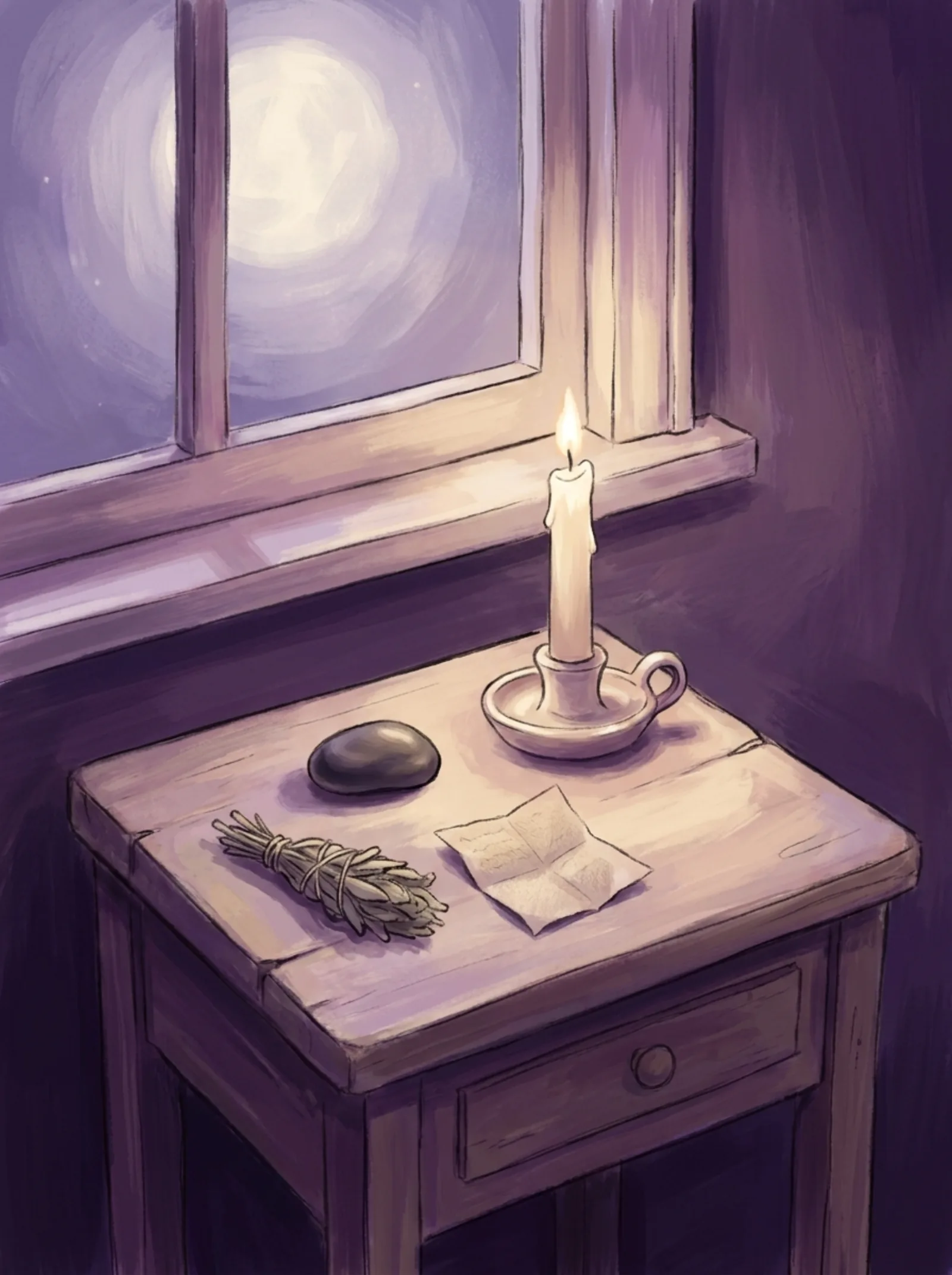
Second: pressure to buy 'candles', 'crystals', 'reunion spells', or an ongoing subscription to keep the connection 'open'. Reputable readers charge one clear fee for a session and let you leave. Third: promises of specific dates ('he will call on the 14th'), specific reunifications, or specific outcomes ('you two are twin flames and will marry'). Nobody can promise that. Ethical readers speak in tendencies, patterns, and possibilities.
Fourth: demands for his full name, date of birth, current location, photo, or any information you would not tell a stranger on the bus. A tarot reading does not require his data. Anyone collecting it is either scamming him or building a profile to manipulate you.
Fifth: fear language. If a reading makes you feel worse, smaller, or more panicked than when you started, close the tab. Good tarot leaves you calmer and clearer, even when the news is hard. That is the tell.
Safety, Privacy, and Emotional Wellbeing
Free readings usually cost something other than money. Most free tarot sites collect at least your email, and some ask for detailed relationship information that gets fed into marketing lists or, worse, sold. Before you sign up, skim the privacy policy for the phrases 'third parties' and 'sell'. If you cannot find a privacy policy at all, that is your answer.
Never share the other person's full name, workplace, address, or photograph on a free reading platform. You do not have his consent to enter his personal data into a third-party system. In the UK this is a GDPR issue; in California it is covered by the CCPA. Ethically, it is also just not yours to hand over.
Guard your emotional bandwidth as fiercely as your data. A single reading per situation, revisited weekly at most, is healthy. Multiple daily readings on the same person is a symptom that anxiety has taken the wheel. If you notice this pattern in yourself, it is worth naming honestly — 'I am using tarot to soothe distress' — rather than pretending the twelfth reading will be the definitive one.
And a hard line: if you are having a crisis, if you are considering harming yourself, or if a relationship situation involves coercion, threats, or fear for your safety, close the app. Contact a licensed therapist, your GP, or a crisis line (Samaritans in the UK on 116 123, 988 in the US). Tarot is not built for that weight.
Card Meanings for 'What Is He Thinking?' — A Quick Reference
Full card meanings fill entire books, but a working reference for love-mind readings helps. Majors first. The Fool: he is in early-days curiosity, undefined, open to see where this goes. The Lovers: a genuine values-level connection is on his mind, not just attraction. The Hermit: he has withdrawn into himself, and the withdrawal is about him, not necessarily about you. The Tower: something in his mental model of the relationship is breaking down — sometimes destructively, sometimes usefully.
Cups govern feelings. Ace of Cups: fresh emotional opening on his side. Two of Cups: he is thinking of this as mutual. Three of Cups suggests his mind is with friends and social life, not deep romance. Five of Cups: regret, focus on loss, possibly rumination about a past connection. Ten of Cups: he is imagining long-term with you, at least in daydream form.
Swords govern thought and communication. Two of Swords: he is stalling a decision he knows he needs to make. Three of Swords: recent hurt is dominating his mental space. Five of Swords: conflict, possibly a wounded ego. Seven of Swords: something is being hidden or held back. Nine of Swords: anxiety and overthinking dominate his mind, and it may not be about you at all.
Wands are drive and energy. Knight of Wands: impulsive interest, real but potentially inconsistent. Four of Wands: he is thinking of stability, home, a settled future. Pentacles are material and practical. Four of Pentacles: he is holding on tightly to control or resources, cautious about opening up. King of Pentacles: he is thinking about you within a framework of commitment, security, and long-term provision. Use these as starting prompts, not final translations.
Timing: When Will Tarot Actually Tell You Something Real?
Clients constantly ask, 'When will he text? When will he decide? When will we get back together?' Tarot is notoriously poor at literal timing. The Wheel of Fortune, Judgement, and the Three of Wands can all suggest a coming shift, but pinning a card to Tuesday at 4pm is where readings go from useful to embarrassing.
A more honest way to read timing: use tarot to notice the season of the situation. Is this the beginning of something (Fool, Aces), the muddled middle (Sevens, Hanged Man), or the ending phase (Death, Ten of Swords, Judgement)? Season-level reads tend to be accurate because they match the archetypal energy of your actual life, not a calendar.
There is also personal timing: your timing. Sometimes the most valuable answer a reading gives is 'not yet — you are not ready to receive this information usefully.' If a spread feels muddy or you keep re-shuffling, that is often the message. Come back in a week. You are allowed.
And a note on obsessive timing questions. If you are asking 'when will he text?' more than once a day, the reading you actually need is one about self-worth, boundaries, and where your attention is going. Tarot will happily give you that reading, if you have the courage to ask it.
'What Is He Thinking?' vs Other Popular Love Questions
Comparing spreads is useful because different questions produce different levels of honesty. 'What is he thinking?' is externally focused — it makes him the subject and you the observer. Its cousin 'What are his feelings for me?' is similar but points at emotion rather than cognition; it tends to draw more Cups and to feel gentler, but it is still primarily about him.

'Are we compatible?' is a relational question. It shifts from spying on his interior to examining the space between you two. This is almost always a more useful read because it recognises that a relationship is not something one person contains — it lives in the shared field. Try this spread when you have been circling 'what is he thinking?' for weeks.
'What am I not seeing?' is the mirror question, and in my client work it is the single most powerful love-tarot query. It abandons the pretence that the other person is the mystery and admits that the person you have the least clarity on is often yourself. Expect this reading to be uncomfortable. That is the sign it is working.
Finally, 'What would I do if I already knew?' is not really a tarot question at all — it is a therapy question borrowed into tarot practice. Draw one card as a prompt. Sit with what it evokes. Most people already know the answer to their central love question. They are just waiting for permission.
When Tarot Is Not Enough: Bringing in a Professional
Tarot is a reflective practice. Reflective practices have limits, and it is a mark of self-respect to know where yours are. If you are making a legally binding decision — divorce, custody, joint finances — you need a family lawyer and a financial advisor, in that order. No card can tell you the tax implication of a joint mortgage separation.
If you are making a health decision, including a decision to stay in a relationship that is affecting your mental or physical health, please involve a GP, therapist, or counsellor. Organisations like BACP (British Association for Counselling and Psychotherapy), APA (American Psychological Association), and Psychology Today's therapist directories offer verified practitioners. Many offer sliding-scale fees.
If the relationship involves abuse — physical, emotional, financial, sexual, or coercive control — please contact a specialist service. In the UK, Refuge (0808 2000 247) and Women's Aid; in the US, National Domestic Violence Hotline (1-800-799-7233). Tarot is not the tool. A trained person is. Try best natal chart app to explore this in more depth.
And if you find yourself doing eight readings a day, hiding the habit from a partner, or spending money you cannot afford on psychic hotlines, please consider that a compulsive behaviour worth naming with a professional. Reflection is healthy; compulsion is a signal. Both can live in the same practice, and the difference matters.
A Realistic Weekly Practice You Can Actually Sustain
Here is the practice I recommend to clients who want tarot as a genuine self-knowledge tool rather than a slot machine. Once a week, on the same day, do a single three-card reading. Journal it in longhand. Same time, same place, same deck (or same app). Rituals of consistency are what make reflection stick. Try best numerology app to explore this in more depth.
Between weekly readings, if a specific charged situation arises — a difficult conversation, a silence, a decision point — allow yourself one focused spread on it. Not five. One. Sit with the cards for at least an hour before doing anything about them. This slows the compulsive loop that free readings can otherwise feed.
Once a month, do a longer reading — the Celtic Cross, or a bespoke seven- or nine-card spread about a bigger question. Take your time. Write not just what the cards say but what you notice about your own reaction to them. That reaction is often the reading.
And once a quarter, look back through your journal. You will discover something extraordinary: the same cards keep coming up around the same themes. That is not tarot being mystical. That is tarot working exactly as intended — as a mirror stable enough to show you the pattern of your own life, so you can finally decide what you want to do about it.