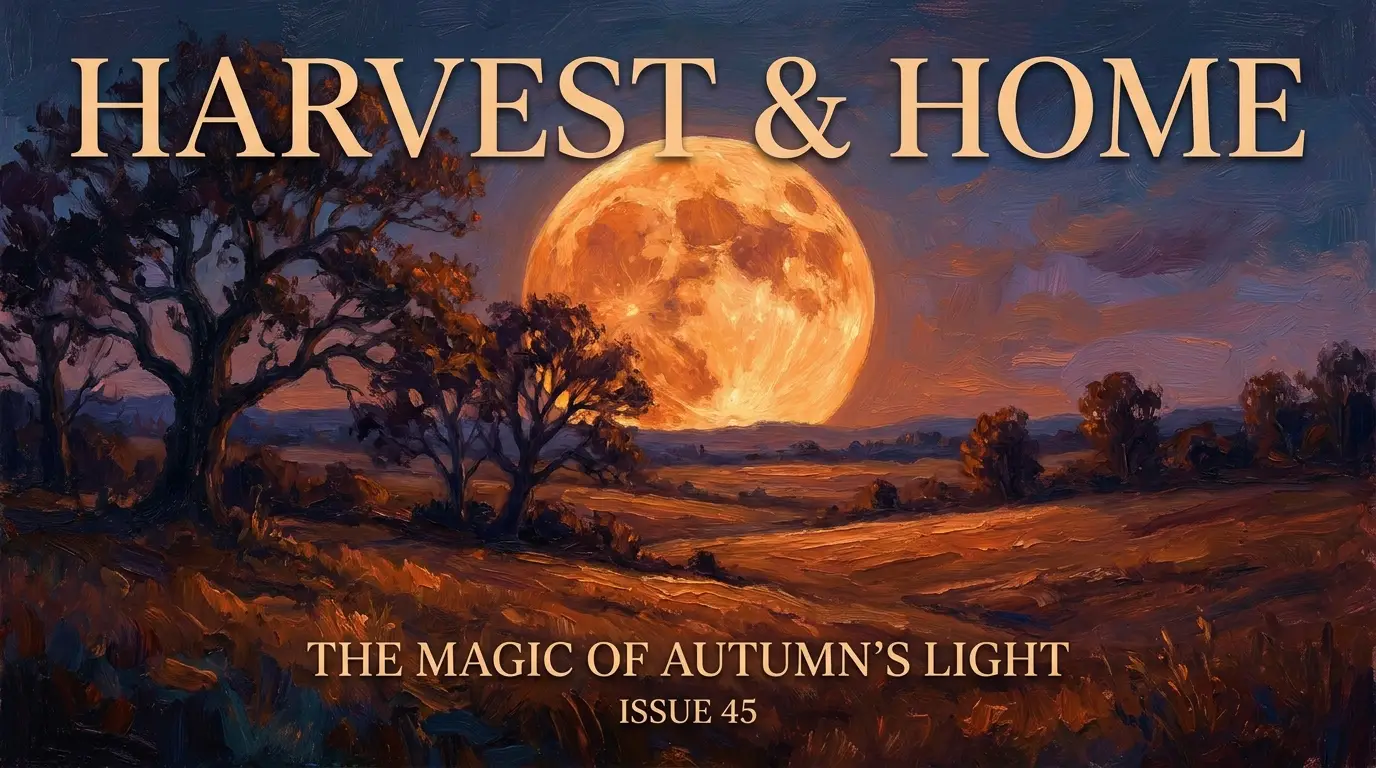
Why the Moon Looks Orange: The Actual Physics?
The single most important fact about orange moons is that they are, in almost every case, a story about Earth's atmosphere and not about the Moon itself. The Moon has no light of its own; it reflects sunlight, which is broadly white. What determines the color you see when you look up is what happens to that reflected light on its way through the roughly 100-kilometer-thick blanket of gas and particles surrounding our planet. That blanket is a wavelength filter, and it treats different colors of light very differently. Part of our astrology guide library. Part of our astrology guide library.
The mechanism is called Rayleigh scattering, named for the nineteenth-century British physicist Lord Rayleigh. Short wavelengths — blues and violets — bounce off air molecules far more efficiently than long wavelengths like orange and red. When the Moon is directly overhead, its light passes through a relatively thin slice of atmosphere and only a little blue is scattered away, so it reads as a cool bright white. When the Moon is near the horizon, its light travels along a much longer, shallower path — as much as thirty to forty times more atmosphere. Almost all of the blue is scrubbed out along that path, and the surviving light hitting your retina is dominated by warm oranges and reds. See our related guide on hole in the ear spiritual meaning. See our related guide on groundhog spiritual meaning. See our related guide on spiritual meaning of umbilical cord around neck.
This is the same reason sunrises and sunsets are orange. A midday sun is white; a horizon sun is amber. Nothing has changed about the Sun or the Moon in either case. What has changed is your geometry relative to the atmosphere between you and the light source. Once you internalise that, the mystery of the orange Moon collapses into an everyday optical fact — one that also happens to be quietly beautiful. (part of our spiritual_signs) Part of our astrology guide library. See our related guide on spiritual meaning of a cat staring at you. See our related guide on raccoon spiritual meaning. See our related guide on jumping spider spiritual meaning.
Secondary contributors amplify the effect. Humidity, aerosols from wildfires, volcanic ash, Saharan dust events, and general urban air pollution all add particles that scatter or absorb light in wavelength-selective ways. On a smoky night the Moon can appear deep pumpkin-orange even when it is high in the sky. So when someone asks 'why is the Moon orange tonight,' the honest first question back is: how low is it, and what is in the air between you and it? Part of our astrology guide library. Part of our astrology guide library.
The Horizon Illusion: Why a Low Moon Also Looks Huge
Alongside the color shift, most people who notice an orange Moon also notice that it looks unusually large. This is the famous Moon illusion, and it is a genuine perceptual puzzle rather than an optical one. Measurements confirm that the Moon on the horizon is not actually larger than the Moon overhead — if anything, it is very slightly smaller, because you are marginally farther from it. Yet the brain insists that the horizon Moon is bigger, sometimes dramatically so. See how Raka compares to other apps in our independent guide.
There are competing scientific explanations. The Ponzo illusion account argues that the brain uses foreground objects — trees, buildings, distant hills — as depth cues and, expecting the horizon to be far, inflates the perceived size of anything sitting there. The apparent-distance theory says the sky is perceived as a flattened dome rather than a hemisphere, so objects on the 'far' horizon get scaled up. Neither theory is fully settled, but both agree the illusion is neurological, not atmospheric.
The relevant point for our topic: whenever conditions are right for an orange Moon (low altitude), they are automatically right for the Moon illusion too. The combined effect of oversized appearance plus warm color is what makes horizon moonrises feel emotionally weighted. Photographers and painters have exploited this pairing for centuries, and it is a major reason the Harvest Moon feels iconic even though, physically, it is just another full moon. (part of our spiritual_signs)
Understanding the illusion is useful because it prevents a common mistake — treating the size of the Moon on any given night as meaningful. Supermoons are real (perigee full moons are genuinely a few percent larger), but the visual drama you remember is almost always the Moon illusion doing the heavy lifting, not orbital mechanics. (part of our spiritual_signs)
The Harvest Moon: Why It Reliably Glows Orange
The Harvest Moon is defined as the full moon that falls closest to the autumnal equinox in the Northern Hemisphere — usually in September, occasionally in early October. Its reputation for looking orange is not folklore but geometry. Around the equinox, the Moon's orbital path relative to the horizon becomes unusually shallow, meaning the full moon rises only twenty to thirty minutes later each successive night instead of the usual fifty. For a stretch of about a week, an almost-full Moon appears low in the eastern sky right after sunset, night after night.
That is a lot of prime orange-moon viewing. Farmers before electric light exploited this window to work later into the evening, gathering crops by the extra hours of natural illumination — hence the name. The Old Farmer's Almanac has carried the term in English print since 1792, and it predates the almanac by at least a century in oral tradition. Similar seasonal names for the same full moon appear across Northern European, Anglo-Saxon, and Native American calendars, though the specific labels vary.
Because the shallow-angle geometry keeps the Moon near the horizon for a longer portion of each evening, the atmospheric scattering effect described earlier gets extended airtime. Instead of a fleeting fifteen-minute orange glow at moonrise, you can get an hour or more of visibly warm-toned Moon low in the eastern sky. That extended dwell time is why people remember the Harvest Moon as 'the orange one,' even though the Moon itself is behaving identically to every other full moon.
In 2026, the Harvest Moon falls on the night of October 25-26. This is later than usual — most years the Harvest Moon lands in September — because that particular full moon is closer to the September 23 equinox than the September full moon is. Both dates are worth marking on a calendar if you want reliable orange-Moon viewing conditions in the northern half of the world.
The Hunter's Moon: October's Sequel
The Hunter's Moon is simply the first full moon after the Harvest Moon. In most years that puts it in October; in years where the Harvest Moon slips to October, the Hunter's Moon moves to November. It shares the shallow rise-angle geometry with its predecessor, so it also produces prolonged orange horizon glow for several successive evenings.
The name comes from Northern European and Native American traditions in which the extra evening light was used to hunt deer, fox, and other game fattened for winter, silhouetted against fields already cleared during the Harvest Moon. It is one of the more evocative traditional moon names precisely because it links a natural optical phenomenon to a concrete human survival activity. Symbolically, many contemporary practitioners read the Hunter's Moon as a call to focus, provision, and prepare — themes that map onto the darker half of the year regardless of one's spiritual leanings.
Because the Hunter's Moon follows the Harvest Moon by about 29.5 days, it often coincides with the beginning of astronomical autumn's colder, drier air masses in the mid-latitudes. Dry, stable air produces sharper horizon views, and the resulting Hunter's Moons are frequently the most photogenic of the year. Photographers plan around them.
In some years the Hunter's Moon coincides with lunar perigee, producing a Hunter's Supermoon — visibly larger and brighter than an average full moon. The October 2025 Hunter's Moon was one such event, roughly 14 percent larger in apparent diameter than a micromoon. The 2026 Hunter's Moon is not at perigee, so expect a normal-sized but still classically orange horizon full moon.
Blood Moon: The One Truly Different Case
The Blood Moon deserves its own category because it is the only kind of orange-red Moon whose color is not primarily produced by scattering in your local atmosphere. A Blood Moon is a totally eclipsed Moon — one that has passed fully into Earth's shadow (the umbra). During totality, direct sunlight cannot reach the lunar surface. The only light hitting the Moon is sunlight that has been bent (refracted) through Earth's atmosphere itself, filtered on the way, and projected onto the eclipsed Moon.
In effect, the Moon during totality is illuminated by every sunrise and sunset on Earth simultaneously. Because atmospheric refraction preferentially transmits red and orange wavelengths — the same Rayleigh mechanism that gives us orange sunsets — the Moon glows a deep, uniform copper. The exact shade varies from bright orange to almost black-red depending on how much dust, cloud, and volcanic aerosol are in the terminator regions of Earth's atmosphere at the moment of the eclipse. Astronomers use the Danjon scale, running from L=0 (very dark) to L=4 (bright coppery-red), to rate this.
Blood Moons are strictly predictable. NASA publishes multi-decade eclipse tables. In 2026 the total lunar eclipse falls on March 3, best visible across the Pacific rim — Australia, East Asia, and western North America. The event is safe to observe with the naked eye; no filters are needed, unlike a solar eclipse. Totality typically lasts sixty to one hundred minutes, bracketed by longer partial-eclipse phases.
Culturally, Blood Moons have carried heavier symbolic weight than ordinary orange horizon moons — sometimes interpreted as omens in older religious writings. Modern astronomy has completely demystified the mechanism, and modern astrology tends to read the event as an intensified full-moon culmination rather than a portent. Either way, if you get the chance to see one, do; they are among the most striking naked-eye astronomical events accessible from your own backyard.
Cultural Traditions Around the Orange Moon
Because orange full moons cluster in autumn, most human cultures at temperate latitudes have wrapped festivals, harvests, and rituals around them. The Mid-Autumn Festival, observed for over a thousand years across China, Vietnam, Korea, and diaspora communities, is timed to the full moon nearest the autumnal equinox — effectively the same lunation Northern Europeans call the Harvest Moon. Families gather, eat mooncakes, and, in modern iterations, light lanterns that visually echo the warm color of the Moon rising over the eastern horizon.
Native American traditions across many nations named autumn moons for what the season demanded. Algonquin peoples described the Harvest Moon and Hunter's Moon in terms that overlap almost exactly with the English names. Other names — Corn Moon, Falling Leaves Moon, Migrating Moon — described the same lunation from different regional perspectives. These were practical calendars first and symbolic frames second, but the symbolism has aged well.
Celtic and pre-Christian European traditions marked the season with Samhain (October 31 to November 1), broadly coinciding with the Hunter's Moon window. The imagery of harvest completed, ancestors honored, and the year turning inward toward its darkest quarter is ubiquitous across these traditions. The orange Moon low in the eastern sky is a natural visual anchor for that mood, and it is unsurprising that so many cultures independently landed on similar interpretive themes.
A skeptic's caveat is worth stating plainly: shared symbolism across cultures does not mean the Moon is 'doing' anything to human affairs. It means that humans everywhere lived at similar latitudes, watched the same sky, and reached similar practical conclusions about when to reap, hunt, and gather. The convergence is a fact about us, not a fact about the Moon.
Spiritual and Symbolic Meaning
Within contemporary astrology and modern earth-based practice, an orange Moon is generally read as a marker of harvest, transition, and gratitude. The Harvest Moon in particular is treated as a culmination — a moment to look at what a cycle actually produced, name it honestly, and give thanks (or acknowledge grief) before the season turns. The Hunter's Moon carries a slightly more directed energy: focus, provision, preparing what you need to carry through the darker months. Try numerology calculator to explore this in more depth.
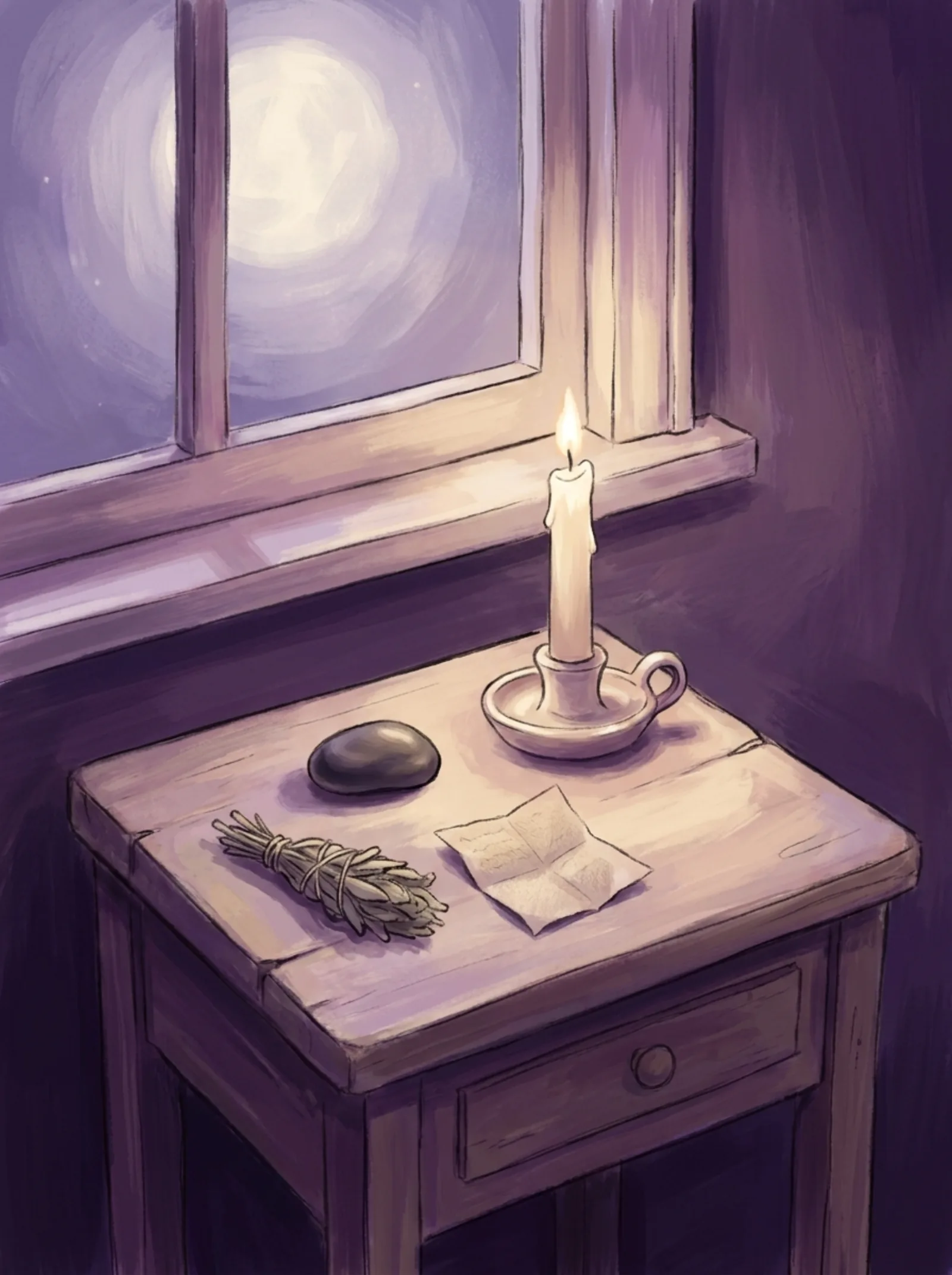
Blood Moons — total lunar eclipses — are typically read as intensified full moons. Astrologers often frame them as culminations that surface something that has been quietly ripening, sometimes uncomfortably. The traditional counsel is not to make major irrevocable decisions during eclipse windows, but instead to observe carefully what surfaces and give it a few weeks before acting. This is a temperate, useful frame regardless of whether you take the astrology literally.
A responsible symbolic reading treats these lunations as prompts, not predictions. The orange Moon does not tell you what will happen; it offers a culturally-resonant cue for the kind of reflection that autumn already invites. Journaling, gratitude practices, tidying unfinished commitments, and marking transitions all fit the mood. They are also all things a good therapist would recommend independently of any lunar phase.
Where symbolic practice becomes a problem is when it substitutes for medical, financial, or relational judgment. If you are struggling with your mood, sleep, or a major life decision, the orange Moon is not a source of guidance — a licensed therapist, physician, or qualified professional is. Ritual can complement that support beautifully. It cannot replace it, and any practitioner claiming otherwise is overselling.
Astrological Interpretation by Phase
Astrologers assign different meaning to an orange Moon depending on its phase and the zodiac sign it occupies. A waxing crescent Moon glowing orange low in the western sky just after sunset is read as beginnings — a small, warm invitation to start something modest and let it grow. A waxing gibbous approaching fullness carries themes of refinement and last-mile effort before culmination.
The full Harvest Moon in Aries, Libra, or Pisces (three signs it commonly occupies depending on the year) is read through the lens of that sign's themes: Aries emphasizes autonomy and initiative; Libra emphasizes relationship and balance; Pisces emphasizes surrender, grief, and imaginative release. The color itself doesn't change the reading; it amplifies the emotional register.
A waning gibbous or last-quarter Moon glowing orange near moonset before dawn — a rarer sighting because it happens in the small hours — carries themes of release, integration, and letting go of what has completed. Traditional astrologers consider it a favorable window for closure conversations, ending commitments cleanly, or writing down and releasing something that no longer fits. Try sign compatibility to explore this in more depth.
None of this constitutes prediction or advice about specific outcomes in your life. It is a symbolic framework people have used for thousands of years to organize reflection. Treat it as prompt material for journaling and conversation. If you notice yourself using astrology to avoid decisions that require professional input — medical, legal, financial — that's a signal to close the app and call a qualified human.
Orange Moon Dates to Watch in 2026
The reliably orange lunar events of 2026 fall into two categories: predictable seasonal full moons and the year's lunar eclipse. Every full moon in 2026 will look orange for the first thirty to sixty minutes after moonrise, so a full calendar of full moons is essentially a calendar of orange-Moon opportunities — but a few dates stand out.
The 2026 total lunar eclipse (Blood Moon) occurs on March 3, 2026, with totality visible from the Pacific rim: Australia, New Zealand, East Asia, Hawaii, and western North America. Central and eastern North America will see partial phases before moonset. Europe and Africa miss this event entirely; those regions get the next total lunar eclipse in the sequence later in the decade.
The 2026 Harvest Moon falls on October 25-26, 2026 — later than typical because that full moon sits closer to the September 23 equinox than September's does. Expect classical orange horizon behavior for roughly a week on either side of the exact full-moon date, since the shallow rise-angle geometry lingers. The Hunter's Moon follows on November 23-24, 2026, closing out the autumn orange-Moon season.
A supplementary category worth noting is smoke-affected moons. Northern Hemisphere wildfire seasons in the American West, Canada, southern Europe, and Australia can produce deeply orange moons at any altitude for days or weeks at a time. These are not calendrical events — they depend on where you live and what fires are burning — but they are the second most common cause of a strikingly orange Moon after horizon geometry.
Photographing an Orange Moon
The best photographs of orange moons share a formula: shoot within thirty minutes of moonrise, use a telephoto lens (200mm minimum, ideally 400-600mm), place the Moon behind a recognizable foreground silhouette for scale, and expose for the lunar surface rather than the sky. A common starting exposure is ISO 100-400, aperture f/8, shutter speed 1/125 second, adjusted from there based on light meter feedback.
A sturdy tripod is essential at long focal lengths. Even a small handshake at 400mm blurs lunar detail badly. Use a two-second timer or a remote release to eliminate shutter-press vibration. If your camera has electronic first-curtain shutter, enable it. If you're on a mirrorless body, IBIS helps but does not substitute for a tripod at those focal lengths.
White balance matters. Auto white balance will 'correct' the Moon toward neutral, killing exactly the orange you're chasing. Set white balance manually to daylight (roughly 5500K) or slightly warmer (6000K) to preserve the observed color. Shoot RAW so you can fine-tune later without destroying color information. Try best AI tarot app to explore this in more depth.
Composition tips: use the Photographer's Ephemeris or PhotoPills app to plan exactly where the Moon will rise on a given date from a given spot. The most striking Harvest Moon photographs typically involve intentional alignment with a bridge, mountain ridge, or urban skyline. That planning is what separates a good moon photograph from a great one.
A Skeptic's Note on Meaning-Making
It is worth being honest about what an orange Moon is not. It is not a signal aimed at you. It is not a change in the Moon's actual color, composition, or influence. It is not evidence of supernatural agency, cosmic mood shifts, or predictive information about your future. It is atmospheric optics, sometimes amplified by smoke or eclipse geometry, applied to reflected sunlight bouncing off a rocky satellite. Everything else layered onto that is human meaning-making — which is itself a legitimate, ancient, and often useful activity, but should be recognized for what it is.
Meaning-making around natural phenomena has real psychological value. Ritual, reflection prompts, and shared cultural calendars help humans mark time, coordinate community, and process transitions. A Harvest Moon dinner with family or a Blood Moon journaling session can be genuinely meaningful without requiring the Moon to literally 'do' anything. The mistake is confusing the useful reflective frame with a causal mechanism.
Where lunar mysticism becomes actively harmful is when it displaces evidence-based decision-making — postponing a medical consultation until 'a better moon phase,' making financial decisions on the strength of an eclipse forecast, or interpreting a difficult relationship pattern as karmic destiny rather than something to address in therapy. Astrologers who behave responsibly consistently direct clients back toward qualified professionals for those categories of decision. Try top natal chart app to explore this in more depth.
So enjoy the orange Moon. Photograph it, journal about it, gather friends to watch it rise. Learn the physics that produces it and the traditions that named it. Just don't outsource decisions that deserve real analysis to a phenomenon that is, at bottom, sunlight passing through a thick slice of air.
Practical Questions People Actually Ask
Does an orange Moon affect tides? No differently than any other full moon. Tidal amplitude is a function of the Sun-Earth-Moon geometry, not lunar color. Perigee full moons (supermoons) produce marginally stronger perigean spring tides, but the color has nothing to do with it. Coastal residents should watch supermoon dates, not orange-Moon dates. Try top numerology app 2026 to explore this in more depth.
Does an orange Moon affect childbirth or hospital admissions? Multiple peer-reviewed studies have looked and found no reliable correlation between full-moon phase and birth rates, ER admissions, or psychiatric incidents once you correct for reporting bias. Nurses' anecdotal impressions are well-documented; the underlying data does not support them. If you work in a hospital and notice a 'full-moon effect,' you are noticing a confirmation-bias effect, which is its own interesting cognitive phenomenon.
Can pets sense an orange Moon? There is no evidence that animals respond to lunar color specifically. Some species respond to lunar phase generally (nocturnal predators are more active around full moons because they have better hunting light), but color is a downstream atmospheric effect that has no obvious biological signal for a non-human eye. If your dog acts strangely on the night of a Harvest Moon, look for a more proximate cause first.
Is it safe to look at an orange Moon? Completely safe with the naked eye, and safe through binoculars or telescopes. Unlike the Sun, the Moon is far too dim to damage vision at any phase. This is why lunar eclipses are one of the most accessible astronomical events — no filters, no equipment, no risk.