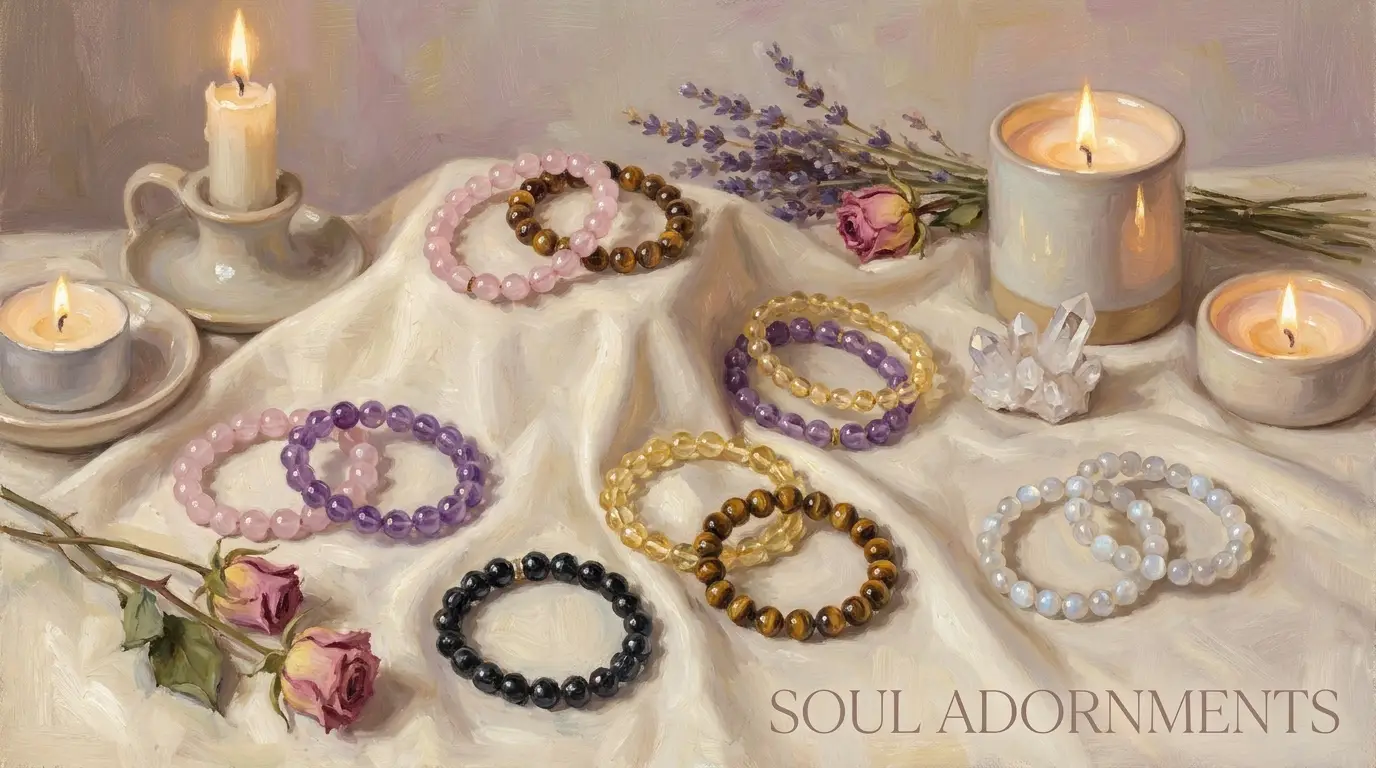
What Crystal Bracelets Actually Are
A crystal bracelet is exactly what the name suggests: a strand of polished gemstone beads, usually between six and ten millimetres in diameter, threaded on an elastic cord or a metal chain and worn on the wrist. The stones are cut from natural mineral specimens — quartz, feldspar, tourmaline, jade, and dozens of others — then tumbled or faceted until they take on the glassy, rounded shape that has become almost synonymous with the wellness aisle. What separates a crystal bracelet from any other beaded jewellery is not the material so much as the intention behind it: the wearer picks the stone for what it is believed to mean, not simply for how it looks against their skin.
The tradition of wearing minerals against the body is genuinely ancient. Egyptian tomb inventories list lapis lazuli and carnelian amulets worn on the wrist and neck; Greek and Roman writers described specific stones as protective; medieval European lapidaries assigned virtues to each gem; and cultures across the Americas, Africa, and East Asia carried polished stones as talismans long before the modern wellness industry existed. What is new in 2026 is not the stone but the packaging — a mass market, an Etsy-and-TikTok distribution engine, and a vocabulary borrowed from yoga studios and self-help podcasts. See our related guide on hole in the ear spiritual meaning. See our related guide on groundhog spiritual meaning. See our related guide on spiritual meaning of umbilical cord around neck.
When most people say crystal bracelet today, they mean a specific style: a single-strand, stretch-cord bracelet made of round polished beads, sometimes with a small charm or a spacer bead in a contrasting stone. The single-strand format is popular because it is inexpensive, easy to layer with other jewellery, and unisex enough to sit on a wrist next to a smartwatch without looking out of place. That practicality is a big reason the category has kept growing while other spiritual accessories have come and gone. Part of our spiritual signs glossary library. Part of our spiritual signs glossary library. See our related guide on spiritual meaning of a cat staring at you. See our related guide on raccoon spiritual meaning. See our related guide on jumping spider spiritual meaning.
It is worth being clear about what a crystal bracelet is not. It is not a medical device. It is not a diagnostic tool. It does not replace therapy, medication, or any legitimate treatment for physical or mental health. The most honest way to describe it is as a piece of intentional jewellery — a wearable cue that reminds the person wearing it of something they have decided to focus on. Once that framing is in place, most of the confusion around whether crystals work becomes a much smaller and much more answerable question. Part of our spiritual signs glossary library.
Why People Wear Them in 2026?????
The obvious reason people wear crystal bracelets is aesthetic. Polished stone is beautiful in a way that plastic and even a lot of precious metal is not — light moves through amethyst and clear quartz, chatoyant bands wander across tiger's eye, moonstone flashes an unexpected blue when it catches the sun. For a lot of buyers, that is enough. The bracelet is chosen the way any other bracelet is chosen: because it looks good on the wrist and pairs well with the clothes they already own. The spiritual meanings are a bonus, sometimes discovered years after the first purchase. Part of our spiritual signs glossary library.
A second reason, and arguably the more interesting one, is behavioural. Wearable objects are excellent memory prompts. Every time the wearer notices the bracelet — glancing at a watch, washing hands, resting a hand on a desk — there is a small, almost subliminal moment of remembering: right, I chose this for a reason. That reason might be be kinder to myself this month, or stop reaching for my phone in meetings, or make peace with a difficult family relationship. The stone is the excuse; the noticing is the point. Part of our spiritual signs glossary library.
Cultural context matters too. The last decade has produced a generation that is spiritually curious but institutionally sceptical — happy to meditate, journal, and read tarot but wary of organised religion. Crystal bracelets fit that middle space almost perfectly. They carry a whiff of the sacred without asking anyone to sign a doctrinal statement. They are portable, private, and personal. They can be worn under a shirt to a corporate job and taken off at a doctor's appointment without inviting comment either way.
Finally, there is the honest and slightly uncomfortable reason: hope. People buy crystal bracelets during hard chapters — a breakup, a diagnosis, a job loss, a grief. They want something to hold on to. Whether or not the stone does anything measurable, the act of choosing it, ordering it, unwrapping it, and putting it on is a small ceremony of self-care during a stretch of life when self-care is scarce. That is not nothing. It might not be magic, but it is not stupid either, and any grown-up guide to crystal bracelets should say so plainly.
Choosing a Bracelet by Intention
The most useful question to ask before buying a crystal bracelet is not which stone is the most powerful but what am I actually trying to work on right now. Intention is the filter that turns a beautiful piece of jewellery into a working ritual object. If the intention is vague — good vibes, positive energy — the bracelet will feel decorative and probably end up in a drawer within a few weeks. If the intention is specific — be less reactive with my teenager, finish the manuscript, stop drinking on weeknights — the bracelet becomes a small, wearable ally.
Most experienced practitioners suggest picking one intention per bracelet rather than trying to make a single strand do everything. A bracelet designed to promote calm and abundance and love and protection and creativity all at once is essentially the horoscope equivalent of a New Year's resolution list: too much to hold in the mind at once. If several intentions matter, wear several bracelets, or rotate them week by week. The wrist can carry a stack; the attention cannot. (part of our spiritual_signs)
There is also value in matching the stone to the season of life rather than to a permanent identity. Someone in the middle of a divorce might want rose quartz and amethyst on hand for a year, then quietly retire them once the acute grief has passed and reach for citrine and tiger's eye as they rebuild a career. This is not fickleness; it is the same reason we change the books on the nightstand. The tools we need in one chapter are not the tools we need in the next, and there is nothing spiritually second-rate about admitting that.
A practical filter that Raka readers often find helpful is the three-question test. Before buying, ask: what specific behaviour do I want to change, what would it feel like if that change happened, and which stone's traditional meaning most closely matches that feeling? If the answers are clear, the bracelet has a job. If the answers are muddled, spend an evening journalling first and buy the stone next week. The bracelet will still be there, and the intention will be sharper. (part of our spiritual_signs)
The Top 10 Crystals for Bracelets
Almost any mineral hard enough to survive daily wear can be turned into a bracelet, but a relatively small set of stones does most of the work in the wellness market. Ten crystals in particular show up again and again, both because their traditional meanings map neatly onto common modern intentions and because they are widely available at prices that do not require a mortgage. Learning this shortlist gives most people all the vocabulary they need to shop with confidence and skip the more exotic — and often more expensive — options that get pushed on social media.
The core ten are rose quartz, amethyst, citrine, black tourmaline, clear quartz, tiger's eye, aquamarine, moonstone, obsidian, and jade. Each has a well-established traditional meaning, a recognisable appearance, and a track record long enough that the associations are not going to shift overnight. If you spend twenty minutes learning these ten stones and one intention each, you will understand ninety per cent of the crystal-bracelet conversation happening in English-language wellness culture right now.
It helps to think of the ten as falling into rough families. Rose quartz and moonstone sit in the heart and emotional flow family. Amethyst, aquamarine, and clear quartz cluster around calm, clarity, and the mind. Citrine and tiger's eye anchor confidence and abundance. Black tourmaline, obsidian, and jade cover protection and grounding. Once these families are in place, buying a bracelet becomes an act of picking a family first and a specific stone second, rather than staring at a bewildering wall of colour and hoping something jumps out.
The next few sections walk through each stone in a little more detail. Read them the way you would read a wine list at a restaurant — not to memorise every note but to develop a rough sense of which categories you keep gravitating toward. Most people find that two or three of the ten stones come up again and again in their life, and building a small rotating collection around those favourites is a much saner strategy than chasing every new stone that goes viral online. See how Raka compares to other apps in our independent guide.
Rose Quartz for Love and Self-Compassion
Rose quartz is the pink variety of quartz, coloured by trace amounts of titanium, iron, or manganese. In the traditional literature it is almost universally described as the stone of love — not just romantic love but the broader family of self-love, friendship, and reconciliation. That very broad meaning is why it works for so many life situations. Someone recovering from a breakup, a parent trying to be gentler with a difficult child, a person just learning to speak to themselves without contempt: all three can wear the same pink stone with completely different but overlapping intentions.
As a bracelet stone, rose quartz is forgiving. It is soft enough to be comfortable, common enough to be affordable at almost any budget, and pale enough to disappear under a sleeve if the day requires. The most flattering strands are the ones that show a little internal cloudiness rather than trying for total transparency — the milkiness is part of what gives rose quartz its characteristic warmth. If a bracelet is suspiciously bright pink and perfectly clear, it may have been dyed, which is not a moral failing but is worth knowing before you pay a premium.
The intention question with rose quartz is important because love is famously vague. A useful narrowing is to ask whether the love in question is directed inward, outward, or into a specific relationship. Inward-facing intentions tend to sound like speak to myself the way I would speak to a good friend. Outward-facing ones sound like be more generous with strangers this month. Relationship-specific ones sound like make it safer for my partner to tell me hard things. Choosing one of the three, rather than all three, is what turns a pretty pink bracelet into a piece of practical psychology.
There is also a common temptation to buy a rose quartz bracelet for someone else — a partner, a grieving friend, a teenager going through a hard year. This can be a lovely gift, but it works best when the recipient is already curious about crystals and is invited into the intention rather than assigned one. A stone chosen for someone can feel imposed; a stone chosen with someone becomes a small shared ritual. If in doubt, gift the bracelet and let the recipient decide what it means, which is respectful and honest and, not incidentally, better ritual practice.
Amethyst for Calm and Sleep
Amethyst is the purple variety of quartz, coloured by trace iron and natural radiation deep in the earth. It is one of the most-worn crystals in the world, partly because the colour is beautiful and partly because its traditional associations — calm, sobriety, sleep, spiritual clarity — hit almost every stress point of modern life. The Greek word from which it takes its name meant not intoxicated, and Greek and Roman drinkers wore amethyst amulets in the belief that the stone would keep them clear-headed through a long evening. In 2026 the equivalent intention is usually calm my nervous system without a substance, which is a version of the same idea.
For bracelets, amethyst comes in a wide range of tones, from deep royal purple to pale lavender. The deeper colours tend to be more expensive but also more prone to fading if left in strong sunlight for months at a time. The paler rose de France tones are cheaper, softer, and pair well with warm skin tones and gold hardware. Either way, amethyst is hard enough to survive daily wear without chipping, which is one reason it has been used in jewellery for thousands of years. (part of our spiritual_signs)
The most common intention people set with an amethyst bracelet is around sleep. Wearing it during the day as a reminder to protect the evening — to stop scrolling, to close the laptop, to actually go to bed at a reasonable hour — is a very concrete way of using the stone. Some people also keep an amethyst piece on the nightstand overnight, which has more to do with the ritual of putting it there than any measurable effect, but the ritual itself is what makes the difference. Sleep hygiene is largely habit, and habit is largely cued.
Amethyst is also traditionally associated with clear thinking and the ability to hold a difficult conversation without losing composure. Wearing it into a hard meeting, a family dinner, or a therapy session can be a small pre-commitment device: I am the person who chose to wear the calm-down stone today; I am going to try to behave like her. That is not mysticism; it is straightforward behavioural psychology dressed up in a colour that happens to be beautiful, which is arguably how a lot of good rituals have always worked.
Citrine and Tiger's Eye for Abundance and Confidence
Citrine is a golden-yellow to amber variety of quartz, coloured by trace iron. Most citrine on the market today is actually heat-treated amethyst, which is not a scandal — the treatment produces the same mineral, just with the colour permanently shifted. Genuine natural citrine is rarer, paler, and often more expensive. For bracelet purposes, either version is fine, and the intention associated with the stone is the same: abundance, confidence, and the willingness to be visible. It is the stone people reach for when they are trying to ask for a raise, launch a business, or stop apologising for existing.
Tiger's eye is a different mineral entirely — a chatoyant form of quartz with golden-brown bands that shift as the stone moves in the light. Its traditional associations lean more toward courage and grounded confidence than pure abundance. Where citrine says you are allowed to want more, tiger's eye says you are allowed to defend the ground you already stand on. The two stones pair beautifully in a stack, and many people who wear both find that they lean on one or the other depending on the week: citrine for expansive weeks, tiger's eye for defensive ones.
The intention question with both stones is worth handling carefully. Abundance in wellness culture often shades into a manifest-your-lottery-win fantasy that is neither honest nor useful. A more grounded framing is to ask what specific, doable action would move the wearer closer to whatever they mean by abundance this quarter. Sending three cold emails a week. Raising a rate. Applying to a job. Opening a savings account. The bracelet does not cause the money to arrive; it reminds the wearer to do the thing that might.
Both stones are comfortable everyday wear, but tiger's eye in particular has a bold, warm look that reads more masculine in a lot of Western fashion contexts, which has made it a popular entry point for men who are crystal-curious but wary of pink and purple. That is worth mentioning because a lot of the crystal marketplace is coded in a way that quietly excludes half the potential audience, and there is no reason a stone associated with confidence and courage should carry a gender tag. If it looks good on the wrist and matches the intention, it belongs there.
Black Tourmaline, Obsidian, and Jade for Protection
Black tourmaline is the workhorse of the protection category. It is a dense, opaque black stone traditionally believed to absorb or deflect negative influences — a very broad meaning that in modern practice usually translates to help me stop absorbing other people's moods. For anyone who works in high-emotion environments — teachers, nurses, therapists, customer-service staff, parents of small children — that is a genuinely useful intention. Wearing black tourmaline becomes a wrist-level reminder that other people's feelings are not automatically the wearer's job to fix or carry home.
Obsidian is volcanic glass, formed when lava cools too quickly for crystals to grow. It shares the general protective association with black tourmaline but tends to be described in slightly sharper terms — a mirror, a truth-teller, a stone that reflects unwelcome patterns back at the wearer. That framing makes it a good companion stone during therapy, journalling seasons, or any stretch of life dedicated to actually looking at the things one has been avoiding. It is not a comfortable stone in the way rose quartz is comfortable, and that discomfort is arguably the point.
Jade sits a little apart. In East Asian jewellery traditions it has been worn for millennia as a stone of good fortune, longevity, and protection, and its meanings in Western crystal culture are largely inherited from that older lineage. As a bracelet, jade is quiet and elegant, and it tends to age well — the polish softens with wear rather than looking scratched. Green jade is the most recognisable, but white, lavender, and black jade all exist and carry slightly different associations, so it is worth learning the colour vocabulary before spending on a serious piece.
When picking a protection stone, the honest intention is almost never protect me from evil forces. It is much more likely to be help me not doomscroll before bed, help me leave work at work, or help me stop replaying that argument in my head. Framing the intention in behavioural terms keeps the practice grounded and testable. A month later the wearer can ask whether they actually slept better, ended arguments faster, or closed the laptop earlier, and the answer will tell them something real about whether this particular tool is working for them.
Clear Quartz, Aquamarine, and Moonstone for Clarity and Flow
Clear quartz is the most versatile stone in the entire crystal vocabulary. Its traditional meaning is clarity and amplification — the ability to sharpen whatever intention it is paired with, which is why so many bracelets combine clear quartz beads with a second, more specific stone. For someone brand new to crystals and unsure where to start, a single-strand clear quartz bracelet is a very safe first purchase. It carries no strong colour statement, pairs with anything, and can be re-purposed for a new intention every few weeks without feeling wrong.
Aquamarine is the pale blue variety of beryl, the same mineral family as emerald. It is traditionally the stone of communication, calm speech, and honest conversation — the courage to say the true thing, especially the true thing that is hard to say. As a bracelet, aquamarine is cool and soft-looking, and it works particularly well for people whose intentions cluster around difficult conversations: coming out to family, asking for a divorce, telling a friend a truth they will not want to hear. Wearing it in the days leading up to the conversation is a way of pre-committing to the honesty required on the day itself.
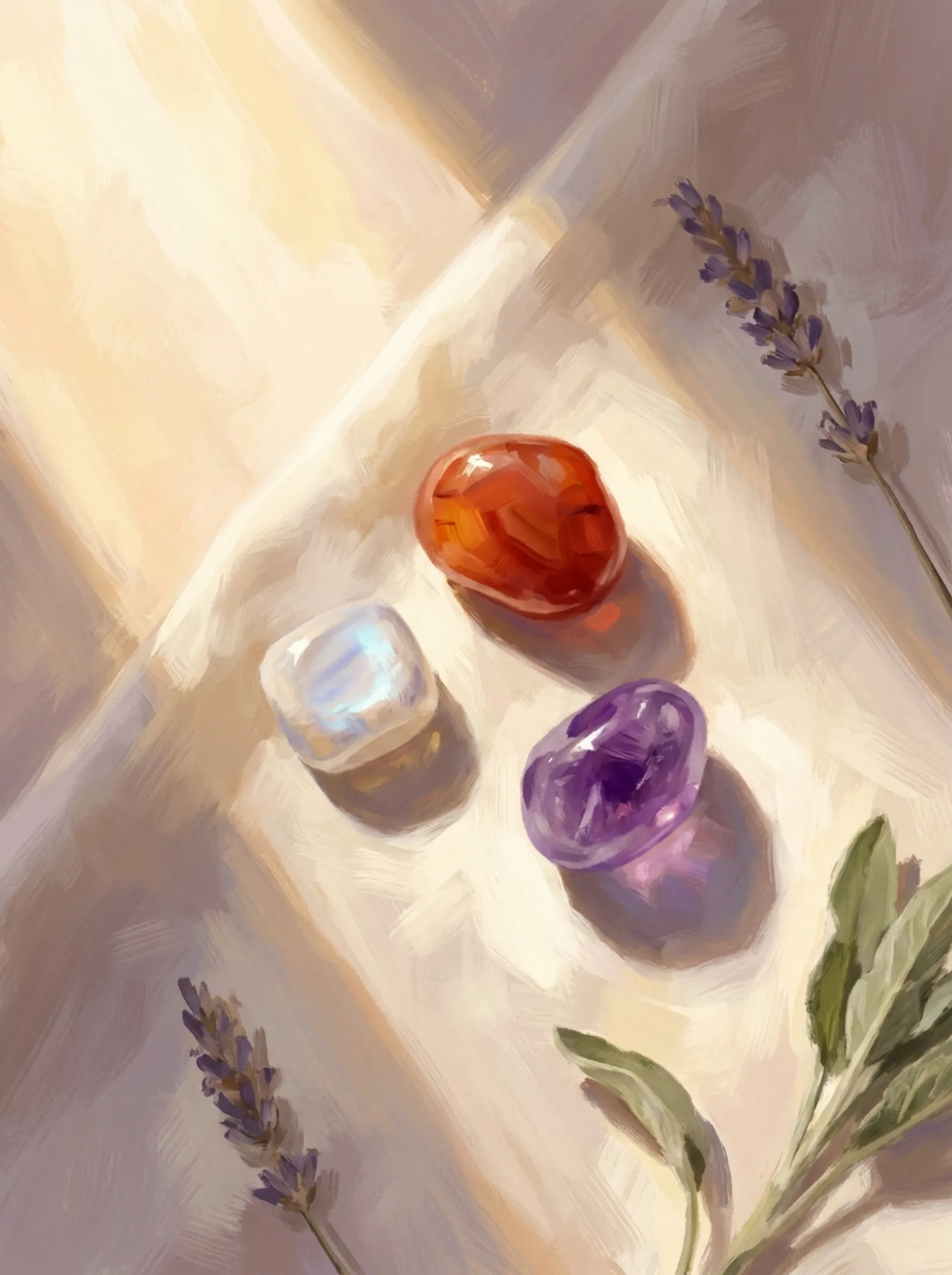
Moonstone is a feldspar with a characteristic bluish or rainbow sheen that seems to move under the surface. Its traditional associations are with cycles, intuition, and the parts of life that are not linear — grief, creative work, hormonal rhythms, the emotional weather of a long relationship. Moonstone is less about producing a specific outcome and more about accepting that things move in phases, which is genuinely useful for anyone in the middle of a season that has no clear end date. It pairs beautifully with rose quartz on a stack for anyone navigating heart-shaped questions.
All three of these stones fit intentions that are more about attitude than action. That is worth naming, because it means the payoff is slower and more subtle than with, say, a confidence stone worn into a specific meeting. The right way to measure a clarity-and-flow bracelet is not by any single week's result but by whether, over a season, the wearer notices themselves being a slightly better listener, a slightly braver speaker, or a slightly more patient version of themselves. Those are real gains, but they need a longer measuring stick than most wellness marketing wants to admit.
Left Wrist vs Right Wrist: What It Means
One of the most-asked questions in the whole crystal-bracelet conversation is whether the stone should be worn on the left wrist or the right. The short answer, drawn from a mix of Eastern energy traditions and Western wellness practice, is: left for receiving, right for giving. A bracelet worn on the left wrist is understood as an invitation — of calm, love, abundance, protection, whatever the stone is chosen for. A bracelet worn on the right wrist is understood as a projection — sending confidence outward, releasing anger, giving away something the wearer no longer wants to hold.
That framing is a helpful default, but it should not be treated as a strict rule. Handedness matters too. Many people find that a bracelet on their dominant wrist gets knocked around by keyboards, steering wheels, and door handles all day, which shortens its lifespan and quietly turns the ritual into a nuisance. If the receiving-versus-projecting distinction feels meaningful, honour it; if it just makes the bracelet uncomfortable, wear it on whichever wrist keeps it out of the way. A ritual that stops being worn is not doing anyone any good.
Some traditions get more specific — associating certain stones with certain wrists based on chakra placement or planetary rulership. These systems can be internally consistent and beautiful, but they can also become a source of anxiety for newcomers who worry they are doing it wrong. The honest answer is that there is no lab-tested optimal wrist. The point is to remember that the bracelet is on, and any consistent placement that supports that remembering is a correct placement for the wearer.
A practical middle path is to pick a default wrist for a given intention, wear it there for a lunar cycle or a calendar month, and then reassess. If it felt right, keep it there. If it kept catching on sleeves or getting forgotten, switch. Treating the wrist choice as a small, revisable experiment — the way an adult would treat any other habit — is much healthier than treating it as a superstition that will be punished if broken. The stone does not know which wrist it is on; the wearer does, and that is the entire mechanism at work.
How to Cleanse and Charge Your Bracelet?????
Cleansing a crystal bracelet, in the traditional sense, means clearing whatever residue the stone is believed to have accumulated during use — usually described as absorbed stress, other people's moods, or the general noise of daily life. Whether or not one takes that description literally, the practice of setting a monthly appointment to pause, notice the bracelet, and reset the intention behind it is genuinely useful. The cleansing ritual is not really about the stone; it is about the wearer's relationship with the stone. That is why almost any cleansing method works as long as it is done with attention.
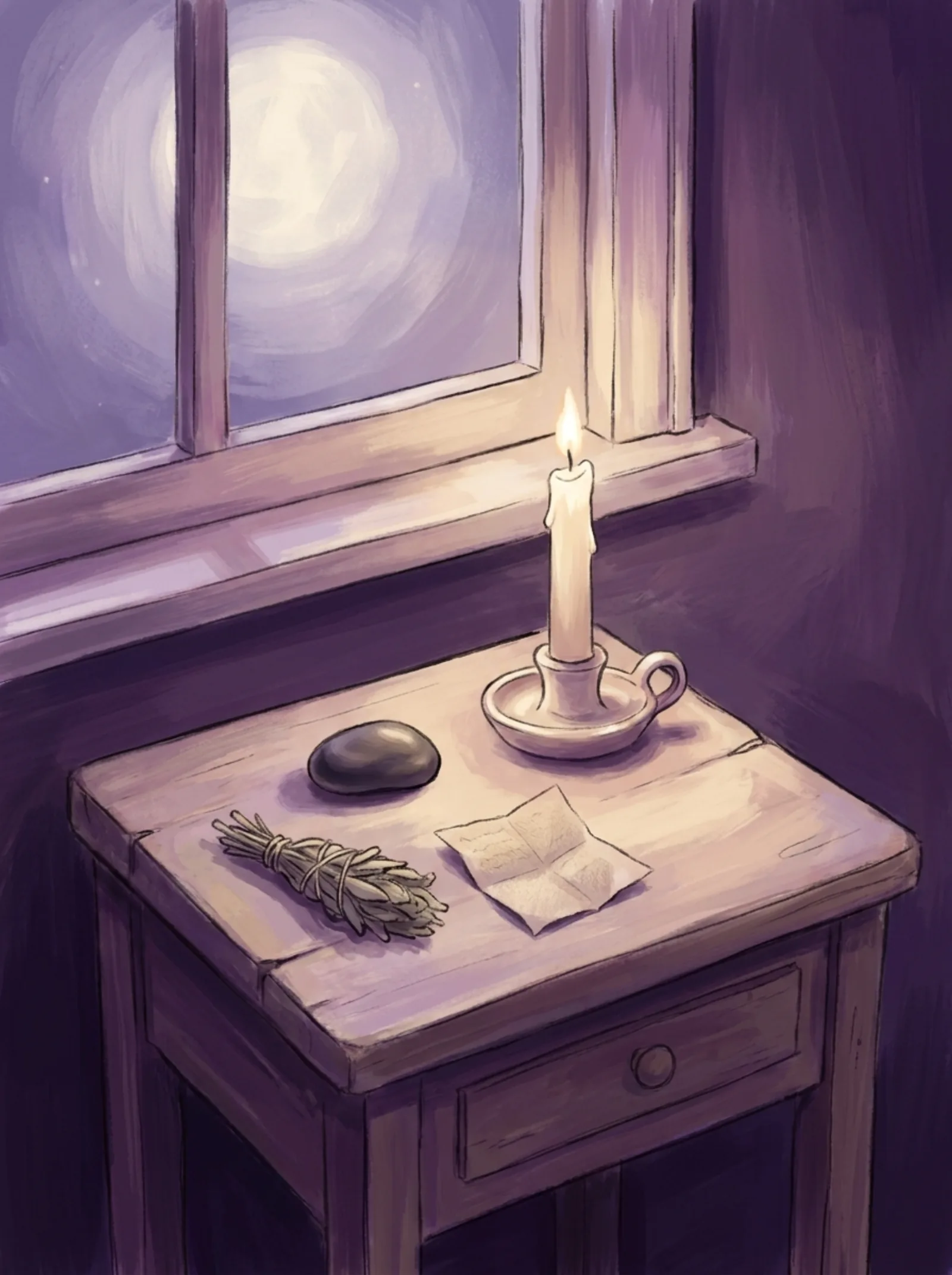
There are five common methods. Running water — cold tap water for a minute or two — is the simplest, though it should be avoided for water-soluble stones like selenite. Moonlight, especially the night of a full moon, is popular and requires nothing more than leaving the bracelet on a windowsill overnight. Sound cleansing with a singing bowl, tuning fork, or simply a chime app on a phone works well for stones that cannot get wet. Smoke from herbs such as rosemary, cedar, or lavender is another traditional option. Placing the bracelet on a bed of dry sea salt for a few hours is a fifth, though salt can damage some softer stones over time.
Charging is the counterpart practice: not just clearing the stone but re-establishing its intention. A full-moon window is the classic charging moment, but a new-moon night works just as well if the intention is about starting something rather than releasing it. Selenite plates and clear quartz clusters are traditionally used as charging surfaces because they are believed to keep other stones in a bright, ready state. Again, whether or not the mechanism is literal, the ritual of pairing a moon phase with an intention refresh is a useful monthly habit for anyone trying to stay honest about what they are working on.
A practical schedule that works for most people is: cleanse the bracelet once a month, ideally around a full moon; refresh the intention out loud or in a journal at the same time; and give the bracelet a quick rinse or wipe more often if it has been worn through a particularly stressful stretch. Overdoing it is possible — some enthusiasts cleanse daily and end up spending more time managing the stone than wearing it. As with most rituals, consistency beats intensity, and a five-minute monthly reset done twelve times a year will do more than a two-hour ceremony done twice.
When to Take It Off and Daily Care
Crystal bracelets are more delicate than they look. The stones themselves are usually hard enough to handle daily wear, but the elastic cord that holds most strands together degrades over time — faster in hot water, faster still in chlorinated pools and salty ocean water, and much faster in the presence of skincare oils, sunscreens, and perfumes. A well-made stretch bracelet will typically last one to three years of regular wear before the cord needs replacing, and a rough-treated one might snap in six months. Taking the bracelet off during specific activities is not superstition; it is basic care.

The short list of times to remove a crystal bracelet: showering, swimming, sleeping if the bracelet has sharp faceted beads, working out at high intensity, applying lotion or sunscreen, cooking with a lot of oil, and any activity that involves impact — gardening, moving furniture, contact sports. A small dish by the bathroom sink and another by the bedside makes this habit almost automatic. Anyone who has watched a beloved bracelet spray beads across a bathroom floor has learned the lesson the hard way; there is no reason to repeat that education.
Cleaning between deeper cleansing rituals is straightforward. A soft dry cloth wipes off skin oils and daily grime. For stones that tolerate water — most quartzes, tiger's eye, obsidian, jade — a very quick rinse under lukewarm water followed by a thorough dry is fine. Avoid ultrasonic cleaners, harsh chemicals, and jewellery dips designed for gold and silver. When in doubt, treat the stone the way you would treat a soft antique: gently, with a dry cloth, and only wet if you know it can handle it.
There is also a subtler question of when to emotionally take a bracelet off. If a stone has been worn through a hard chapter and that chapter has closed, retiring the bracelet — putting it in a small pouch in a drawer with a note about what it meant — is a lovely piece of closure. Continuing to wear it out of habit long after the intention has passed can quietly dilute the practice. The whole point of intentional jewellery is that the wearer is choosing to wear it today, on purpose. If that choice has gone dormant, the bracelet is ready for a rest, and a new one is ready to take over.
Do Crystal Bracelets Actually Work?
This is the section every honest guide to crystal bracelets has to include, and it deserves to be handled without either eye-rolling or hand-waving. The short, evidence-based answer is: there is no peer-reviewed scientific evidence that crystals emit measurable healing energy, alter human biofields, or produce specific therapeutic effects beyond what any placebo-controlled trial would show. The best-known studies — most famously a set of experiments by Christopher French and colleagues in the early 2000s — found no difference between real quartz and glass fakes when participants were blinded to which they were holding. Believers reported effects; the stones did not distinguish themselves.
That is one honest reading. Here is another, equally honest. Placebo effects are not fake — they are measurable, replicable, and sometimes remarkably strong, particularly for outcomes like pain, anxiety, and mood. Rituals reliably shift attention, and shifted attention reliably shifts behaviour. Wearing a chosen object as a reminder of a chosen intention is a well-studied mechanism in behavioural psychology; commitment devices, implementation intentions, and cue-based habit formation all rest on it. If a rose quartz bracelet helps someone speak to themselves more kindly for six months, the mechanism may not be metaphysical, but the improvement is real.
The place where crystal culture gets into trouble is when the jewellery is presented as a substitute for actual medical or psychological care. A crystal bracelet cannot treat depression, cancer, chronic pain, an eating disorder, or a substance-use problem, and any seller who implies otherwise is doing harm. Reflective practices — including crystals, tarot, journalling, meditation, astrology — are best treated as supplements to a life that also includes doctors, therapists, medications when appropriate, and the boring infrastructure of sleep, exercise, and human connection. Nothing on the wrist replaces any of that.
Held to that standard, crystal bracelets come out looking neither miraculous nor stupid. They are a beautiful, low-cost, low-risk category of intentional jewellery that works to the extent that they help their wearer pay attention to something they have decided matters. That is a modest claim, but it is a defensible one, and it is the claim this guide is willing to make with a straight face. Anyone selling more than that is selling something else, and the reader is entitled to be sceptical. (part of our crystals)
Building a Practice With Raka
A crystal bracelet is at its best when it is embedded in a wider reflective practice rather than treated as a standalone charm. That is the framing Raka is built around. The app pairs a real natal-chart engine — the same astronomical maths used by professional astrologers — with a tarot module, a numerology profile, and an AI reading coach that helps translate symbolic prompts into concrete, testable intentions. A bracelet becomes the wearable extension of whatever intention the wider practice has surfaced that season, rather than a piece of jewellery bought on impulse and forgotten.
The 90-lesson course inside Raka is designed to run over roughly a quarter of a year — long enough to build a habit, short enough not to feel like a second job. Users who wear a chosen bracelet through the course tend to report that the two practices reinforce each other: the daily lesson gives the intention its language, and the bracelet gives the intention its wrist-level cue. Neither element is doing anything mystical by itself. Together they form a very ordinary piece of behavioural design that happens to be dressed in beautiful symbolic clothing.
The AI reading coach is worth calling out because it is where a lot of newcomers get the most immediate value. Rather than staring at a spread of tarot cards or a natal chart trying to decode what any of it means for their actual life, users can ask a plain-language question — how do I use this week's new-moon energy to actually finish the thing I keep putting off — and get a grounded, non-hyped response that ties the symbolic prompt back to a concrete action. Choosing which bracelet to wear that week is often part of the answer.
None of this requires belief in the metaphysical claims of any tradition. Raka is written for adults who want the reflective structure without the credulity, and its guides — including this one — are prepared to say so out loud. A crystal bracelet, treated well and worn with a clear intention, is a small and legitimate tool for building the life the wearer says they want. It will not do the work for them. That has always been the point of every ritual object worth wearing, and it remains the point in 2026.