What zodiac compatibility actually is (and isn't)
Zodiac compatibility is the study of how two people's astrological placements interact — a symbolic language borrowed from thousands of years of Hellenistic, medieval, and modern astrological practice. It maps temperament, communication style, emotional needs, and the friction points where two personalities might rub. What it is not, despite what pop-astrology headlines suggest, is a predictive tool that tells you whether a relationship will last, whether someone is your soulmate, or whether you should swipe left. Anyone selling that framing is selling comfort, not honest astrology. The honest version is smaller and more useful: it gives you vocabulary for patterns you already sense, and it sharpens the questions you ask about a relationship.
The confusion happens because most people encounter astrology through Sun-sign horoscope columns and dating-app icebreakers. Those formats reduce a rich, multi-variable system to a single data point — your Sun sign — and then extrapolate wildly. Real compatibility analysis, the kind a working astrologer actually does, uses your full natal chart: ten planetary bodies moving through twelve signs and twelve houses, plus the aspects (geometric angles) between them. Comparing two full charts is called synastry, and it produces dozens of meaningful data points about a relationship's dynamics. Sun-sign compatibility is to synastry what a business card is to a résumé. See our related guide on aries compatibility. See our related guide on leo compatibility. See our related guide on aries and gemini compatibility.
There's also a research question worth acknowledging honestly. Peer-reviewed studies — Wyman and Vyse in 2008, Hartmann and colleagues in 2006, and older work by Geoffrey Dean — have found no statistically significant correlation between Sun-sign compatibility and measurable relationship outcomes like marriage duration or reported satisfaction. That doesn't mean astrology is useless. It means Sun-sign compatibility is a poor predictor in aggregate, and that astrology's value lies elsewhere: in the symbolic and reflective realm, not the statistical one. Treated as a mirror, it's often illuminating. Treated as a forecast, it fails. See our related guide on cancer and gemini compatibility. See our related guide on birthday compatibility. See our related guide on capricorn and scorpio compatibility.
The frame I'd suggest, and the one Raka is built around, is this: use zodiac compatibility as a self-reflection tool and a conversation starter. When your chart says you tend to withdraw under stress and your partner's chart says they tend to escalate, that's not a curse — it's a hypothesis to test against your lived experience. If it fits, you now have shared language for a pattern that was previously unnamed. If it doesn't fit, you discard it. Astrology at its best is a vocabulary, not a verdict. See our related guide on are gemini and virgo toxic. Related: Pisces And Virgo Compatibility. Related: Leo And Pisces Compatibility. Related: Capricorn And Leo Compatibility. Related: Gemini And Pisces Compatibility.
The four elements: fire, earth, air, water
The four elements are the deepest, oldest layer of zodiac compatibility, and they're where I'd suggest anyone new to astrology start. Each of the twelve signs belongs to one of four elemental families: fire (Aries, Leo, Sagittarius), earth (Taurus, Virgo, Capricorn), air (Gemini, Libra, Aquarius), and water (Cancer, Scorpio, Pisces). Elements describe the fundamental medium a sign operates in — fire acts, earth builds, air thinks, water feels. Every serious compatibility framework since Ptolemy has started here, and for good reason: element harmony is the single simplest heuristic that actually captures something real about how two people relate. Related: Scorpio And Taurus Compatibility. Related: Capricorn And Libra Compatibility. Related: Leo And Taurus Compatibility.
Related: Gemini and Cancer compatibility
Fire signs are propulsive. They want to initiate, express, and burn brightly, and they tend to feel most alive when something is being risked, created, or celebrated. Two fire signs together produce enormous forward momentum, often at the cost of steadiness. Earth signs are the opposite in temperament — grounded, sensory, invested in what can be built and maintained over time. They express love through reliability, provision, and physical presence. When a fire and an earth pair well, fire brings vitality and earth brings durability; when they clash, fire finds earth stifling and earth finds fire exhausting. Both readings can be true in the same relationship. Related: Libra And Virgo Compatibility. Related: Leo And Libra Compatibility. Related: Cancer And Capricorn Compatibility.
Air signs are the communicators and analysts. They live in the realm of ideas, language, and social connection, and their compatibility currency is intellectual stimulation — being seen, heard, and mentally matched. Water signs move in the emotional and intuitive layer. They read the room instinctively, feel deeply, and need emotional attunement more than they need conversation. The classic pairings work along two lines: same-element harmony, where partners share a native medium, and complementary-element pairings, where fire and air fuel each other (air feeds fire) and earth and water nourish each other (water shapes earth). Related: Gemini And Libra Compatibility. Related: Cancer And Cancer Compatibility. Related: Scorpio And Virgo Compatibility.
The cross-element pairings — fire with water, earth with air — are the ones traditional astrology flags as challenging, and they often are, but not fatally so. Fire and water can either produce steam or extinguish each other, depending on which partner brings self-awareness. Earth and air can either build practical intellectual life together or spend a decade never feeling truly met. The most important thing I want to say about element compatibility is this: it describes friction, not doom. Two people who understand their elemental difference can work with it. Two people who don't will keep repeating the same fight without ever naming what's underneath it. Related: Aquarius And Sagittarius Compatibility. Related: Aquarius And Taurus Compatibility. Related: Aquarius And Aquarius Compatibility.
Modalities: cardinal, fixed, and mutable
The modalities are the second axis of the zodiac's structure, and they're the piece most casual readers skip. Every sign belongs to one of three modes: cardinal (Aries, Cancer, Libra, Capricorn), fixed (Taurus, Leo, Scorpio, Aquarius), or mutable (Gemini, Virgo, Sagittarius, Pisces). Modality describes how a sign engages with change: cardinal signs initiate it, fixed signs sustain it, and mutable signs adapt to it. This is one of the most practically useful layers of compatibility analysis because it maps directly onto how partners handle decisions, transitions, and conflict — the everyday mechanics of a relationship rather than its poetic tone. Related: Capricorn And Sagittarius Compatibility. Related: Pisces And Pisces Compatibility. Related: Gemini And Gemini Compatibility.
Cardinal signs are starters. They open seasons — Aries begins spring, Cancer begins summer, Libra begins autumn, Capricorn begins winter — and they carry that initiating energy into relationships. They tend to lead, propose, and drive the pace. Two cardinal partners can either build empires together or spend a decade quietly competing over who gets to make the plans. Fixed signs stabilize. They hold ground, deepen commitment, and are famously stubborn. Fixed-fixed pairs create some of the most enduring partnerships in astrology, but also some of the most gridlocked — neither partner will yield first, and both would rather die than change their mind on a dinner reservation. Related: Sagittarius And Sagittarius Compatibility.
Mutable signs are the adapters. They pivot, translate, and mediate, and they tend to be the emotional shape-shifters of the zodiac. Mutable-mutable pairings often feel refreshingly flexible in the early years and confusingly ungrounded later on, when both partners keep changing course and neither is willing to plant a flag. The classical wisdom, which I mostly agree with, is that mixed-modality pairings tend to be the most functionally balanced: a cardinal partner brings direction, a fixed partner brings staying power, a mutable partner brings adaptability, and any two of those tend to cover for the other's blind spots.
When you combine element and modality, you get a much richer read than Sun-sign alone. A cardinal fire sign like Aries relates differently to a fixed fire sign like Leo than the shared element suggests: same fuel, different combustion pattern. A mutable water sign like Pisces meets a fixed water sign like Scorpio with genuine emotional resonance but very different needs around control and containment. Any compatibility framework that ignores modality is only reading half the picture. In Raka's synastry module we surface modality overlays explicitly, because they usually explain more day-to-day friction than element differences do.
Sun-sign compatibility: a full pairing table with honest caveats
Here's the Sun-sign pairing table, offered with a heavy caveat: this is entertainment-grade astrology. Treat it as a starting point for curiosity, not as a prediction. Aries tends to pair most easily with Leo, Sagittarius, Gemini, and Aquarius, and to friction with Cancer, Capricorn, and other Aries. Taurus aligns naturally with Virgo, Capricorn, Cancer, and Pisces, and struggles most with Leo, Aquarius, and Scorpio. Gemini flows with Libra, Aquarius, Aries, and Leo, and finds friction with Virgo, Pisces, and Sagittarius. Cancer pairs beautifully with Scorpio, Pisces, Taurus, and Virgo, and clashes with Aries, Libra, and Capricorn.
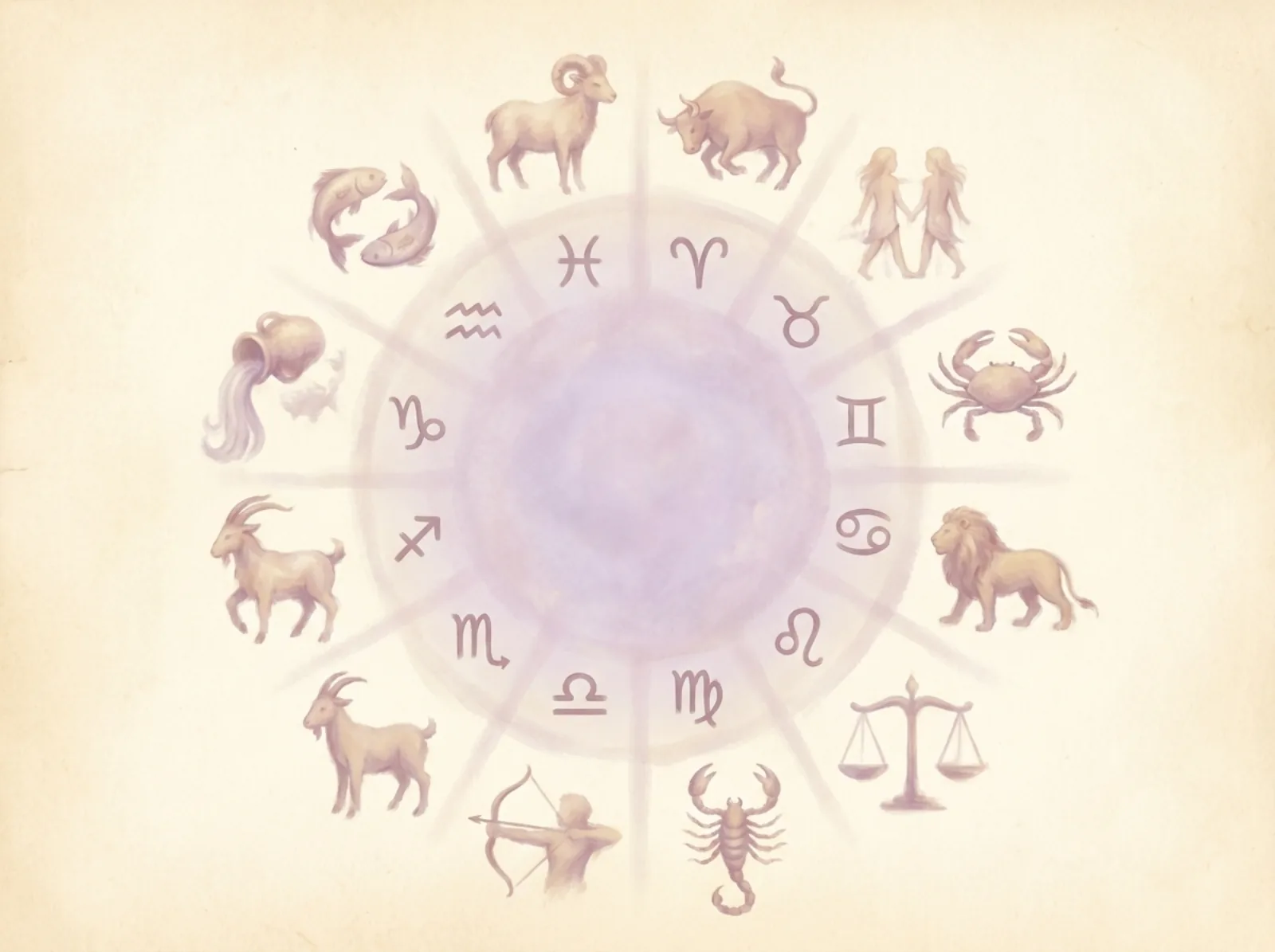
Leo matches with Aries, Sagittarius, Gemini, and Libra, and friction with Taurus, Scorpio, and Aquarius. Virgo flows with Taurus, Capricorn, Cancer, and Scorpio, and struggles with Gemini, Sagittarius, and Pisces. Libra aligns with Gemini, Aquarius, Leo, and Sagittarius, and clashes with Cancer, Capricorn, and Aries. Scorpio pairs deeply with Cancer, Pisces, Virgo, and Capricorn, and friction with Leo, Aquarius, and Taurus. Sagittarius matches with Aries, Leo, Libra, and Aquarius, and struggles with Virgo, Pisces, and Gemini.
Capricorn flows with Taurus, Virgo, Scorpio, and Pisces, and clashes with Aries, Cancer, and Libra. Aquarius pairs with Gemini, Libra, Aries, and Sagittarius, and friction with Taurus, Scorpio, and Leo. Pisces aligns with Cancer, Scorpio, Taurus, and Capricorn, and struggles with Gemini, Virgo, and Sagittarius. Notice the pattern: same-element pairings appear in every 'easy' list, complementary-element pairings often show up, and square (three signs apart) and opposition (six signs apart) pairings dominate the friction lists. That's the underlying geometry doing the work.
The reason I keep hedging is that in twenty years of reading charts I've watched every one of these pairings work beautifully and every one of them collapse, and the pattern is not sign combination — it's self-awareness, communication, and treatment. I've seen Aries-Cancer marriages last forty years. I've seen Taurus-Virgo pairs, textbook compatible, fall apart in eighteen months. Sun-sign compatibility tells you the baseline temperament dynamic. It tells you nothing about whether either person has done their emotional work, whether they respect each other, whether they want the same life. Use the table for curiosity. Use everything else in this article for real analysis.
Why Sun-sign alone gives a bad read??????
A natal chart contains ten planetary bodies (Sun, Moon, Mercury, Venus, Mars, Jupiter, Saturn, Uranus, Neptune, Pluto), placed across twelve signs and twelve houses, plus the Ascendant, Midheaven, lunar nodes, and dozens of aspects between all these points. Depending on how you count, that's between 120 and 200 meaningful data points per person. Sun sign is one of them. Using Sun sign to predict compatibility is like judging a novel by its first sentence: sometimes the first sentence really does tell you everything, but usually it tells you almost nothing about how the story unfolds. It's a preview, not a plot.
The Sun in astrology represents your core identity, life force, ego expression, and the archetype you're growing into over a lifetime. It's important — it's arguably the most important single placement — but in relationships, other planets often carry more weight. The Moon governs your emotional needs, self-soothing patterns, and how you respond under stress. Venus rules what you find attractive, how you express affection, and your aesthetic and romantic taste. Mars describes your drive, desire, and conflict style. In a real synastry reading, an astrologer often gives Moon-Moon and Venus-Mars aspects more analytical weight than Sun-Sun.
This is why Sun-sign horoscope compatibility so often feels flat or wrong. Two people can share a 'compatible' Sun combination and still have Moons that fundamentally can't self-soothe together, or Venus placements with wildly incompatible love languages, or Mars placements that produce vicious fights over trivialities. Conversely, a 'incompatible' Sun pair can have a beautifully harmonious Moon trine, a Venus conjunction that produces effortless romantic ease, and Mars aspects that channel disagreement productively. The chart is a system, and any single-variable read is going to miss the systemic picture more often than it captures it.
There's a second reason Sun-sign alone underperforms: sign is only half the placement. The house a planet occupies matters as much as the sign it's in. Your Sun in Leo in the 4th house behaves very differently from your Sun in Leo in the 10th house — one prioritizes family and home, the other prioritizes career and public identity. Sun-sign compatibility ignores houses entirely. Any framework that reduces two people to two symbols and then draws conclusions is going to be wrong more often than right. This is why the Raka app calculates the full chart and surfaces the placements that actually matter for the relationship you're asking about.
Why Moon and Rising matter more than Sun in real compatibility??????
If I could get everyone reading this to remember one thing, it would be this: Moon sign compatibility is the strongest single predictor of long-term emotional harmony, and it's routinely ignored in casual astrology. Your Moon describes what makes you feel safe, how you self-soothe, what you need when you're overwhelmed, and how you show up emotionally in intimate relationships. It's the private self that lives underneath your public presentation. Two people whose Moons are in compatible signs — either same element or a harmonious aspect — often feel a deep, quiet ease with each other that has nothing to do with shared hobbies or personality overlap. It's the ability to be regulated in each other's presence.
When Moon signs clash, partners can feel deeply mismatched even when everything else looks compatible. A Moon-in-Aries partner needs space to move, react, and process anger quickly, and finds prolonged emotional processing suffocating. A Moon-in-Cancer partner needs prolonged emotional processing to feel safe and finds the Aries Moon's quick reactivity destabilizing. Neither is wrong. Neither is bad. But if they don't understand each other's Moon language, they'll keep injuring each other in ways that feel personal but are really structural. This is exactly the kind of pattern astrology is genuinely good at naming, and where its self-reflective value is highest.
The Rising sign, or Ascendant, is the second placement that punches above its weight in compatibility. Your Rising describes the persona you meet the world with — your default demeanor, your first-impression energy, your body language, and often your physical style. In relationships, Rising compatibility often shows up as chemistry, particularly the kind that hits in the first few meetings and drives early attraction. Two people with Risings in the same element frequently feel an immediate 'I recognize this person' energy. It's not the deepest layer, but it's the layer you meet first, and it explains a lot of the fast-attraction, slow-fade pattern many people experience.
A useful shortcut: when you're just getting to know someone and you want a fuller compatibility read than Sun-sign gives, ask for their birth time (so you can compute Rising accurately) and check their Sun, Moon, and Rising as a triad against yours. This 'big three' gives you identity, emotional core, and social self — three layers instead of one, and often enough to see whether the relationship has real elemental support underneath the personality attraction. Raka's natal chart engine calculates all three from birth date, time, and location, and the compatibility module compares all three side by side.
How to read synastry: the basics??????
Synastry is the technique of overlaying two natal charts to see how one person's planets aspect the other's. It's the closest thing astrology has to a real compatibility method, and it's what a working astrologer actually does when someone asks about a relationship. The output isn't a compatibility score or a verdict — it's a map of where two lives resonate and where they friction. Learning to read synastry, even at a basic level, is one of the best returns on invested time in all of astrology, because it makes every relationship you observe (yours and others') legible in a new way.
The core mechanic is the aspect: the angular distance between two planets, measured in degrees. The major aspects are the conjunction (0°, planets in the same sign — intense fusion), the sextile (60°, gentle harmony), the square (90°, productive friction), the trine (120°, easy flow), and the opposition (180°, magnetic polarity). In synastry, you look at where your partner's planets aspect yours. Your Sun conjunct their Moon, for example, describes a deep sense of being emotionally seen. Your Venus square their Mars describes attraction laced with conflict. Every aspect tells a small story, and dozens of them together tell the relationship's story.
The placements that carry the most weight in synastry are, roughly in order: Moon-to-Moon aspects, Sun-to-Moon aspects, Venus-to-Mars aspects, Ascendant contacts, Saturn contacts (which describe long-term commitment potential and difficulty), and outer-planet contacts (Uranus, Neptune, Pluto — which describe transformation, illusion, and depth). A synastry chart with strong Moon and Venus support tends to describe a relationship that feels emotionally sustaining and romantically warm. A chart heavy on Saturn contacts tends to describe a relationship with real weight and real challenge — often deeply committed, often difficult, usually formative for both people.
You don't need to learn all of this to benefit from synastry. What you need is a tool that computes the aspects accurately and interprets them in language you can actually use. The Raka app's synastry module does the calculation with Swiss Ephemeris precision and walks you through the aspects with the AI reading coach, which explains each contact in plain, non-hyped language and connects it to questions you can bring back to your relationship. It's not a replacement for a professional astrologer, but for most people asking most compatibility questions, it's substantially more useful than a Sun-sign chart.
Real red flags in compatibility (and the ones astrology can't see)
Let's talk honestly about red flags, because this is where compatibility content most often turns manipulative. The clearest red flags in any relationship are behavioral: contempt, stonewalling, chronic dishonesty, coercive control, threats, physical aggression, and patterns of disrespect that don't respond to conversation. None of these show up in a natal chart. Astrology cannot tell you whether someone is safe to be with. It can describe temperament and tendency, but it cannot see character, choice, history, or intent. If a compatibility source is telling you astrology can identify abusers or predict betrayal, they're overselling astrology and underserving you. Trust your observations of behavior first, always.
That said, synastry can flag structural challenges worth naming. A partner's Saturn heavy on your Moon or Venus often describes a dynamic where you feel emotionally restricted, criticized, or 'not enough' in ways that go beyond ordinary friction — this pattern is worth watching, especially if it matches lived experience. Hard aspects (squares, oppositions) between Mars and Pluto in synastry can describe power struggles and control dynamics that intensify over time. A Neptune-heavy overlay onto your Sun or Venus can describe idealization and later disillusionment. These aren't verdicts, but they're patterns to be honest about when they show up in the chart and in your day-to-day experience simultaneously.
Sign-based red flags — 'never date a Scorpio,' 'Geminis will cheat on you' — are astrology at its worst. Every sign contains millions of people, spanning every character type, ethical framework, and level of self-awareness on earth. The idea that a Sun sign predicts moral behavior is not just wrong, it's a category error about what astrology describes in the first place. Sun sign is temperament, not character. Character is built by choices, environment, upbringing, and self-work — the natal chart is a starting condition, not a destiny, and it doesn't excuse anyone's behavior or predict anyone's cruelty.
The most honest use of compatibility red flags is this: when a chart pattern matches something you've been ignoring in lived experience, the chart is giving you permission to take that observation seriously. If synastry surfaces a Saturn-Moon contact that matches a nagging sense you've had of feeling criticized and small in the relationship, the chart isn't inventing the pattern — it's confirming what you already knew. That's the reflective use of astrology at its best. It's a permission structure for taking your own perceptions seriously, not a substitute for them.
The best and worst pairings — a nuanced view
The 'best pairings' in classical astrology are the ones with the most structural support: same-element trines (Aries-Leo, Taurus-Virgo, Gemini-Aquarius, Cancer-Scorpio, and their variants), complementary-element sextiles (fire-air, earth-water), and mixed-modality combinations that balance initiation, sustaining, and adaptation. These pairings tend to feel effortless in early attraction and durable over time. The two combinations I see most consistently work well in long-term partnerships are earth-water pairings (grounded and emotionally attuned) and same-modality trines like fixed-fixed or cardinal-cardinal where both partners share a fundamental orientation to change.
The 'worst pairings' in classical astrology are typically the squares (three signs apart, same modality, different element) and some oppositions (six signs apart, opposite polarity). Aries-Cancer, Taurus-Leo, Gemini-Virgo, Cancer-Libra, Leo-Scorpio, Virgo-Sagittarius, Libra-Capricorn, Scorpio-Aquarius, Sagittarius-Pisces — these squared pairings tend to friction over fundamental temperament differences. But friction isn't failure. Square aspects are the ones that produce growth, precisely because they demand adaptation. Some of the most transformative long-term partnerships I've seen have been square Sun signs where both partners used the friction as fuel for individual growth rather than as evidence to leave.
Opposition pairings — Aries-Libra, Taurus-Scorpio, Gemini-Sagittarius, Cancer-Capricorn, Leo-Aquarius, Virgo-Pisces — are the classic 'opposites attract' combinations. They share a common axis (an axis of themes) but express it from opposite ends. These pairings often feel magnetically drawn to each other in early attraction and exhausted by each other in year three. The dynamic they set up is genuinely useful: each partner embodies the qualities the other under-developed, which is either a beautiful mutual education or a permanent low-grade tension, depending on how much curiosity both partners bring.
Here's the summary I'd offer honestly: there is no combination that guarantees success and no combination that guarantees failure. Same-element pairings feel smoother; square pairings feel more effortful. But behavioral quality, communication skill, and self-awareness dominate outcomes far more than sign geometry does. A square pair with two self-aware partners will out-perform a trine pair with two conflict-avoidant ones. Use compatibility not to select or deselect partners, but to understand the dynamic you're already in and what it's asking each of you to grow into.
Venus and Mars: the romance and desire layer
Venus and Mars are the two placements most directly relevant to romantic and sexual compatibility, and they're wildly underused in casual astrology. Venus describes what you find beautiful, how you express affection, your aesthetic and romantic taste, and your love language. Mars describes your drive, your desire, your conflict style, and how you pursue what you want. In synastry, Venus-to-Mars aspects between two people often describe the raw chemistry of the relationship — whether desire is mutual, aligned, or mismatched. This is the layer that pop-astrology skips entirely because it requires birth-date-plus-birth-time precision to calculate.
Two people with Venus in compatible signs — same element, or trine, or conjunct — usually find each other's affection styles legible. They express love in ways the other easily recognizes as love. Two people with Venus in incompatible signs often love each other deeply but fail to communicate it in the modes the other actually receives. A Venus-in-Capricorn partner expresses love through reliability, provision, and steady presence, and can spend years quietly showing up while a Venus-in-Leo partner keeps wondering why they don't get flowers. Both are loving. Neither is being unloving. But without a shared vocabulary, both feel unloved.
Mars synastry describes desire and drive. When Mars-to-Venus contacts are strong, the relationship tends to have strong sexual chemistry — sometimes overwhelmingly so. When Mars-to-Mars contacts are supportive, partners can pursue shared goals without competing. When Mars aspects are hard (squares, oppositions), the conflict style becomes a live issue: one partner escalates, the other withdraws, and neither can find the middle. Mars is also the placement that describes anger, and Mars-heavy synastry often describes relationships with real heat — both erotic and combative. Whether that heat sustains or scorches depends on emotional maturity.
The most functional Venus-Mars pattern in long-term relationships is one where Venus placements feel harmonious enough to sustain romantic affection over decades, and Mars placements feel differentiated enough to keep desire alive without producing chronic combat. This is a narrower target than pop-astrology suggests, and it's why so many relationships that start with intense chemistry burn out — the initial Mars contacts were strong, but the underlying Venus support wasn't there to convert desire into lasting affection. Raka's synastry module surfaces Venus and Mars contacts explicitly, because they're the two placements that most reliably predict romantic and sexual sustainability.
How to actually use zodiac compatibility in real life??????
Here's the practical framework I'd suggest for using compatibility without letting it become superstition. Start with your own chart before you start reading other people's. Understand your Sun, Moon, Rising, Venus, and Mars in depth. Learn what your Moon needs when you're overwhelmed, what your Venus expresses when you're loving, what your Mars does when you're angry. This work is where astrology's real utility lives — self-knowledge — and it makes every subsequent compatibility read more useful, because you're now reading the relationship from a place of self-awareness rather than looking for external validation of a pattern you can't name.
When you look at compatibility with a specific person, look at your charts side by side rather than checking sign compatibility in isolation. Ask three questions: Where do we resonate? (harmonious aspects — the trines, sextiles, and complementary elements). Where do we friction? (squares and oppositions — the places we'll rub). What are our respective growth edges? (the placements our partner's chart illuminates in ours). This is genuinely useful information for a real relationship. It surfaces patterns worth talking about and gives you shared language for dynamics you might otherwise navigate silently.
Bring compatibility insights into the relationship as questions, not as verdicts. 'My chart says I withdraw under stress and yours says you escalate — does that match what you experience?' is a productive conversation. 'You're a Scorpio, you're going to betray me' is not. The former treats astrology as a hypothesis-generation tool; the latter treats it as a persecution device. Every astrologer I respect uses the former framing exclusively. If astrology is generating fights, defensiveness, or surveillance in your relationship, it's being misused — usually as ammunition rather than as reflection.
Finally, hold everything loosely. The relationships that work are the ones where both partners keep choosing each other, keep growing, and keep communicating. Astrology can support that work by giving you shared vocabulary and reflective structure. It cannot replace it. A perfectly compatible chart won't save a relationship where one partner is checked out. A challenging chart won't sink a relationship where both partners are engaged. Use compatibility as one tool among many, alongside therapy, honest conversation, lived observation, and time. The Raka app is built with this frame — the AI reading coach is designed to surface reflection, not deliver verdicts.
How numerology and tarot add texture to compatibility
Astrology isn't the only symbolic system that speaks to compatibility, and honestly, triangulating between systems often produces sharper insight than any single system alone. Numerology, particularly Pythagorean numerology, offers a Life Path number derived from your full birth date that describes core life themes and temperament. Comparing Life Path numbers alongside Sun-Moon-Rising often either confirms an astrological read or usefully complicates it. When numerology and astrology agree about a compatibility theme, you can be more confident it's real. When they disagree, the disagreement is often more interesting than either single reading, because it points to a genuine complexity in the dynamic.
Tarot enters compatibility differently. Rather than describing fixed temperament, tarot describes the current energetic dynamic of a relationship — what's active now, what's asking to be seen, what's in motion. A relationship spread using cards like the Lovers, the Two of Cups, the Devil, or the Tower can surface what's alive in the relationship in a given season. This is genuinely useful when astrology feels too static — sign compatibility describes long-term structure, but relationships also have seasons, and tarot maps the seasons better than natal astrology does. Many working readers use both, and Raka's reading coach integrates tarot-style spreads with astrological interpretation.
The healthiest way to use multiple systems is layered reflection, not layered prediction. Start with the astrological structure: elements, modalities, big three, key synastry aspects. Add the numerological layer: Life Path compatibility, expression numbers, personal year cycles. Bring in tarot for the present-tense question: what's alive here right now, what needs attention, what's the current invitation. Together these three systems produce a richer reflective picture than any of them alone. None of them predict the future. All of them, used honestly, sharpen the questions you bring to the relationship.
If this multi-system approach appeals to you, the Raka app is built for it. The natal chart engine calculates your and your partner's full astrological charts with Swiss Ephemeris precision. The numerology tools generate Life Path, Destiny, and Personal Year numbers from birth dates. The AI reading coach walks tarot spreads with you for relationship-focused questions. And the 90-lesson course teaches you to read these layers yourself over time, so you're not dependent on an app or a professional to interpret your own relationships. The frame throughout is consistent: reflection, not prediction. Self-knowledge, not verdict.
How to hold zodiac compatibility honestly??????
The single most important shift I want anyone reading this article to make is from a predictive frame to a reflective frame. Zodiac compatibility does not tell you whether a relationship will last. It tells you what dynamics are structurally present, what temperament differences you're navigating, and what growth each partner's chart is asking for. Used this way, it's a genuinely useful tool for self-understanding and for having better conversations in relationships. Used predictively — as a verdict on who is 'right' for you or who to avoid — it's a form of astrological superstition that produces more anxiety than insight, and misrepresents what astrology has ever honestly offered.
Behavior always beats astrology. A person's sign tells you nothing about how they'll treat you. A person's behavior tells you everything. If someone's chart is 'perfectly compatible' with yours and they're contemptuous, dishonest, or cruel, the chart is not the truth of the relationship — the treatment is. If someone's chart is 'incompatible' and they show up consistently with kindness, honesty, and self-awareness, the relationship can flourish for decades. Astrology can describe what temperament dynamic you're navigating with a given person, but it never overrides your direct observation of how you're being treated. Trust the treatment.
Compatibility is also not the whole picture of a relationship. Shared values, shared vision, aligned life circumstances, mutual attraction, respect, and the willingness to grow together matter enormously — and none of them show up in a natal chart in any complete way. Astrology captures temperament and dynamic. It doesn't capture whether you both want children, whether your careers align, whether your families are compatible, whether you're at the same life stage, whether you can afford to build a life together. All of these are real inputs into whether a relationship works, and none are astrological. Hold the chart lightly.
If you want to go deeper into your own chart and into synastry as a reflective practice, the Raka app is where I'd point you — biased disclosure, since I write the content for it. The natal chart engine, synastry module, numerology tools, tarot reading coach, and 90-lesson course together form a self-guided path for learning astrology as a language of self-understanding. The voice of the app matches the voice of this article: grounded, honest, non-predictive, focused on reflection. Use it to know yourself and your relationships better. Don't use it — or anyone else's compatibility tool — to make decisions astrology was never designed to make.