What a Compatibility Test Actually Is
A compatibility test, in the traditional astrological sense, is not a quiz. It is a side-by-side reading of two full birth charts to see how the planets in one person's chart speak to the planets in the other. The technical name is synastry, from a Greek root that means bringing stars together. What you are looking at is not whether two people are fated to work, but how their internal wiring meets when they try to share a life. That distinction matters because a real test does not spit out a percentage. It gives you a map of where the friction lives, where the easy flow lives, and what each person will keep unconsciously asking the other to do.
When people type compatibility test into a search bar, they are usually not asking for a map. They are asking a much smaller question, which is: is this going to hurt me. That is a completely reasonable thing to want to know, and astrology cannot answer it, because whether a relationship hurts is mostly a function of choices two adults make over years. What synastry can do is show you the shape of the pattern you will both be tempted to fall into. That is genuinely useful information. It is also the exact thing a Sun-sign quiz cannot give you, because your Sun sign is roughly one twelfth of one twelfth of your chart. See our related guide on aries compatibility. See our related guide on leo compatibility. See our related guide on aries and gemini compatibility. See our related guide on cancer and gemini compatibility.
There is a version of the compatibility test that is honest about being a game. Buzzfeed style quizzes, magazine sidebars, dating app icebreakers. Those are fine as long as nobody treats them as a decision-making tool. The version that is not honest is the site that dresses up a Sun-only comparison in serious language, adds a fake percentage, and lets you leave thinking you have consulted the stars. You have consulted a lookup table. A real compatibility test uses a birth time for both people, calculates ten planetary positions and the angles, and then reads the conversation happening between the two charts. See our related guide on birthday compatibility. See our related guide on capricorn and scorpio compatibility. See our related guide on are gemini and virgo toxic.
The last thing worth saying up front is that compatibility, in astrology, is not the same as ease. Two charts can score as maximally easy and produce a couple who politely bore each other for forty years. Two charts can look thorny on paper and produce a marriage in which both people grow more than they ever would alone. The test is not measuring pleasure. It is measuring pattern, tension, and the specific quality of the work each pairing asks of you. Once you understand that, the whole practice stops feeling like a verdict and starts feeling like the pre-conversation you should have been having anyway. Related: Pisces And Virgo Compatibility. Related: Leo And Pisces Compatibility. Related: Capricorn And Leo Compatibility. Related: Gemini And Pisces Compatibility.
Why Most Online Compatibility Tests Are Shallow??????
Open the first ten results for compatibility test online right now and nine of them will ask for two names and two Sun signs. That is not a compatibility test. That is a lookup table with a heart-shaped background. Your Sun sign is your core identity, the thing you were sent here to become, and it is real information. But asking two Sun signs to describe a relationship is like asking two job titles to describe a company. Aries and Cancer will look bad on paper and land beautifully in life because his Moon is in Cancer and her Venus is in Aries. The Sun-only test will never see that. Part of our zodiac compatibility library. Related: Scorpio And Taurus Compatibility. Related: Capricorn And Libra Compatibility. Related: Leo And Taurus Compatibility.
Related: Gemini and Cancer compatibility
The second-tier tests add the Moon, which is closer to honest but still incomplete. They will tell you that a Taurus Sun and a Scorpio Sun with a Pisces Moon and a Cancer Moon get along at 78 percent, and that number is meaningless. Percentages in astrology are marketing. There is no accepted formula in any serious astrological tradition that produces a single number for two charts. When you see one, it was invented for engagement. The actual output of a real synastry reading is a list of aspects, a set of house overlays, and a paragraph of interpretation. It is qualitative, not scored. Part of our zodiac compatibility library. Related: Libra And Virgo Compatibility. Related: Leo And Libra Compatibility. Related: Cancer And Capricorn Compatibility.
The third problem with most online tests is that they ignore aspects entirely. An aspect is the angular relationship between two planets, and it is the actual mechanism by which one chart talks to another. Your Venus at 12 degrees Libra sitting exactly opposite her Mars at 12 degrees Aries is the thing that will make you fight and make up in the same afternoon. No quiz that ends in a percentage has told you that. To see it you need the degrees, the orbs, and someone or something that can read them. That is not a small technical detail. That is the entire practice. Part of our zodiac compatibility library. Related: Gemini And Libra Compatibility. Related: Cancer And Cancer Compatibility. Related: Scorpio And Virgo Compatibility.
The last reason shallow tests keep winning is that they give the answer people want to hear fast. A real reading takes forty minutes to prepare and an hour to explain. A quiz takes fifteen seconds. In the attention economy the quiz wins, and the person searching for compatibility test walks away with a number that felt authoritative and meant nothing. That is fine for entertainment. It is not fine as the input to a decision about a person you love. If you are going to consult the stars, consult them properly, or admit that you are just playing. Related: Aquarius And Sagittarius Compatibility. Related: Aquarius And Taurus Compatibility. Related: Aquarius And Aquarius Compatibility. Related: Capricorn And Sagittarius Compatibility.
The Four Planets That Matter Most
In classical synastry there are ten bodies to look at, from the Sun out to Pluto, plus the two lunar nodes and the four angles. For most practical compatibility work you can compress that down to four planets and get about eighty percent of the useful signal. Those four are Sun, Moon, Venus, and Mars. Together they describe identity, emotional needs, love style, and desire. If you know where those four bodies sit for both people, and how they aspect each other across the two charts, you have the working skeleton of a real compatibility read. Everything else is refinement. Related: Pisces And Pisces Compatibility. Related: Gemini And Gemini Compatibility. Related: Sagittarius And Sagittarius Compatibility.
The Sun is who you are becoming. It is the conscious self, the thing you point at when someone asks who you are. In synastry, when one person's Sun contacts another person's chart, it says here is my identity meeting your inner world. The house of your chart their Sun lands in is the area of your life they will most naturally light up or overshadow. This is why Sun-only compatibility is not entirely worthless, just wildly incomplete. The Sun is the front door. It is not the house. (part of our compatibility library)
The Moon is what you need to feel safe. It is your emotional operating system, formed early and largely below the level of choice. In compatibility, the Moon is where relationships either become home or stay stressful no matter how attractive the surface. A strong Moon contact between two charts, such as one person's Sun sitting on the other's Moon, produces the specific feeling of being known without having to explain yourself. A hard Moon contact produces the specific feeling of being constantly slightly misunderstood by someone who loves you.
Venus is how you love and what you find beautiful. Mars is what you want and how you go after it. Together they are the erotic and combative pair, and in synastry they describe both the pull and the fight. Venus to Venus contacts describe aesthetic agreement, whether you enjoy the same kind of Saturday. Mars to Mars contacts describe whether you fight the same way. Venus to Mars contacts describe attraction, the actual current running between the two of you. If you learn to read only those four planets in both charts, you will already be ahead of ninety percent of compatibility tests on the internet.
Step 1: Compare Sun Signs (Identity)
Start with the Suns because they are the loudest and easiest to feel. Look at the two Sun signs, then look at their elements and modalities. Elements are fire, earth, air, water. Modalities are cardinal, fixed, mutable. Two Suns in the same element tend to speak the same language about life without having to translate. Two Suns in compatible elements, meaning fire with air or earth with water, tend to complement each other, one providing what the other needs to breathe. Two Suns in the same modality tend to move at the same speed but butt heads about direction. Two Suns in square modalities feel constant low-grade tempo friction.
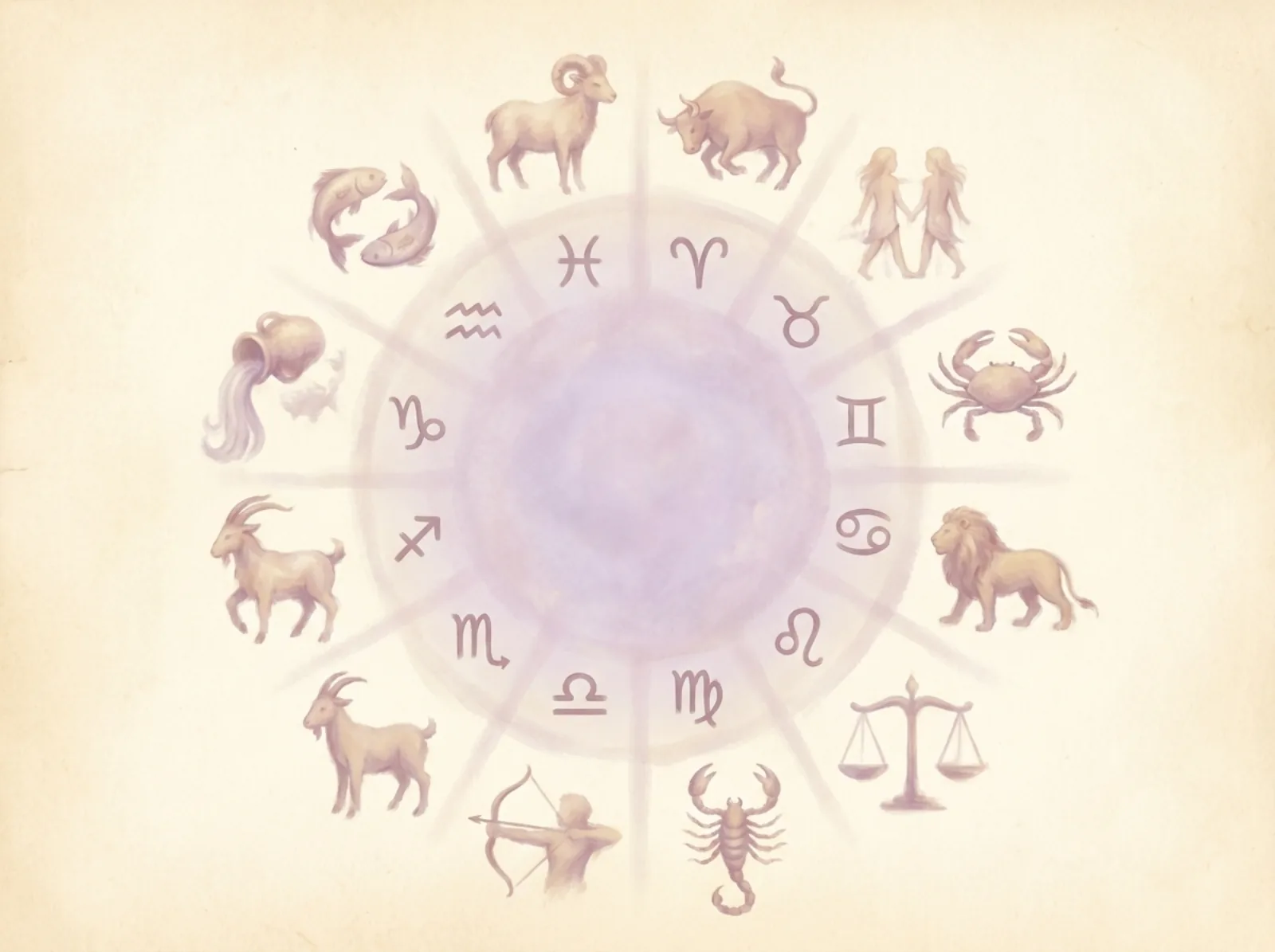
After the elemental read, look at the exact degree of each Sun and the aspect between them. If they are within eight degrees of a trine, meaning one hundred and twenty degrees apart, the identities support each other naturally. If they are within eight degrees of a square, ninety degrees apart, they push at each other in a way that either produces growth or produces exhaustion depending on the maturity of the two people. If they are in opposition, one hundred and eighty, they are looking at each other across the zodiac, which can feel like completion or like living with a mirror you cannot turn off.
Then ask the harder question. What house does the other person's Sun fall into in your chart, and vice versa. If their Sun lands in your seventh house of partnership, they will feel unusually significant almost immediately, whether or not the rest of the read is easy. If their Sun lands in your twelfth house, they will feel familiar in a way you cannot explain, and possibly triggering in ways you did not sign up for. The house overlay is the piece that Sun-sign compatibility tests will never tell you, and it is often where the actual story of a relationship lives.
Finally, hold the Sun read loosely. Two people with technically incompatible Sun signs make excellent partnerships every day of the week because everything else in the chart said yes. The Sun read is the opening chapter, not the verdict. If you feel a strong pull toward someone whose Sun seems wrong on paper, that is not a red flag. It is a signal to look at the other three planets, because something in the Moon, Venus, or Mars layer is doing the pulling, and it will keep pulling regardless of what a magazine tells you about your sun signs.
Step 2: Compare Moon Signs (Emotional Needs)
The Moon is the single most important body in synastry for long-term compatibility, and it is the one most quizzes ignore. Look at both Moon signs, their elements, and their houses. A Cancer Moon needs security and nesting. A Sagittarius Moon needs freedom and horizon. Those two people can absolutely love each other, but they will keep needing opposite things at the exact same moment, and the relationship will succeed or fail on whether they can name that out loud instead of resenting it silently. The compatibility test is not asking whether the needs match. It is asking whether the two people can meet different needs kindly.
Look at aspects between the two Moons. Moon trine Moon feels like your emotional weather patterns are compatible. You can be sad together, quiet together, celebratory together, without one of you needing to perform for the other. Moon square Moon feels like every fight is really about how you fight. Moon conjunct Moon, especially in the same sign, produces an almost eerie sense of shared emotional rhythm. Moon opposite Moon is the classic complementary pair, each of you carrying what the other has repressed, which is generative for a while and can become tiring if neither of you does your own work.
Then look at Sun to Moon contacts across the two charts. One person's Sun conjunct the other person's Moon is one of the most quietly powerful compatibility indicators in astrology. It produces a marriage-like feeling of home, where the more expressive person feels naturally supported by the more nurturing one. It shows up in a huge number of long marriages when you look at their birth data. Sun trine Moon works similarly, with less intensity and often more equality. Sun square or opposite Moon shows a strong bond that requires conscious work to keep from sliding into parent-child dynamics.
Finally, ask what house each person's Moon falls into in the other's chart. Moon in the partner's fourth house feels like home. Moon in the partner's tenth house feels like being watched or evaluated, even when that is not the intent. Moon in the partner's eighth house is the classic deep-water contact, intimate and sometimes overwhelming, capable of producing both the most bonded and the most volatile relationships you will read. This is the level of detail a real compatibility test operates at, and it is why Sun-sign quizzes can never touch what actually determines whether two people build a life.
Step 3: Compare Venus Signs (Love Style)
Venus is how you love and what makes you feel loved. Two people with Venus in compatible elements tend to agree, without discussion, about what a good evening looks like, what counts as a gift, and what tone of voice reads as affectionate. Two people with Venus in incompatible elements often feel misunderstood in small daily ways even when the larger relationship is strong. You buy her flowers because your Venus in Libra says flowers mean love. Her Venus in Capricorn wanted you to fix the thing in the kitchen. Neither of you is wrong, and neither of you is being loved in your own language.
Look at the specific sign of both Venuses. Venus in fire signs, meaning Aries, Leo, or Sagittarius, loves with heat and expression. Venus in earth signs, Taurus, Virgo, or Capricorn, loves with reliability and provision. Venus in air, Gemini, Libra, or Aquarius, loves with talk and shared ideas. Venus in water, Cancer, Scorpio, or Pisces, loves with feeling and merger. When two Venuses are in the same element the daily texture of love feels intuitive. When they are two elements apart, love has to be translated, which is not a problem if both people are willing translators.
Then look at Venus to Venus aspects. Venus conjunct Venus is aesthetic twinning, the couple who dress alike and finish each other's Pinterest boards. Venus trine Venus is easy shared taste. Venus square Venus is the productive fight about how to spend money and time. Venus opposite Venus is often the classic opposites-attract dynamic, especially aesthetically. And do not forget Venus to Mars aspects between the two charts. Your Venus in soft aspect to his Mars is one of the most reliable indicators of sustained attraction, the current that keeps a long relationship from going platonic.
Finally, note where the partner's Venus lands in your chart by house. Venus in your second house tends to make you feel more valuable and often literally wealthier around this person. Venus in your fifth house makes them feel like play and romance. Venus in your seventh house is the classic marriage overlay. Venus in your eighth house is the smoldering, transformative one, capable of both deep intimacy and complicated financial or sexual entanglement. Read these overlays alongside the aspect read and you will have a picture of the love style match that no compatibility percentage on the internet can match.
Step 4: Compare Mars Signs (Desire and Conflict)
Mars is what you want, how you go after it, and how you fight. In compatibility, Mars is the planet that determines whether the attraction lasts and whether the arguments are productive. Two Marses in compatible elements produce a couple who tend to fight cleanly and want the same kind of touch. Two Marses in incompatible elements tend to fight in ways the other cannot decode. Mars in Aries wants to yell it out fast and be done. Mars in Cancer goes quiet and cold. Neither is a wrong style, but if neither person understands the other's mode, arguments become traumatic instead of clarifying.
Mars to Mars aspects tell you about physical and volitional match. Mars conjunct Mars in the same sign is the couple who train together, work together, and occasionally combust together. Mars trine Mars is easy shared energy, often shows up in creative partnerships. Mars square Mars is the fight-and-make-up couple, exhausting for some, addictive for others. Mars opposite Mars is the classic power dynamic, and it can be a lifelong tension or a lifelong dance depending on whether both people know how to yield. In no case does the Mars aspect predict violence. It predicts style.
Venus to Mars contacts between the two charts are where sexual chemistry lives on paper. Your Venus conjunct his Mars, or her Venus trine your Mars, tends to produce sustained attraction rather than the flash-in-the-pan kind. This is the aspect that makes a couple still find each other physically compelling ten years in. The absence of Venus-Mars contact between two charts does not mean no chemistry, because chemistry has many sources, but its presence is the single most repeatable astrological signature of ongoing physical pull. Any real compatibility test that skips this contact is not a real compatibility test.
Finally, look at what house the partner's Mars lands in for each of you. Mars in the seventh house of the other person often produces an intense pull that has an argumentative edge from the start. Mars in the fifth house produces play, sport, and sex. Mars in the eighth house is intense, sometimes obsessive, capable of great transformation. Mars in the fourth house can produce fights about the home. These house overlays are where a Mars read stops being abstract and starts describing your actual life, and they are the layer any adult use of the compatibility test needs to consult.
Reading the Aspects Between Charts
An aspect is an angular relationship between two planets, measured in degrees. The five major aspects are conjunction, zero degrees, sextile, sixty, square, ninety, trine, one hundred and twenty, and opposition, one hundred and eighty. In synastry you are looking at aspects between planets in one person's chart and planets in the other's, within an orb, or margin of error, usually of five to eight degrees. If your Sun is at 14 Leo and her Moon is at 16 Leo, that is a Sun conjunct Moon contact within two degrees, and it is unusually strong. The tighter the orb, the louder the aspect.
Conjunctions merge the two planets. Sextiles and trines feel easy and often go unnoticed because they run in the background without demanding attention. Squares create friction that generates growth or wears people down depending on maturity. Oppositions create a see-saw dynamic where each person tends to embody what the other represses. None of these is good or bad in the abstract. A chart full of trines can be dull. A chart full of squares can be the making of two people. What matters is the specific planets involved and whether the two people are willing to work with what the aspect brings.
For a workable compatibility test, list the aspects between the two charts in the following pairs. Sun to Sun, Sun to Moon, Sun to Venus, Sun to Mars, Moon to Moon, Moon to Venus, Moon to Mars, Venus to Venus, Venus to Mars, and Mars to Mars. Also note Sun, Moon, Venus and Mars aspects to the other person's Ascendant and to their ruling planets. This gives you roughly fifteen contacts to look at, which is manageable, and it is enough resolution to write a paragraph of real interpretation rather than a fake percentage. That is the work a serious reading does.
When you look at your list of contacts, notice patterns rather than individual verdicts. If most of the Moon and Venus contacts are easy but most of the Mars contacts are hard, you have a couple who are emotionally at home and physically at war. If most of the Sun and Mars contacts are strong but Moon contacts are absent, you have a couple who is excited by each other and cannot quite settle in. This is the diagnostic value of synastry, and it is the reason the practice has survived for two thousand years. It gives you language for what you are already sensing.
The Seventh House and What It Actually Says
The seventh house of your birth chart is the house of committed partnership, of the visible other. It is not exactly the house of romance, which is more the fifth, and it is not the house of sex, which is more the eighth. It is the house of the partner across the table, the person you commit to publicly. Understanding your own seventh house is a compatibility test all by itself, because it tells you what quality of other you keep summoning into partnership. The sign on the cusp of your seventh house describes the archetype. Planets inside it describe what you actually attract.
If Aries is on your seventh house cusp, you tend to attract initiators, people with high independence, sometimes with a fight in them. If Cancer is on the cusp, you attract nurturers, and sometimes people who need you to nurture them. If Capricorn is on the cusp, you attract structure and often people older or more established. This is not superstition. It is a repeated pattern across many chart readings, and once you know your own seventh house archetype, you can stop being surprised by the kind of person you keep dating and start being intentional about which of their qualities you actually want.
In a two-chart compatibility test, look at what falls into each person's seventh house from the other chart. If her Sun sits inside your seventh house, she will feel like a natural partner to you almost immediately. If his Venus sits inside your seventh house, he will feel like romance and possibility from the first day. If her Saturn sits inside your seventh house, the partnership will feel weighty, formal, and often long-lasting, though it may also feel restrictive at times. The seventh house overlay is one of the most predictive single indicators of whether a relationship gets serious.
None of that means the relationship will be easy or that it will last. It means the archetypal function of partnership is being switched on by this person. Two people with strong seventh house contacts are more likely to commit and more likely to feel like the other belongs. Whether the commitment is good for either of them is a separate question, answered by the Moon, Venus, and Mars layers above and by the choices they actually make. But if you want to know why a particular person felt different from the moment you met them, the seventh house is usually where the answer lives.
How to Spot a Real Question vs a Fun Quiz??????
There is nothing wrong with a fun compatibility quiz as long as you know it is a quiz. The problem is that our brains treat any confident-sounding output as a data point, and if a website tells you your Aquarius partner and your Taurus self are a 31 percent match, that number will attach itself to your evening and quietly influence how you interpret the next argument. Learning to tell a real compatibility question from a fun quiz is a small piece of media literacy that will save you a lot of unnecessary worry. Once you can name the difference, you can enjoy the quizzes as entertainment without letting them steer you.
A real compatibility question asks for the full birth data of both people. Full birth data means date, exact time, and place of birth for each person. Without birth time, the Moon can be off by up to fifteen degrees, and the Ascendant and the entire house structure are unavailable. A test that does not ask for birth time is a Sun sign lookup dressed up as astrology. That does not make it evil, but it does mean the output is not actually a compatibility read. It is a horoscope for a hypothetical couple, and the couple in your life is not hypothetical.
A real reading produces qualitative language, not numbers. If the output is a percentage, a star rating, a heart score, or a match grade, you are looking at a game. If the output is a paragraph that names specific placements, describes the specific dynamic they create, and points at what each person can work with, you are looking at a reading. Real readings will use words like Moon square Moon, seventh house overlay, Venus Mars trine. Games will use words like soulmate, twin flame, and destined. Both can be enjoyable. Only one is diagnostic.
Finally, ask yourself what you would do with the result. If a number would change your behavior toward a person you love, do not consume the number. If a reading would give you language for a pattern you have been feeling but could not name, seek out the reading. The distinction is not about which tool is legitimate. It is about what you are ready to hear and why you are asking. A compatibility test is only worth taking if you are prepared to sit with the answer for longer than the fifteen seconds it took to generate.
Red Flags in Synastry (and What They Don't Mean)
You will read online that certain synastry contacts are red flags. Saturn on someone's Venus, Pluto on someone's Moon, Mars square Mars, a heavy twelfth house overlay, the composite chart with a difficult Ascendant. Some of these get real reputations, and the reputations are not entirely wrong. Hard Saturn contacts can produce restriction and duty. Hard Pluto contacts can produce power struggles. But the language of red flags in astrology has drifted a long way from what a red flag actually is in life, and it is worth pulling that apart before you break up with a wonderful person over a chart.
An astrological red flag describes a pattern you will be tempted to fall into. It does not describe an outcome. Pluto on your Moon does not mean this person will hurt you. It means the relationship will bring up material about power, control, and emotional intensity, and it is asking you both to grow up around that material. Many of the most transformative long relationships in history feature exactly these contacts. What determines the outcome is not the aspect. It is whether the two people are willing to see what the aspect is showing them and do the work.
A real red flag is a behavior, not a placement. Contempt, chronic dishonesty, controlling money, isolating you from friends, refusing repair after conflict. Those are the flags to leave for. A synastry contact tells you the shape of the game you will be playing together. A behavior tells you whether the person is playing it in good faith. Do not use astrology to leave a person who is treating you well. Do not use astrology to stay with a person who is not. The chart is a tool for understanding. It is not a permission slip and it is not a warrant.
If you find yourself Googling every hard aspect between your chart and your partner's, and using the results to build a case, stop. That is not a compatibility test. That is confirmation seeking, and the chart will always give you material because every chart has hard aspects. A more useful practice is to write down one hard aspect and one soft aspect between the two charts, and journal about how each one has actually shown up in your relationship. That is diagnostic. The Google spiral is not, and it will corrode the relationship you are supposedly investigating.
Using Compatibility Tests Without Becoming Obsessive
There is a way to use a compatibility test that leaves you calmer and more compassionate, and a way that leaves you anxious and slightly paranoid. The difference is not the tool. It is the frequency and the intention. Running a synastry read once with a partner, sitting with it for a week, and using it to open one conversation you had been avoiding is healthy. Running the same read seventeen times, refreshing different websites, and screenshotting the ones that agreed with what you already thought is not healthy. The chart is not going to change between refreshes. Only your relationship to it will.
A useful rule is one compatibility read per relationship phase. Read the synastry once at the beginning to know what you are walking into. Read it again if the relationship shifts substantially, an engagement, a move, a rupture and repair. Read the transits when a specific challenge arrives, to see what larger cycle is passing through. Between those moments, live the relationship. Astrology cannot tell you whether you are safe or loved right now. Your partner's actual behavior, and your own body's response to it, can. The chart is background music, not the movie.
Watch for the specific tell that a compatibility test has become obsessive. You start looking up synastry between yourself and every person you meet, including people you are not dating. You start referring to your partner primarily by their placements, my Scorpio, my Cancer Moon. You stop having a first-person conversation about your relationship and start having a third-person conversation about your charts. When those signals appear, close the apps and go for a walk. The chart is a tool. When the tool starts using you, you have inverted the relationship.
Finally, be honest about what you are seeking. If you are seeking reassurance, no compatibility test can give it, because reassurance from a chart is not durable. If you are seeking language, the chart is excellent. If you are seeking permission to stay in something that is hurting you, the chart cannot give it and should not be asked. Use the compatibility test for what it does well, which is naming patterns. Use your own life and your own therapy and your own honest friends for everything else. That is not less spiritual. That is what spiritual maturity looks like in practice.
Running It Inside the Raka App
Raka's compatibility feature was built to solve the specific problem this article has been describing, which is that most online tests are Sun-only quizzes wrapped in mystical language. Inside the app, a compatibility read requires the full birth data of both people, calculates the natal charts on the same engine that powers the individual chart tool, and then produces a layered read across Sun, Moon, Venus, Mars, and the seventh house overlay for each direction. There is no percentage, because we do not think percentages are honest. There is a paragraph of language, a list of contacts, and a set of prompts for both people.
The reading is designed to be shared. When two people run a compatibility read inside Raka, both get the same output, which means the tool becomes a conversation piece rather than a private surveillance file. That is the design choice we cared most about. Astrology used quietly in secret to build a case against someone tends to corrode the relationship. Astrology used openly, together, tends to give both people language for what they are already sensing. The compatibility feature is built to nudge you toward the second use and to make the first use awkward on purpose.
The AI reading coach is available inside every compatibility read. If you see a contact you do not understand, or you want a plainer language version of a piece of the read, you can ask the coach and get an explanation calibrated to your chart, not a generic textbook definition. It is trained on the same interpretive framework as the 90-lesson course, which means the answers are consistent with what a real astrology student would learn. It also refuses to make predictions about whether the relationship will succeed, because that is not what a compatibility read can honestly do.
If you want to go deeper, the numerology tools in Raka include a life path compatibility read, which is a separate practice from synastry and looks at the numerological match between two full names and birth dates. It is not a substitute for the astrological read, and it is not scored on the same axis, but it is often illuminating alongside the synastry, especially for long-standing relationships where the day-to-day rhythm question matters more than the initial spark. Together, the tools give you a fuller picture than any single-planet compatibility test on the internet can offer, and they respect your intelligence while doing it.
Closing: The Test You're Actually Taking
The real compatibility test is not the one you run online. It is the one you run in your own life when you decide whether to bring a hard conversation instead of a silent grudge, whether to stay curious about someone after the honeymoon phase ends, whether to keep meeting your partner as the person they are today rather than the person you decided they were two years ago. That is the test that determines whether relationships work, and no chart in the sky can pass it for you. Astrology is useful precisely because it helps you see what you keep avoiding.
If you take away one thing from this piece, let it be this. A compatibility test is a mirror, not a scoreboard. It is meant to show you the pattern you and another person tend to create together, so that you can choose more consciously how to move inside it. It is not meant to tell you whether to stay or leave. It cannot do that, and any tool that says it can is either overpromising or selling. Use the practice for what it actually offers, which is language, pattern recognition, and a small but real reduction in your own confusion.
For a broader read on the sign-by-sign layer of this practice, the Raka blog piece on zodiac compatibility walks through each pairing at the Sun and Moon level and is a useful companion to this article. If you are new to reading a chart at all, the getting started guide inside the app will take you through the natal chart on your own birth data first, which is the correct place to begin. You cannot read the space between two people if you have not first read the space inside one of them. Start with yourself. Then bring the other person in.
Finally, remember that the person you love is not a chart. They are a full human being who woke up this morning and made decisions about how to treat you today. The chart describes the wiring. The person chooses what to do with it. A useful compatibility test leaves you more able to see the person in front of you, not less. If you finish a reading and feel closer to your partner, the tool worked. If you finish feeling farther away, the tool used you. Close the app, put the phone down, and go see who is actually there.