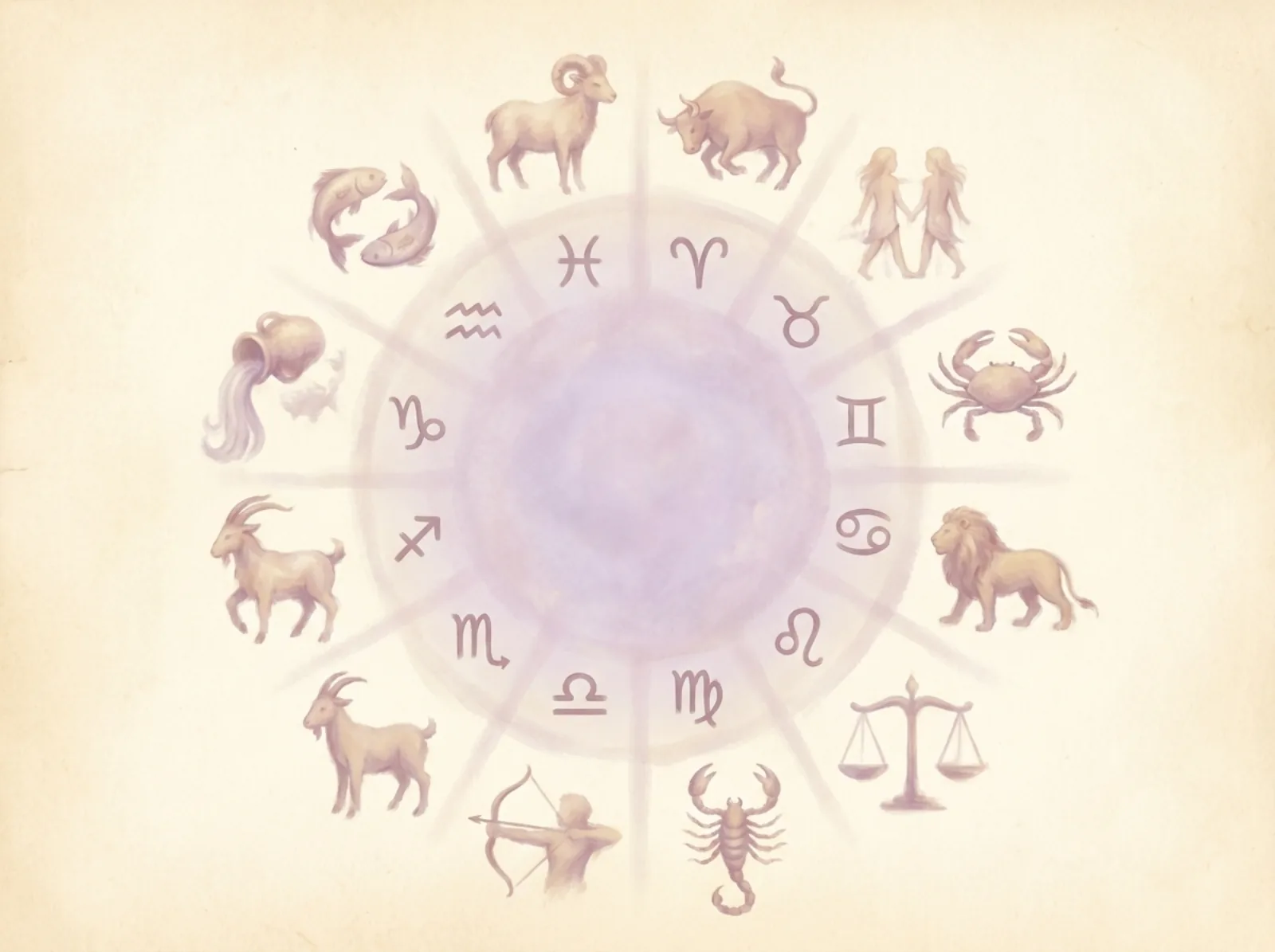
What Your Moon Sign Actually Represents
In Western astrology, your Sun sign is the headline — the identity you perform for the world. Your Moon sign is the quieter story underneath. It's the part of you that reacts before you have time to think, the emotional template you were born with, the way you were parented and the way you now parent yourself. Part of our tarot library.
I like to think of the Moon as the room you retreat to when the public day ends. Some charts have a Moon in a tidy, controlled room (Virgo, Capricorn). Others have a Moon in a wide, dreamy ocean (Pisces, Cancer). The Leo Moon lives in a sunlit room with a stage in the middle. There's a mirror on one wall, a velvet chair, and a fireplace that never goes out.
Astrologers often describe the Moon as governing three overlapping things:
What the Moon rules in your chart
- Your inner child. How you first learned to feel loved — or not loved. The imprint from your earliest caregivers.
- Your emotional defaults. How you react under stress, when tired, when half-asleep, when you don't have time to perform.
- Your attachment style. What makes you feel safe in close relationships, and what makes you pull away or cling.
A Leo Moon isn't the same as being a Leo. Plenty of Capricorns and Pisces walk around with Leo Moons, and the inner heat shapes them in ways their outer presentation doesn't always show. The Moon is also what tends to get stirred up in long-term relationships, after the honeymoon manners wear off and you're just two humans sharing a kitchen. See our best AI astrology app guide.
If you want to find your Moon sign, you'll need your birth date, time (to the hour, ideally) and city. Any decent chart calculator — CafeAstrology, astro.com, or Chani Nicholas's site — will give it to you free. The time matters because the Moon moves roughly 13 degrees a day, which can shift it into a different sign between 2 a.m. and midday.
The Leo Moon Emotional Profile
Here's the thing I always want new Leo Moons to understand: your emotional nature is not shallow. The internet has done you dirty on this one. Leo Moons get caricatured as attention-hungry, dramatic, performative. In reality, the Leo Moon has one of the warmest, most generous emotional climates in the zodiac — but it's a climate that needs sunlight to function.
The Moon in Leo sits in the sign ruled by the Sun. That matters more than it sounds. It means the Leo Moon processes emotion the way the Sun does — openly, warmly, with heat and visibility. Where a Scorpio Moon turns feeling inward and metabolizes it in private, a Leo Moon metabolizes feeling by being witnessed. Not applauded. Witnessed.
What a Leo Moon feels like from the inside
- Big-hearted and loyal. When a Leo Moon loves you, you feel it. There's no ambiguity, no mixed signal, no slow-walk affection. You are in.
- Deeply proud. Leo Moons have a quiet (or not so quiet) sense of inner dignity. Humiliation lands harder here than almost anywhere else in the zodiac.
- Creative and expressive. Making things, performing, decorating, hosting, writing, dressing well — these aren't vanity for a Leo Moon, they're emotional regulation.
- Warm but boundaried. The Leo Moon runs hot, but they don't give their inner circle to just anyone. The warmth is public; the trust is private.
I had a client once, a Leo Moon with a Virgo Sun, who described herself as 'a golden retriever in a librarian's cardigan.' That's about right. The outside can look understated. The inside is sun-drenched.
The other thing worth naming: Leo Moons have a strong relationship to joy. Not toxic positivity, not forced cheer — real joy, the kind that's a form of resistance when life is hard. If you're a Leo Moon who's forgotten how to play, something is off at a cellular level. Reconnecting with play, performance, art, or any kind of celebratory ritual is usually the fastest route back to yourself.
What a Leo Moon Needs to Feel Safe
Every Moon sign has a short list of non-negotiables, and ignoring them is how you end up anxious, resentful, or inexplicably exhausted. For Leo Moons, the list is specific and sometimes a little uncomfortable to say out loud.
The first thing a Leo Moon needs is to be seen as an individual, not as a role. 'My wife,' 'my mom,' 'the person who always handles the group chat' — those labels, even loving ones, start to suffocate a Leo Moon if there's no space left for who they are on their own. This is why so many Leo Moons quietly fall apart in family systems that treat them as the dependable one. The dependability is real, but it's not the whole person.
Second, Leo Moons need appreciation that's specific, not generic. 'Thanks, you're the best' lands flat. 'I noticed you called my mom on Sunday and I know you don't love that — thank you' lands like water in a desert. Vague praise feels like being managed. Specific praise feels like being known.
The daily non-negotiables
- Visible warmth from the people they love. Not performed warmth — real, embodied, eye-contact warmth.
- Creative outlet. Something that is theirs, that they make, that doesn't have to be productive or monetizable.
- Grooming and self-presentation that feels like them. Leo Moons who neglect how they feel in their own skin tend to spiral quickly.
- Enough autonomy to be the star of their own life. Even if 'the star' just means picking the restaurant.
And finally — I say this gently — Leo Moons need to feel they are the primary emotional person to at least one other human. Not the only person, but a primary one. If a Leo Moon has given years of warmth to a partner who's emotionally logged in to their phone, or to a parent who treats them like a sibling to the 'favorite' child, something quiet and important inside the Leo Moon will go cold. Rebuilding that warmth takes real work.
Attachment Style and Relationship Patterns
Attachment theory and astrology aren't the same framework, but they do rhyme. In my experience working with charts, Leo Moons tend toward a secure-leaning anxious attachment when they're well, and a bright, performative anxious attachment when they're not.
Here's what I mean. A healthy Leo Moon in a safe relationship is one of the warmest, most consistently affectionate partners you can have. They initiate, they remember, they plan the surprise, they show up for your friends. They are physically affectionate without being clingy. They are proud of you in public. They treat your win as their win.
But a Leo Moon who's been emotionally underfed — by a current partner, a past partner, or a parent — will start to lean into the performance of being lovable rather than the experience of being loved. Posting more. Dressing up for the person who isn't paying attention. Over-giving. Making grand gestures and then quietly feeling resentful that nobody noticed.
Patterns I see in Leo Moon relationships
- Chooses partners who need 'fixing' early in life. There's a savior reflex because being needed feels like being loved. Learning the difference is lifelong work.
- Stays loyal past the sell-by date. The Leo Moon pride that makes them so generous also makes them hate admitting a relationship didn't work.
- Grand gestures as communication. When words feel risky, a Leo Moon will often show instead of tell. This is beautiful and also confusing for partners who need the words.
- Needs reciprocal pursuit. A Leo Moon who always has to initiate affection will eventually freeze over, usually without warning.
The healthiest relationship move I see Leo Moons make is learning to ask directly for appreciation instead of performing in the hope of earning it. 'I need you to tell me specifically what you love about me' is a terrifying sentence for a Leo Moon and a transformative one. Once they can say it, the whole emotional economy of their relationships shifts.
If you're doing this work on your own, journaling about where you perform affection vs. where you ask for it is one of the single most useful things a Leo Moon can do. The Raka app's reflective prompts touch on this directly, but a notebook and a quiet evening work just as well.
Leo Moon in Friendships and Family
The Leo Moon is a loyalty-first social animal. Once you're in, you're in — often for life. I know Leo Moons who still send birthday cards to third-grade friends and show up for an ex's mother's funeral because 'she was good to me, that matters.' The warmth is real. The memory for who was kind is also real.
In friendships, Leo Moons tend to play one of two roles. Either they are the host — the one with the apartment people gather in, the one who plans the birthday, the one who introduces people — or they are the deeply loyal second, the one standing right next to the host, making sure nobody is left alone, remembering everybody's name.
What hurts a Leo Moon friendship most isn't a big fight. It's being quietly deprioritized. A friend who flakes with a vague 'life is busy' is wounding in a specific way a lot of other Moon signs don't fully understand. The Leo Moon isn't being needy — they're reading the signal as 'I don't matter to you,' which cuts to the inner-child layer underneath.
Leo Moon in the family of origin
- Often the 'shining' child. Leo Moons were frequently cast early as the funny one, the creative one, the one who performed for grandparents. This can be lovely and it can also become a cage.
- Can struggle with siblings who get more airtime. If a sibling was ill, difficult, or more academically celebrated, a Leo Moon can carry a quiet, lifelong feeling of being 'the easy one who didn't need as much.'
- Protective of younger siblings and family members. The warmth translates directly into fierce defense. Don't mess with a Leo Moon's little brother.
- Takes parental coldness personally. A withholding parent is particularly painful to a Leo Moon child, who reads lack of visible warmth as evidence that they're not lovable.
As adults, a lot of Leo Moons do serious work around the family-performer role. The question I ask them is: who are you when you're not making anyone feel better? That question tends to open a door most of them have never opened before.
Stress Response and Emotional Regulation
Here's where the Leo Moon surprises people. Under acute stress, Leo Moons are often remarkably composed. Something in the fixed-sign nature holds them together in a crisis. They are the person who stays calm when the food poisoning hits at the wedding. They are the one who drives the friend to the ER. In the moment, they rise.
The crack shows up later, in private, when the stress has become chronic rather than acute. A chronically stressed Leo Moon tends toward one or more of these:
- Over-giving to the point of exhaustion, then crashing with resentment they feel guilty for having.
- Performative 'fine-ness,' posting bright things, dressing up, making jokes, while something quiet inside them is depleting.
- Flashes of pride-anger — sudden, hot reactions to being slighted or dismissed, which often surprise them later.
- Physical signs in the heart and spine area — tension, posture issues, chest tightness. Astrologically, Leo governs the heart and upper back, and many bodyworkers see this as more than coincidence.
What actually regulates a Leo Moon
- Being physically witnessed by someone warm. A long hug, a dinner where someone really looks at you, a phone call with a friend who doesn't try to fix you.
- Making something. Cooking, writing, painting, decorating a space, dressing up for nobody — creative output as medicine, not output.
- Sunlight and movement. I'm not being poetic. Leo Moons wilt in dim light and sedentary days. A 20-minute morning walk changes their nervous system in a way they underestimate.
- Celebration rituals. Marking the small wins. The promotion, the finished project, the Tuesday that didn't suck. Leo Moons who don't celebrate anything become slowly disconnected from their own life.
What doesn't work well: pretending nothing's wrong, white-knuckling through, or trying to 'logic' their way out of a feeling. Leo Moons feel through the body and the heart, not primarily through analysis. A journaling practice that invites them to name what they want to be seen for this week is often more useful than one that asks them to 'process' an emotion.
Celebrities Reported to Have a Leo Moon
A quick note before we start: Moon placements depend on exact birth time, so the examples below are drawn from public birth-chart databases (astro.com, Astrotheme) and may be revised as new birth data surfaces. Treat them as examples of a type, not as gospel.
Several figures commonly listed in public natal-chart databases as having a Leo Moon include:
- Paul McCartney — the warmth, the showmanship, the lifelong public affection toward collaborators and family, and the ability to keep writing from a place of joy well past the age most people have gone cynical. Classic Leo Moon generativity.
- Charlize Theron — a Leo Moon pattern of fierce privacy around personal matters paired with full public presence when working. The protective warmth around her kids, the loyalty to long-time collaborators.
- Patrick Swayze — the Leo Moon's romantic, big-hearted gallantry, the physicality of expression (dance was his first love), the famously loyal 34-year marriage to Lisa Niemi.
- Mila Kunis — reported Leo Moon; warm, grounded in long friendships (including Ashton Kutcher from teenage years), fiercely protective of her Ukrainian family and heritage.
- Jennifer Lopez — some chart databases list a Leo Moon for her, and the archetype fits: generational work ethic, visible devotion to family, a career built on being seen.
What the pattern tells us
What these figures share, if the Leo Moon reading is correct, isn't vanity. It's a long-running capacity for warmth, loyalty, and visible emotional investment in people and craft. Leo Moons tend to build careers and relationships that last — not because they're calculating, but because being consistently warm over decades is a Leo Moon superpower.
If you have your own chart and your Moon is in Leo, resist the urge to compare yourself to famous charts. The archetype is the same; the life is yours.
Leo Moon Compatibility: Best Moon-Sign Matches
Astrological compatibility is more complicated than magazine columns suggest, and anyone who tells you a Leo Moon must partner with a certain sign is selling something. That said, Moon-sign compatibility is a real factor in emotional ease — and ignoring it is how two people with great Sun-sign chemistry end up in the kitchen wondering why they can't talk about feelings.
Here's what I've seen, in my own practice and in the broader astrology literature.
Moon signs that generally click with Leo Moons
- Aries Moon. Two fire Moons. Both read affection as action. Both need visible warmth. Fights can be loud but they tend to be short, and both parties recover quickly.
- Sagittarius Moon. The third fire Moon. A Sagittarius Moon's optimism and freedom-love pair beautifully with a Leo Moon's warmth — if the Sag Moon can learn to say 'I love you' in small daily ways, not just big declarations.
- Libra Moon. Air feeds fire. Libra's instinct for partnership and aesthetic beauty gives the Leo Moon the mirroring they crave, and the Libra Moon loves being adored.
- Gemini Moon. Playful, verbal, curious. A Gemini Moon who's willing to be present (not just witty) can be a wonderful match for a Leo Moon who needs words and attention.
Moon pairings that need more work
- Scorpio Moon. Both fixed, both proud, both intense. When it works, it's unshakeable. When it doesn't, it's a stalemate. Needs excellent communication and real respect.
- Aquarius Moon. The opposite sign. Aquarius Moon tends to intellectualize feelings; Leo Moon needs them embodied. Opposites can be magnetic, but the emotional languages are genuinely different.
- Capricorn Moon. Capricorn's reserve can read as coldness to a Leo Moon, and the Leo Moon's visible warmth can read as 'too much' to a Capricorn Moon. Workable with awareness.
- Virgo Moon. Virgo's instinct to critique can wound Leo Moon pride badly, even when kindly meant. Needs explicit agreements around how feedback is given.
None of this is destiny. I've seen Leo Moon / Capricorn Moon marriages that work for forty years because both people did the work to understand each other. Compatibility is a starting point for reflection, not a verdict.
The Leo Moon Shadow Side
Every Moon has a shadow, and the Leo Moon shadow is one of the least honestly discussed in popular astrology because it looks 'nicer' than, say, a Scorpio Moon shadow. It isn't.
The core wound of a Leo Moon is almost always some version of: I was only lovable when I was performing / shining / useful. This can come from an overt wound (a parent who only praised academic or athletic wins) or a quieter one (a parent who was simply emotionally absent, so the child had to perform to get warmth in the room). Either way, the Leo Moon adult often carries a lifelong fear that if they stop being impressive, people will stop staying.
What this looks like day-to-day
- Over-reaction to being overlooked. A missed birthday, a credit given to the wrong person, a photo they weren't tagged in — the hurt lands disproportionately because it hits the 'I don't matter' wound.
- Pride-driven avoidance. Leo Moons can go silent for weeks rather than admit they were hurt, needed something, or made a mistake. The dignity is real; it's also sometimes a wall.
- Difficulty receiving. Leo Moons love to give. Being on the receiving end — being nursed through an illness, being surprised, being paid for — can feel oddly uncomfortable until they've done the inner work.
- Performed emotion. At the extreme end, a Leo Moon who hasn't done inner work can start to confuse the performance of a feeling with the feeling itself. 'I should be sad' becomes a show of sadness that doesn't actually get processed.
- Jealousy that masquerades as other things. Leo Moons don't love admitting envy. It often comes out sideways — as criticism of the person they envy, or as a sudden withdrawal from them.
The healing arc
The healing work for a Leo Moon is learning that they are loved when they are ordinary. Not performing, not shining, not even particularly interesting. Just existing. The partner, friend, or parent who can convey that message consistently gives the Leo Moon the exact medicine their inner child never got — and the Leo Moon who can give themselves that message, through steady self-regard, becomes one of the warmest, most unshakeable adults in the room.
Journaling Prompts for Leo Moon Self-Work
I'm a believer in prompt-based journaling for Moon work because the Moon is pre-verbal — it operates below the level of your usual thinking. A good prompt bypasses the manager-brain and gets you to the honest material.
These are the prompts I return to most often with Leo Moon clients. Try one a day, or sit with one for a week. There's no bonus for finishing fast.
Prompts for understanding your core needs
- Who in my life sees me as a person, not a role? When was the last time I let them really see me?
- What's the specific appreciation I wish someone would say to me out loud? Can I say it to myself first?
- When did I learn that being lovable required performance? What age was I? What did I learn to perform?
Prompts for working with the shadow
- Where in my life am I performing warmth instead of feeling it? What would it cost me to stop performing in that place?
- What's a time I was overlooked recently? What did my inner child make it mean? What's a more adult reading of the same event?
- Who am I jealous of right now? What does that jealousy tell me about an unmet desire of my own?
- When I imagine being loved in a totally ordinary moment — tired, un-styled, not interesting — what comes up?
Prompts for building emotional safety
- What's one small daily ritual that would help me feel genuinely seen by myself? Not Instagrammable — just real.
- Who in my life has earned my full trust? What have they done to earn it? What do I want to tell them?
- What's a creative project that's just for me, that nobody has to applaud? When will I start it?
If you want structure, the Raka app has Moon-aware prompts that rotate with the lunar cycle, which is useful if you're the kind of person who likes a nudge. But a notebook and a quiet 15 minutes before bed will take you most of the way. The point isn't the tool. The point is giving the Leo Moon in you some real company for the first time.
Frequently asked questions
What is a Leo Moon in simple terms?
Your Moon sign is your emotional operating system — the part of you that reacts before you think, the way you first learned to feel loved, your attachment template. A Leo Moon means that operating system runs on warmth, visibility, pride, and loyalty. You feel most safe when you're genuinely seen by people who matter to you, you take relationships personally in the best and worst ways, and you process difficult feelings through creative expression and being witnessed, not through isolation or analysis.
Is a Leo Moon rare?
No Moon sign is especially rare — the Moon spends about two and a half days in each sign, so roughly one in twelve people has any given Moon placement, including Leo. What's less common is a prominent Leo Moon that's also angular (close to a chart angle), paired with a fiery Sun, or placed in the fifth house. Those placements can intensify the archetype considerably. For most people, Leo Moon is one meaningful layer of a more complicated chart, not a defining fate.
What is Leo Moon's best match?
Astrologically, Leo Moons often pair most easily with other fire Moons (Aries, Sagittarius) and with air Moons that enjoy expressive partnership (Libra, Gemini). Those pairings tend to share emotional languages: warmth, verbal affection, visible pursuit, and a love of being adored. That said, the 'best match' in real life is more about shared values, respect, and whether both people are willing to do their own inner work. I've seen Leo Moon partnerships thrive with every other Moon sign when both partners understand what the Leo Moon actually needs.
Are Leo Moons dramatic or toxic?
No. Leo Moons get a reputation for drama because the warm, expressive, visible way they feel things is louder than, say, a Capricorn Moon's. Loud is not the same as toxic. A healthy Leo Moon is one of the most generous, loyal, celebratory people you can know. An unhealed Leo Moon can tip into performance, pride-avoidance, or over-reaction when overlooked — but that's a wound in need of care, not a personality defect. Dismissing Leo Moons as 'dramatic' usually says more about the dismisser than the Leo Moon.
Can my Leo Moon change over time?
Your Moon sign at birth doesn't change — it's a fixed point in your natal chart. What changes is your relationship with it. A Leo Moon at 22 who's never been genuinely seen can look very different from a Leo Moon at 45 who's done the inner work, built reciprocal relationships, and found consistent creative outlets. The archetype stays. The expression matures. That's actually true of every Moon sign — the chart is the blueprint, not the finished house.
What does Leo Moon anxiety sound like?
A Leo Moon's anxiety usually sounds like: Am I being overlooked? Am I being replaced? Did I say the wrong thing? It's relational anxiety, tied to being seen or not seen. The regulators that work are embodied — walks in sunlight, real conversations with warm people, creative expression, celebration rituals. What tends not to help: pure analysis, white-knuckling, or performing wellness online. If anxiety is persistent or interfering with your life, please talk to a licensed clinician — astrology is a lens for reflection, not a substitute for mental health care.
How is a Leo Moon different from a Leo Sun?
Your Leo Sun is your identity, your conscious self, the part of you that chooses how to show up in the world. A Leo Moon is your emotional interior — how you feel safe, how you were loved as a child, how you react before you think. A Leo Sun might love attention consciously; a Leo Moon needs warmth and recognition in a quieter, more private, inner-child way. You can also have both, which tends to produce an unmissable person. Or you can have Leo Moon with a very different Sun, and the warmth lives mostly behind closed doors.