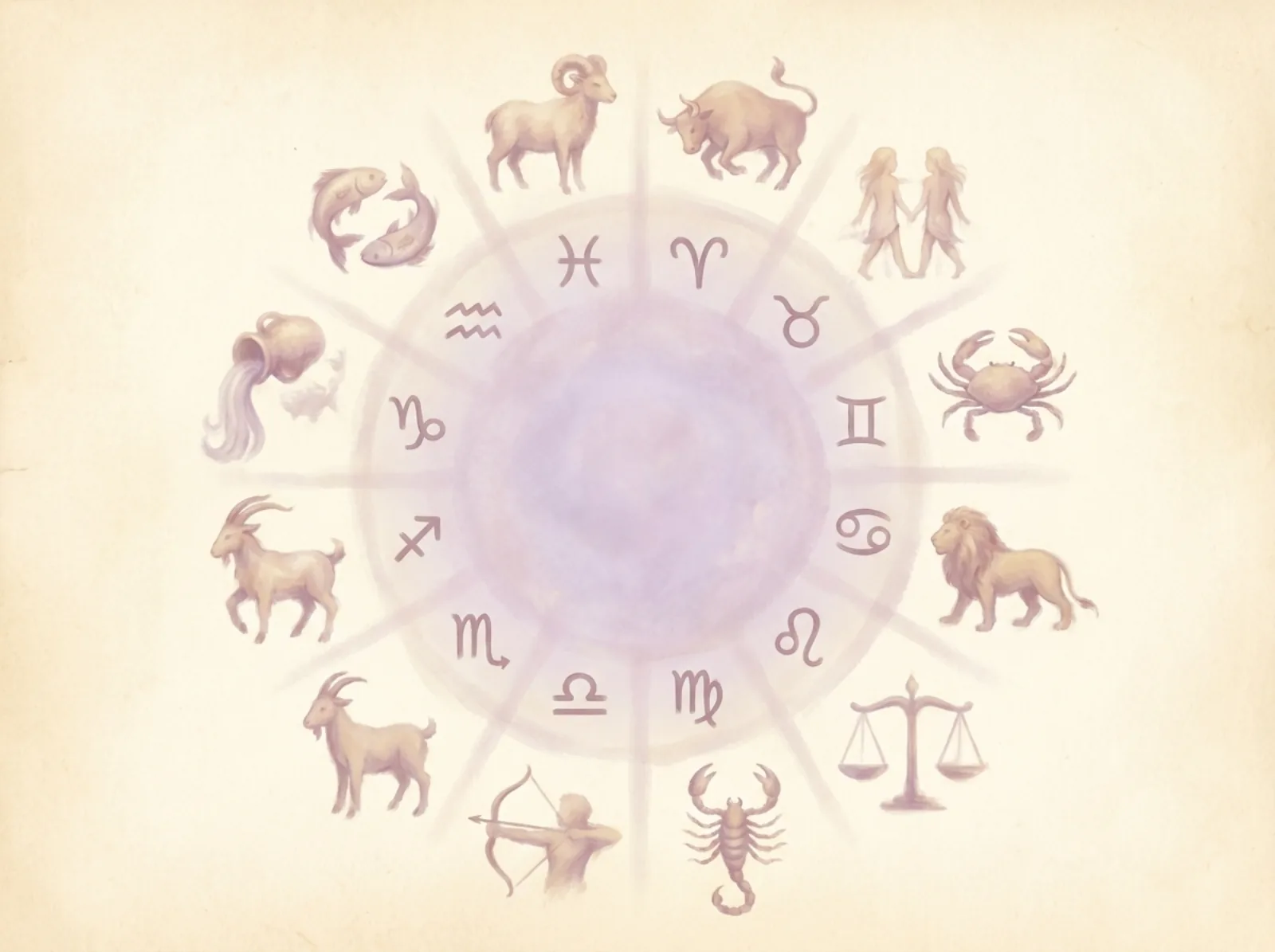
What Your Moon Sign Actually Means
Your Sun sign is your identity signal — the version of you that answers "so what do you do?" Your Moon sign is something else entirely. It's the inner life. The soft-animal self. The way you cried at seven and the way you still cry, if you let yourself. In traditional Western astrology, the Moon rules emotion, mood, instinct, and what classical astrologers used to call the "sensitive soul" — the part of you that responds to the world before your conscious mind has filed a report. Part of our astrology guide hub.
Practically, your Moon sign shapes:
- What makes you feel safe and how you self-soothe when nobody's watching
- How you bond with caregivers, partners, and close friends
- Your early emotional patterns — the templates set in childhood
- Your attachment style and how you regulate inside close relationships
- How you feel at rest, in private, when the day is done
Why the Moon Can Feel More Honest Than the Sun
If your Sun and Moon live in different elements — say you're a Capricorn Sun with a Gemini Moon — you may spend years feeling like one person on paper and a different person at home. The Sun is the role; the Moon is the room you walk into when the role ends. For a lot of people, the Moon is the sign that explains why they do the "irrational" thing: the sudden text, the retreat, the overthinking spiral, the need to narrate the whole day to someone before they can sleep.
None of this is destiny. Your Moon sign isn't a sentence you have to serve — it's a tendency, a native language, a weather pattern that recurs. Knowing yours is useful because it stops you from pathologizing a wiring quirk. It lets you say, "oh, that's my Gemini Moon," and then meet the pattern with a little more kindness and a lot more skill. See our best AI tarot app guide.
The Core Gemini Moon Emotional Profile
Gemini is a mutable air sign ruled by Mercury — the planet of language, exchange, and the restless, hungry mind. When the Moon lives there, your emotional life takes on three distinctive flavors: it's verbal, it's fast, and it's fundamentally social.
Verbal first. A Gemini Moon processes feelings by talking, texting, writing, posting, or voice-noting. The thought and the feeling arrive together, often indistinguishably — which can trick you into believing you've "dealt with" an emotion because you've described it eloquently. (You haven't. We'll get to that.) Journaling isn't a nice-to-have for this placement; it's a nervous-system intervention. Many of my Gemini Moon friends only know how they actually feel after they've written it down and read it back a day later.
Fast second. The Moon in Gemini has a short emotional dwell time. You can be devastated at breakfast, intrigued by a new idea at lunch, and genuinely laughing by dinner. People who love you may find this disorienting; they'll ask "but how are you really?" and you'll have four honest, contradictory answers ready. This isn't shallowness. It's a mutable, airy nervous system that cycles through states quickly and metabolizes feeling through conversation.
Social third. Gemini is the sign of the pair, the dialogue, the twin. A Moon here needs a witness. You feel most like yourself when you're mid-sentence with someone who gets the reference. Solo silence, especially the brooding kind, can feel like a punishment to this placement — not because you lack an inner life, but because your inner life is built for exchange.
What Keeps This Moon Up at Night
The Gemini Moon shadow is a specific kind of insomnia: the mind replaying the day's conversations, drafting tomorrow's, auditing an email you sent at 3 p.m. for tone. The feelings are there — they just route through the thinking brain first, which is faster but noisier. Learning to let a feeling land before narrating it is lifelong work for this placement, and it's exactly the work worth doing.
What a Gemini Moon Needs to Feel Safe
Every Moon sign has a security recipe. For a Cancer Moon, it's a familiar kitchen and a soft blanket. For a Capricorn Moon, it's a plan and a weekly rhythm. For a Gemini Moon, it's mental movement plus trusted conversation plus permission to not have a single feeling about something.
In concrete terms, this placement feels safe when:
- There's a book, a podcast, or a new idea in rotation — something to chew on
- At least one person in your life "gets" how you talk and lets you unspool
- Your days contain small novelties: a different coffee shop, a new route, a text thread with someone funny
- You can leave if you want to — physical and emotional exit routes aren't a red flag for this Moon, they're a precondition
- You're allowed to change your mind without being called inconsistent
And this placement feels distinctly unsafe when: the conversation goes one-way for too long, you're told what you're feeling by someone else, there's silence that's meant to punish, or you're asked to commit to one single emotional stance about something complex. Gemini Moons live in the "and also." Being pinned to a single feeling is where they panic.
A Note on Overstimulation
Because this Moon is porous and curious, it's easy to confuse stimulation with regulation. Three group chats, two podcasts in your ears, and a Twitter habit will keep your brain busy, but they won't actually calm your nervous system — they'll just outrun the feeling you were avoiding. Real safety for a Gemini Moon is engaged quiet: a notebook, a long walk with a voice memo, a slow coffee with someone who listens. The ingredients include thought, but at a tempo your body can keep up with. I use the reflection chat in Raka for exactly this when I don't want to burden a friend at midnight — a place to put the words so the body can finally stop drafting.
Attachment Style and Relationship Patterns
Attachment theory isn't astrology, but the two overlap in interesting ways. Gemini Moons tend to show a few recognizable patterns in close relationships — not because the Moon causes them, but because the Gemini wiring interacts with early attachment experiences in predictable ways.
The most common Gemini Moon flavor is mildly avoidant with a huge communicative front. You seem incredibly open — you can describe your inner life in paragraph form on a first date — but a very specific layer of vulnerability stays guarded. Words become a sort of friendly moat: they let you share almost everything while keeping the one thing you don't yet have language for safely out of reach.
You might notice:
- Easy early intimacy via conversation; slower deepening via silence or stillness
- A tendency to intellectualize conflict ("let's unpack what we each meant") before feeling it in the body
- Discomfort with partners who are long-silent, cryptic, or expect you to "just know" how they feel
- Pulling away via distraction rather than confrontation — a new project, a trip, a sudden fascination
- Needing to talk through a feeling before you fully trust it exists
What a Secure Gemini Moon Relationship Looks Like
Secure attachment for this placement doesn't mean becoming someone else. It means pairing your native language with a few new skills: pausing before responding, letting a feeling exist in your body for a minute before you label it, trusting that silence from a partner isn't automatically rejection. The gift of a Gemini Moon in love is a partner who can metabolize things with you — nothing stays unsaid, nothing festers for weeks because somebody didn't want to "make it a thing." Partners who value a Gemini Moon tend to love exactly this quality once they understand it isn't performance; it's how you locate yourself.
If this layer of your chart has been running on autopilot, a few sessions of named self-reflection — a journal, a therapist, a reflective app like Raka — can turn the pattern from fate into choice. You don't lose the wit. You just stop using it as a shield.
Gemini Moon in Friendships and Family
If you've ever been the friend with the group chat strategy, the fact-check reflex, and a different voice note for each of your inner circle at any given time — hi, Gemini Moon. Friendship is where this placement often thrives, because friendship allows the thing romance sometimes doesn't: multiplicity. You can be one version of yourself with the college friend, another with the work friend, another with the childhood friend, and all of them are real.
Common Gemini Moon friendship patterns:
- Wide circle, deep inner ring — many acquaintances, a small handful of true confidants
- You remember specifics: the name of someone's dentist, the podcast they recommended in 2021, their mom's birthday
- You check in asynchronously: links, memes, voice notes — not necessarily long phone calls
- You rotate; a friend who's been quiet for six months is still a friend, not a lapsed project
- You give advice easily and sometimes forget to ask for it in return
Family of Origin
In childhood, Gemini Moons often grew up in verbally busy homes — a lot of talking, a lot of information, sometimes a lot of information and not a lot of emotional attunement. The placement can also show up for only children who built an elaborate inner dialogue, or for middle children who learned to be the family translator. If you were the kid who "handled it" by narrating it — to a sibling, a diary, an imaginary friend — that pattern is probably still live. The adult version is more sophisticated, but the mechanism is the same: translate the feeling into language, make it portable, keep moving.
Healing work for this Moon in a family context often involves slowing down with the people who raised you, resisting the urge to perform the clever grown-up version of yourself, and letting a conversation land without a punchline. It's harder than it sounds. It's also where the real intimacy lives.
Stress Response and Emotional Regulation
Everyone has a go-to under stress. Fire Moons heat up. Water Moons flood. Earth Moons grind. Air Moons — including Gemini — escape upward into the head. When a Gemini Moon is overwhelmed, the pattern is remarkably consistent: the mind speeds up, the body goes slightly offline, and the person starts solving the feeling as if it were a logic puzzle.
Signs your Gemini Moon is dysregulated:
- Twenty open tabs, both metaphorically and literally
- Rapid topic-switching in conversation; nobody can land on one thing
- Nervous verbal fillers — jokes, pivots, "anyway" — right before something tender
- Insomnia caused by replaying conversations
- Suddenly deeply curious about a brand-new hobby, usually at an inconvenient time
- Caffeine as emotional management
What Actually Helps
Because this Moon processes through language, the fastest way back to regulation is often externalising the thought stream in a format that doesn't require another human to be awake:
- Longhand journaling, specifically — not typing. The slower pace forces the body to catch up
- Walking while voice-noting, no destination, no audience
- A single, bounded conversation with one trusted person (not three group chats simultaneously)
- Physical repetition that mildly occupies the mind — swimming, chopping vegetables, folding laundry
- Reading fiction, which gives the Gemini Moon's narrative brain somewhere to live that isn't your own problem
What doesn't help: more input. More podcasts, more scrolling, more drafting of imaginary rebuttals. Gemini Moons under stress often reach for more information when what they actually need is less. The nervous system wants metabolism, not more content to swallow.
Celebrities With a Gemini Moon
Celebrity Moon signs come with a caveat worth stating up front: the Moon changes signs roughly every two and a half days, so Moon-sign claims depend on knowing a person's birth time, which not every public figure has published. Of the names below, Barack Obama's chart has a well-documented, time-rated birth record; the others are commonly cited across astrology databases based on published birth data.
A few recognisable Gemini Moons:
- Barack Obama — reads widely across subjects, speaks in long paragraphs, writes books about his own inner life. The Gemini Moon's native habit of narrating experience is practically a career skill here.
- Dustin Hoffman — famously versatile across roles, with a trademark intellectual approach to acting craft; a classic Gemini Moon curiosity about character and voice.
- Marion Cotillard — multilingual, deeply verbal in interviews, moves between tones and registers with mutable-sign ease.
- Jada Pinkett Smith — built an entire public platform around on-the-record emotional conversations, which is a Gemini Moon's dream format.
What You Notice Across the List
None of these people are "shallow." That's the stereotype Gemini Moons get stuck with and don't deserve. What they share is a linguistic approach to emotion — a willingness to speak publicly about inner life, to narrate, to revise, and to keep narrating. The depth is there; it just lives in the exchange rather than in long silences. If you've ever been told you're "all head, no heart," look at this list and reconsider the premise.
Gemini Moon Compatibility: Best Moon-Sign Matches
Moon-sign compatibility is where I get careful. Any two charts can work if two actual people choose to work them. That said, Moon-to-Moon dynamics are real, and some pairings require less translation than others. Here's how a Gemini Moon tends to meet each Moon-sign family:
Air Moons: Gemini, Libra, Aquarius
Easiest emotional language. Lots of talking, lots of ideas, lots of respect for mental space. Risk: you can both float above the feeling for years. These relationships often need an outside anchor — a shared project, a baby, a therapist — to force the deeper layer.
Fire Moons: Aries, Leo, Sagittarius
Energising. Fire Moons react quickly and openly, which a Gemini Moon finds legible — you can see where you stand. Sagittarius Moon in particular shares Gemini's love of range and travel; Aries Moon brings the warmth and directness Gemini sometimes avoids giving itself.
Water Moons: Cancer, Scorpio, Pisces
The classic "opposites teach each other" setup. Water Moons feel first and name later; Gemini Moons name first and feel later. A Cancer or Pisces Moon partner can teach a Gemini Moon to stay with a feeling instead of describing it. The friction is in tempo: water wants to marinate, air wants to move. Scorpio Moon with Gemini Moon is a famous challenge pairing — not because it can't work, but because it demands that the Gemini Moon stop performing openness and actually be open.
Earth Moons: Taurus, Virgo, Capricorn
Underrated for Gemini Moons. Earth Moons offer the grounding this placement often secretly craves. Virgo Moon shares Mercury's rulership, which creates a surprising amount of emotional fluency between you. Taurus Moon slows a Gemini Moon down in a way that feels irritating for about a week and then feels like coming home. Capricorn Moon partners offer structure that the mutable-air Gemini Moon can lean against without losing their flexibility.
None of this is prediction. It's pattern. The compatibility question is never "do our signs match?" — it's "are we both willing to meet the pattern honestly?"
The Shadow Side of a Gemini Moon
Every placement has a shadow, and the Gemini Moon's is a particular trio: intellectualisation, avoidance by novelty, and the articulate dismissal.
Intellectualisation is the big one. A Gemini Moon can describe exactly why they're sad, trace it to a childhood pattern, cite the attachment theory, and still not have cried. The map replaces the territory. The language gets so fluent that the feeling never gets its turn to arrive.
Avoidance by novelty is subtler. When a feeling threatens to land, a Gemini Moon can conjure a brand-new interest, a different project, a sudden curiosity about a city they've never visited. This isn't frivolousness — it's a defense. Movement feels safer than stillness because stillness is where the un-languaged feeling waits.
The articulate dismissal is the one Gemini Moons use on other people, and it hurts. You can wield words so precisely that a conflict ends not because it's resolved but because the other person can't keep up with your framing. If you're a Gemini Moon reading this and you felt a little seen just now — same.
The Specific Wound
Many Gemini Moons carry a specific early wound: being made to feel that their feelings were "too much" or "too fast" or "too complicated" to be worth sustained attention. The verbal gift became a way to make the inner life manageable for the adults around them — short, witty, legible. The adult cost is a reflex to pre-digest emotion before it reaches another person. The repair work is slow and worth it: you don't have to perform a cleaned-up version of your feelings for people to love you. Some of the most loving relationships in a Gemini Moon's life begin the day they let a feeling arrive messy, unformatted, un-sentence'd.
Working with the shadow doesn't mean rejecting the gift. The quick mind, the wit, the way you can hold five perspectives at once — those stay. What changes is their timing. The articulation becomes a tool, not a shield.
Journaling Prompts for Gemini Moon Self-Work
Journaling is non-negotiable for this placement. Not because you have to produce "insight" — but because your Moon's native language is written, and your nervous system literally regulates faster when the thoughts move from head to hand to page. Below are prompts to sit with over a week or a month. Use longhand if you can. Resist the urge to make them clever.
- Which of today's feelings did I describe before I let myself experience it? Write about the one you most pre-digested.
- When I say "I'm fine," what am I actually not saying? Not for a therapist — for you.
- Who in my life gets a short, witty version of me, and who gets the real one? Why?
- What feeling have I been outrunning with input? (Podcasts, scrolling, group chats, new interests all count as input.)
- Which "I'm just not that bothered" is a cover story?
- If this feeling could speak without any wit, what would it say?
- What's a childhood moment where my feelings were called "too much"? How does that still show up?
- Who in my life stays with me when I'm not performing coherence?
How to Use Them
Pick one prompt per sitting. Set a 15-minute timer. Write without editing. The goal isn't a polished entry — it's giving the feeling a chance to land before your Mercury-ruled mind reformats it. If writing solo feels too lonely, you can do the same work in a reflection chat inside Raka, which treats what you write as a conversation rather than a confession. The point is that the words leave your head and go somewhere they can be seen — by you, mostly. Your Gemini Moon has spent a lifetime translating itself for everyone else. These prompts are translation practice for the hardest audience: yourself, unperformed.
Frequently asked questions
What does it mean to have a Gemini Moon?
A Gemini Moon means the Moon was moving through Gemini at your exact birth time, which shapes your inner emotional life. You process feelings through language — talking, writing, texting, journaling — and you feel safest when there's room for curiosity, exchange, and the chance to change your mind. It's a mutable-air emotional wiring: fast, articulate, social, and more sensitive than it often lets on.
How is a Gemini Moon different from a Gemini Sun?
Your Gemini Sun is your public identity and conscious drive; your Gemini Moon is your private emotional nature. A Gemini Sun shows up in how you present and the kind of life you build. A Gemini Moon shows up in how you self-soothe, bond, and process feeling in private. You can have one without the other — a Scorpio Sun with a Gemini Moon, for instance, looks intense in public and surprisingly verbal at home.
Who is a Gemini Moon most compatible with?
Air Moons (Gemini, Libra, Aquarius) share your emotional language, Fire Moons (especially Sagittarius) match your love of range, and Earth Moons (Taurus, Virgo, Capricorn) offer grounding you often secretly crave. Water Moons are more work but can teach you to stay with a feeling. Honest answer: compatibility is less about matching signs and more about whether both people are willing to meet their patterns on purpose.
What are the challenges of a Gemini Moon?
The common ones are intellectualisation (describing feelings instead of feeling them), avoidance via novelty (new projects when old emotions get heavy), overstimulation disguised as regulation, and using wit as a shield in conflict. The deeper wound is often an early message that your feelings were "too much" or "too fast" to be met, which trained you to pre-digest them before anyone sees.
How can a Gemini Moon soothe anxiety?
Externalise the thought stream in a format that doesn't require another human to be awake: longhand journaling, a walk with a voice memo, a bounded conversation with one trusted person. Resist the urge to add input — more podcasts, more scrolling, more group chats — because your nervous system doesn't need more content to swallow, it needs the content it already has to be metabolised.
Can a Gemini Moon be emotionally deep?
Yes, and it's a stereotype worth retiring. Gemini Moons just route depth through language instead of through long silences. The depth is in the exchange — the specificity, the capacity to hold multiple truths at once, the willingness to narrate interiority on the record. The work is making sure the eloquence doesn't outrun the actual feeling underneath it.