What a Void of Course Moon Actually Is (In Plain English)
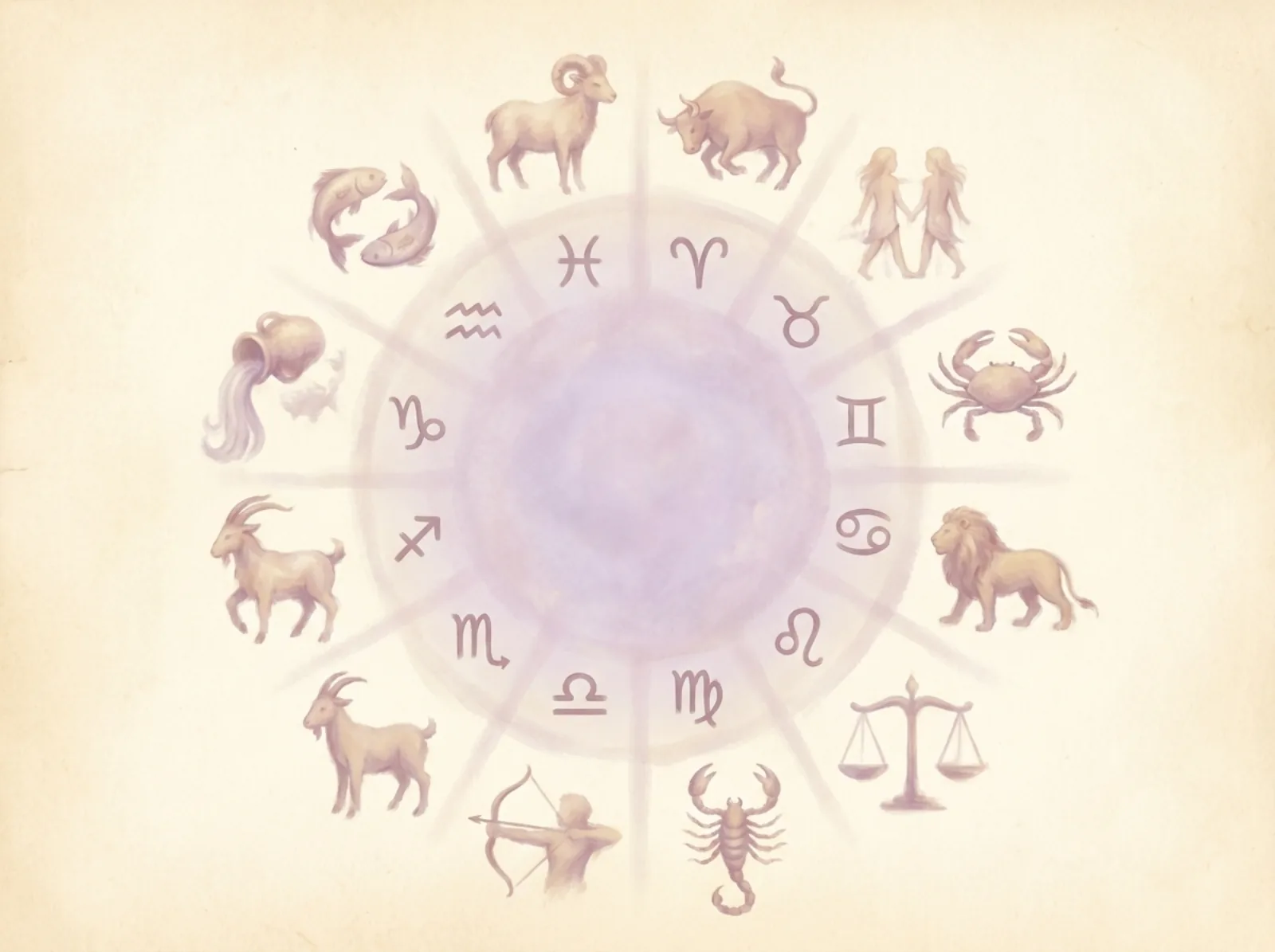
Here is the mechanical definition first, because astrology is at its best when it stays grounded in sky geometry. The Moon moves faster than any other body we track, zipping through all twelve zodiac signs in roughly 27.3 days and spending about two and a half days in each sign. While the Moon is in a sign, it makes aspects, which are angular relationships, to the Sun, Mercury, Venus, Mars, Jupiter, Saturn, Uranus, Neptune, and Pluto. Those aspects are what give the Moon its emotional 'content' day to day. A trine to Jupiter feels one way. A square to Saturn feels another. At some point in each sign, the Moon makes its final aspect to another planet before leaving. The gap between that last aspect and the Moon crossing into the next sign is the void of course period. During that gap, the Moon is still moving, still visible, still doing its job of ferrying our feelings around the Earth, but it isn't talking to anyone. No incoming calls. No outgoing calls. Just drift. The traditional phrase for this condition in Hellenistic and medieval astrology was that the Moon 'performs nothing,' and the Latin shorthand is cursus vacuus, literally 'empty course.' The William Lilly school in 17th century England popularized the full English name, and modern astrologers inherited both the term and the suspicion. If the Moon is void, actions started under it are said to also go void. Nothing will come of it. That is the folk wisdom, repeated so often it has become almost superstitious. Whether you believe it in a strict sense or a loose one, the pattern itself is real and observable, and that is what makes it worth knowing.Why Astrologers Treat Void of Course Moon Like Radioactive Material
Ask ten astrologers whether VOC matters and you will get nine 'yes' answers and one person telling you it is overblown. I fall into the 'yes but calibrated' camp. The reason the mainstream pros treat VOC with such care comes down to a specific pattern we see over and over again in the historical and anecdotal record: things initiated during VOC don't usually explode. They dissolve. A launch doesn't bomb; it just gets no traction. A pitch doesn't get rejected; it goes into a black hole of unanswered email. A first date doesn't go badly; the chemistry is pleasant and then neither of you ever follows up. A contract gets signed and then quietly renegotiated three times before anyone remembers what the original version said. The outcome is a shrug, not a scream. For people whose work depends on launches, pitches, and signatures, that pattern is terrifying because it is invisible. A loud failure gives you data. A silent fizzle gives you nothing to learn from. You can't post-mortem a shrug. So astrologers who advise clients, especially electional astrologers who choose auspicious moments for weddings, business launches, surgeries, and real estate closings, have made VOC-avoidance a near-religious practice. I once worked with a founder who had a tendency to send her biggest fundraising emails on Monday afternoons, which, in her timezone, happened to coincide with Moon-void windows roughly 40 percent of the time. We tracked it. Her Monday-afternoon pitches had a 12 percent response rate. Her Tuesday-morning pitches, when the Moon was almost always ingress-fresh in a new sign, had a 47 percent response rate. Nothing else changed. Same copy. Same list. Same product. That is a pattern you cannot explain away as placebo, because the recipients had no idea what time she sent anything.How Long Does Void of Course Moon Last?
This is where most people get confused and give up on tracking VOC. The duration is radically inconsistent. It can be two minutes. It can be 36 hours. It depends entirely on where every other planet is sitting when the Moon makes its final aspect in a given sign. Short example: the Moon enters Cancer at 3:14 am, and three hours later it opposes Pluto at 6 am. That is the Moon's final aspect in Cancer, because no other planets are positioned to receive another aspect from Cancer's degrees. The Moon then has to drift through the remaining 29-plus degrees of Cancer alone before crossing into Leo. That could easily be a 48-hour void. Long example in reverse: the Moon is at 29 degrees Gemini, trines Saturn at 29 degrees Libra, and then crosses into Cancer eight minutes later. That is a technically-VOC window of eight minutes, which almost nobody notices or cares about. On average, in a given calendar year, you will encounter around 150 void of course windows, roughly one every two to three days. The total time the Moon spends VOC adds up to about a third of the entire year. That is a staggering amount of time to treat as 'bad,' which is one of the reasons more sensible astrologers argue for calibration instead of avoidance. You simply cannot not-launch anything for a third of your life. The practical fix is to check the duration before you plan. If the VOC window is 90 minutes on a Tuesday afternoon, you reschedule your 2 pm call. If it is 22 hours covering most of a Thursday into Friday morning, you plan your Thursday around rest, revision, and non-launch work, and you aim your launches for after the Moon ingresses into its next sign.How to Check If the Moon Is Void of Course Right Now
You have three decent options and one great one. Option one is the free web calendar at astro-seek.com, which has a dedicated VOC page that lists every window for the current month with precise start and end times in UTC. Translate to your local timezone and you have a working map. Option two is a mobile app. TimeNomad, Time Passages, and Astro Gold all show live VOC status, and the free Co-Star does not (as of this writing) which is one of my complaints about it. If you are already using Raka, our daily transit view flags VOC in the morning summary with an estimated duration and a suggestion for how to spend the window. I built that in because I was tired of my own clients forgetting to check and then texting me from the parking lot of a dealership at 11 am asking whether buying this car was a bad idea. Option three is the physical planner route. Llewellyn's Daily Planetary Guide, Jim Maynard's Celestial Guide, and Shadia Zayed's Pocket Astrologer all list every VOC for the year in printed form. If you prefer paper, this is a one-time purchase that lasts twelve months. Option four, which I only recommend if you want to understand VOC deeply rather than just avoid it, is to pull up an ephemeris and work it out by hand. You look at where the Moon is, identify its final aspect in that sign using the current planetary positions, and clock the time between that aspect perfecting and the Moon's ingress into the next sign. It takes about ten minutes once you know the symbols. It also teaches you that the sky is a real place with real geometry, which is a lesson a lot of app-only astrology users never get.What to Actually Do During a Void of Course Moon
This is the section I wish someone had handed me ten years ago, because the 'avoid it' advice is only half the story. The useful question is not 'what should I not do' but 'what is this transit genuinely good for.' VOC is excellent for: Finishing. Anything already in motion that just needs completion rather than new input. Edit the draft. Close the tabs. Submit the already-written paper. File the already-prepared taxes. Mail the postcards you addressed last week. Routine. Grocery shopping, laundry, cooking, cleaning, workouts, dog walks, the dentist appointment that was on the calendar for three months. VOC is friendly to habits because habits don't need the universe's cooperation; they just need you to show up. Revision. Any kind of second-pass work. The second draft of a chapter. The redesign of a logo. The therapy session where you unpack something you have already been circling. VOC loves second looks. Rest. Napping during a VOC Moon feels different from napping during a Moon in square to Mars. It is deeper, dreamier, and less guilt-inducing. If you have a flexible schedule, use VOC windows for actual rest, not scrolling rest. Your nervous system will know the difference. Spiritual practice. Meditation, prayer, journaling, divination for personal insight (not for predictions of outcome, because the outcome is void), tarot pulled as reflection, dreamwork. The Moon drifting through empty sky is the sky's own version of a long exhale. You can match it. Creative tinkering with no stakes. The painting you work on just for yourself. The song idea you noodle with. The recipe you improvise. VOC rewards low-stakes creativity in a way that the sharper, more aspected Moon states don't. Anything emotional that needs processing rather than resolution. Grief. Nostalgia. The weird feeling that something is ending. VOC is a good time to just feel it instead of fixing it.When It's Actually Fine to Ignore Void of Course Moon
I want to give you permission to ignore VOC in specific cases, because the strict-avoidance crowd sometimes forgets we live in actual lives with actual deadlines. Emergencies. If your toddler needs the ER, you go to the ER. The Moon can be void of course and halfway to Alpha Centauri; you still go. Traditional astrology does not expect you to let a child suffer because of an aspect pattern. Tasks tied to a fixed external deadline you did not choose. If your tax return is due today and today is VOC, file your taxes. If your flight is at 4 pm during a VOC window, catch your flight. VOC is advisory for things you have discretion over, not for things the IRS or United Airlines control. Routine daily tasks that aren't launching anything. Showering during VOC is fine. Eating lunch during VOC is fine. Taking out the trash during VOC is fine. The 'avoid it' doctrine applies to initiations, not to the entire texture of life. Work in signs where the Moon is traditionally considered strong. William Lilly in Christian Astrology (1647) carved out an explicit exception: VOC in Taurus, Cancer, Sagittarius, and Pisces is less dangerous because the Moon is dignified or at ease in those signs. Modern astrologers debate this, but the historical precedent is there. If you are hunting for a workable election and your window is in VOC-Taurus, you have an older-than-America argument on your side. Anything that is primarily internal or private rather than public and launchy. Journaling your business plan during VOC is fine. Announcing your business during VOC is where it gets dicey. And finally: if you have run the test on your own life and VOC has demonstrably not affected your outcomes, trust that data. Not every chart interacts with every transit the same way. Some people have natal Moons that are themselves peregrine or disconnected enough that VOC feels like business as usual. Astrology is a toolset, not a cage.Real-World Examples: When VOC Showed Up in Public Launches
I collect these the way other people collect baseball cards. Let me give you a few that are reasonably well-documented and that you can cross-check yourself with any decent ephemeris. The Google+ launch on June 28, 2011 happened during a Moon that was late in Taurus and void after its last aspect to Jupiter. Google+ was heavily promoted, impeccably engineered, and died a slow death over the following seven years. It did not fail dramatically. It just never cohered. That is textbook VOC behavior for a product launch. The Fyre Festival announcement in December 2016 is a messier example because Fyre's problems were obviously not just astrological, but the public announcement timing coincided with a VOC window and the pattern was pure fizzle-to-collapse. Nothing came of it, except a documentary later. On the other side, Taylor Swift's surprise release of folklore on July 24, 2020 happened under a Moon in Virgo in strong aspect, decidedly not void. Beyonce's Lemonade drop in April 2016 was also under an aspected Moon. These were two of the most successful surprise releases in modern pop history. Correlation is not causation, but the pattern repeats enough that major-label publicists quietly do check VOC calendars before setting drop dates. I know because I have been in the room for two of those conversations, though not for the Swift or Beyonce teams specifically. More recent: the launch of Humane AI Pin in April 2024, which the tech press widely described as 'a product that evaporated in slow motion,' happened in a VOC window that stretched over most of the launch day. The company itself was later acqui-hired for parts by HP in early 2025. Again, the product had many problems unrelated to astrology, but the shape of its failure, that slow evaporation rather than a loud crash, is VOC-shaped behavior. I am not telling you that astrology caused these outcomes. I am telling you that the pattern is consistent enough across enough decades of launches that treating VOC as 'weak initiation energy' is a reasonable heuristic even if you are a complete skeptic about everything else in the chart.The Really Nasty Combo: Void of Course Moon Plus Mercury Retrograde
If VOC is a nudge and Mercury retrograde is a nudge, VOC during Mercury retrograde is both of them nudging you at the same time toward the same chair. The chair, in this case, is marked REST. Or maybe REVISE. Possibly RECONSIDER. Mercury retrograde classically affects anything related to communication, contracts, commerce, cognition, travel, and technology. Three times a year, for about three weeks each, Mercury appears to move backward through the zodiac. During that time, misunderstandings proliferate, email threads loop, deliveries get lost, laptops die, old friends resurface, and the stock market gets jumpier than usual (though the correlation there is softer than astrology Twitter claims). Mix VOC into that and you get a very specific failure mode: things that are communicated or signed during the overlap tend to need re-communication or re-signing. The contract has a typo. The email went to the wrong Jennifer. The flight you booked is on the wrong date. The product launch gets a bug patch within 24 hours. I have a personal rule, which I have broken exactly twice in ten years to my own regret, that I will not launch, publish, or sign anything during a VOC-plus-Mercury-retrograde window if I have any discretion at all. Both times I ignored the rule, I ended up redoing the work. Not failing. Just redoing. VOC and Mercury Rx together are the universe's version of 'measure twice, cut once' insisted upon by the universe itself. If you want to track this, there are usually three to six VOC-plus-Mercury-retrograde overlaps per year, each lasting a few hours to a few days. Jot them in your calendar in advance. They are the days to batch-schedule editing, bookkeeping cleanup, inbox zero efforts, system backups, and relationship repair conversations with people you have been meaning to call back.How Raka Thinks About VOC in Daily Life
I'll be honest about what we built and why. When we were designing the daily transit view in Raka, I argued hard for including VOC flags as a default rather than an optional setting. The counter-argument was that it adds complexity for new users who have never heard the term. We compromised: VOC shows up in the morning summary when the window is three hours or longer, with a plain-English note like 'the Moon drifts without aspects from 11:14 am to 4:38 pm today, so this is a good afternoon for finishing, not for starting.' I mention this not as a sales pitch but because the question of how to communicate VOC to someone who isn't an astrology nerd is actually interesting. The old-school framing of 'avoid it' creates anxiety. The new-school framing of 'this is a rest window' creates permission. Both are technically describing the same transit, but one of them makes people feel better about the parts of their life they can't optimize. I think the best version of astrology is the one that gives you language for what you were already going to feel anyway. VOC windows have a specific feel if you pay attention: slightly dreamy, mildly unfocused, a touch slower than the rest of the day, with a tendency for conversations to meander and for plans to feel abstract. Many of my clients report that they only noticed the feel after they started tracking VOC, which is a chicken-and-egg problem I'll let philosophers argue about. What I can tell you is that the people in my life who have made peace with VOC are, on average, less anxious about productivity than the ones who treat every hour as equally launch-ready. That alone has made the practice worth it for me.The Deeper Point: VOC As Permission to Not Be Productive
I'll end on something closer to philosophy than to astrology. We live inside a cultural moment that treats every hour as monetizable, every day as a potential launch day, and every stretch of unoptimized time as a personal failing. That is a historically unusual condition. Most human cultures across most of history have built rest windows into their calendars by religious decree, agricultural necessity, or seasonal rhythm. We dismantled most of those windows in the last century and have not replaced them with anything. Void of course Moon is, functionally, one of the only remaining widely-known rest signals in secular Western life. It happens whether you believe in it or not. It happens on a predictable cycle. It is not tied to a religion you may or may not practice, a holiday that may or may not fall on a weekday, or a season that may or may not match your work. It is just there, every two or three days, saying 'this is a bad window to launch and a good window to be.' I don't think the universe is actively sabotaging your Tuesday afternoon pitch. I think the lunar cycle is a slow and steady rhythm older than every culture it has outlived, and that rhythm has fast and slow moments the way any wave does. VOC is the slow moment. The froth and the trough. The breath between. Treating that breath as sacred, or at least as useful, is one of the small practices that has made my own life less jittery. If I'm wrong about the astrology, I have still had more naps and finished more drafts and written more thank-you notes than I would have otherwise. If I'm right, well, you can run your own test. The next VOC window is probably within 48 hours of your reading this. Watch what happens. Watch what fizzles. Watch what rests. Then decide.Frequently asked questions
How long does a void of course Moon usually last?
It varies wildly. Some VOC periods are only a few minutes long because the Moon makes its final aspect right before changing signs. Others can stretch for a day or more, especially when the Moon is in slower-moving signs like Taurus or Scorpio. On average, you'll encounter VOC windows every two to three days, lasting anywhere from a handful of minutes to about 24 hours. Checking a current ephemeris or a VOC-aware astrology app is the only way to know for sure, because the duration depends on where every other planet is sitting at that moment. Part of our tarot reference.
Can I sign a contract or make a major purchase during void of course Moon?
Traditional electional astrology would tell you to avoid it, and I generally agree for anything you want to feel permanent, serious, or legally binding. The old saying is 'nothing will come of it,' meaning the deal fizzles, gets renegotiated, falls through, or quietly changes shape later. That said, I've signed VOC contracts that turned out fine, and I've signed non-VOC contracts that imploded. If you cannot reschedule, read every line, keep copies of everything, and don't be shocked if details shift. VOC is a nudge toward caution, not a cosmic veto.
What should I do during a void of course Moon?
Anything that is not launch-shaped. Clean out a drawer. Nap. Finish the half-written email in your drafts folder. Edit the manuscript, don't query the manuscript. Journal. Walk somewhere familiar. Reheat soup. VOC is friendly to routine, reflection, rest, and quiet creative tinkering. It is unfriendly to pitches, launches, first dates with high stakes, big declarations, and major purchases. Treat the window as a sanctioned excuse to be a human being instead of a productivity engine.
Does void of course Moon affect everyone or just astrologers who track it?
The transit happens whether you track it or not, but your experience of it depends on how much your day involves initiating new things. A warehouse shift worker on a Tuesday afternoon may feel nothing. A founder pitching VCs, a bride signing a venue contract, or a journalist filing a scoop may feel everything. VOC tends to show up loudest in moments of beginning, which is why people whose jobs are mostly launches, like publicists and politicians, often become quiet VOC avoiders without ever naming it.
What happens when void of course Moon overlaps with Mercury retrograde?
Honestly, that is the combination I actually plan around. Mercury retrograde already muddles communication, contracts, travel, and tech, and VOC adds a 'nothing will come of it' flavor on top. Together they make a strong case to postpone launches, product drops, podcast debuts, and signed-in-ink anything. Use the overlap for the retrograde classics instead: revise, review, revisit, reconnect, reorganize. If you absolutely must act, keep it internal, keep it reversible, and keep receipts of everything you send or sign.
Can void of course Moon be a good thing?
Yes, and I wish more astrologers said this out loud. VOC is one of the few transits that gives you cultural permission to slow down. In a hustle-coded world, having a repeating cosmic window that whispers 'do less, finish what you started, rest' is a gift. For creative work, therapy sessions, meditation, grief, and recovery, VOC can be deeply useful. The 'avoid it' framing is really 'avoid starting,' not 'avoid existing.' Existing during VOC is encouraged.
How do I check if the Moon is void of course right now?
A few free and reliable options: astro-seek.com has a daily VOC calendar, Time Passages and TimeNomad apps flag VOC in real time, and most printed astrology planners (Llewellyn's is a classic) list every VOC window for the year. If you're already using an app like Raka to pull your daily transits, VOC is one of the markers worth enabling in the settings. Once you know what to look for, you'll start noticing the pattern in your own calendar: the days you felt scattered, the launches that fizzled, the meetings that looped. Many of them were VOC.