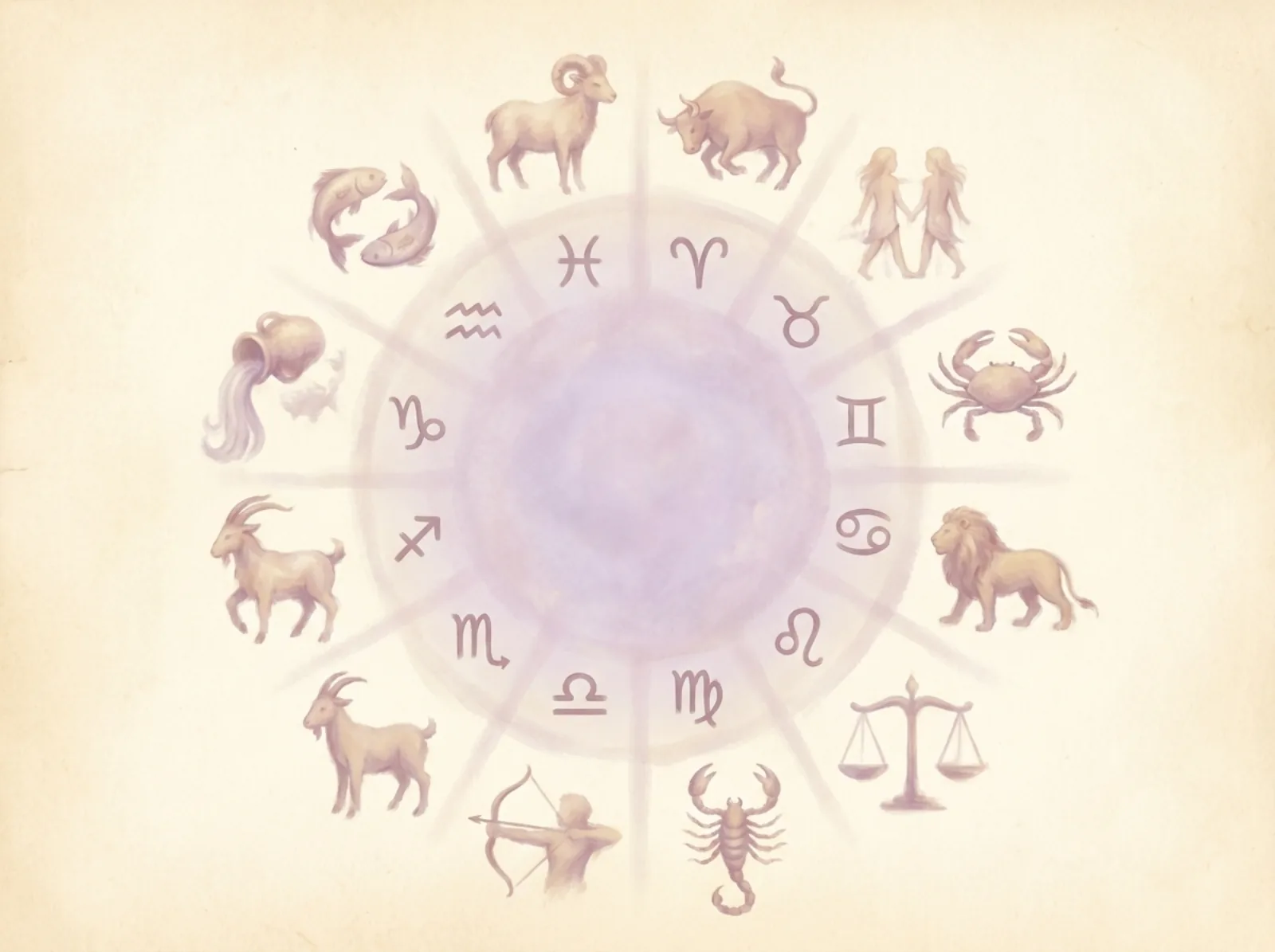
The night I understood the 5th house, I was watching a four-year-old refuse to apologize
A client brought her small son to one of my casual Sunday chart circles in Edinburgh, back when I was still teaching out of a tea shop on Clerk Street. He had just finished tearing a sheet of her natal chart printout in half with the solemn dignity of a monarch declaring war, and when she asked him to say sorry, he looked her square in the eye and said, 'But I made it look better.' He was absolutely right. The torn pieces, scattered on the floor, did look better than the pristine wheel she had been staring at for an hour. That is the 5th house. That is the entire 5th house, in one sentence, from a boy who had never heard the word 'astrology' in his life. Part of our astrology guide hub.
The 5th house is where you create for the pleasure of creation itself, with no permission asked and no apology offered. It is the sector of the natal wheel that governs art you make for yourself, romance before it becomes a relationship, children (biological or metaphorical), hobbies, speculation, and the particular style of play that lets you feel most alive. Howard Sasportas, in 'The Twelve Houses,' called it the house of 'the inner child-artist' — the part of you that still believes delight is a legitimate reason to do something.
I have been reading charts for almost twenty years, and I can tell you that the 5th house is the one clients misunderstand most often, because they come in expecting it to tell them whether they will have kids or meet 'the one.' That is not what it does. It tells you how you flirt, what makes you feel playful, what kind of creative risk thrills you rather than terrifies you, and what kind of audience your soul is quietly performing for. In this article I will walk you through every sign and every major planet in the 5th house, what transits here feel like, what to do if yours is empty, and how to use it as a mirror rather than a crystal ball. See our best AI astrology app guide.
A note on framing before we go deeper: I write from a Western tropical astrology tradition, with occasional references to how Vedic astrologers (where the 5th house is called Putra Bhava) treat the same territory. If you have been typed by a Vedic astrologer in the past, your 5th house sign will likely differ from your Western one. Both systems are internally consistent; neither is wrong. For this piece, assume Western tropical unless I say otherwise.
What the 5th house actually rules (and what it does not)
The 5th house sits in the lower-right quadrant of the chart wheel, directly opposite the 11th house of community. Where the 11th asks 'who are my people?', the 5th asks 'what do I bring to the party?' It is a succedent house, which in traditional terminology means it stabilizes and expresses what the preceding angular house (the 4th, home and roots) has established. You cannot really play until you feel safe, and the 5th house is where that safety gets spent on joy.
The core significations, drawn from Liz Greene, Howard Sasportas, Steven Forrest, and traditional sources going back to Vettius Valens, cluster into five domains. First: creative self-expression — the arts, performance, writing, making. Second: romance in its early, courtship phase — flirting, dating, the chemistry of attraction before the commitments of the 7th house kick in. Third: children, both literal (your biological or adopted kids) and symbolic (anything you parent into existence). Fourth: play, hobbies, sports, and recreation — the things you do that no one is paying you to do. Fifth: speculation and risk — gambling in the broadest sense, including starting a business on a gut feeling, buying a lottery ticket, or betting on an idea no one else sees.
What the 5th house does not rule is often more interesting than what it does. It does not govern committed marriage (that is the 7th house). It does not govern your actual kids' futures (that is their chart, not yours). It does not govern your career unless your career happens to be creative or performative. It does not govern deep spiritual transformation (12th), long-term investments (8th), or the mentoring you receive (9th). I have had clients convinced that a difficult Saturn in their 5th meant they would never have children, and in nearly every case the truth was more pedestrian: Saturn there meant they took creativity, parenting, and romance seriously, and often postponed them until they felt ready.
The 5th house is also where you reveal yourself without meaning to. Steven Forrest, in 'The Inner Sky,' makes the point that we broadcast our 5th house signature in small moments — the kind of joke we make at a dinner party, the hobby we return to when no one is watching, the way we dance when we think the room is empty. If you want to know what your 5th house is up to, pay attention to what you do when you have an unexpected free Saturday and nobody is asking you for anything.
How to find your 5th house in under two minutes
You cannot do serious 5th house work without knowing your exact birth time. The house cusps shift roughly every two hours, and a four-hour-off birth time will put your 5th house in an entirely wrong sign. If you were born in a hospital in the US, UK, Canada, or Australia after about 1950, your birth time is almost certainly on your original birth certificate — not the short-form card, the long-form document. Order it from your state or country of birth if you do not already have it.
Once you have your time, follow these steps. One: go to Astro.com, Astro-Seek, or open the Raka app and start a new natal chart. Two: enter your date of birth, your exact time (down to the minute if you have it), and the city where you were born — not where your mother was from, not where you grew up, the actual hospital city. Three: choose the Placidus house system if you want the mainstream Western default; Whole Sign if you want the traditional system that Hellenistic and Vedic astrologers use. The two systems will often give you different 5th house signs, and both are valid.
Four: once the wheel displays, find the house numbered 5. In most chart drawings it is in the lower right, below the horizon on the left-hand side of the Descendant. Five: read the zodiac sign written at the cusp (the line that opens the house, moving counterclockwise). That is your 5th house sign. Note any planets that fall inside the house — these are the loudest voices in your creative, romantic, and playful life.
If your time of birth is genuinely unknown, you can still read the sign your natal Sun occupies and treat that as a rough proxy for your 5th house themes, because the Sun is the planetary ruler of Leo, which naturally rules the 5th. It is a workaround, not a replacement, and you will miss everything that depends on house cusps (transits, progressions, solar arcs). Chani Nicholas has written persuasively about doing meaningful chart work with incomplete data, but if you can get your time, get it.
The 12 signs on the 5th house cusp, in brief
Aries on the 5th cusp makes creativity fast, physical, and competitive. You start projects on impulse and often abandon them when the thrill fades, but the ones you finish have a raw first-draft energy others cannot replicate. Taurus on the 5th cusp makes creativity sensory, slow, and durable: pottery, bread, textiles, gardens, music that physically resonates. Romance is a long seduction involving good meals and better fabric; your creative output tends to be small in quantity but high in quality.
Gemini on the 5th cusp makes your play verbal, variable, and plural. You flirt by text, you parent by conversation, you have twelve hobbies and will have fourteen by Christmas. Writers, teachers, podcasters, and zine-makers live here. Cancer on the 5th cusp flows creativity through memory, family, food, and ancestral material; you often make art about where you came from, and your romantic life is emotionally intimate from the first date.
Leo on the 5th cusp is the 5th house in its natural condition. Creativity is central to your sense of self; without a creative outlet you dim. You flirt dramatically, parent generously, and need an audience of at least one person who truly sees you. Virgo on the 5th cusp makes creativity craft-based, precise, and improvement-oriented — you make things carefully, edit obsessively, and often undersell their quality. Romance begins with usefulness: you fall for people whose minds work well.
Libra on the 5th cusp is relational and aesthetic — you design, you collaborate, you make work about beauty and partnership, and flirting is an art form you have been practicing since you were twelve. Scorpio on the 5th cusp goes to the dark, the taboo, and the transformative; you cannot make small, polite work, and your art, your love affairs, and your relationship to children all carry weight. Romance tends toward obsession in your twenties and depth in your forties.
Sagittarius on the 5th cusp makes play expansive, foreign, and philosophical. You create to teach, flirt by taking people on adventures, and parent by exposure (museums, mountains, questions). Travel writers and comedy writers often have this placement. Capricorn on the 5th cusp makes creativity structured, ambitious, and late-blooming — you take your art seriously, often postpone having children until materially ready, and whatever you build creatively tends to last. Think of Capricorn Dolly Parton, whose creative empire required decades of patient construction.
Aquarius on the 5th cusp makes creativity weird, communal, and future-facing — you make work slightly ahead of its audience, flirt through intellectual curiosity, and treat children as small people with their own ideas from day one. Pisces on the 5th cusp is dreamlike, musical, and permeable; you channel more than you construct, your romantic life is cinematic and sometimes rose-tinted, and your parenting is deeply empathic. The risk is dissolving into other people's creativity instead of making your own.
A pattern worth noting across all twelve: the element of the 5th cusp sign tells you the medium (fire = performance and risk, earth = craft and body, air = words and concepts, water = emotion and image), while the modality tells you the tempo (cardinal = you initiate projects, fixed = you finish them, mutable = you remix them). If you only remember one framework, remember that one. It will carry you further than any single sign interpretation.
Planets in the 5th house: who is making the noise
Sun in the 5th: creativity, romance, and play are central to your identity rather than hobbies on the side. You feel most yourself when you are making something or being seen for something you made. The risk, as Liz Greene has written in several essays, is that the Sun here can tie self-worth so tightly to performance that any creative silence feels like personal failure. Famous example: Taylor Swift's natal Sun sits in her 5th house, which is almost comically on-the-nose for a songwriter whose creative output and romantic life have been the primary texts of her career.
Moon in the 5th: your emotional security runs through creative expression and (often) through children. On good days you self-soothe by making something; on bad days you may need an audience's reaction to feel okay. Romantic life tends to carry the texture of your relationship with your mother, for better or worse. Mercury in the 5th: your mind plays. You think in jokes, puns, stories, metaphors, and you flirt through words. Teachers, children's book writers, comedians, and copywriters often have this placement.
Venus in the 5th: this is Venus in one of her favorite neighborhoods. Love comes easily, art comes easily, and both come often. The gift is a natural capacity for pleasure; the risk is that pleasure gets confused with meaning, and you accumulate romantic experiences or creative hobbies without ever committing deeply to one. Mars in the 5th: aggressive creative drive, competitive flirting, and a tendency to turn hobbies into contests. Athletes, action-film directors, and intensity-forward artists live here. Sexual chemistry runs hot; the chase is often more exciting than the catch.
Jupiter in the 5th: creative abundance, lucky breaks in romance, and often many children (literal or metaphorical). This placement makes it easier to say yes to opportunities, which is why so many successful creative professionals have Jupiter here or aspecting the 5th. The risk is overconfidence, overspending on hobbies, and treating speculation like a sure thing. Richard Tarnas, in 'Cosmos and Psyche,' has written about Jupiter's role in cultural creative booms, and the same dynamic plays out in individual lives.
Saturn in the 5th: creativity is serious work, romance is approached cautiously, and children (if desired) are often delayed. This is the placement most feared and most misread. The classic fear is 'I will never have kids' or 'I will never make real art.' The truth, in nearly every chart I have read, is that Saturn here produces slow, durable, high-quality creative output and committed, late-chosen love. Steven Forrest calls Saturn 'the ally,' and nowhere is that more true than here.
Uranus, Neptune, Pluto in the 5th: because these planets move slowly, their 5th house positions are generational as much as personal. Uranus brings disruptive, inventive creativity and unconventional romance; Neptune brings artistic sensitivity and romantic idealization that can tip into escapism; Pluto brings compulsive creative drive and transformative, sometimes overwhelming, love affairs. Howard Sasportas treated outer planets in the 5th as initiations rather than ordinary placements — they ask more of you and give more back.
When a planet transits through your 5th house
Transits are the moving pieces of astrology — the current positions of planets as they travel across your natal chart. When a transiting planet enters your 5th house, it activates the themes of creativity, romance, children, and play for the duration of its stay. The duration depends entirely on which planet is visiting.
The fast transits (Moon, Mercury, Venus, Sun, Mars) move through your 5th house in days or weeks and are mostly felt as mood weather. A Moon transit through the 5th gives you one evening of wanting to make or flirt. A Venus transit (about three to four weeks) is a classic window for new creative projects, dating, and buying things that are beautiful but impractical. A Mars transit (about six to eight weeks) brings competitive energy and can sharpen either your art or your temper.
Jupiter in the 5th house (about one year) is the transit most people wait for. It expands creative output, often brings a new romantic chapter, and famously correlates with pregnancies (both planned and otherwise). Chani Nicholas's weekly horoscope archive has detailed notes on recent Jupiter-in-5th transits for different signs; it is worth reading those if you want ground-truth language rather than generic forecast prose.
Saturn in the 5th house (about two and a half years) is the transit people dread and then quietly thank. It asks you to pick one creative practice and commit, one romantic situation and either marry it or leave it, one hobby and go pro at it. Clients I have worked through this transit often describe it as 'the end of casual' — casual art, casual dating, casual parenting all stop working. In exchange, whatever survives the pruning becomes real.
Pluto in the 5th house (anywhere from twelve to twenty years, depending on your natal signs) is a once-in-a-lifetime transit for most people. It rewrites your relationship to desire, pleasure, and creative identity from the ground up. The old creative self dies; a more honest one gets born. Famous people who have been through this transit publicly include many artists whose middle-period work looks nothing like their early work.
What if your 5th house is empty? Don't panic — most houses are
You have ten planets (counting the Sun, Moon, and modern outer planets) distributed across twelve houses. The math alone guarantees that most people have between four and six empty houses in their natal chart. An empty 5th house is not a cosmic verdict against creativity, romance, or children. It is a quieter note, not a missing one.
To read an empty 5th house, you do three things. First, read the sign on the cusp — that is still the color of your creative life, even without planets amplifying it. Second, find the ruling planet of that cusp sign elsewhere in your chart. If your 5th cusp is Taurus, find Venus; if it is Scorpio, find Mars and Pluto. The house that planet occupies tells you where your creative and romantic energy actually gets expressed. Third, look at any aspects to the 5th house cusp from planets elsewhere, which can quietly feed activity into the house without putting planets inside it.
A real example from my practice: a client with an empty 5th house in Capricorn, whose Saturn (the ruler) sat in her 10th house of career. She had convinced herself from a bad previous reading that she was 'not creative.' Her career was running a design studio she had built from nothing over fifteen years. That is not a non-creative life; that is a 5th-house-themed creative life expressed through the 10th house container. The empty 5th was telling her she did not need to play at being an artist — she had already become one.
The one time I would take an empty 5th house seriously as a signal is if the client is actively unhappy about an absence of creativity or play in their life, and the chart shows the ruler of the 5th buried in a difficult placement (12th house with hard aspects, for instance). Even then, the diagnosis is not 'no creativity' but 'creative energy routed through a channel that is hard to access.' That is a therapy question as much as an astrology question.
Famous charts: four 5th houses you probably recognize
Taylor Swift (born December 13, 1989, 5:17 AM, Reading, Pennsylvania) has her natal Sun in Sagittarius in the 5th house. The 5th house ruler, Jupiter, sits in Cancer in her 12th. Her creative work (5th) draws from private emotional material (12th), which is a near-perfect description of her songwriting method. The Sagittarius signature shows up in the sweep of her stage shows and the autobiographical restlessness of each album era.
Frida Kahlo (born July 6, 1907, 8:30 AM, Coyoacán, Mexico) had the Moon in Taurus in her 5th house. Her creative output was deeply embodied (Taurus) and emotionally autobiographical (Moon in the 5th). The physical pain she channeled into painting was 5th house material in its rawest form — the inner child-artist refusing to apologize, even for suffering.
Prince (born June 7, 1958, 6:17 PM, Minneapolis) had Mercury and Venus both in Gemini conjunct in his 5th house. The Mercury-Venus conjunction here reads almost like a job description for a prolific, flirtatious, lyrically dexterous songwriter. He wrote and recorded more music than most artists sketch out in a lifetime, which is textbook Jupiter-trine-5th energy (which he also had).
Carl Jung (born July 26, 1875, 7:32 PM, Kesswil, Switzerland) had Saturn in the 5th house in Aquarius. His creative output — the Red Book, the collected works, the active imagination technique — was slow, structured, and generationally future-facing. He treated the unconscious the way a Saturn-in-5th person treats any creative material: as serious work requiring decades of discipline. His own autobiography, 'Memories, Dreams, Reflections,' was essentially a 5th house document assembled under Saturn's direction.
A note on using celebrity charts: birth times for public figures range from highly reliable (recorded on official documents) to speculative (reconstructed from biography). The times I use above come from AstroDatabank's AA and A ratings, which are the gold standard for astrological research. If you want to pull real examples for your own study, start there rather than relying on random astrology blogs.
What NOT to confuse the 5th house with
The 7th house, not the 5th, rules committed partnership. The 5th gets you to the second date; the 7th gets you to the shared mortgage. If a client comes to me asking whether they will 'find love,' I look at the 7th house first and the 5th second. The 5th tells us about the energy of attraction and courtship; the 7th tells us about the capacity for and style of long-term commitment.
The 10th house, not the 5th, rules career and public reputation. A creative career lives in both houses — the making is 5th, the professional structure is 10th. People with heavy 5th house placements and empty 10th houses often make brilliant art that nobody buys, because they have not built the career infrastructure. People with heavy 10th houses and empty 5ths often have successful careers in creative fields without any actual creative joy. You want both engaged for a sustainable creative life.
The 4th house, not the 5th, rules your home and your relationship to your children's domestic and emotional environment. The 5th tells you how you play with your kids; the 4th tells you what kind of home you make for them. Both matter, and they can be in very different conditions — a Saturn-4th / Jupiter-5th parent, for instance, might run a strict household but be the funniest parent at the park.
The 11th house, not the 5th, rules friendship and community. Romantic interest that starts as friendship often has strong 11th-5th cross-signatures, but the 11th is the opposite side of the axis — it is the room full of people the 5th performs for. If you confuse the two you will misread chemistry for compatibility, which is one of the most common errors in modern dating.
Finally, do not confuse the 5th house with pure escapism. The 12th house rules dissolution, retreat, and the dream world. The 5th plays in the world; the 12th disappears from it. The person who sings karaoke on a Friday night is a 5th house person. The person who spends Friday night deep in a meditation retreat is a 12th house person. Both are valid; they are not the same.
Using your 5th house as a mirror, not a crystal ball
Astrology, as I practice it and as writers like Chani Nicholas, Steven Forrest, and Liz Greene have taught it, is a reflective practice. The chart gives you a vocabulary for self-understanding; it does not predict your Tuesday. The 5th house, more than any other, rewards a reflective approach because its subject matter — creativity, romance, play — is precisely the territory where self-knowledge translates most directly into daily action.
A practice I give to clients: once you know your 5th house sign and any planets there, keep a one-sentence journal for thirty days. Each night, write down the moment you felt most like yourself that day. After thirty days, look at the list. You will almost always find that the moments cluster around activities that match your 5th house signature. A Pisces 5th will have moments of music, water, and immersion. A Capricorn 5th will have moments of finished tasks and quiet mastery. The chart was not predicting anything; it was describing something true that you had not quite noticed.
A second practice: identify one creative project you have been avoiding and ask yourself which planet in your 5th house (or the ruler of your 5th if the house is empty) is being asked to show up for it. A Saturn-in-5th project needs discipline and small daily commitment. A Venus-in-5th project needs beauty and permission to be enjoyable. A Mars-in-5th project needs you to pick a fight with it rather than sitting politely at your desk. Diagnose the energy; prescribe the action.
A third practice, which I owe to Howard Sasportas via a workshop recording I listened to years ago: when you feel creatively or romantically stuck, read your 5th house out loud to someone who does not know astrology. Not the technical language — the plain-English translation of what the placement means. Hearing yourself describe your own creative nature in your own voice to a non-astrologer collapses the gap between what the chart says and what you are allowed to do about it. The chart stops being a report and becomes an invitation.
When to put the chart down and call a professional
Astrology can be a profoundly useful self-reflection tool, and it is also not therapy. If you are using 5th house analysis to understand why you keep ending early relationships, that is reasonable chart work. If you are using it to avoid asking why you cannot form attachments, you have swapped a therapist for a wheel of symbols. The first case leads to insight; the second leads to spiritual bypass.
I recommend consulting a licensed therapist or counselor, not an astrologer, when any of the following are true: you are experiencing persistent low mood or anxiety that interferes with daily function; you have recurring relationship patterns that cause real harm to you or others; you are grieving a loss (including the loss of a creative identity, which is real); you are a parent struggling with your relationship to a child; or you are using astrology (or any single framework) to avoid making a decision you already know you need to make.
I recommend consulting a professional astrologer, specifically, when: you want a reading of your full chart rather than one house in isolation; you are navigating a major outer planet transit (Saturn return, Pluto transit, Uranus opposition) and want informed context; you are planning something time-sensitive (a wedding, a launch, a move) and want electional astrology, which is a specialist skill; or you have been self-studying and want someone to check your work. Look for astrologers certified by organizations like NCGR (National Council for Geocosmic Research) or ISAR (International Society for Astrological Research), both of which have ethical codes and continuing-education requirements.
A note on cost and expectation: a good natal reading from a working professional astrologer in the US or UK runs between $150 and $400 and lasts 60-90 minutes. Anyone promising to tell you whether you will get married, have children, or make a specific amount of money by a specific date is not practicing astrology; they are practicing fortune-telling, which is a different trade with worse ethics. The 5th house, more than most houses, invites this kind of overreach because its themes — love, children, creative success — are exactly what people want certainty about. There is no certainty available. There is only a clearer map.
The small practice that holds everything together
Of all the 5th house advice I have given over two decades, the one that has aged best is also the simplest: do something creative, badly, every week. Not professionally. Not for an audience. Not even well. Draw a bad picture. Sing one off-key song. Write a 300-word story nobody will read. Dance in your kitchen. The 5th house does not care about quality; it cares about expression. It wants to be used. Clients who institute a weekly bad-art practice almost universally report, within three months, that something in their broader life — their relationships, their work, their sense of possibility — has loosened in a way they did not expect.
This is because the 5th house, in Jungian terms (and Carl Jung, as we have seen, had a serious 5th house himself), is the sector where the ego loosens its grip just enough to let the Self come through. Creativity, romance, play — these are the activities in which we temporarily stop being strategic and become receptive. The chart cannot do that for you. The chart can only tell you which door in your particular house is marked 'playroom,' and remind you that the door is unlocked.
The four-year-old who tore up his mother's chart that Sunday in Edinburgh was not being naughty. He was running a demonstration of exactly what the symbol in front of him meant. The torn pieces did look better. The best 5th house moves in any life — the song that gets written, the risk that gets taken, the person who gets kissed, the child who gets raised, the hobby that becomes a vocation — tend to look, from the outside, like someone rearranging the pieces into something that was not sanctioned by the original design. That is the entire point. Your 5th house is where you get to do that, with permission from no one, and it is the part of your chart most worth getting to know by name.
Frequently asked questions
What does the 5th house represent in astrology?
The 5th house represents everything you create for the sheer pleasure of creating it — children (biological or creative), romance before it becomes commitment, hobbies, performance, play, risk, speculation, and the specific way your personality wants to shine. It is the house of self-expression that answers only to itself, which is why Howard Sasportas called it the territory of the 'inner child-artist.'
Is the 5th house always about having children?
No. Traditional texts linked the 5th house to children because pregnancy was once the most visible 'creation' a person made, but modern astrologers like Chani Nicholas treat it as any act of bringing something new into the world — a novel, a startup, a garden, a child, a song. If you are childfree, your 5th house still describes how you create, flirt, and play.
What does an empty 5th house mean?
An empty 5th house simply means no planets were in that sector when you were born, which is statistically normal — the average chart has roughly five empty houses. Read the sign on the cusp and the condition of its ruling planet elsewhere in the chart. Empty does not mean missing; it usually means uncomplicated.
How do I know what sign is on my 5th house cusp?
Generate a free natal chart using your exact birth date, time, and city on Astro.com, Astro-Seek, or inside the Raka app. Once the wheel displays, locate the house labeled '5' and read the zodiac sign at its starting line. That sign colors how you create, flirt, and play, regardless of whether planets occupy the house.
What is a 5th house transit?
A 5th house transit happens when a currently moving planet enters your natal 5th house by sign and degree. Jupiter brings creative abundance and romance; Saturn asks you to commit to one craft; Pluto rewrites your relationship to desire. Transits of the outer planets can last one to twenty years depending on the planet involved.
Is the 5th house the same as the Leo archetype?
They rhyme but are not identical. The 5th house is Leo's natural ruler, so both share themes of creativity, romance, and self-expression. However, your 5th house might be in Pisces or Capricorn, which gives you a very different creative style than someone with a strong Leo stellium. The house describes where you play; the sign describes how.
Can the 5th house predict my love life?
It describes how you flirt, date, and experience early romance — the chase, the chemistry, the butterflies. It is not where committed partnership lives (that belongs to the 7th house). A strong 5th house can mean dating is easy; a difficult one can mean you confuse infatuation with love. Prediction, however, is not something any serious astrologer promises.