What Cancer Rules in the Body (Traditional Associations, Not Medical Claims)
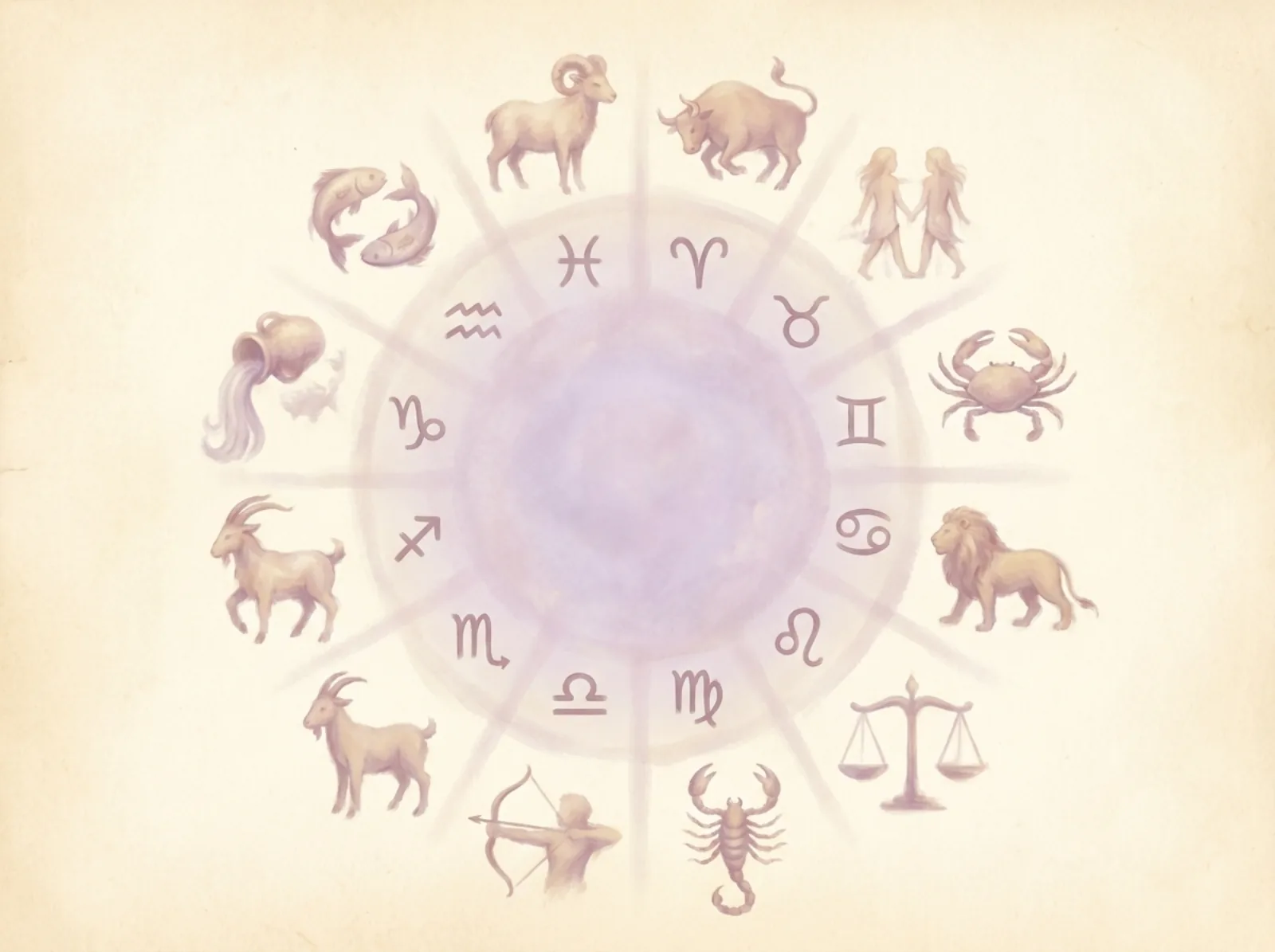
In classical Western astrology, every zodiac sign is associated with a region of the body — a system that dates back to Ptolemy and the medieval melothesia charts, where a human figure is overlaid with the twelve signs from head to toe. Aries rules the head and face. Taurus rules the throat and neck. Gemini rules the shoulders, arms, and lungs. Virgo rules the digestive tract and nervous system. Libra rules the kidneys and lower back. Capricorn rules the knees, bones, and skin. Pisces rules the feet and lymphatic flow. Cancer, the fourth sign, rules the chest, the breasts, the stomach, and the diaphragm. Traditional texts also give Cancer dominion over the body's fluid retention — anything that holds, stores, or carries water. You can see the logic: Cancer is a cardinal water sign, ruled by the Moon, which governs tides. The archetype is about containment, nourishment, and the soft tissues that hold us together. None of this means a Cancer sun will get stomach problems or that a non-Cancer won't. It means the archetype, as a symbolic language, keeps circling back to the belly, the chest, and the emotional-digestive loop. When I read for Cancer clients, their questions almost always eventually land on 'why does my stomach hurt when I'm stressed' or 'why do I cry when I'm hungry.' The symbolism tracks the lived experience. That's all astrology is doing here — giving you a vocabulary for noticing. The noticing is the point.The Cancer Energetic Pattern: Tide, Not Fire
If Aries is a sprinter and Capricorn is a long-distance hiker, Cancer is a tide. There is nothing linear about Cancer energy. It comes in, it goes out, it floods, it recedes, and if you try to push it to behave like a Leo you will exhaust yourself and probably cry about it in a parking lot. I watched Selena Gomez — a Cancer sun — publicly navigate lupus, a kidney transplant, and the mental-health realities that come with being famous since childhood, and what struck me wasn't just her honesty. It was the rhythm. She disappears, she rests, she makes something beautiful, she disappears again. That's a Cancer energy signature in public form: cyclical productivity, not constant output. The culture tells us to grind. Cancer energy says, grind and you will leak. Princess Diana was a Cancer sun. Tom Hanks is a Cancer sun. Ariana Grande, Post Malone, Lana Del Rey, the Dalai Lama — all Cancer suns. Look at the common thread: enormous emotional range, public tenderness, a quality of being deeply felt by millions, and a well-documented need to retreat. The retreating isn't a flaw. It's the recovery half of the tide. The practical takeaway: if you have a lot of Cancer in your chart, build your week around cycles, not streaks. One high-output day, one quiet day. Two productive weeks, one restorative weekend where nobody is allowed to ask you for anything. The nervous system of this archetype is not built for seven-day sprints.Common Cancer Lifestyle Habits — The Lovely and the Load-Bearing
Let's be honest about the shadow side, because Cancer culture online is all crab emojis and 'moon child' aesthetics, and that doesn't actually help anybody live better. Here is what I actually see. The lovely: Cancers tend to keep gorgeous homes, often with low lighting, soft textiles, and a candle situation that would make a Scandinavian weep. They cook. They remember birthdays. They text you when they sense something is wrong before you've even said anything. They are often the family's emotional archivist — the one who remembers what Grandma's kitchen smelled like. The load-bearing: this same archetype has a documented tendency to overgive, then feel resentful about it, then feel guilty about the resentment, then overgive harder to compensate. The classic Cancer burnout spiral. Food becomes comfort, which becomes avoidance, which becomes a stomach that hurts for reasons the GI specialist can't quite name. Home becomes safety, which becomes isolation, which becomes a social world that quietly shrank over three years. The archetype's gift — holding space — becomes a cage when the Cancer forgets they're allowed to leave the room. If you recognized yourself in any of that, you're not broken. You're patterned. Patterns can be rewritten. The next few sections are how.Best Workouts for Cancer: Match the Water, Not the Fire
The fitness industry is largely designed for Aries and Capricorn energy. HIIT, CrossFit, barbell PRs, 75 Hard — these programs reward people who are already good at pushing through discomfort and ignoring internal signals. Cancer archetypes are not that. Cancer archetypes feel everything, which means a workout that requires suppressing feeling will backfire within six weeks. What tends to work for Cancer energy, based on what my clients actually stick with for years, not months: Swimming. Obvious, but earned. The sensory input of water, the rhythm of the breath, the containment — Cancers often describe pool time as the only hour of the week their nervous system fully unclenches. Lap swimming three times a week beats a gym membership they ghost in February. Walking, especially outdoors near water. A long shoreline walk or a riverbank loop does more for Cancer mental health than any Peloton class. Steady state cardio, in a sensorially-rich environment, moving at the body's own pace. This is the archetype's native tempo. Yin and restorative yoga. Not vinyasa — Cancer bodies tend to hold stress in the chest, hips, and belly, and the long-hold postures of yin give the fascia time to actually release. A 60-minute yin class once a week has visibly changed clients' baseline anxiety in a way their therapist noticed. Strength training, but gently progressive. Cancers benefit enormously from building muscle — it protects the bones they'll need in their sixties, and it regulates mood through myokines — but the drill-sergeant approach is counterproductive. A patient trainer, light weights that progress monthly not weekly, two sessions a week with full recovery, is the sustainable version. What to avoid: anything that requires you to shame yourself into showing up. If the only motivation you can find is 'I hate my body,' the workout will not stick, and the self-talk will leak into the rest of your life. Cancers who exercise because they love their body are a thousand times more consistent than Cancers who exercise to punish it.Nutrition Patterns for Cancer: Rhythm Over Rules
I'm going to be careful here because the internet is full of astrology-diet nonsense and I refuse to add to it. There is no 'Cancer diet.' Astrology cannot tell you what to eat. Your doctor, a registered dietitian, and your own body can. What the Cancer archetype does suggest, as a reflective frame, is that this is an energy that benefits from predictability. The stomach is traditionally Cancer-ruled, and the chaotic eating patterns the modern world encourages — skipping breakfast, grazing while working, dinner at 10 pm, snacking through stress — tend to hit Cancer bodies harder in the digestion department. Things I've watched work for Cancer clients across years: eating at roughly the same times every day. Sitting down to eat, not standing over the counter. Cooking at home at least four nights a week — this isn't about frugality, it's about the archetype's documented emotional response to feeding and being fed. Hydration tracked honestly, because Cancer energy forgets to drink water and then wonders why the headache arrived at 3 pm. Emotional eating is a conversation this archetype has to have with itself eventually. Not with shame — with curiosity. 'What am I actually hungry for right now?' is a Cancer question. Sometimes the answer is a sandwich. Sometimes the answer is a nap, a hug, or permission to stop performing competence for the day. The food was standing in for something else, and the body knew the whole time. If you suspect you have a disordered relationship with food, please talk to a professional. Astrology is not equipped for that conversation. A good therapist or dietitian is.Sleep and Recovery: Where Cancer Lives or Dies
If I could tell every Cancer client one thing and make them actually do it, it would be: protect your sleep like it is your job, because for your archetype, it is. Cancer is ruled by the Moon. The Moon's domain is night, dreams, the unconscious, and the body's recovery processes. In practice, this translates to a nervous system that genuinely cannot run on six hours. The high-functioning sleep-deprived Cancer is a myth; what you're actually looking at is a Cancer whose emotional regulation is going to collapse by Thursday. What Cancer sleep hygiene actually looks like, from clients who've worked on it: a hard screen cutoff ninety minutes before bed, not thirty. The chemistry doesn't care if you're the exception. A dark room — blackout curtains if the budget allows, a sleep mask if not. Cool temperatures, around 65-68°F. A pre-bed ritual that signals to the body that the day is over: the same tea, the same book, the same lamp. Cancer bodies love rituals. The ritual itself is a cue. Dreams. Cancer energy tends to produce vivid dream lives, especially when the person is processing something emotionally. Keep a notebook by the bed. You don't have to interpret anything — just the act of writing down the fragment when you wake up anchors the subconscious work the sleep was doing. I've had Cancer clients work through grief faster this way than they did in six months of talk therapy. Not instead of therapy. In addition to. If you're consistently waking up tired despite good hours, see a doctor. Thyroid, iron, sleep apnea, perimenopause, depression — these are the usual suspects and they are all medically assessable. Don't let anyone, including me, convince you your fatigue is spiritual when it might be clinical.Cancer Stress Response: The Shell, and How to Come Out of It
The crab metaphor is tired but it earns its keep. When a Cancer archetype is stressed, the move is to retreat — into the home, into the shell, into a smaller and smaller version of the social self. For short periods this is adaptive. The nervous system genuinely needs the solitude. For long periods it becomes isolation, and isolation becomes depression, and depression becomes a doctor's office, which — again — is where you should be, not in the comments section of an astrology Instagram. Short-term downshifting that actually works for Cancer energy: a long bath, phone in another room. Twenty minutes with a hot-water bottle on the belly, because Cancer stress lives in the gut and heat applied directly tells the vagus nerve to stand down. A walk alone, no podcast, no music, just the sound of the neighborhood. Calling the one friend who doesn't require you to perform wellness. Cooking something you've made a hundred times, because the muscle memory is calming and the smell is nostalgic. Medium-term boundary work, which is the real medicine: learning to say no to the people who treat your empathy as a free utility. Cancer energy was taught, usually by family, that love equals availability. It does not. Love equals presence when you're present and honest absence when you're not. The Cancer who learns this at thirty will have a very different fifty than the one who doesn't. I watched a Cancer-moon client cut three draining relationships out of her life over the course of a year — not dramatically, just quietly stopping the overfunction — and her blood pressure dropped eleven points. Her doctor was surprised. I wasn't. The body keeps the score the astrology was already reading.Mental Health Reflection for Cancer (Reflection, Not Diagnosis)
I want to be very clear here. I am a tarot reader. I am not a therapist, a psychiatrist, or a social worker. Nothing in this section is a diagnosis of anything. If you are struggling, please talk to a licensed mental health professional. In the US, call or text 988. In the UK, call Samaritans at 116 123. In Canada, call 988. In Australia, call Lifeline at 13 11 14. What astrology can do is give you language for self-reflection. The Cancer archetype has a well-documented emotional profile in the reflective literature: deep feeling, strong empathy, a tendency to absorb other people's moods, a hyperactive sense of responsibility for other people's happiness, and a shadow side that includes rumination, retreat, and difficulty asking for help. If you recognize yourself in that, you are not alone — and you are not broken. These are patterns, and patterns can be worked with. A therapist who understands attachment, family systems, and emotional labor will probably be more useful to a Cancer than any one astrology reading. The reading can be the thing that gets you in the door. The therapy is the work. I will also say, because nobody else in the astrology-content space seems willing to: if you have a diagnosed mental health condition, your treatment plan comes first. Astrology is a complement, not a substitute. Take the medication. Keep the appointments. Then, maybe, journal with the cards on top of it. In that order.When to See a Real Doctor: Always, Actually
I'm going to say this plainly because I've watched too many people online get this wrong. Astrology cannot diagnose, treat, or manage any physical condition. If you have symptoms — pain, lumps, bleeding, chronic fatigue, digestive changes, breathing problems, mood changes that interfere with your life — see a doctor. Today. Not after a reading. For the Cancer archetype specifically, the traditional body-rulership overlaps with areas that have real preventive-screening value in modern medicine. Breast exams and age-appropriate mammograms. Regular check-ins on digestive health, especially if there's a family history. Thyroid panels if fatigue is chronic. Mental health screenings if the emotional weather has been bad for more than two weeks. None of these screenings are 'because you're a Cancer.' They are 'because you are a human with a body, and preventive care is how modern medicine works.' But if the astrology helps you remember to make the appointment, use it that way. I have had clients book overdue mammograms because a reading nudged them. The reading did not diagnose anything. The mammogram did its job. That is the correct division of labor. The cards and the chart are good at surfacing patterns and giving language to feelings. They are terrible at anything a lab, an imaging machine, or a licensed professional should be doing. Please do not mix those up. Your body deserves both the reflection and the real medicine.Journaling with Raka for Pattern-Tracking (and a Final Note on Reflection vs Medicine)
This is where a tool like Raka earns its keep, and I'll be honest about what it is and isn't. Raka is a tarot app. It isn't going to tell you anything medical. What it can do, used daily or weekly, is help you build a longitudinal record of your own patterns — which is something the Cancer archetype is genuinely good at using. Here is a practice I've recommended to Cancer-heavy clients for years, adapted for the app era. Once a week, pull three cards in Raka with a specific body-and-mood check-in question. Something like: 'What is my body asking for this week?' Pull the cards, read what comes up, and then write three lines in the app's journal. Not an essay. Three lines. How you slept. How your digestion was. What your emotional baseline felt like. Do this for twelve weeks. At the end of the twelve weeks, scroll back. You will see patterns you could not see in the moment: that you crash the week before your period, that you overeat the three days after a work deadline, that your sleep tanks every time your mother calls. These are patterns a doctor cannot see because they only see you in a fifteen-minute appointment every six months. You can see them because you were paying attention. Raka's job is to be a lightweight structure for the paying-attention. The attention itself is the medicine. The cards are a doorway. The journal is the record. The patterns are yours. And if a pattern you see concerns you — the sleep crash that won't resolve, the fatigue that keeps deepening, the mood that keeps dropping — take the record to a doctor. That's what the longitudinal data is for. One final note, so we're clear: everything in this article is reflective, archetypal, and lifestyle-oriented. None of it is medical advice. Astrology is a symbolic language for making sense of patterns in your life. It does not diagnose, treat, cure, or prevent any condition. Sleep is non-negotiable. Boundaries are a medical intervention. Food is nourishment, not a moral test. Exercise should feel like coming home to your body, not punishing it. And if something hurts, call a doctor. The astrology is one layer, and it is nowhere near the most important one. Your doctor is.Frequently asked questions
Does being a Cancer mean I'm more likely to get sick?
No. Zodiac signs do not predict illness, cause illness, or protect against illness. Nothing in astrology is medical. The 'body rulership' of each sign is a traditional symbolic correspondence used for self-reflection, not a diagnostic claim. A Cancer sun has the same medical risk profile as anyone else with their actual genetics, lifestyle, and environment. For real health risk, talk to a doctor who knows your history. Part of our tarot library.
What foods should Cancers eat?
There is no 'Cancer diet' and anyone selling one is making it up. What the archetype suggests is that regular meal timing, home-cooked food, mindful eating (not grazing through stress), and good hydration tend to help this energy feel steadier. These are also just generally sound nutritional habits that apply to every sign and every human. For actual nutrition guidance, see a registered dietitian, not an astrologer.
Why do Cancers get tired so easily?
Many people with Cancer placements report a cyclical energy pattern — high output followed by a strong need for recovery — which the archetype's lunar rulership mirrors symbolically. Honoring that rhythm, protecting sleep, and setting emotional boundaries all help. But chronic fatigue is a medical symptom with real causes: thyroid issues, iron deficiency, sleep apnea, perimenopause, depression, long COVID, and more. If you are consistently exhausted, see a doctor and get bloodwork. Do not spiritualize fatigue that might be clinical. See our best AI astrology app guide.
What are the best workouts for Cancer energy?
Based on what tends to stick with Cancer-heavy clients: swimming, long outdoor walks (especially near water), yin or restorative yoga, and gently progressive strength training. The common thread is rhythm, sensory richness, and self-compassion rather than drill-sergeant intensity. The best workout, for any sign, is the one you'll still be doing in two years.
How can I use Raka to track my health patterns?
Try a weekly three-card pull with a body-and-mood question like 'What does my body need this week?' Then log three short lines in the Raka journal: sleep quality, digestion, and emotional baseline. Do this for twelve weeks and scroll back to see your own patterns. Bring that record to your doctor if anything concerning emerges. The cards don't diagnose — they prompt attention. Your attention is what builds the useful data.
Is astrology enough for mental health support?
No. Astrology is a reflective tool, not a treatment. If you are struggling with your mental health, please contact a licensed professional. In the US, call or text 988. In the UK, call Samaritans at 116 123. In Canada, call 988. In Australia, call Lifeline at 13 11 14. Journaling with cards can be a meaningful complement to therapy, but it is never a replacement for it.
When should a Cancer definitely see a doctor?
When anyone, Cancer or otherwise, has symptoms. Pain, lumps, bleeding, chronic fatigue, digestive changes, breathing issues, mood changes that interfere with life — these are reasons to call a doctor today, not reasons to pull cards. Preventive screenings matter too: age-appropriate check-ups, bloodwork, breast health exams, dental, vision, mental health. Astrology is a journaling tool. Medicine is medicine. They do not overlap.