What traditional astrology says about Virgo and the body
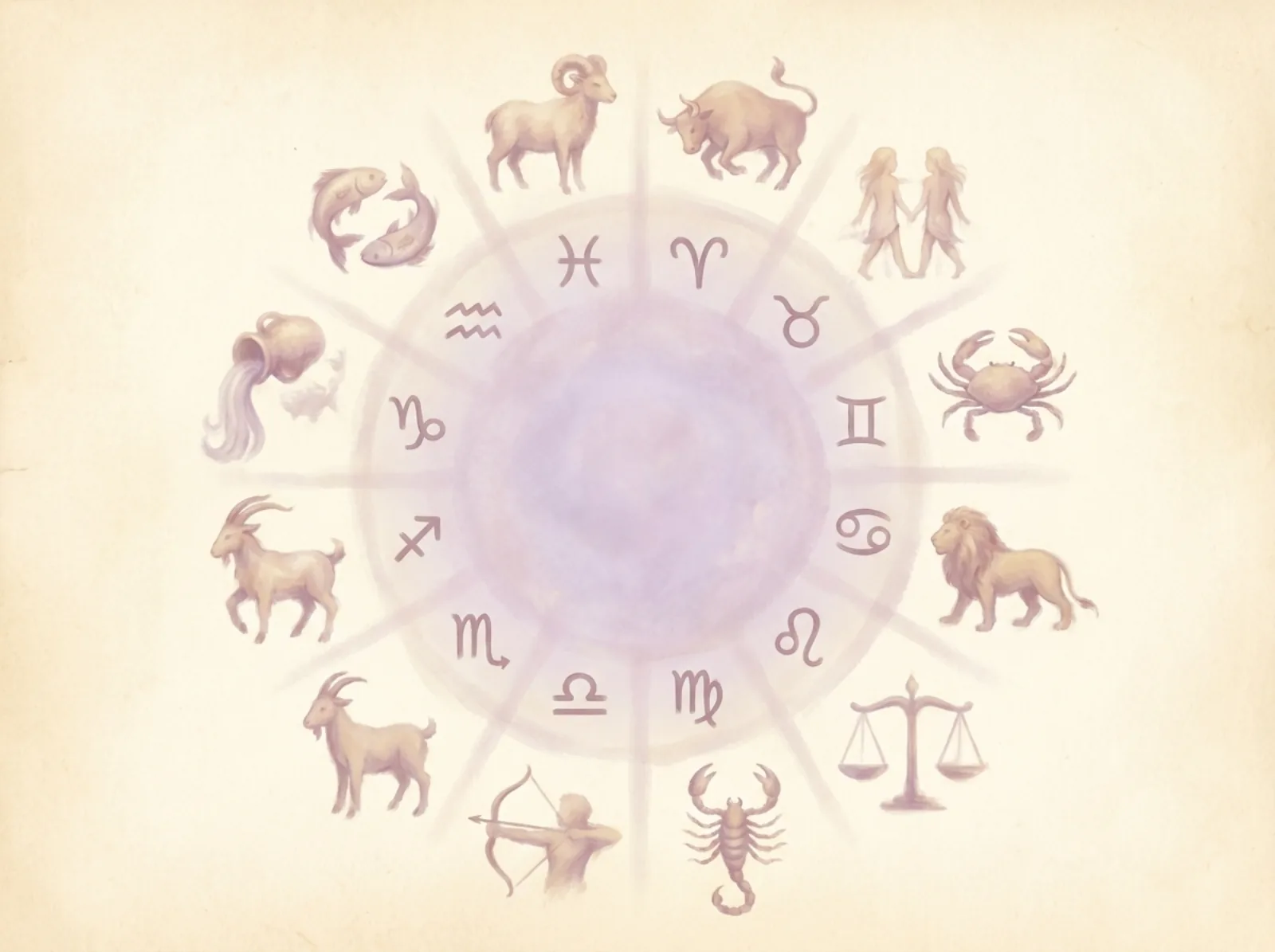
Medical astrology is one of the oldest branches of the practice, and it goes back roughly two thousand years to Hellenistic texts that mapped each zodiac sign to a region of the body. The system is called melothesia, and it's exactly what it sounds like — a layered diagram of a human figure with the signs assigned top to bottom. Aries rules the head. Taurus rules the throat and neck. Gemini rules the hands, arms, and lungs. Cancer rules the chest and stomach. Leo rules the heart and spine. Virgo rules the digestive system, specifically the intestines, pancreas, and the gut-brain interface. Libra rules the kidneys and lower back. Scorpio rules the reproductive and eliminative organs. Sagittarius rules the hips and thighs. Capricorn rules the knees, bones, and skin. Aquarius rules the circulatory system, calves, and ankles. Pisces rules the feet and the lymphatic system. This map is not clinical. No cardiologist I know is diagnosing anyone off a Leo stellium. But as a symbolic lens, it's useful — it tells you where a sign's energetic pattern tends to show up in the body first. For Virgo, that place is the gut. If you have strong Virgo placements and you've ever noticed that stress makes you nauseous before it makes you anything else, or that you feel emotional overwhelm as a tight stomach rather than a tight chest, that's the pattern expressing itself. The modern gut-brain research — the vagus nerve, the enteric nervous system, the hundred million neurons in your intestinal lining — doesn't contradict any of this. It just gives it a different vocabulary. Both descriptions are pointing at the same thing: the gut is a feeling organ, not just a digestion organ, and Virgo is the sign most tuned to that frequency.The Virgo energetic pattern, honestly
The Virgo signature is precision, analysis, service, and discernment. The shadow of Virgo is anxiety, criticism (of self and others), and the kind of perfectionism that passes for productivity but is actually fear wearing a lab coat. Both exist in the same person. The ruling planet is Mercury, which governs the nervous system, communication, and the quality of mental activity — and Virgo's version of Mercury is detail-oriented, pragmatic, and grounded in the material world (unlike Gemini's Mercury, which is more conceptual and quick). What this translates to physically is a person who runs hot in the head and tight in the gut. The nervous system is often doing more than it looks like from the outside. Virgos tend to be the quietest person in a stressed room who is nonetheless running the most background processes — mentally cataloging what needs to be done, who is upset with whom, which supplement they forgot to take, and whether that sound the car is making is normal. All of this is useful. A Virgo friend is the one who notices your tone has changed and asks if you're okay before you've admitted it to yourself. But it is also metabolically expensive. The nervous system is burning fuel to run those processes, and the body eventually sends the bill. The growth work for Virgo, health-wise, isn't becoming more careful. It's learning when careful tips into controlling, and learning that rest is not laziness. The sign of service has to be allowed to receive, including from itself. Zoe Saldana, Beyoncé, Keanu Reeves, and Michael Jackson were all Virgo suns — different lives, same signature of relentless craftsmanship and extremely private self-management.Common Virgo lifestyle habits — the good, the complicated
The healthy end of the Virgo lifestyle looks like this: a consistent morning routine, meals eaten at approximately the same time most days, a reasonable bedtime, a workout schedule that gets honored more weeks than not, and a general awareness of what's going into the body. Virgos are the people who actually read the ingredients list, who know what their resting heart rate is this month versus last month, who have a GP they see annually and a dentist they see twice a year. In a culture that treats basic health maintenance as optional, this is a quietly powerful advantage. It compounds. The complicated end looks like this: three different tracking apps that are quietly competing for attention, a supplement drawer that costs more than a car payment, a running mental list of foods that have been secretly declared bad, and a tendency to feel vaguely guilty on any day that doesn't contain a workout. The optimization becomes the stressor. The thing meant to produce health starts eating the health instead. I know Virgos who have genuinely more peace of mind now that they stopped tracking their sleep, because the data was making the sleep worse. The cleanest Virgo wellness looks less like an elaborate protocol and more like a short list of non-negotiables — sleep, water, protein, movement, sunlight, time outside — practiced loosely and forgiven when missed. The Virgo trap is treating the body like a project. The Virgo medicine is treating it like a relationship.Best workouts for Virgo energy
Match the movement to the sign's native frequency. Virgo likes precision, technique, and measurable progression. Movement forms that reward attention to form tend to feel genuinely good to Virgo bodies, because the mind has something to do while the body is working — which calms the whole system down. Pilates and barre are near-perfect Virgo workouts. The alignment focus, the small controlled movements, the quietly brutal difficulty that doesn't look like difficulty from the outside — it all suits the sign. Yoga works, especially alignment-focused styles like Iyengar or Ashtanga, less so the vibey vinyasa classes where the teacher is more concerned with aesthetics than with your knee. Lap swimming is excellent because it is repetitive, measurable, and the water calms the nervous system in a way nothing else quite does. Running works beautifully for Virgos, especially with a plan — a half-marathon training block will keep a Virgo happy for sixteen weeks straight. Strength training with a structured program (push, pull, legs, repeat) is similarly satisfying. What tends to not work as well for Virgos: chaotic group fitness classes where everyone is shouting and nobody is cueing form, dance-based cardio that rewards improvisation, and competitive team sports where the Virgo spends most of the game analyzing what everyone else is doing wrong. There are exceptions — a Virgo with a strong Leo moon might love Zumba — but the general pattern holds. Give the Virgo mind a job and the Virgo body will show up. The caveat is the same as always. The best workout is the one you will actually do this week. If the alignment-focused yoga class is at 6 a.m. on the other side of town and you have never once gone, that is not a Virgo workout. A twenty-minute walk is.Virgo nutrition patterns — themes, not diets
I want to be careful here because sun-sign diet guides are one of the places astrology does the most damage. Nutrition is personal, sometimes clinical, often cultural, and absolutely not something to pin to a birthday. If you have a real nutrition question, see a registered dietitian — ideally one who understands your specific context, including any conditions you're managing. What I can offer, as reflection: Virgo energy tends to do well with regular, warm, whole-ingredient meals rather than erratic grazing on packaged food. The sign's association with the digestive system means Virgos are often more sensitive than average to what disagrees with them — not necessarily in a diagnosable way, just a felt-sense way. Many Virgos I know report feeling noticeably better when they eat consistently (same approximate times, three times a day, with real meals rather than snacks), and noticeably worse when they skip meals or front-load the day with caffeine and no food. Where Virgo health gets into trouble is when the nutrition becomes a project. Elimination diets, cleanses, biohacker protocols, and the kind of macro-tracking that occupies three hours of a weekend — these are catnip to the sign, and they are often where orthorexia starts. Orthorexia is the eating disorder of people who are trying to eat perfectly, and Virgo-dominant people are statistically overrepresented in that population. If you find yourself unable to eat at a friend's house without quietly cataloging what's wrong with the food, that's a flag. The healthiest Virgos I know have a short list of foods they feel good eating, cook most of their own meals, and don't make it weird when they're at a restaurant. The chart is a mirror, not a menu.Sleep, recovery, and the Virgo overthinking spiral
If I had to name one place Virgo health most consistently breaks down, it would be sleep. The Virgo mind does not shut off; it rotates. You lie down, you review the day, you plan tomorrow, you remember the thing you were supposed to text your mother, you spiral briefly on something someone said in 2019, you plan tomorrow again from a slightly different angle, and then it is 2 a.m. and you have to be up at 7. The thing that works is not meditation. I say this as an astrologer and reluctant meditator. Telling a Virgo mind to empty itself at bedtime is like telling a dog to stop being a dog. What works is giving the mind a controlled place to put its material before bed — a notebook, a tomorrow-list, a brain dump. Writing down the open loops is the single most effective sleep intervention I know for this sign. The mind rehearses what it fears forgetting. If it knows the list exists on paper, it is willing to let go. Structurally, the same sleep hygiene that works for everyone works for Virgos, but Virgos actually benefit the most from it because they'll follow it. Same bedtime most nights. Phones out of the bedroom (not just face-down — out). Caffeine curfew at noon or 1 p.m., which is earlier than most people want to hear. A warm shower about ninety minutes before bed; the subsequent core-temperature drop is a legitimate biological signal that it's time to sleep. Cool bedroom, dark bedroom, boring bedroom. If you share a bed with someone whose schedule is wrecking yours, that's a conversation, not a biohack. Recovery for Virgo isn't just sleep. It's permission. Many Virgos genuinely do not know how to rest without feeling guilty. The reframe that helps is understanding that rest is a performance input, not a performance interruption. The nervous system does its best work asleep and its second-best work bored. Give it both.Stress response and how a Virgo downshifts
Every sign has a signature stress response. Virgo's is tightening — mentally, physically, interpersonally. Under stress, the Virgo mind narrows into problem-solving mode and the Virgo body braces, usually in the shoulders, jaw, and gut. Communication gets terser. Standards get higher. The person becomes very capable and quietly miserable, often without noticing the misery for weeks because they're too busy being capable. The downshift that works for Virgo is physical and specific, not conceptual. You cannot think your way out of a Virgo stress spiral; the mind is the thing that is stressed. What works is interrupting the body first. A long walk outside, ideally in a green space, with no podcast — just the walk. A hot bath, long enough that the shoulders actually drop. Being around water, which has an outsized nervous-system effect on this sign. Massage, if accessible. Stretching, specifically for the hip flexors and jaw, which both hold Virgo tension. Breathwork that emphasizes the exhale (four-count in, eight-count out), because longer exhales are a direct vagal cue to the parasympathetic system that Virgo rules. Socially, the Virgo stress downshift includes permission to say less. Virgos under stress often over-explain, over-apologize, and over-manage other people's feelings. The practice is to notice the urge and not act on it. Not every email needs the pre-amble. Not every text needs the softening. The Virgo nervous system is often doing emotional labor nobody asked for, and reclaiming that bandwidth is one of the most restorative things the sign can do. Medically — because I have to say it — if your stress response has crossed into panic attacks, chest pain that mimics a heart event, insomnia that lasts weeks, or anything else that feels beyond the scope of a long walk, please see a clinician. Astrology is good at pattern recognition. It is not a substitute for a prescription.Mental health reflection, not diagnosis
This is the part where I have to be most careful. I am not a therapist and I'm not a psychiatrist. Virgo as a sign is associated in modern astrology with anxiety, perfectionism, and a certain flavor of self-criticism that psychologists would call internalized high standards. These are tendencies in the energy, not diagnoses. Plenty of Virgos have zero mental health struggles. Plenty of non-Virgos have severe anxiety. The sign is a lens, not a label. What I can say, as a reflection, is that the inner Virgo critic — the voice that notices every flaw, every missed detail, every imperfect sentence — is sometimes a useful editor and sometimes a bully, and the sign's growth work is learning to tell the difference. When the voice is pointing at something you can act on, it's an editor. When it's reviewing a conversation from three years ago at 11 p.m., it's a bully. Treating the bully like an editor is how a lot of Virgo depression starts; it feels like you're being responsible when you're actually being cruel to yourself in a way you'd never tolerate from someone else. The clinical landscape here matters. Anxiety and depression are highly treatable. Therapy works. Medication works for the people it works for. The idea that you can astrology or supplement your way out of a real mental health condition is wrong and sometimes dangerous. If you have been struggling for a while, please talk to a licensed therapist — ideally someone trained in CBT or ACT, both of which work extremely well for the Virgo thought-pattern. The chart will still be there. It will probably make more sense once you have the clinical support.When to see a real doctor (which is: often)
I want to put this plainly, because I have watched people delay care because they were waiting for the right lunar phase or because their intuition said to try one more supplement first. Astrology does not replace medicine. It never has. The oldest astrological texts explicitly told practitioners to defer to physicians for anything physical. Nothing has changed except that we have better physicians. If you have any of the following, see a doctor, not a card deck: persistent pain of any kind lasting more than a week or two, unexplained weight change, blood where there shouldn't be blood, a new mole or a changing one, a lump, chronic digestive issues that aren't resolving, a cough that won't go away, numbness or weakness, persistent headaches, mental health symptoms that are affecting your daily functioning, anything that scares you. The visit is cheap. Delay is not. For Virgos specifically, the risk is actually the opposite of underchecking — it's overchecking. Googling symptoms into a hypochondriac spiral is a classic Virgo failure mode, and it often leads to a kind of frozen avoidance where the person is too anxious to actually see the doctor who could resolve the anxiety. If that's you, pick a GP, book the appointment for the next available slot, and go. The relief of knowing is almost always better than the dread of not knowing. And a good doctor would rather see you for something that turns out to be nothing than miss something that turned out to be something. An annual physical, dental cleaning, eye exam, and whatever screenings are age-appropriate for you are the actual minimum. Virgo health is not kept together by crystals or green juice; it's kept together by basic preventive care and sleep. Please get both.Using Raka for pattern-tracking, not treatment — and the final note on the Virgo wellness trap
I built the Raka reflection practice around the idea that a chart or a card is useful mainly as a mirror — a way of putting words on patterns you are already living. For health and lifestyle, that framing matters even more than usual, because the moment astrology starts pretending to be medicine is the moment it stops being useful at all. What Raka can genuinely help with is noticing. If you journal with it over a few months, you may start to see things — energy dips that correlate with a specific transit, mood patterns around your Mercury return, stress spikes in a particular lunar phase, repeated cards showing up during the weeks you were under the most work pressure. None of that is diagnostic. All of it is useful context. The kind of context that can turn 'I feel awful and I don't know why' into 'I feel awful, this is the fourth time it's happened in this specific pattern, and I'm going to mention it to my doctor at my next appointment' — which is a vastly more productive conversation than the first one. I use Raka this way myself, as a kind of structured journal that remembers. I log how I'm sleeping, how my energy is, what's happening in the chart that week, and whether anything surprising came up in a reading. Over a year, that's a real dataset about my own patterns. It is not medical data. It will never replace my GP, my dentist, or the therapist I saw for most of my twenties. But it is a layer of self-knowledge I didn't have before, and it has made me a slightly better advocate for myself when I do sit down with a clinician. If you want to try it, the practice is simple. Three minutes before bed. What was my energy today, on a scale of one to five. What was the dominant mood. One sentence on anything the day asked of my body. One card, pulled with a question like 'what do I need to see about my body right now?' — and importantly, what the card made you think of, not what it predicted. Reflection, not prophecy. Over time, the patterns show up on their own. I'll close with the thing I most want Virgos to hear, which is that your worth is not your optimization. The sign spends so much of its life trying to earn its own approval — one more supplement, one more productive morning, one more day where the macros worked out and the workout got done and the inbox hit zero — that it can lose track of the fact that it was already fine. The body is not a project. The nervous system is not a KPI. You are not a problem to be solved. The healthiest Virgos I know are the ones who held onto the sign's attention to detail and let go of the sign's belief that attention to detail is the price of being lovable. They still eat well and sleep well and move their bodies. They just don't make it their identity. They have hobbies that are not about self-improvement. They let themselves be mediocre at things on purpose, because mediocrity is the texture of a full life and expertise is only the texture of a part of one. They see their doctors on time, they ignore most of the wellness internet, and they laugh more than they used to. That's the invitation. Your sign is a lens. Your body is yours. Your doctor is for medicine, your therapist is for the mind, and Raka — or any other reflection practice — is for the slow, patient work of knowing yourself a little better than you did yesterday. All three of those things are tools. None of them is the whole picture. You are.Frequently asked questions
Does Virgo rule a specific part of the body in astrology?
Yes. In traditional medical astrology, Virgo rules the digestive system, intestines, pancreas, and the parasympathetic nervous system (the branch that handles rest and digestion). This is symbolic, not clinical. It means Virgos often notice tension and emotion land in the gut first — a tight stomach before a meeting, nausea during conflict, bloating after a stressful week. The sign-body map goes back to Hellenistic astrology and remains a useful lens for self-reflection, not a diagnostic tool. If your digestion is genuinely struggling, see a gastroenterologist. The chart is a mirror, not a prescription. Part of our tarot library.
What is the healthiest workout style for a Virgo?
Virgos tend to thrive on precise, technical, repeatable movement — Pilates, barre, yoga with alignment focus, lap swimming, running with a watch, strength training with a programmed split. The nervous system calms when the body is doing something structured and measurable. What tends to drain Virgos is chaotic, unpredictable group chaos or high-intensity formats that reward improvisation over form. That said, the exact right workout is the one you'll actually show up for three times this week. Astrology is a lens, not a prescription.
Why do Virgos often have sensitive digestion or anxious stomachs?
The symbolic answer is that Virgo rules the gut, so Virgo-dominant charts tend to feel stress there first. The practical answer involves the gut-brain axis, which affects everyone — anxiety raises cortisol, cortisol disrupts digestion, and perfectionist thought patterns (very Virgo) feed chronic low-grade anxiety. The two explanations don't contradict each other. If you have persistent GI symptoms — pain, blood, significant weight change, chronic reflux — that's a doctor's visit, not an astrology reading. Please go. The chart can wait.
How can a Virgo downshift from overthinking at night?
The Virgo mind doesn't turn off — it just rotates. The downshift that tends to work is a boring, repeatable wind-down: same time, same lights, same tea, same ten minutes of writing down tomorrow's list so your brain stops rehearsing it. Phones out of the bedroom helps enormously. So does a hot shower about ninety minutes before bed (the core-temperature drop afterward is a real signal to the nervous system). What rarely works for Virgos is 'just relax' — the sign needs a system, not a vibe. Build one.
Does Raka give medical or health advice?
No, and it won't. Raka is a tarot and astrology reflection app, not a medical tool. If you ask Raka about a symptom, it will gently redirect you to a doctor. What Raka does well is help you notice patterns — mood dips before your Mercury return, energy crashes in a specific lunar phase, a repeated card showing up during a stressful quarter. That pattern data is useful context to bring to a real appointment, but it does not replace one. Think of Raka as a journal that remembers.
Are Virgos actually healthier than other signs?
No sign is 'healthier' — that framing is where astrology gets silly. What Virgos tend to be is more health-conscious. The sign is associated with hygiene, routine, and attention to detail, so Virgo-dominant people often research supplements for three months before buying one, read ingredient labels, and know their resting heart rate. That same tendency can tip into orthorexia, hypochondria, or burnout from over-optimization. Health is not a scorecard you win by being the most careful. Sometimes the Virgo growth edge is doing less, not more.
Should I change my diet based on my sun sign?
Please don't. Sun-sign diet guides are mostly nonsense, and some are actively harmful. Nutrition is personal, often genetic, sometimes clinical, and should involve a registered dietitian if anything is seriously off. What Virgo energy can offer is a gentle pattern-noticing lens — do you feel better with regular meals versus skipped ones, with warm food versus cold, with whole ingredients versus heavily processed ones? Those are observations worth journaling. They are not a diet plan. The chart suggests themes; your body gives the data.