What Sagittarius Actually Rules in the Body (And Why That Matters)
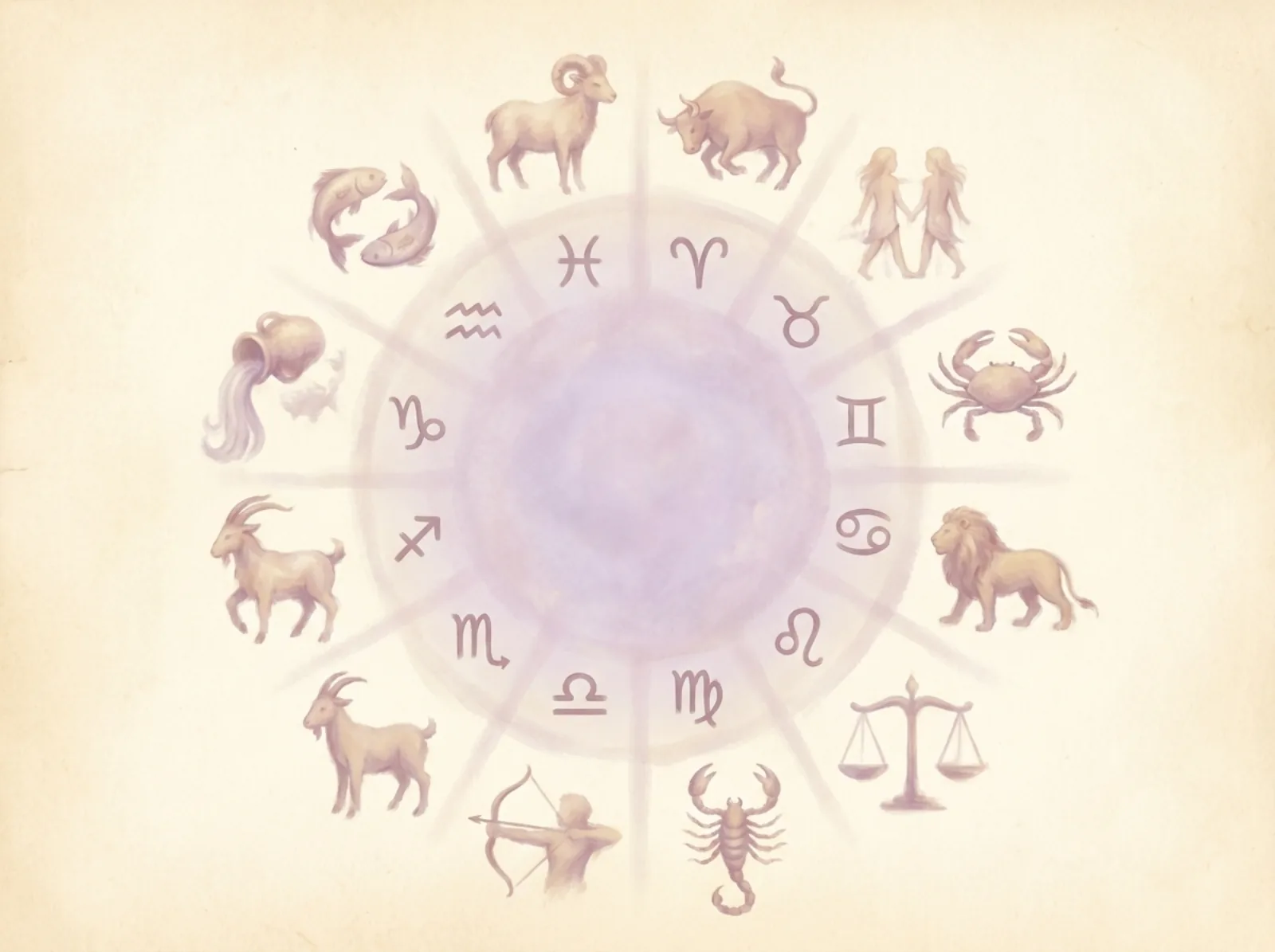
Traditional Western astrology maps each zodiac sign to a part of the body. Aries rules the head, Taurus the throat and neck, Gemini the hands and lungs, Cancer the chest and stomach, Leo the heart and spine, Virgo the digestive system, Libra the kidneys and lower back, Scorpio the reproductive and eliminative systems, Capricorn the knees and skeletal structure, Aquarius the ankles and circulation, and Pisces the feet. Sagittarius rules the hips, thighs, sciatic nerve, and the liver, with the ruling planet Jupiter also connected to the processes of growth, metabolism, and how the body expands and recovers from exertion. This is where I need to pause and say something important: this is a symbolic framework, not a medical one. The ancient astrologers who built this system weren't running clinical trials. They were observing patterns, assigning correspondences, and building a vocabulary for talking about the body as a reflection of psychological and spiritual themes. A Sagittarian isn't more likely to have hip problems than anyone else, and if your hips hurt, the answer is a physical therapist and your doctor, not a birth chart reading. What the body-rulership does give you is a useful lens for reflection. Sagittarius governs the hips and thighs — the parts of the body that drive forward motion, that carry you toward the horizon. The sciatic nerve runs from the lower back down the leg, the longest nerve in the body, connecting what you sit on to where you're going. The liver filters, processes, and metabolizes everything that comes into you — food, drink, experience, emotion. These are the Sagittarian themes of mobility, direction, and processing distilled into anatomy. When I'm journaling with a Sagittarius client, I'll sometimes ask: how are your hips feeling? Not as a medical question, but as a reflection prompt. Tight hips often correlate with sitting still too long, with staying in a situation that part of you wants to leave. Flaring sciatic pain in someone with no injury history can be a nudge to look at what you've been carrying. Again — not a diagnosis. Just a conversation starter.The Sagittarius Energetic Pattern: Fire, Expansion, and the Horizon
The Sagittarius archetype is a mutable fire sign ruled by Jupiter, which is a lot of adjectives but each one matters. Fire means warmth, drive, enthusiasm, the energy that initiates. Mutable means adaptable, changeable, able to pivot. Jupiter means expansion — more, bigger, further, broader. Put those together and you get an energetic signature that tends to look like a person who is always moving toward something, who gets bored fast, who treats life as a series of horizons rather than a settled landscape. In practice, this plays out as a particular rhythm. The Sagittarius-coded person tends to have more projects than hours, more commitments than they can realistically keep, more interests than they can pursue in depth. They say yes to adventure, to new experiences, to the invitation that comes in at 11pm on a Tuesday. They're often the ones booking the last-minute trip, enrolling in the class on a whim, taking the opportunity that scares them a little. This is beautiful energy. It's also exhausting. The thing about fire is it needs fuel, and the thing about expansion is it doesn't have a built-in brake. When I look at the celebrities with prominent Sagittarius placements — Taylor Swift, Jay-Z, Miley Cyrus, Steven Spielberg, Brad Pitt, Scarlett Johansson, Nicki Minaj — I see artists and creators who produce an enormous volume of work, who travel constantly, who seem to have multiple careers running in parallel. That's the Sagittarius signature at full tilt. What you don't always see is the recovery infrastructure these people have built around themselves because the archetype doesn't come with one. If you recognize yourself in this pattern, the useful question isn't 'how do I have more energy' — you already have energy. The useful question is 'where does my energy actually go, and what refills it?' Fire that isn't tended becomes ash. Mutability without grounding becomes scattered. Jupiter without Saturn becomes bloat. The health work for Sagittarius is almost always about structure, boundaries, and recovery — the opposite of the archetype's natural tendency.Common Sagittarius Lifestyle Habits: The Good and the Expensive
Let me describe a lifestyle pattern and you can tell me if it sounds familiar. You have three partially unpacked suitcases somewhere in your home. Your calendar for next month has at least two things that overlap and you haven't figured out which one you're canceling. You've started a new hobby in the last ninety days — maybe climbing, maybe a language, maybe pottery — and you're either all-in or you've already abandoned it. You eat the same five foods when you're at home because meal planning feels suffocating, but you'll try anything on a menu when you're out. You've been meaning to call your doctor about that thing for six months. That's a Sagittarius-coded lifestyle, and it has real strengths. The breadth of experience, the willingness to try new things, the resistance to settling into a routine that would bore you — these produce rich lives and interesting people. Sagittarians tend to have unusual careers, broad friend groups, and a willingness to make big moves (geographically and otherwise) that more cautious signs envy. They also tend to be the friends who show up with a solution you hadn't considered, who connect you to someone you need to know, who talk you into the thing that turned out to be exactly what you needed. The expensive side of the same pattern is what I call the 'next-thing-itis.' Everything is better when it's new, which means nothing gets fully developed before you move on. Health habits in particular struggle in this environment. You start a workout program, love it for six weeks, discover something new, and the program dies. You start eating well, feel great, get pulled into three weeks of travel, and the structure collapses. You find a therapist, do a few sessions, feel better, and quit before you've actually done the work. The lifestyle fix isn't to become a Capricorn — you'd hate it and it wouldn't last. It's to build what I call 'portable structure': health habits that travel with you, that work in multiple environments, that don't depend on being in one place or on one schedule. A ten-minute mobility routine you can do in a hotel room. A core set of meals you know how to make or order anywhere. A therapist who takes video calls. A journaling practice that lives in your phone. Portable structure respects the Sagittarian need for movement while giving you the stability the archetype doesn't naturally generate.Best Workouts for Sagittarius: Match the Energy, Protect the Hips
If you want a Sagittarius to actually show up for exercise, it needs to feel like something other than exercise. The standard gym-grind, same-workout-every-day structure that works for other signs tends to collapse in a Sagittarius life. The archetype wants movement that's an experience, that takes you somewhere, that has novelty built in. What tends to work: hiking, trail running, outdoor cycling, rock climbing, martial arts, dance, team sports with casual pickup games, yoga styles that include flow and variation, horseback riding (if it's accessible — the mythological Sagittarius is a centaur, after all), skiing and snowboarding, surfing, anything that gets you outside and in a new environment. The common thread is novelty, exploration, and the sense that movement is a vehicle for experiencing something, not just burning calories. What tends to work less well: rigid gym programs with the same six exercises every week, treadmill running without variation, barre or pilates classes that follow identical sequences, long isolation workouts that happen in a single space. These aren't bad in themselves — plenty of people thrive on them — they just tend to lose a Sagittarius by week eight. The one piece of movement I'd argue every Sagittarian benefits from, regardless of what else they're doing, is hip and thigh work. The archetype rules those areas and the lifestyle tends to put them under stress. Hip mobility work — figure-four stretches, pigeon pose, hip circles, deep squats, lunges in multiple directions — undoes the damage of a lot of sitting and a lot of movement in the same direction. Resistance training for the glutes and quads supports the sciatic region. If you only have fifteen minutes, give it to your hips. If you have forty-five, do thirty minutes of whatever you love and fifteen minutes of hip and glute work. One pattern I see constantly in Sagittarian clients: they'll do a lot of cardio and almost no resistance training because cardio feels more like adventure. This is a mistake. Muscle protects joints, supports metabolism, and gives you the physical capacity to keep doing the adventurous things you want to do for the next sixty years. Two short strength sessions a week — even twenty minutes each, even at home — massively protect the Sagittarian lifestyle long-term. Boring to say, true anyway.Nutrition Patterns for Sagittarius: What the Lifestyle Does to Your Plate
I'm not going to tell you what to eat. I'm not a dietitian, astrology is not nutrition science, and anyone selling you a 'Sagittarius diet' is selling you nonsense. What I can do is describe the nutrition patterns that tend to show up in Sagittarian lifestyles, so you can notice them in yours. The first pattern is irregularity. Sagittarius-coded people often don't eat on anything resembling a schedule. You skip breakfast because you were working, forget lunch because you were in flow, realize at 4pm that you haven't eaten and crush something fast, then eat a huge dinner at 10pm because you're starving. This cycle is incredibly common and it does real damage over time — not because of the calories, but because of what it does to your blood sugar, your sleep, and your relationship with hunger. The lifestyle fix isn't a strict schedule; it's a baseline. Something at breakfast, something at lunch, something that doesn't require decision-making. Decision fatigue is a Sagittarius killer. The second pattern is travel-driven inconsistency. Sagittarians travel more than average, whether for work or for the sheer love of it, and travel wrecks nutrition for everyone. The useful adjustment isn't to try to replicate your home diet on the road — you'll fail and feel bad about it. It's to have a short list of 'this is what I eat when I'm in motion' that works in airports, hotel breakfasts, and strange cities. For some people that's protein-forward breakfasts and a big salad once a day. For others it's just making sure water, something green, and something with protein happen in every twenty-four-hour window. The specifics are personal; the discipline of having a system is the point. The third pattern, and I'll be direct about this: Sagittarius culture has an alcohol problem. The archetype is Jupiter, which is expansive, celebratory, and party-adjacent. The ruling-planet associations with the liver aren't lost on me. Sagittarians often find themselves in environments where drinking is the social default — travel, late nights, celebrations, hospitality industry work — and the 'yes-energy' makes it very easy to drink more than you want to over time. This isn't a judgment, it's a pattern worth noticing. If your drinking has crept up and you're uncomfortable with it, that's a conversation with your doctor, not with your horoscope. For anything that goes beyond general lifestyle reflection — allergies, chronic conditions, weight concerns, disordered eating, performance nutrition — please talk to a registered dietitian. Astrology has nothing useful to say about those things.Sleep and Recovery for Sagittarius: The Hardest Habit to Hold
If I had to pick the single health habit Sagittarians struggle most to maintain, it would be sleep. The archetype hates going to bed. There's always one more thing to do, one more conversation to have, one more episode to watch, one more idea to chase down the rabbit hole at midnight. The expansive energy of Jupiter doesn't want to be constrained by something as mundane as a bedtime. And yet nothing — nothing — degrades the Sagittarian lifestyle faster than sleep deprivation. The energy that defines the archetype depends entirely on recovery to sustain itself. A tired Sagittarius is irritable, scattered, overcommitted without the capacity to execute, prone to impulsive decisions they'll regret, and much more likely to reach for stimulants, alcohol, and sugar to compensate. Six weeks of bad sleep will unravel the parts of your life you most want to protect. The lifestyle fix is unglamorous and I'll offer it anyway: a consistent bedtime, even when you don't want to. For most adults that's seven to nine hours, which means working backward from when you need to be up. If you're reading this and already annoyed, that's the Sagittarius talking. The resistance is the pattern. The resistance is also what's exhausting you. A few things that specifically help in the Sagittarius pattern: a shutdown routine that signals 'the day is over' — this is harder than it sounds for people who don't have a natural off-switch. Removing the phone from the bedroom. Keeping travel sleep structure as similar as possible to home sleep structure (same wind-down, same approximate time adjusted for the time zone). Not stacking late-night commitments. Learning to leave the party before 1am without feeling like you're letting the archetype down. Caffeine cut off by early afternoon. And — because I have to say this every time — if your sleep is persistently bad, if you're waking up gasping or snoring loudly, if you have unexplained fatigue, if insomnia has lasted more than a few weeks, that is a doctor visit. Sleep disorders are real and treatable, and no amount of lifestyle optimization will fix a diagnosable sleep issue. Astrology doesn't do sleep medicine.The Sagittarius Stress Response and How to Downshift
Every sign has a signature stress response, and the Sagittarius one is particularly recognizable: when overwhelmed, Sagittarians tend to move faster, add more, and run away. The impulse under pressure is to escape — to take the trip, to start the new project, to end the relationship, to quit the job, to pick a fight that gives you an excuse to leave. The archetype doesn't downshift. It accelerates. This is adaptive in some situations and catastrophic in others. The willingness to leave a bad situation is a Sagittarian strength — plenty of people stay in situations they should have left years ago, and Sagittarians rarely have that problem. The flipside is that the archetype can bail on things that just needed patience and iteration, confusing the discomfort of a hard phase with evidence that the thing is wrong. The skill the Sagittarius-coded person has to build is the ability to stay. Not forever, not when staying is actually harmful — just long enough to make the decision from a resourced place instead of a stress-flooded one. In practice this looks like: when the escape impulse hits, you do not make the decision today. You make the decision in two weeks, after you've slept, eaten regularly, moved your body, and talked to one person who isn't going to just validate whatever you want. The nervous-system work for Sagittarius is specifically about downshifting. Breathwork that extends the exhale. Longer time in nature without a goal (walking without tracking the walk). Yoga styles that favor holding over flow — yin, restorative. Baths. Being bored on purpose for a weekend. These feel almost unbearable to the archetype the first few times you try them, which is how you know they're the medicine. Therapy helps too. A good therapist can help you distinguish 'this is a real situation that needs changing' from 'this is my nervous system looking for an exit.' If stress is affecting your daily life, your relationships, your sleep, or your physical health, please see one. That's not an astrology problem; that's a healthcare problem.Mental Health Reflection for Sagittarius: What the Archetype Hides
I'm going to be very careful here. Astrology does not diagnose mental health. Full stop. Nothing I'm about to say should be read as 'Sagittarians have X condition' or 'if you have Sagittarius placements you should expect Y.' What I am going to describe is a reflective pattern — the specific way Sagittarian-coded lifestyles can mask what's actually going on underneath. The archetype prizes optimism, forward motion, and the next horizon. The shadow of that pattern is a tendency to outrun your feelings. If I'm always moving, always onto the next thing, always booked and busy and reaching, I don't have to sit with what hurts. Grief, loneliness, old trauma, chronic sadness — all of these can hide underneath a Sagittarian lifestyle for years. The person looks fine. The person is fine, mostly. The person is also running. The reflection questions I'd offer: When was the last time you were alone, truly alone, without an input — not scrolling, not reading, not planning the next thing, just alone with yourself? How did it feel? Where in your life are you using 'yes' to avoid being with yourself? What would come up if you stopped moving for a week? If those questions produce something uncomfortable, that's useful information. If they produce something that feels like a crisis, that's a therapist conversation. There's a kind of Sagittarian 'high-functioning depression' that doesn't look like depression from the outside and sometimes doesn't even feel like it from the inside — it feels like being tired, or like being bored, or like just needing a bigger adventure. If you've been in that pattern for a while, I'd gently suggest it's worth bringing to someone trained to help. Mental healthcare access varies enormously by location and insurance, and I know that's a real barrier. In the US, Psychology Today has a therapist directory you can filter by insurance; in the UK the NHS mental health talking therapies service is a starting point; in Canada most provinces have provincial mental health services; in Australia the Better Access initiative provides some Medicare-rebated sessions. Those are not comprehensive, but they're starting points. Please use them if you need them.When to See a Real Doctor: Always, And Especially Now
I want this section to be unmissable. Astrology is not medicine. Nothing in this article, in any astrology article, in any horoscope app, in any birth chart reading, is a substitute for actual medical care. If you are experiencing any of the following, please see a doctor: Persistent pain anywhere in your body that has lasted more than a few weeks, especially in the hips, lower back, or legs. Sudden or severe pain anywhere. Chest pain, shortness of breath, dizziness, or fainting. Changes in bowel or bladder habits that persist. Unexplained weight loss or gain. Persistent fatigue that doesn't improve with rest. Changes in menstrual patterns. New headaches, changes in vision, or neurological symptoms. Any lump, bump, or skin change that's new or changing. Mental health symptoms including persistent sadness, anxiety, panic attacks, intrusive thoughts, or thoughts of harming yourself. I'm being specific because 'see a doctor if something's wrong' is too vague to be useful, and the Sagittarian pattern of 'I'll see them when I have time' is specifically dangerous. The archetype's forward-motion energy can turn into 'I don't have time to be sick' which turns into 'I didn't catch that thing when it was still easy to treat.' If you're reading this and you've been putting off an appointment, please book it today. This also means annual physicals, dental cleanings, eye exams, age-appropriate cancer screenings, and whatever preventive care your doctor recommends. The lifestyle work in this article is supplementary — it works alongside real healthcare, not instead of it. Astrology is a mirror. Medicine is a toolkit. You need both, and they do different things.Journaling with Raka for Pattern-Tracking (And a Final Reminder)
This is where I'll mention Raka, because the kind of self-reflection I've been describing is exactly what the app is designed to support. Raka is a tarot and astrology reflection tool — I'm one of the writers who helps shape its voice — and the thing I actually use it for is pattern-tracking over time. Not prediction. Not advice about what to do. Just a structured way to notice what's happening in my life and what's recurring. For the Sagittarian lifestyle specifically, I'd suggest a weekly check-in rather than daily — the archetype doesn't tolerate daily rituals well, but it can hold a weekly reflection. Three questions, Sunday night, five minutes: What drained me this week, and why? What energized me, and can I have more of that? Where did I say yes when I should have said no, or vice versa? Over eight weeks, patterns show up. You start to see that one person is always on the 'drained' list. You notice that one kind of work consistently energizes you. You realize you've been saying yes to the same category of thing for months and resenting it each time. This is slow, boring, undramatic self-knowledge, which is exactly what the Sagittarian lifestyle usually lacks. Raka adds the archetypal layer — the tarot card for the week, the astrological pattern you're inside of, the question the current transit is asking you — as a kind of reflection prompt alongside your own observations. I don't think the cards are predicting anything. I think they're offering language for noticing. For a Sagittarian pattern of 'running too fast to feel what's happening,' having a tool that forces you to pause and name something once a week is genuinely useful. And here is the final reminder I'll overstate on purpose because the stakes are real: nothing in this article is medical advice. Nothing in it is designed to diagnose, treat, prevent, or cure any physical or mental health condition. The 'Sagittarius rules the hips and liver' framework is a thousand-year-old symbolic correspondence, not a clinical finding. The lifestyle patterns I've described are archetypal observations, not epidemiology. This is lifestyle reflection, not medicine. Use the noticing. Make the changes you can make. Talk to the people — doctors, therapists, dietitians, physical therapists — who are actually trained to help with the specifics. I write about astrology because I think it's a beautiful, old, imperfect language for the inner life. I don't write about it because I think it replaces real knowledge or real care. The Sagittarius archetype at its best is a seeker of truth, which means it should respect the truth about what astrology is and isn't. It's a mirror. Look in the mirror, learn what you can, then go do the real work of taking care of yourself in all the unglamorous, non-mystical ways that actually keep a body and mind alive and well. The horizon will still be there. It's always there. That's the Sagittarian promise and the Sagittarian trap, and knowing the difference is the whole practice.Frequently asked questions
Does Sagittarius actually rule the hips, thighs, and liver?
In traditional Western astrology, yes — Sagittarius is associated with the hips, thighs, sciatic nerve, and liver, and Jupiter (its ruling planet) connects to growth, expansion, and the body's processing systems. That's a symbolic map, not a medical one. It doesn't mean Sagittarians are more likely to have hip or liver problems than anyone else. What the symbolism actually gives you is a reflection prompt: pay attention to the parts of life Sagittarius culturally represents — mobility, expansion, how you process and metabolize experience. If your hips are tight, your liver feels sluggish, or your sciatic nerve is flaring, that's a signal to see a healthcare provider, not an astrologer. Part of our tarot library.
I'm a Sagittarius Sun but I'm not energetic at all. Am I doing it wrong?
You're not doing anything wrong, and sun-sign astrology was never meant to describe your entire personality. Your Moon, rising sign, Mars placement, and the state of your Jupiter all shape your actual energy. A Sagittarius Sun with a Taurus Moon and Capricorn rising is going to feel very different from a Sagittarius Sun with an Aries Moon and Leo rising. If you don't recognize yourself in the 'high-energy Sag' stereotype, trust that over the stereotype. The archetype is a mirror, not a mandate.
What's a realistic workout schedule for a Sagittarius who gets bored easily?
Variety and movement that feels like play, not punishment. A pattern that tends to work: two or three cardio or adventure-based sessions a week (hiking, running outside, cycling, a dance class, a new sport), one or two mobility and strength sessions (yoga, pilates, basic lifting with a focus on hips and glutes), and at least one 'unscheduled movement' day — a walk somewhere new, a pickup game, a bike ride without a destination. The point is to work with the Sagittarius pattern of needing novelty, not against it. If you force yourself into a rigid gym routine you hate, you'll quit by week three. Build in the variety from the start.
Is there a Sagittarius diet?
No. Please ignore anyone selling you a 'Sagittarius diet' or a zodiac-based meal plan — that's not nutrition science, and sometimes it's dangerous pseudoscience. What the Sagittarius lifestyle archetype can offer is reflection on patterns: Do you eat on the run and forget meals when you're busy? Do you over-rely on takeout when you travel? Do you drink more than you want to in social settings because Sagittarius energy tilts toward 'yes'? Those are useful observations. Actual nutrition advice should come from a registered dietitian or your doctor, especially if you have any health condition that affects what you eat.
Why do I burn out so hard as a Sagittarius?
The archetypal pattern is overcommitment: a yes-to-everything, nothing-is-impossible energy that doesn't factor in recovery. Sagittarius mythology is Jupiter — expansion, more, bigger, further — with no built-in downshift. The burnout usually comes from scheduling your life for the version of you who's at 100% every day, which no one is. The fix is boring and unglamorous: fewer commitments, more white space, protected recovery, and learning that saying no to a good opportunity now protects your capacity for a better one later. If your burnout is persistent, physical, or affecting your mental health, that's a doctor conversation, not an astrology one.
Can astrology actually help with mental health?
Astrology can be a reflection tool. It can give you language for patterns, help you notice what you're avoiding, and prompt journaling that leads to real insight. What it absolutely cannot do is diagnose, treat, or replace mental healthcare. If you're experiencing depression, anxiety, trauma responses, suicidal thoughts, or anything that's affecting your daily functioning, please talk to a licensed therapist, psychiatrist, or your doctor. Astrology works best as a complement to real mental healthcare — a journaling framework alongside therapy — not as a substitute for it.
How do I use Raka to track Sagittarius patterns without it becoming another thing I'm obsessed with?
Keep it low-stakes and low-frequency. The point of pattern-tracking isn't to generate more data about yourself — it's to notice what you'd otherwise miss. A weekly check-in on a Sunday night, three questions long, is more useful than daily entries you stop reading. Ask yourself: What drained me this week? What energized me? Where did I overcommit? Over months, patterns emerge. Raka is designed as a reflection prompt, not a prediction engine, so use it that way. If journaling starts feeling like a chore or an anxiety loop, scale back.