What Gemini Rules in the Body (Traditional Associations)
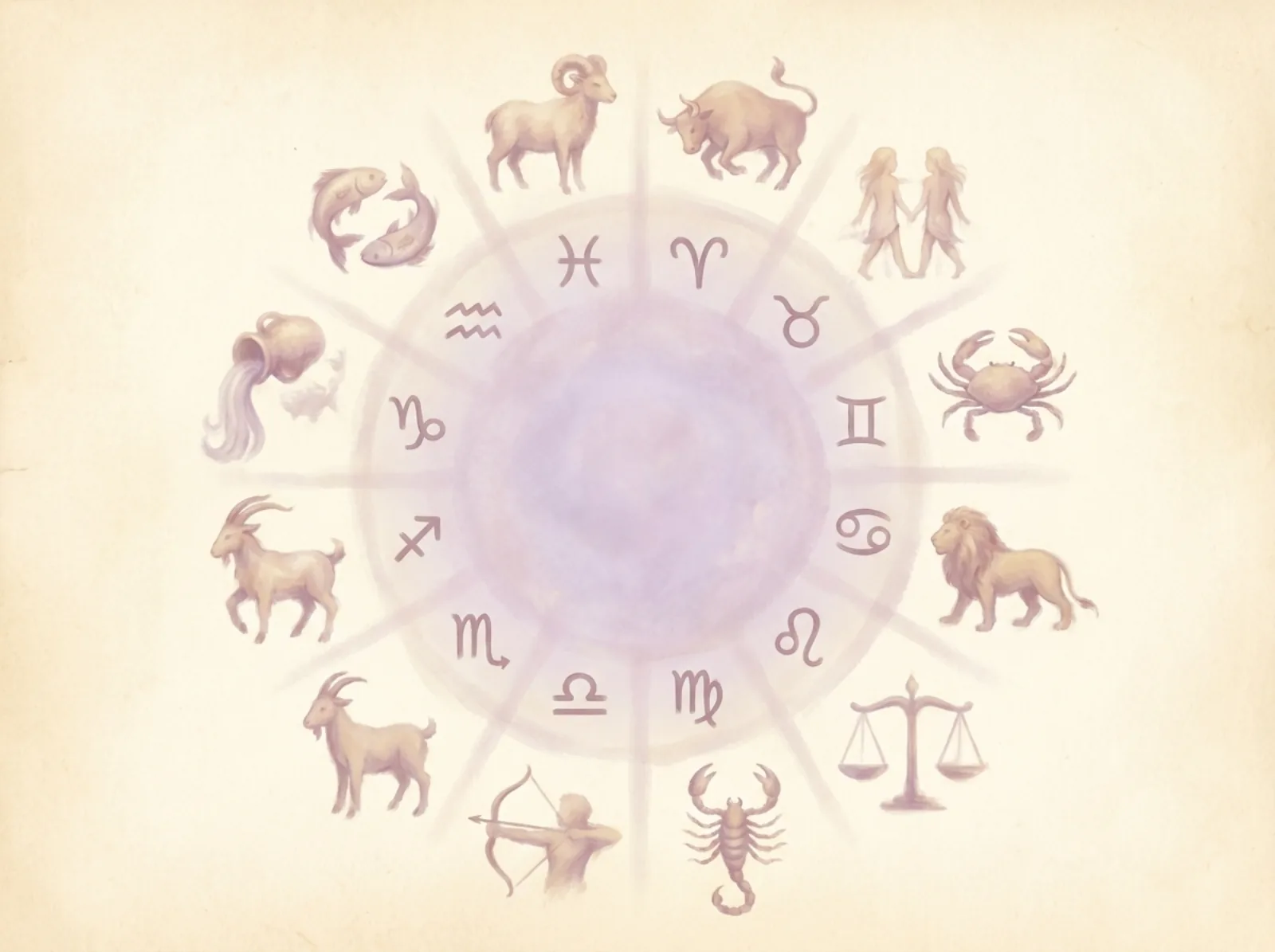
In classical medical astrology — the kind written in Latin before anyone had a stethoscope — each sign governs a region of the body. The scheme runs head-to-toe starting with Aries. Aries rules the head and face. Taurus rules the throat and neck. Gemini, third in line, rules the shoulders, arms, hands, and lungs, with a strong link to the nervous system and the breath. That body-map is called melothesia, and it shows up in medical texts from Ptolemy's Tetrabiblos through the Renaissance into modern astrology handbooks. The modern version you'll find on Astrology.com or in Cafe Astrology's archives keeps the same associations: arms, hands, respiratory system, nervous system, upper shoulders. Why does it matter? Honestly, it doesn't — not for diagnosis. You will never find a cardiologist who orders tests based on your sun sign, and you shouldn't want one. What the map gives you is a reflection prompt: where in my body do I carry stress? If a Gemini friend of mine jokes about shoulder knots and tension headaches, I don't say well your sign rules the shoulders, obviously. I say, huh, interesting that you keep ending up there — what's going on in your life right now? The sign gives you a story to hang the question on. Celebrities give us a familiar silhouette. Angelina Jolie (Gemini sun) has described herself in interviews as someone who keeps her hands busy constantly — directing, drawing, writing, sketching storyboards. Johnny Depp is a famously hyper-expressive hand-talker on camera. Paul McCartney wrote and performed with those hands for sixty years. The arms-and-hands theme isn't predictive, but it's a recurring motif in how people with heavy Gemini placements describe themselves — and in how their biographers describe them. For body-rulership tables that are reasonably well-sourced, see the Astrology.com body associations index or Labyrinthos's melothesic chart. Neither replaces an anatomy textbook, which is the point.The Gemini Energetic Pattern (Mutable Air, Mercury-Ruled)
Four modalities, four elements, three polarities. Gemini is mutable air, ruled by Mercury. Translate those three words and you get: changeable, mental, communicative, fast, curious, scattered, agile, verbal, iterative. It's the sign of the Twins because it's inherently plural — one mood in the morning, another by 3pm, a third after dinner. Mutable air shows up as mental velocity. Fixed signs (Taurus, Leo, Scorpio, Aquarius) commit to a lane. Cardinal signs (Aries, Cancer, Libra, Capricorn) start things. Mutable signs (Gemini, Virgo, Sagittarius, Pisces) adapt and shapeshift. For a Gemini body, that often translates to a nervous system running at a higher baseline — not anxious necessarily, but on. The system is wired for intake: new conversations, new reading material, new tabs, new ideas, new people, new reasons to open your phone again. Mercury rules the sign, and Mercury is the planet of transit, exchange, and the between. The Greek Hermes was the god who crossed boundaries — between worlds, between people, between tongues. If you've ever been described as code-switches constantly or can talk to anyone, there's a decent chance you have strong Mercury or Gemini in your chart. It's not a flex and it's not a flaw. It's the operating system. I had a Gemini client last year — a journalist in London — who kept trying to force herself into a 90-minute deep work block because that's what the productivity blogs say. She hated it. She'd fidget, open Slack, abandon the task, feel guilty, repeat. We looked at her chart (Gemini sun, Gemini Mercury, Virgo moon) and I said: what if your deep work block is three 25-minute sprints with switch-tasks between them? She tried it. She wrote two features that month she'd been stuck on for weeks. Her nervous system didn't need to be fixed. It needed to be worked with. That's the Gemini pattern in one line: the mind is a tool that works best when it gets to move.Common Gemini Lifestyle Habits (Good and Challenging)
Alright, let me get specific. Patterns I see over and over in Gemini-heavy clients, with the honest caveat that no two Geminis are identical and your rising sign, moon, and Mercury placement all shape this. The gifts, first. - Natural information-processors. Geminis read fast, link ideas, and remember strange trivia. - Social adaptability. Can hold a conversation with a seven-year-old and a seventy-year-old in the same hour. - Verbal fluency. Writing, podcasting, teaching, selling, cold-messaging — Mercury traits. - Curiosity-driven. The best Geminis treat life as a lifelong undergraduate degree. - Hand-work talent. Instrument playing, drawing, surgery, carpentry, typing, cooking — physical hand intelligence is often strong. The costs, honestly. - Scattered attention. Four projects in motion, one finished. If this is you, you know. - Sleep debt from a mind that won't stop at midnight. - Over-caffeination. The brain wants fuel; the nervous system does not need another espresso. - Social-energy drain. Geminis often don't notice they're exhausted until they crash. - Shoulder and jaw tension from carrying mental load physically. - Oh I'll start Monday syndrome — great at starting, less great at the dreary middle of a habit. - Snack-grazing instead of real meals, because sitting down for forty minutes feels interminable. None of this is a personality verdict. These are patterns, which means they can shift. The whole point of noticing a pattern is you now get a choice. Natalie Portman (Gemini sun) studied at Harvard while filming Star Wars, which is the Gemini I'll do both instinct at Olympic level. Venus Williams built a tennis career and a design business and an interiors line. Prince released thirty-nine studio albums and could play twenty-seven instruments. The signature isn't lack of focus — it's refusal to stay in a single lane. The task of a healthy Gemini is building a life that gives the mind enough variety that it doesn't have to go find variety by self-sabotaging.Best Workouts for the Gemini Nervous System
Here's where the body-rulership stuff actually becomes useful. If Gemini is linked to breath, arms, hands, and nervous system — and if the Gemini energetic signature is variety-seeking — then the best workout isn't the one that burns the most calories. It's the one you'll actually do more than three times. What tends to work for Gemini-heavy clients: - Variety-first programming. Rotate three or four modalities per week instead of grinding one. Monday run, Wednesday climb, Friday pilates, Sunday hike. The novelty is the retention mechanism. - Breath-centered movement. Yoga, pilates, swimming, running intervals with nasal-breath cycles. Reconnects a wired nervous system to a slower rhythm. - Agility and footwork. Boxing, dance, martial arts, tennis, rock climbing. Hands and reflexes get engaged. - Group-social movement. Spin classes, run clubs, climbing gyms. The social hit is as motivating as the exercise. - Walking meetings. The underrated Gemini productivity cheat code. What tends to fail Geminis: - The same single-modality program for twelve weeks. The adherence rate crashes around week three. - Pure powerlifting with no cardio or mobility. Fine as supplement, miserable as sole modality for most Geminis. - Silent, screen-free, no-podcast cardio for sixty minutes. The mind will mutiny. Give it a book, a show, a friend. Nicole Kidman has talked in interviews about mixing running, cycling, yoga, and Pilates — different year, different lead. Chris Evans rotates heavy lifting with recreational basketball and dog walks. The pattern is modality rotation, not a single commandment. A real study worth knowing: the American College of Sports Medicine recommends 150 minutes of moderate activity weekly plus two days of strength training. That's the floor. How you distribute it is where personality comes in. Gemini folks tend to hit the floor more reliably when the 150 minutes is split across four or five different activities instead of consolidated into three identical 50-minute blocks. Breathwork deserves its own line. Box breathing, 4-7-8, alternate-nostril — pick one, do five minutes before bed. Lungs are Gemini-ruled territory in the old maps, and your actual lungs will thank you regardless of whether the symbolism holds up.Nutrition Patterns That Suit Gemini Energy
I want to be careful here because I'm not a dietician and this is lifestyle reflection, not a meal plan. Please talk to an actual registered dietician if you want individualized nutrition advice. What I can share is pattern-level observation. Gemini clients often struggle with three nutrition issues more than other signs: 1. Skipping meals when deep in a project. 2. Grazing on snacks because sitting down for a meal feels like a forty-minute hostage situation. 3. Over-caffeinating a nervous system that's already running hot. Pattern 1 is a focus-blindness issue. The mind locks on, the body gets ignored. The usual fix is habit scaffolding: a 1pm reminder, a prepped lunch in the fridge, a lunch-with-a-friend standing invite. Make the meal happen without requiring willpower. Pattern 2 is a boredom issue. Try shorter meals with more variety. Mezze plates, bento boxes, tapas-style dinners — Geminis often eat better when the plate itself is interesting rather than one block of chicken-and-rice. Pattern 3 is the big one. The CDC flags that most adults should keep caffeine around 400mg daily — about four cups of brewed coffee. A lot of Geminis clear that by 11am and wonder why they can't sleep. Try a cutoff time (noon or 2pm, honest with yourself) and watch what happens over two weeks. A few patterns that tend to help: - Protein-forward breakfast. Blood sugar stability matters for a nervous system that already runs hot. Eggs, Greek yogurt, cottage cheese, a protein smoothie — not a croissant and a cortado at 8am and nothing until 1pm. - Omega-3 attention. Fatty fish, flax, walnuts, or a supplement if you don't eat fish. The brain and nervous system use these. - Magnesium-rich foods (and supplementation only if your doctor okays it). Leafy greens, pumpkin seeds, dark chocolate, legumes. Supports sleep and nervous-system regulation. - Hydration. Boring. Non-negotiable. Carry the bottle. Celebrities with Gemini placements have talked about this. Angelina Jolie has mentioned forcing herself to eat regular meals during intense film shoots because she won't naturally. Zoe Saldana has described herself as a constant grazer who had to learn to sit down. The pattern recurs. Astrology does not care if you eat kale or steak. Your body does. Pick the questions that help you notice your actual eating patterns, and let the sign-stuff be a conversation starter, not a dietician.Sleep and Recovery for the Wired Gemini Mind
Sleep is where Gemini health lives or dies. I say that with no horoscope flourish. Of every pattern I see in Gemini-heavy clients, I slept five hours and now everything is on fire is the most predictable one. The Gemini mind at 11pm tends to be the most alive version of itself. Second wind, project ideas, four tabs reopened, a thirty-minute YouTube rabbit hole. Then the alarm at 6:30am and the whole day gets 60% dim. Patterns that help: - Hard screens-off at 9:30 or 10. Not 11. Not I'll just finish this. The Gemini mind will not finish this. It will find another thing to finish. - A verbal wind-down. Journal, voice-memo, read fiction. The verbal brain needs a graceful off-ramp, not an abrupt one. - A boring book by the bed. Fiction that engages but doesn't excite. - Caffeine cutoff by 2pm absolute latest. - A room cool and dark. The National Sleep Foundation points to roughly 60-67°F (15-19°C) as the comfortable range for most adults. - Seven to nine hours is the adult target per the CDC. If you're a Gemini who's convinced you function on five, you probably don't — you've just normalized the deficit. Recovery days matter and Geminis skip them. The variety-seeking instinct that keeps workout adherence high can also mean you train five days in a row with no rest because switching modalities feels like rest. It isn't. Rest is rest. One true rest day per week, non-negotiable, phone in a different room if possible. Marilyn Monroe famously struggled with sleep her whole life — a cautionary tale, not a template. The dependence on sleep medication she developed is a well-documented tragedy. If your sleep is genuinely dysregulated, that's a medical issue, not an astrology issue. See a sleep specialist. The Mayo Clinic has excellent entry-point resources on sleep hygiene and when to escalate. A Gemini pattern worth noticing: the social jet lag effect, where weekday wake-up is 6:30 and weekend wake-up is 11. The four-and-a-half-hour drift destabilizes everything. Try to keep weekend wake-ups within 90 minutes of weekday wake-ups. The whole system settles.Gemini Stress Response and How to Downshift
Every sign has a stress signature. For Gemini, it's cognitive — not emotional first, but mental. The symptoms I hear: - Mind won't stop. Loops the same conversation twelve times. - Insomnia at 3am. - Shoulder and neck tension. - Jaw clenching, often during sleep. - Fast speech, interrupting more than usual. - Snapping at loved ones over small things. - A kind of mental brittleness — you can function but every input feels louder. The classical body-rulership map ties stress to shoulders, lungs, and nervous system for Gemini, and honestly, that lines up with where I see people hold it. Not because of astrology necessarily — the shoulders are a general stress-storage site for everyone. But Geminis tend to carry it there earlier and more visibly. Downshift tools, from least to most involved: 1. Three slow breaths with the exhale twice as long as the inhale. Right now, while you read this. It works. 2. Five minutes of box breathing. Four-count in, four hold, four out, four hold. Repeat. 3. A ten-minute walk outside, no phone, no podcast. 4. Fifteen minutes of journaling — not a to-do list, actual thought dumping. 5. A longer session: yoga nidra, a guided body scan, a therapy appointment, a conversation with a friend who gets it. 6. Weekly: one evening with no phone or screens past 7pm. 7. Quarterly: a day of nothing. No plans. No productive rest. Just a Saturday where you don't have a schedule. Shia LaBeouf has spoken openly about his mental health struggles and the way talk therapy and twelve-step work changed his relationship to his own mind. That's not an endorsement of any specific approach — it's a note that the Gemini mind benefits enormously from being talked out loud. Verbal processing is the native language. If stress has crossed into panic attacks, chest pain, or sleep that stays broken for more than two weeks, that is not a self-help situation. See your GP. The next section covers this seriously.Mental Health Reflection for Gemini (Not Diagnostic)
Astrology is not psychiatry and I need to say that in bold font and spoken aloud: astrology is not psychiatry. If a reel on your feed tells you Geminis have ADHD because of Mercury — that's content, not diagnosis. ADHD is a clinical condition diagnosed by a professional with specific criteria. So is bipolar, so is anxiety, so is depression. Please do not let your star sign be your diagnostician. With that absolutely clear, here's what reflective astrology can offer for mental wellness: - A vocabulary for your patterns. I tend to run hot cognitively and crash emotionally is useful self-knowledge. - Permission to work with your nervous system instead of against it. The Gemini who tries to meditate for sixty minutes in silence and fails isn't broken; the technique is mismatched. - A conversation starter with a therapist. I notice I context-switch constantly and I'm exhausted is a better opening than I'm fine. - An invitation to track mood, energy, and sleep over time. Patterns emerge faster than you'd think. Common Gemini-pattern mental wellness themes I hear: - I feel too much at the surface and not enough underneath. Classic air-sign reflection — may benefit from somatic work. - I'm the social one and I'm so lonely. Also classic. Social fluency isn't intimacy. - I can talk about anything except what I actually feel. Mercury strength becomes a mask. - I'm either on or crashed, nothing in between. Nervous-system regulation question. Mary-Kate Olsen has spoken about anxiety and the way she had to step out of the public eye to manage it. Lauryn Hill has described withdrawal from the industry as a mental-health necessity. Celebrities aren't templates. Their stories are reminders that the shiny public-facing Gemini-ness often has a quieter, more complicated inside. If you're struggling: your GP, a licensed therapist, 988 in the US, 116 123 Samaritans in the UK, Lifeline 13 11 14 in Australia, 988 (talk or text) in Canada. Help is help, regardless of your chart.When to See a Real Doctor (Always, Full Stop)
I'm going to be unambiguous. Please read this twice. Nothing in this article — nothing on my site, nothing in any tarot reading, nothing in any astrology book ever written — replaces a licensed medical professional. If you have symptoms, see a doctor. If you're on medication, don't stop it because of a horoscope. If you're worried about something, make the appointment. Specifically, see a doctor if: - Chest pain or shortness of breath that doesn't fit obvious context. Just ran up stairs is one thing; sitting on the couch and panicking is another. - A persistent cough longer than three weeks. The lungs are Gemini-ruled in the symbolic map, and they're also actual lungs that can get actual pneumonia. - Numbness or tingling in arms or hands that doesn't go away. See a GP. - Headaches that change pattern or get noticeably worse. - Sleep problems that last more than two weeks and are affecting your day. - Any mental health symptom that scares you or scares the people who love you. - Any new lump, mole change, bleeding, swelling, or pain that's not resolving. The point of pattern-tracking in astrology is to notice when something's off. The next step after noticing is talking to someone qualified to interpret what off means in your actual body. The CDC, Mayo Clinic, NHS, and your country's equivalent have good online entry points for do I need to see a doctor about this questions. Use them. I had a client once — a brilliant Gemini writer — who kept telling herself her shoulder pain was just Gemini stress. It was a frozen shoulder requiring physical therapy. The astrology was a nice vocabulary. The physical therapy fixed the actual problem. Both can be true at the same time. Astrology is a lens. Medicine is medicine. One does not substitute for the other, and good astrologers will tell you this louder than anyone.Journaling with Raka for Pattern Tracking
Here's where I think reflective astrology earns its keep. Not predictions. Not warnings. Tracking. A Gemini mind is excellent at generating thoughts and terrible at remembering what it was thinking last Tuesday. If you want to actually notice your patterns — the sleep ones, the stress ones, the energy ones — you need a system that catches them before they evaporate. My suggestion: pull one Raka Tarot card a day and journal three lines on it. Not what will happen today. Just: what came up when I saw this card, how did I feel this morning, what's my energy level one to ten, how many hours did I sleep last night, one thing I'm carrying. Over thirty days you get a map. Over ninety you get a diagnosis — not a medical one, but a self-knowledge one. I crash on days I didn't eat breakfast. My worst anxiety spikes are the week before a deadline, not the week of. I slept worst the week I had three social dinners in a row. These are the patterns the Gemini mind generates and forgets, and journaling catches them. Raka works for this because the cards are the reflection prompt. You're not writing on a blank page staring at a cursor. You've got a Queen of Cups or Three of Swords or the Hermit, and the image gives you somewhere to start. For a mind that loves inputs, having the input built in makes the habit stick. I run my own card-a-day practice. I've been doing it since 2019. I'm not a Gemini — I'm a Virgo rising with Mercury in Taurus, which is a whole different operating system. But the practice works the same: a nudge, three sentences, a sign-off. Over years, I've noticed my own patterns around deadlines, intimacy, grief, and travel in ways no planner app has ever caught. If you've got Gemini sun, moon, Mercury, or rising, this kind of light-touch verbal journaling is almost tailor-made for your nervous system. You're not asked to meditate. You're not asked to sit still. You're asked to pull one card and write three lines. Your Mercury-blessed brain will produce those three lines in sixty seconds, and the archive compounds. Raka Tarot has an in-built journal that saves alongside each reading. Use it. Export it monthly. Read it quarterly. That's the full practice. And the whole time, remember the frame: this is lifestyle reflection, not medical advice. The point is to know yourself a little better, show up to your doctor a little more informed, and move through your week with a nervous system that feels at least a few degrees less wired than it did last month.Frequently asked questions
Does Gemini really affect my physical health?
No, your sun sign doesn't physically affect your health. Astrology is a symbolic language for self-reflection, not biology. The traditional associations between Gemini and the lungs, arms, hands, and nervous system are useful as prompts to notice your own patterns — things like do I carry stress in my shoulders or am I breathing shallowly. They are not predictive and they do not replace medical advice. See a doctor for anything physical. Part of our astrology library.
What body parts does Gemini rule in astrology?
In traditional medical astrology, Gemini is associated with the shoulders, arms, hands, lungs, and nervous system. This mapping is called melothesia and traces back to Ptolemy's Tetrabiblos. The scheme runs head-to-toe starting with Aries, so Gemini — third sign — governs the upper torso and respiratory region. Modern astrology books carry the same associations, but it's symbolic self-reflection, not anatomy.
What exercise is best for a Gemini?
Variety-based programming tends to work best for Gemini-heavy clients. Rotate three or four modalities per week — a run, a climb, a pilates class, a hike — instead of grinding a single workout. Breath-centered activities (yoga, swimming, nasal-breath intervals) and agility-based ones (boxing, dance, climbing) often suit the Gemini nervous system. The American College of Sports Medicine recommends 150 minutes of moderate activity weekly plus two strength sessions; how you distribute that is where personality shows up.
Why do Geminis have trouble sleeping?
Not every Gemini has sleep problems, but the pattern I see often is a mind that peaks at 11pm — second wind, project ideas, more tabs — followed by a 6:30am alarm. The Mercury-ruled signature is a high cognitive baseline, and that's hardest to downshift at night. Fixes that help: screens-off at 9:30 to 10pm, caffeine cutoff by 2pm, a boring book bedside, and a cool, dark room. If sleep is truly broken for more than two weeks, see a doctor.
Can my sun sign cause anxiety or ADHD?
Absolutely not. Anxiety and ADHD are clinical conditions diagnosed by qualified professionals using specific criteria. Astrology can offer a vocabulary for noticing your patterns — I run hot cognitively is useful self-knowledge — but it cannot diagnose you and no responsible astrologer would try. If you suspect ADHD, anxiety, depression, or any mental-health condition, please talk to your GP or a licensed therapist.
How should Geminis handle stress day to day?
Verbal processing is the Gemini native language, so journaling, talking it out, voice-memoing, or therapy tends to work faster than silent meditation. In the moment, three slow breaths with the exhale twice as long as the inhale resets the nervous system quickly. Daily: a ten-minute no-phone walk outside. Weekly: an evening with no screens past 7pm. Shoulder and neck tension often ease with stretching, massage, and real sleep. If stress has become panic, chest pain, or persistent sleeplessness, see a doctor.
Can astrology ever replace medical advice?
Never. Astrology is a reflective tool, not medicine. It can help you notice patterns, start conversations with practitioners, and track moods, but it cannot diagnose, treat, or substitute for professional care. If you have symptoms, see a doctor. If you're on medication, do not stop it based on a horoscope. The CDC, NHS, Mayo Clinic, and other medical bodies have excellent entry-point resources — use them, and keep astrology as the colorful side dish, never the main course.