Capricorn's Body-Rulership: Where the Tradition Actually Points
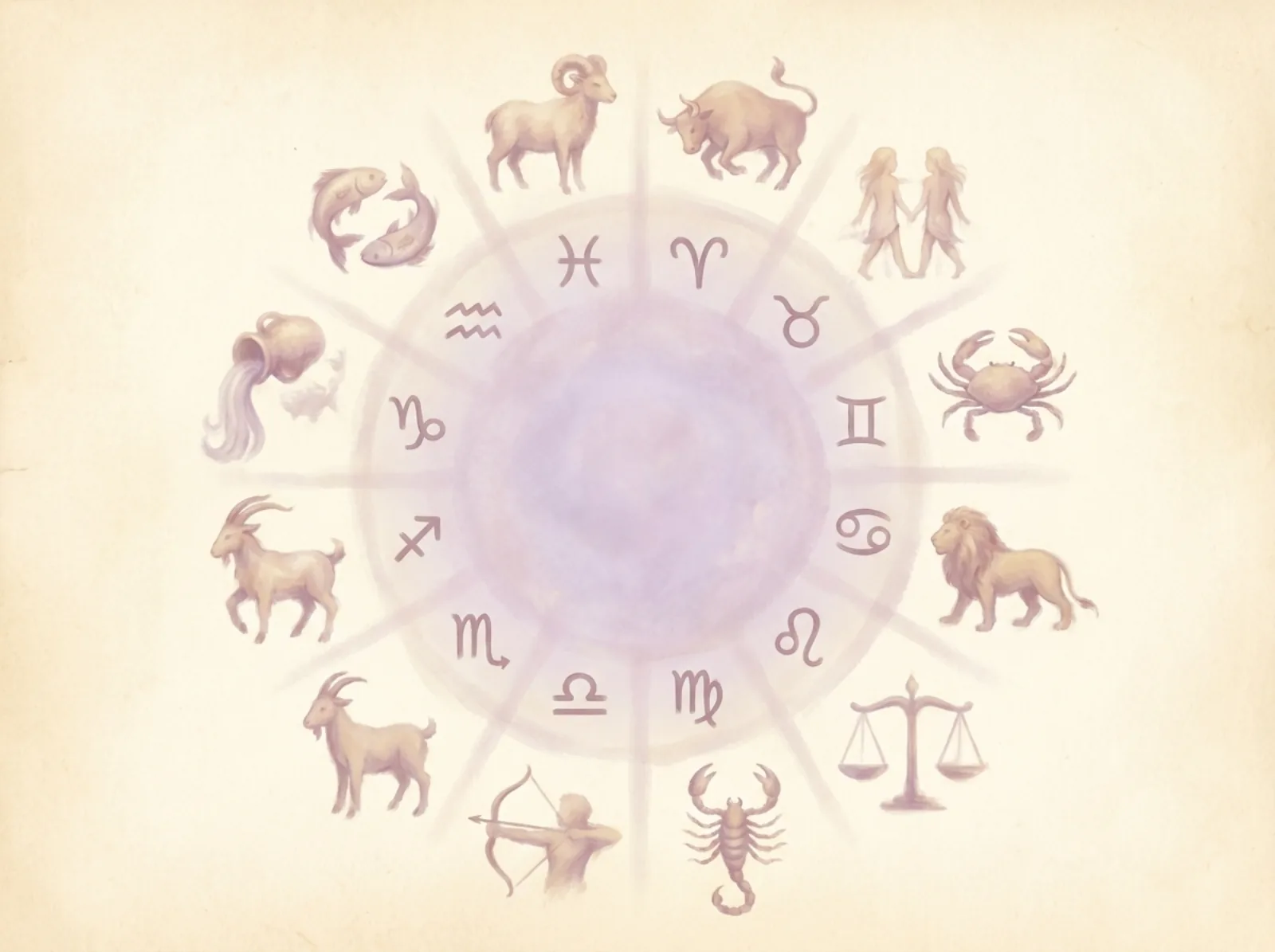
Astrology has had a body-rulership map for roughly two thousand years. It is not clinical. It is a symbolic framework the ancients built to make the body legible — a mnemonic, basically — and we still use it today as a reflective tool. Here is the full twelve-sign map so you can see where Capricorn sits in the sequence, head to toe: - Aries rules the head, face, and brain - Taurus rules the throat, neck, thyroid, and voice - Gemini rules the lungs, shoulders, arms, and hands - Cancer rules the chest, breasts, stomach, and digestive lining - Leo rules the heart, spine, and upper back - Virgo rules the small intestine and digestive system - Libra rules the kidneys, adrenal glands, and lower back - Scorpio rules the pelvis, reproductive organs, and elimination - Sagittarius rules the hips, thighs, and liver - Capricorn rules the knees, bones, joints, skeletal system, teeth, and skin - Aquarius rules the ankles, calves, and circulatory system - Pisces rules the feet and the lymphatic system Capricorn is the sign of structure. Of what holds a body up. Knees, bones, skeleton, teeth, skin — all of it is the architecture that lets you keep standing while you do the long work of your life. The symbolism tracks beautifully with the archetype. Capricorn is the climber, the mountain-goat glyph, the sign that puts in a decade when everyone else gives up at year two. Of course the tradition pinned the structural tissues on this sign. Does that mean a Capricorn sun will have knee problems? No. It means the archetype invites you to notice how you treat the parts of yourself that are supposed to hold you up. Which is a very different question. The reflective question, in Capricorn language, is: are you building a structure that can carry you for forty more years, or are you running the frame into the ground to hit this quarter's goal? That is the mirror. Hold it to your own life and see what it says.Capricorn's Energetic Pattern: Cardinal Earth, Saturn-Ruled
Every sign has what astrologers call a modality and an element. Capricorn is cardinal earth, ruled by Saturn. Translating that out of jargon: Cardinal means Capricorn initiates. It starts the season — winter in the northern hemisphere, the solstice itself — and the archetype begins projects, sets structures in motion, and leads from the front. But it leads at an earth pace, not a fire pace. It does not sprint. It builds. Earth means Capricorn is tangible. It wants results you can touch — a built thing, a trained body, a company, a paid-off house. It respects what shows up in the physical world. And Saturn, the ruler, is the planet of time, structure, limitation, consequence, and endurance. Saturn is slow. Saturn is the long game. Saturn is what you have to do, not what you want to do. If you have ever read anything about discipline, duty, or deferred gratification, you have read something that is secretly about Saturn. Put all three together and you get the Capricorn energetic signature: a long, slow, structural burn. Patient endurance over explosive output. Marathon over sprint. The grind of the person who runs the same five miles every morning for twenty years and then wonders why they feel so good at fifty. Here is the double-edge, though. That signature is a gift when it is channeled well. Capricorn is the sign of people who finish what they start, who show up on day 847 of a project, who understand that bodies and careers are both built in increments. But the same signature becomes a problem when it refuses to downshift. The Capricorn in a tired body who refuses to rest because 'I'll rest when it's done' is also running Saturn — just the shadow version. Keep this in your pocket as we go through the rest of the article. Everything Capricorn is good at and everything Capricorn struggles with is the same pattern turned to different volumes. The work is modulation, not transformation.Common Capricorn Lifestyle Habits: The Good and the Challenging
Let me do this one as a plain-English list in prose, because I think it is the fastest way to see yourself in it. The habits Capricorn tends to do well: **Routine.** Capricorn people often have real routines — not aspirational ones, actual ones. Morning walks that happen every morning. A gym day on the calendar that does not move. A journal they have been keeping since they were nineteen. The pattern-adherence muscle is strong. **Follow-through.** Capricorn finishes. Michelle Obama, a January 17 Capricorn, is a textbook case — law school after Princeton, hospital administration, a First Lady project (Let's Move) that she executed for eight years, memoir, speaking tour, book club, podcast. One thing at a time, built out. That is Capricorn follow-through. **Long-horizon thinking.** Capricorn plans for a decade from now in a way most signs do not. LeBron James, another late-December Capricorn, has spent twenty-plus years treating his body like a long-term investment — the famous million-plus-a-year he reportedly spends on body maintenance is Capricorn energy made literal. **Delayed gratification.** The ability to say no to the pleasant thing now in service of the better thing later. Capricorn can do this almost unnaturally well. Now the habits that get in Capricorn's way: **Overworking.** The sign that invented the phrase 'I'll sleep when I'm dead' is probably Capricorn. The body becomes a tool to accomplish things with, not a self to live in. **Treating rest as a reward.** Rest should be scheduled, not earned. Capricorn tends to only let itself rest after the task is done, which, for a Capricorn, is never. **Pushing through pain.** Capricorn's instinct when the body signals something is wrong is to push through it, finish the workout, close the project, see if it resolves itself. Sometimes it does. Sometimes it does not, and the small signal becomes an injury. **Loneliness in the climb.** Capricorn's archetype is a mountain goat going up alone. People matter, but they get deprioritized when the work is heavy. This has knock-on effects on everything from mental health to recovery. If you read that list and thought 'oh no, that is just my personality,' welcome. That is the reflective hit the archetype is designed to produce.Best Workouts for Capricorn: Match the Energy, Don't Fight It
The core principle is this. Capricorn energy wants long, structural, cumulative movement. Workouts that build something — strength, endurance, skill — over months. Workouts where there is a measurable progression. Workouts that respect the knees, bones, and connective tissue the sign rules, rather than hammering them. Here is what tends to actually feel good to a Capricorn body and keep a Capricorn mind interested: **Strength training.** Progressive overload is Capricorn catnip. You see the numbers go up, you can track it in a notebook, you can keep doing it for thirty years. Classic lifting, kettlebells, or a well-programmed app routine — any of these fit the archetype. **Hiking and climbing.** The mountain-goat glyph is not a joke. Long walks with elevation, actual mountains if you have them, scrambling, ridge days. Capricorn loves a hike that takes six hours and ends in a quiet sense of having earned the top. **Walking.** Just walking. Capricorn is the sign of people who put ten thousand steps on a watch every day without making a project out of it. Low impact, long game, kind to the knees. **Pilates and mat work.** Builds the deep structural core, strengthens the hips and glutes that protect the knees, and is a controlled progression — all very Capricorn. **Cycling, especially outdoor and road.** Long rides. The elegance of a well-trained aerobic base. Easier on the knees than running, which matters for a sign that holds its strain in that joint. **Climbing — bouldering, sport, trad.** Problem-solving plus structural strength plus patience. Climbers skew Capricorn in temperament even when they are not Capricorn in sun sign. A couple of workout traps to watch for, speaking Capricorn to Capricorn: Running on bad knees because you have always run. If the knees are complaining, change the modality. Walking, cycling, swimming, elliptical. The Capricorn virtue is persistence; the Capricorn vice is persistence into tissue damage. Skipping warm-up and cool-down because they feel like a waste of time. Both protect the structural tissue the archetype supposedly rules. Pay the ten-minute tax at both ends. Refusing rest days. A rest day is not a lost day. For Capricorn energy especially, a rest day is when adaptation actually happens. Your Monday self is paying your Sunday self to lie on the couch. Honor the contract.Nutrition Patterns for Capricorn: Routine Over Rules
I am not going to tell you what to eat. That is between you, a dietitian, and your own body. What I can tell you is how the Capricorn archetype tends to behave around food and where the quiet pitfalls are. Capricorn is a creature of routine. The best Capricorn food habits are often simple, boring, structural things done every day for years. Oatmeal at seven, lunch at twelve-thirty, dinner at seven. Grocery list on a schedule. The same ten meals rotated. If you have ever met someone who has been eating the same breakfast for a decade and seems quietly thriving on it, there is a decent chance you have met a Capricorn. That routine is a strength. The body likes predictable fueling. Blood sugar prefers it. Digestion prefers it. The challenges come from Capricorn's relationship with work, not with food: **Skipping meals when deep in work.** Capricorn's defining habit is 'I'll eat after I finish this.' And then it is three o'clock and you have had coffee and half a banana. If you recognize this, set an alarm, put the meal on the calendar like a meeting, and attend the meeting. **Treating food as fuel only.** The body-as-machine thinking leaks into food easily. Food is also pleasure, connection, culture. A Capricorn pattern worth watching is one where meals have been reduced to macros and timing and no longer feel like anything. **Over-caffeinating to stay in Saturn mode.** Capricorn runs on willpower, and when willpower runs low the fastest replenisher is caffeine. The pattern can escalate quietly. If you are on your fourth coffee and it is two p.m., that is information, not just a Tuesday. **Alcohol as the only off-switch.** Because Capricorn finds it genuinely hard to downshift, sometimes a drink becomes the ritual that signals 'okay, I am off duty now.' That is an understandable pattern and also one worth noticing — the drink is not the problem, the inability to downshift without it is. Reflective nutrition prompt in Capricorn language: are you eating like someone who is building a long life, or eating like someone who is spending a body to finish a project? Both are patterns. Only one is the one you would pick on purpose. Again — not medical advice. If food, body image, or restriction is a struggle, that is a therapist and a dietitian conversation, not an astrology article.Sleep and Recovery for Capricorn
If I had to pick one wellness issue that haunts the Capricorn archetype more than any other, it is sleep. Saturn and sleep do not like each other. Saturn is the planet of 'one more hour of work, one more email, one more thing before I stop.' Sleep is the one domain where you cannot bulldoze your way to a result through sheer effort. You either let yourself drop into it, or you do not sleep. The Capricorn mind — the achiever mind, the finisher mind — is often the mind that lies awake running tomorrow's to-do list at eleven-thirty p.m. and then wonders why the energy is low at three p.m. the next day. A few patterns to notice: **Late-night work as the preferred mode.** Capricorn often does its deepest focused work late at night, when nobody wants anything. Then it has to be up at six-thirty for a meeting. The arithmetic is unforgiving. Something has to give — either the late-night work migrates to the morning, or the schedule has to actually make room for sleep. **'I'll catch up on the weekend.'** Sleep debt does not fully reverse with a long Saturday lie-in. The research on this is well-established. Chronic undersleep compounds the way financial debt compounds. **Winding down as a skill, not a mood.** Capricorn tends to think of unwinding as something that should just happen if you lie down. For a Saturn-dominant nervous system, it is a skill, and it takes practice. A real wind-down routine — same time each night, lights down, phone away, something boring to read — is a Capricorn-shaped intervention. **Recovery days as actual recovery.** See the workouts section. A rest day is for actually resting, not for 'light cardio and a long run of errands.' One note on the famous Capricorn example that cuts the other way: Dolly Parton, a January 19 Capricorn, has for years told interviewers she sleeps around five hours a night. That is her, and she is extraordinary. For the rest of us, the research on sleep need is pretty consistent — most adults do best on seven to nine. Do not use Dolly as your sleep protocol. I will say the thing I say in every wellness article I write. If sleep is genuinely broken — insomnia, waking at the same hour every night, needing substances to drop off, snoring that wakes a partner — see an actual sleep clinician. Not Instagram, not me, not Raka. A sleep study is a real thing you can get, and it fixes things that no amount of camomile tea will. The astrology prompt is to notice the pattern. The medical response, when needed, is to call a doctor.Capricorn Stress Response: How the Body Holds the Weight and How to Downshift
Different archetypes carry stress in different places. For Capricorn, the pattern is pretty consistent. The body holds the stress in the structural tissues the sign rules — jaw, shoulders, knees, lower back — and the mind holds it as a sense of 'I just have to get through this, and then it will be okay.' A few of the stress patterns I see over and over in Capricorn-flavored charts: **Jaw clenching, especially at night.** Teeth-grinding, waking up with a sore jaw, a dentist telling you you are wearing down enamel. Capricorn rules the teeth; the stress pattern lives there. **Shoulders up around the ears.** Not metaphorical — literal postural clench. Chronic trapezius tension. The weight-of-the-world shoulder posture. **Knees that start aching in your thirties even though you have not injured them.** The connective tissue is where the sign stores strain. **The 'push through' tell.** The mental version. Capricorn's stress response, uniquely, often looks like getting more productive, not less. You can tell a Capricorn is stressed because the to-do list is suddenly flawless. Downshifting is the actual Capricorn skill-gap. Here are a few interventions I have seen work: **Scheduling the downshift.** If you cannot downshift on vibe, downshift on calendar. Thursday 7 p.m. is yoga. Saturday afternoon is a nap. The structure that is Capricorn's gift becomes the way you make rest happen. **Body-first, not mind-first.** Capricorn cannot think its way out of Capricorn stress. The way out is through the body — a long walk, a bath, a massage, breathing, sauna, swim. Something that forces the nervous system to shift gears before the mind catches up. **Nervous system practices with evidence behind them.** Slow nasal breathing. Longer exhales than inhales. Cold water on the face. These are not woo; they are vagal interventions. A Capricorn-shaped mind likes them because they are concrete and they work on a timeline you can measure. **Co-regulation.** Capricorn tends to downshift alone or not at all. Dinner with a friend who makes you laugh counts as nervous-system medicine. The archetype resists this because it feels unproductive. It is not. It is maintenance for the structure the sign cares about more than any other. If any of this is landing — if you have been clenching your jaw this whole paragraph — that is also the archetype doing its job.Mental Health Reflection for Capricorn (Not Diagnostic)
This section is a reflective one. Astrology does not diagnose anything. If you are struggling with your mental health, you talk to a licensed professional. What astrology can do is give you a vocabulary for noticing patterns. A few Capricorn-flavored mental-health patterns worth naming: **'I'll feel better when I achieve X.'** The deferred-wellbeing trap. Capricorn tends to pin its sense of okay-ness to the next milestone — the promotion, the degree, the house, the launch. The problem is the trap moves. There is always a next milestone. Noticing this pattern is not solving it, but it is where solving it starts. **Perfectionism as a love language toward the self.** Capricorn can be very hard on itself — not out of cruelty, but out of a sincere belief that holding a high standard is the way to be a good person. The internal voice tends to sound reasonable and demanding. It can take years to notice how exhausting it is. **Isolation when the going gets hard.** Capricorn often does not ask for help, does not want to look like it needs help, and will quietly carry a lot for a long time. The pattern is not noble. It is just the pattern. People love you and want to show up. Letting them is a skill. **A productivity-shaped version of depression.** Classic 'high-functioning' presentation. Nothing looks wrong on the outside. The to-do list is immaculate. Inside, there is no joy. This is not a diagnosis — this is a reflective pattern-notice. If it rings a bell, that is a conversation to have with an actual therapist. **Difficulty resting without guilt.** Rest triggers a background anxiety that something is slipping. A lot of Capricorns describe the sensation that doing nothing feels like being watched. Noticing this pattern in your own body is a Capricorn-level piece of self-awareness. I want to say this plainly. The Capricorn archetype is one of the ones most likely to look fine while being tired. If you are reading this and recognizing yourself and feeling a little exposed, that is useful information. Information from an astrology article is not treatment. If anything in this section is more than reflection — if it is your actual life — the next step is a therapist, not a tarot card. Full stop. Astrology is a mirror. A mirror can show you what to go deal with. It cannot deal with it for you.When to See a Real Doctor (Always, Full Stop)
I am going to say this twice in this article because it matters. Astrology does not replace medicine. Ever. Under any circumstance. For any reason. If any of the following are true for you, close this tab and go call a doctor: - A symptom has been going on for more than a few weeks and is not improving - You have been losing weight you did not try to lose - You have persistent pain anywhere, including the knees, bones, jaw, or back - Your sleep is genuinely broken, not just a bit short - You are thinking about hurting yourself, or you have been feeling hopeless for more than a couple of weeks - Something feels off in a way you cannot name but you know Please do not run a scenario through a horoscope and feel like you have handled it. A horoscope cannot order lab work. A tarot card cannot read a blood pressure cuff. The best use of a wellness archetype is to notice a pattern early enough that you take it to a real clinician for actual evaluation. The Capricorn version of this is especially important because, as we have been saying, the archetype tends to push through. 'It is probably nothing.' 'I will see how it is in a month.' 'I will go after the project is done.' These are the exact sentences that turn a small issue into a bigger one. The Capricorn virtue — endurance — is sometimes the thing that keeps you from the appointment you need. Make the appointment. The project will survive. If cost is the barrier, in the US, community health centers and sliding-scale clinics exist in most cities; in the UK, Australia, and Canada you have NHS and Medicare-equivalent access that is one of the great gifts of your systems — use it. If mental health is the issue, 988 in the US, Samaritans in the UK, Lifeline in Australia, and Talk Suicide in Canada are all real human beings on the other end of a phone line. Okay. That is the sermon. Back to the reflective stuff.Journaling with Raka for Pattern-Tracking
The thing I use astrology for in my own life, more than anything else, is pattern-tracking. Not prediction — pattern-tracking. Writing down what my energy is doing, what my body is doing, what my relationships are doing, and over months, seeing the shape of my own habits. The Capricorn archetype is especially suited to this because — of course — it is structural, it is long-game, and it rewards the person who keeps the notebook for ten years. If you are going to use any sign as a journaling framework, Capricorn is probably the easiest one to stay consistent with. A few prompts I use myself, and that I offer in Raka when people are reflecting on a Capricorn-flavored chart: - What did my body ask me for this week that I did not give it? - Where am I pushing through something I should actually stop and look at? - Where did I rest this week? Did it feel earned, or did I let myself have it? - What am I deferring my wellbeing to? What am I waiting on before I let myself be okay? - What is one thing in my life I am building for the long haul, and is my body healthy enough to still be building it in ten years? If you use Raka Tarot, you can pull a weekly reflection card and journal into it. It is a conversational tarot and astrology app built around 'self-reflection, not prediction.' Nothing in it will tell you what will happen. It will ask you better questions. For Capricorn energy, that framing matters — because the archetype is one that responds to questions, structure, and a place to put things. Even if you do not use the app, keep a notebook. The Capricorn gift is time. Give yourself ten years of data on your own patterns and you will know yourself in a way almost no one does. Diane Keaton — an early January Capricorn — has reportedly kept journals for most of her adult life, and in interviews over the years she has described the practice as the thing that most kept her grounded. That is a very Capricorn piece of maintenance. And this is the quiet, bigger thing. The Capricorn health archetype is not really about knees or sleep or bones. It is about the long relationship with the body you are going to live inside for several more decades. The way you treat that body today is the way it will treat you in 2046. Capricorn, more than any other sign, understands compounding. Use that understanding on yourself the way you would use it on anything else you cared about building. One more time, because repetition is a Capricorn virtue. This is lifestyle reflection. Not medical advice. For anything that matters medically, see a professional. Astrology is for noticing patterns. Doctors are for treating conditions. Both are useful, in their lane.Frequently asked questions
What body parts does Capricorn rule in astrology?
In the traditional sign-body map, Capricorn rules the knees, bones, skeletal system, joints, teeth, and skin — essentially the structural tissues that hold a body upright. The pattern is not medical; it is symbolic. The sign of long structure gets paired with the tissues that give the body its structure. The useful reflection is not 'Capricorns have knee problems' (they do not, as a demographic). It is 'am I taking care of the parts of me that are supposed to carry me for the next forty years?' That question lands harder for Capricorn energy than most. Part of our astrology guide hub.
Are Capricorns actually workaholics?
Capricorn energy biases toward long-horizon, structured work and real follow-through — so yes, people with strong Capricorn placements do often work hard and consistently over long periods. Whether that reads as 'disciplined' or 'workaholic' depends on whether rest is in the picture. The archetype's shadow is the one who treats the body as a machine to accomplish things with. The healthy version schedules rest the way it schedules the work. Both are available in the same chart; the difference is modulation, not identity.
What workouts suit Capricorn energy best?
Long, structural, cumulative movement. Strength training with progressive overload, hiking and climbing (very on-brand for the mountain-goat glyph), long walks, cycling, pilates, and bouldering all tend to click. The common thread is measurable progression over months, respect for the connective tissue around the knees, and a clear sense of building something. Capricorn energy gets bored fast with purely performative workouts and thrives on anything that compounds. If your knees are complaining, change the modality — walking, cycling, or swimming — rather than pushing through.
Why do Capricorns struggle with rest and sleep?
Saturn — Capricorn's ruling planet — is the archetype of 'one more thing before I stop.' The achiever-mind is excellent at focus and finishing and genuinely bad at downshifting on command. Many Capricorn-dominant people describe a sense that rest feels like something slipping, or that doing nothing feels like being watched. The intervention is usually structural: schedule the rest, treat wind-down as a learnable skill, and use body-first downshifts (walks, breath work, baths) rather than trying to think your way to calm.
Can astrology help with actual health issues?
No, and anyone who tells you otherwise is selling something. Astrology is a reflective framework — a vocabulary for noticing patterns in energy, behavior, and lifestyle. It is not clinical, not diagnostic, not predictive about disease, and never a substitute for medicine. If you are dealing with a health issue, see a licensed clinician. The useful lane for astrology is before diagnosis, as a journaling and pattern-tracking tool, and alongside treatment as a mirror for the lifestyle work — never as a replacement for care.
How can I use Raka Tarot to track Capricorn health patterns?
Raka is a conversational tarot and astrology app built around self-reflection rather than prediction. For Capricorn energy specifically, the useful mode is weekly or monthly check-ins where you pull a card, read your chart's relevant transits, and journal into the prompts the app offers — around sleep, workload, body signals, and what you have been deferring. Over months you accumulate a body of self-observation, which is exactly the long-horizon pattern-tracking Capricorn energy is built for. Raka will not tell you anything about your health; it will ask you better questions about your own habits.
What are the most common Capricorn stress patterns?
The body tends to hold stress in the structural tissues the sign rules — jaw-clenching, shoulder tension, lower-back strain, and sometimes knee stiffness without a clear injury. The mind tends to hold stress as a sense of 'I just have to get through this.' The behavioral tell is often becoming more productive under stress, not less — the to-do list gets flawless right before the burnout. Downshifting is the actual Capricorn skill-gap, and the fix usually lives in scheduling rest and using body-first regulation rather than trying to think your way to calm.