Aries rules the head (and what that actually means)
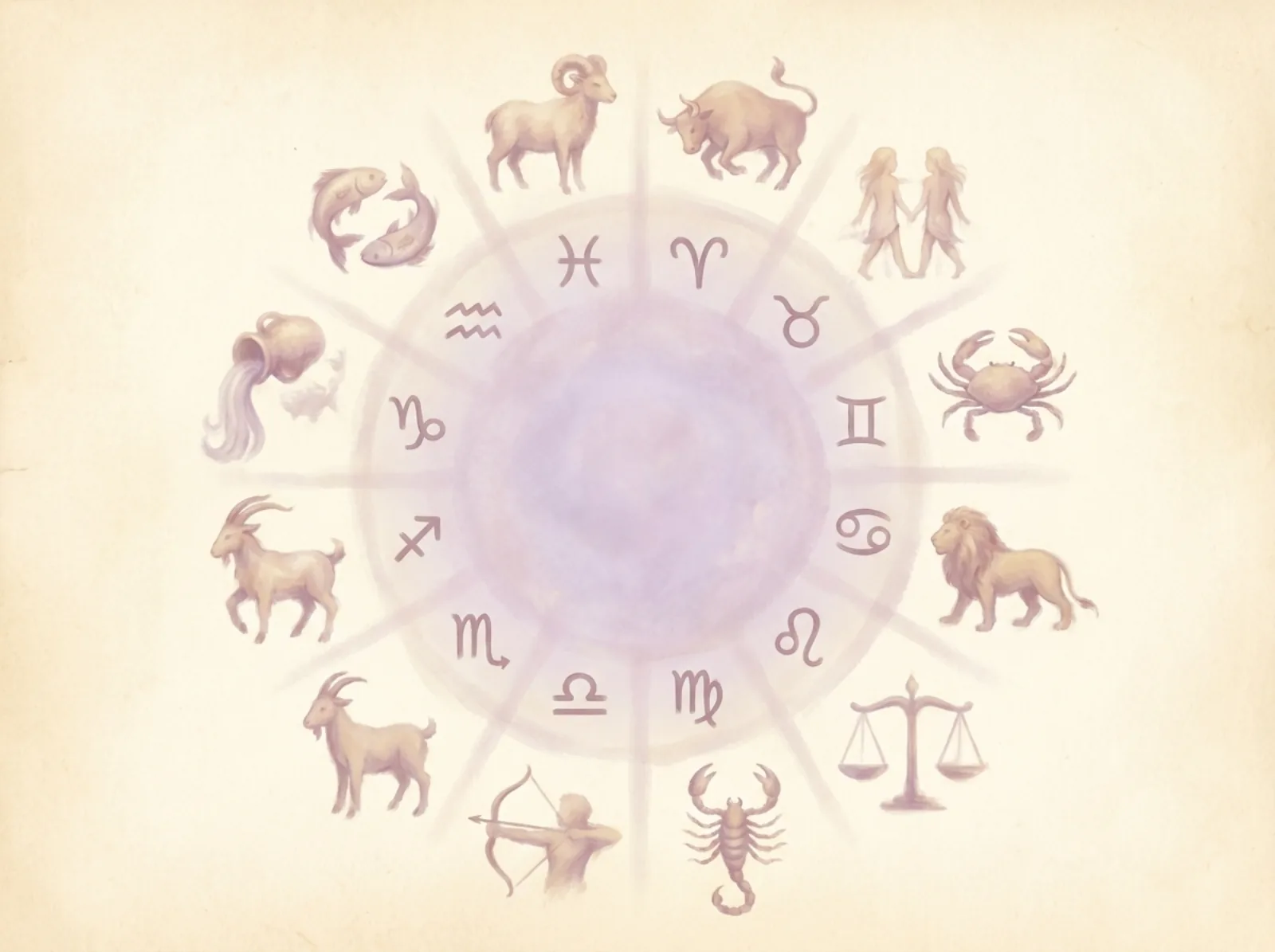
Traditional astrology assigns a body part to each sign, running top to bottom through the zodiac wheel. Aries gets the head — specifically the skull, brain, face, and upper jaw. Taurus takes the throat and neck. Gemini gets the shoulders, lungs, and arms. Cancer rules the chest and stomach. Leo takes the heart and spine. Virgo gets the digestive system. Libra gets the kidneys and lower back. Scorpio gets the reproductive organs. Sagittarius takes the hips and thighs. Capricorn rules the knees and bones. Aquarius gets the ankles and circulation. Pisces gets the feet. This is called melothesia — the astrological mapping of the body — and it dates back at least to the second century, when the Alexandrian astronomer-astrologer Claudius Ptolemy wrote it into his Tetrabiblos. It's a symbolic framework, not a physiological one. Nobody serious is claiming your sun sign causes injury to a specific region. What melothesia offers is a mirror: a place to look for stress, tension, and recurring complaints that match your archetype. For Aries, that mirror points at the head. In practice, this shows up as headaches, migraines (clients report them a lot), jaw tension, teeth grinding, and the occasional dramatic forehead injury that comes from moving faster than your spatial awareness can handle. The Aries person I know best has walked into three glass doors in the past eighteen months. I've seen her chart. The cosmic sense of humor checks out. What this doesn't mean: that you should attribute every migraine to Mars. If you get recurring headaches, see a neurologist. If you grind your teeth, see a dentist. The archetype just gives you a place to look first — a prompt to pay attention, not a verdict. If you notice your tension lives above the collarbone, that's useful self-knowledge. If you notice it lives there often, that's a reason to call a professional.The Aries energetic pattern — short, hot, repeat
Aries is a cardinal fire sign ruled by Mars. Translated out of astrologer-speak: Aries energy initiates, Aries energy burns, and Aries energy burns fast. If you were to graph the average Aries week, you wouldn't get the steady wave of a Taurus or the long undulation of a Pisces. You'd get something closer to a seismograph during a mild earthquake. This has real-world consequences. Aries clients tend to launch projects with enormous initial velocity, hit a wall around the sixty-percent completion mark, get bored or furious about the wall, start a new project, and return to the first project three weeks later with fresh eyes. If this sounds familiar, you're probably not broken. You might be mapped onto a sustained-effort world with a short-burst engine. The research on human energy management — including the work by Tony Schwartz and Jim Loehr in The Power of Full Engagement — argues that humans are not designed for linear output anyway. We're designed for oscillation between effort and recovery. Aries just happens to oscillate on a shorter wavelength than most. The problem isn't the wavelength. The problem is pretending it doesn't exist. What goes wrong is when you fight your own cycle. Aries clients who try to grind through a sixteen-week sprint without a recovery break burn out, get sick, or injure themselves. Pattern I see over and over: Aries founder, month four of launch, in urgent care with something stress-related. Pharrell Williams, an April 5 Aries, has talked openly about intentional rest and daily meditation after years of sprint-cycle output. The practical frame: work in two-to-four-week blocks with a planned off-week. Not a vacation. A deload. A week where you intentionally output less, sleep more, and resist starting the next thing. If you don't give yourself one, your body will take one by force, usually at the least convenient moment.Common Aries lifestyle habits — the useful and the costly
Let me put the patterns on the table without flattery. Habits that generally serve Aries well include morning movement before anything else (Aries bodies tend to feel wrong when they sit too long after waking), direct communication (bottling things up turns into migraines faster for this archetype than almost any other), competition as a motivator (Aries clients outperform in gyms, pitches, and classrooms when there's a scoreboard), making the first move on jobs, friendships, and apologies (because waiting breeds a particular Aries rage), and starting over without shame. That last one is a cardinal-sign superpower; most people cannot pivot without identity collapse, and Aries can. Habits that generally cost Aries: impulse decisions made inside a heated moment (Aries regret has a very specific texture), chronic over-caffeination (this archetype doesn't need a stimulant, it needs a governor), ignoring small injuries until they become big ones (the walk-it-off instinct is a Mars-ruled lie), starting too many things at once (your bandwidth is not infinite, even for you), and confusing anger with motivation. Sometimes the fire is signal. Sometimes it's a smoke alarm. Learning which is which is a lifelong Aries project. Lady Gaga, born March 28, has spoken publicly in interviews with Vogue and others about living with chronic pain — fibromyalgia — and how she's had to rebuild her relationship with intensity. Reese Witherspoon, born March 22, has described slowing down after burnout and reorganizing her career around sustainability instead of velocity. Mariah Carey, born March 27, has been remarkably open about mental-health work she did privately for years before going public. The Aries celebrity file is full of people who hit a wall, then came back with a different operating manual. If you're reading this list and recognizing yourself, that's not a diagnosis. It's a mirror. The next move is to pick one habit on the costly list and interrupt it this week.Best workouts for Aries — match the engine
If you're Aries and you've tried to force yourself through a slow yin yoga practice, you probably know the frustration already. Not because yin yoga is bad — it's beautiful work — but because it's the opposite shape of what your nervous system wants most of the time. Aries bodies tend to respond best to short, high-intensity, win-or-lose exercise. What tends to work: boxing and kickboxing (directional, aggressive, fast); sprint intervals on a bike, treadmill, or track; Olympic lifting or CrossFit (competitive, measurable, loud); climbing (problem-solving plus physical output); team sports with a scoreboard like soccer, basketball, or hockey; and fast running. Note that I said fast running. Most Aries clients I know hate slow jogging and love running hard — pay attention to that distinction when you plan a workout. What tends to be harder: long slow steady-state cardio, static holds without a clear reason, workouts without any competition or metric, and anything a trainer describes as gentle. The word gentle is a trigger for a certain kind of Aries. If that's you, don't fight it — just know what you're responding to. The adjustment, and this is where most Aries get caught: you need the slow stuff anyway. The best Aries fitness protocols I've watched clients run look like roughly seventy percent high-intensity work and thirty percent deliberately slow recovery — mobility, long walks, long stretching sessions, swimming at an easy pace. The slow work is not entertainment. It is the thing that lets the fast work continue to be possible. A note on injuries: the American Academy of Orthopaedic Surgeons has consistently flagged that sudden-high-intensity training without proper warm-up is a leading cause of soft-tissue tears in adult recreational athletes. If you are the Aries who sprints into the gym and loads the bar before stretching, you are the actuarial table's favorite customer. Warm up. The ten minutes will not kill you. Also, if you've been training through pain for weeks, that is not toughness, that is a future surgery. Rest the thing or see a physio. Both are faster than rehab after a tear.Nutrition patterns for Aries — general wellness, no diets
I'm not giving you a diet. If anyone, including an astrologer, hands you a sign-based meal plan with specific caloric prescriptions, close the tab. This section is about general patterns I've observed in Aries clients, not nutritional advice. Aries eating patterns I see often: skipping breakfast and then overeating at dinner; eating standing up, between tasks; pairing high protein with high caffeine without a lot of fiber; treating hydration as optional; and not noticing hunger until it's rage. The anger-is-actually-hunger pipeline is particularly Aries. If you snap at a colleague at 11:40am and you haven't eaten since 6:30am, you have your answer. What tends to help Aries, in a general lifestyle sense: a protein-containing breakfast within an hour of waking; treating water like a scheduled appointment, not an afterthought (a visible bottle on the desk is one of the most boringly effective interventions I know); slowing down enough to actually taste the food; spicy food (this is anecdotal, but most Aries clients I know love it, and traditional astrology associates Aries with the hot humoral quality); and not demonizing any food group. The restrictive-diet-then-binge cycle is especially harsh for cardinal fire types, who tend to go all in on a protocol, break it in a dramatic way, and swing to the other extreme. The 2020–2025 US Dietary Guidelines, which are the kind of thing that bores most of us to tears, still represent the most evidence-based general nutrition baseline: emphasize whole foods, limit added sugar and sodium, cover vegetables and fruit, and don't eliminate entire food groups unless a doctor says so. That's the floor. If an Aries-coded nutrition plan ignores that floor, it's a vibe, not a plan. Victoria Beckham, born April 17, has famously eaten similar meals — grilled fish, vegetables, little deviation — for years. That's one Aries approach: structure as a cage against impulse. It's not the only one, and it's not required, but it works for her because it removes decision-making from a decision-fatigued system. You might need less structure than that. You almost certainly need some.Sleep and recovery for Aries — the thing you'll resist
I'm going to tell you something you already know. Aries sleep is where most of the archetype's wellness arguments live or die. The pattern I see most: a late-night second wind around 10:30pm; just-one-more-thing turns into 1:47am; alarm at 6:15am; caffeine, repeat; collapse on Saturday at 2pm. The US Centers for Disease Control and Prevention puts adult sleep need at seven or more hours a night. The research on sleep deprivation is unambiguous — chronic undersleeping degrades immune function, cognition, metabolic health, and emotional regulation. For an Aries, who is already prone to short-fuse reactivity, undersleeping multiplies the reactivity by an uncomfortable factor. The friend who told you that you're meaner when you're tired is correct and probably underselling it. Things that tend to help Aries sleep: a hard screen cutoff, not negotiable with yourself; a cool, dark, boring bedroom (sorry, boring is the goal); writing down the running task list before bed so the brain lets go of it; magnesium in the evening if your doctor says it's fine for your other meds; a short walk after dinner instead of a workout; and not working out within three hours of sleep. I know. You want to. Don't. The other sleep lie Aries clients tell themselves is that catching up on the weekend works. The research says it doesn't, really. Sleep debt is not neatly settleable. Consistent timing beats weekend sprees every time. Celine Dion, born March 30, has spoken for years about rigorous rest protocols — vocal rest, physical rest, media rest — as part of maintaining her career longevity. Elton John, born March 25, has been publicly open about the role recovery and sobriety have played in sustaining a decades-long career. Aries bodies that make it into their fifties, sixties, and seventies still at full output are almost always ones that figured out sleep in their thirties. If you resist this section specifically, that's data. The thing you resist the hardest is often the thing you need the most.The Aries stress response — and how to actually downshift
Mars-ruled bodies tend to default to fight. Not freeze, not fawn, not usually flight — fight. When an Aries hits a stressor, the first instinct is to push back, push through, or push over. This has made Aries clients excellent in crisis and terrible in meetings with vague feedback. The stress response isn't a character flaw. It's a nervous system that evolved to resolve conflict quickly. The problem is that modern conflict doesn't resolve quickly, and sustained fight-mode activation is what the research literature calls allostatic load — chronic physiological wear from unresolved stress. The late neuroscientist Bruce McEwen spent decades documenting how this chronic activation correlates with cardiovascular issues, immune dysregulation, metabolic problems, and depression. If you've been in fight mode for three years, your body has an invoice coming. How to downshift an Aries nervous system in real time: move. Walk, run, hit a bag, do push-ups. The fight response wants discharge; give it some. Cold water on the face or wrists triggers the mammalian dive reflex and lowers heart rate within seconds. Slow exhale breathing works — box breathing (four counts in, four hold, four out, four hold) is reliable, and the physiological sigh (two inhales through the nose, one long exhale through the mouth), which Stanford's Andrew Huberman has popularized, is faster. Name the specific thing you're angry about, out loud or in writing — Aries anger that stays vague stays stuck. Delay any response email by twenty-four hours. Nothing bad happens from waiting. What generally doesn't work for Aries: being told to just calm down (never has, never will); suppression (it compounds); alcohol (short-term relief, long-term amplification); picking a different fight on top of the current one (you'd be surprised). If you can build a two-minute downshift practice into your day — right after work, before dinner, before any difficult conversation — you'll change the shape of your week. Not because astrology willed it. Because you intervened in your own pattern.Mental health reflection for Aries — not diagnostic, just a mirror
I want to be very clear here, because this part gets misused. Astrology does not diagnose mental illness, and sun-sign content that pretends to is dangerous. What a sign-based reflection can do is give you a vocabulary for patterns you might otherwise call just who I am. Common Aries mental-health reflections I hear in readings include: a pattern of starting therapy, feeling great after three sessions, and quitting right before the hard work begins; a tendency to externalize frustration (it's their fault, it's the system's fault) for longer than most; difficulty naming grief, which often gets expressed as anger instead; an underground loneliness that doesn't match the extroverted presentation; and a fear of boredom that drives constant stimulation. None of this is pathology. All of it is pattern. If any of it rings loud, that's a signal worth bringing to an actual therapist — not a cards reader, not a horoscope column, not a Reddit thread. Patterns like these are what therapy is designed to work with. A good therapist will help you distinguish between temperament, trauma response, and clinical condition. An astrologer cannot. Robert Downey Jr., born April 4, has publicly discussed decades of recovery work after a very public struggle with addiction. His framing in interviews has consistently been that recovery requires accountability, routine, and continuous reflection — not willpower. That's Aries wisdom at full maturity: the willingness to admit that the engine runs hot and build a maintenance schedule around it rather than pretending it doesn't. If you're struggling right now, please use real resources. In the United States, call or text 988 for the Suicide and Crisis Lifeline. In the United Kingdom, Samaritans are at 116 123. In Canada, 988 is the Suicide Crisis Helpline. In Australia, Lifeline is 13 11 14. Astrology can be a mirror. It can't replace a person on the other end of a phone.When to see a real doctor — always, when something is off
I'm going to be short and direct here, because this is the most important section of this article. Astrology is a reflection tool. It is not a diagnostic tool. If you have persistent pain, a new or worsening headache pattern, changes in sleep, appetite, mood, or energy that last more than two weeks, any symptom that genuinely worries you, a family history of a condition and new symptoms, or mental-health symptoms including persistent sadness, intrusive thoughts, or thoughts of self-harm — go see a doctor. Not instead of a doctor. Not after a reading. First. A good astrologer, a good tarot reader, a good friend — none of us are trained to diagnose or treat medical conditions. The archetype may give you a place to look, a vocabulary for a pattern, or a prompt to pay attention. The follow-up is always medical. I say this in every health-adjacent reading I do: the stars are a lens. The lens does not replace the eye of a clinician. If cost is the barrier — and in the United States it very often is — community health centers, telehealth services, employer EAPs, and sliding-scale clinics exist. In the UK, Canada, and Australia, your national system is the starting point. Please use what's available. The archetypes will still be here when you get back.Journaling with Raka for pattern-tracking
Here's where I'll bring this home. Over the past year I've been using Raka — the app we built — to do something that used to require three paper journals and a lot of handwriting: track daily patterns against astrological transits, moon phases, and personal reflection prompts. What I use it for, as someone with a loud Mars in my own chart: a thirty-second morning check-in (what's the energy today, what's one card the deck pulled, what am I actually feeling); a nightly log (what went right, what went sideways, what I noticed in my body); a weekly review (what patterns are showing up in sleep, mood, output, injury, hunger); and transit tracking (when Mars, your ruler, changes signs, what shifts for you). If you're an Aries reading this and you've nodded along to half the sections, pattern-tracking is the move. Not because the app is magic — it's not, it's a tool — but because Aries bodies tend to feel symptoms late and name them later. A daily log collapses the lag between feeling off and noticing you feel off. That lag is often where small problems become big ones for this archetype. You can do this without any app, obviously. A paper notebook works. A note on your phone works. The specific tool matters less than the practice. What Raka adds is prompts matched to your chart and current transits, so you're not staring at a blank page every morning trying to figure out what to notice. If you want structure, the app provides it. If you want freedom, a notebook will do. Pick a method. Use it for thirty days. Review on day thirty. Patterns you've been missing for years will become suddenly, boringly obvious. That's the whole trick — and it is a trick, not a prophecy. Prophecy is for other people's websites. We're here for the work.Frequently asked questions
Does Aries really have more headaches than other signs?
There's no clinical evidence that sun signs cause specific medical conditions. The traditional association between Aries and the head is symbolic — it's a reflective framework from classical astrology, not a diagnostic one. That said, many Aries clients do report head-related tension (jaw clenching, migraines, stress headaches). Whether that's archetype, personality type, lifestyle pattern, or coincidence is up to you. If you get recurring headaches, please see a neurologist, not an astrologer. Part of our astrology guide hub.
Is the Aries workout advice in this article evidence-based?
The general exercise principles — high-intensity interval work, strength training, proper warm-up, mixing in recovery sessions — are drawn from mainstream exercise science and are well-supported by organizations like the American College of Sports Medicine and the American Academy of Orthopaedic Surgeons. The Aries-specific framing is lifestyle observation, not clinical research. If you have an existing condition or injury, work with a physio or trainer who knows your body.
Can astrology predict my health?
No. Astrology is a reflective and symbolic practice. It can be useful for self-knowledge, pattern-recognition, and reframing habits, but it cannot predict medical outcomes. Anyone selling you a chart reading that promises diagnostic or predictive health information is misrepresenting the tool. For medical questions, see a licensed healthcare provider.
What foods should Aries avoid?
None, as a rule. There's no evidence-based sign-specific diet, and restrictive sign-based eating plans often cause more harm than good. The general wellness guidance — plenty of whole foods, enough protein and fiber, hydration, limited added sugar — applies to Aries like it does to everyone else. If you have a specific health condition that requires dietary changes, that comes from a doctor or registered dietitian, not from your sun sign.
Why do Aries people seem to burn out so often?
Likely a mix of temperament, cultural pressure, and a short-wavelength energy cycle. Many Aries-identified people operate in high-output modes without planned recovery, which is a reliable recipe for burnout regardless of astrological sign. The intervention isn't astrological — it's structural: planned deloads, better sleep, lower caffeine, and a willingness to stop before the body stops you.
Is any of this medical advice?
No. This article is lifestyle reflection and general wellness writing from an astrological perspective. It is not medical advice, not a diagnosis, not a treatment recommendation, and not a substitute for care from a licensed healthcare provider. If you have medical concerns of any kind, please see a doctor.
How often should Aries do slow recovery work?
The general rule I've watched work for high-energy clients is about thirty percent of their total movement time, distributed through the week. That might be two or three days of mobility, walking, stretching, or easy swimming alongside four days of harder training. The exact ratio depends on your age, training history, injury history, and life load. A good trainer or physio can tune it to you — a horoscope cannot.