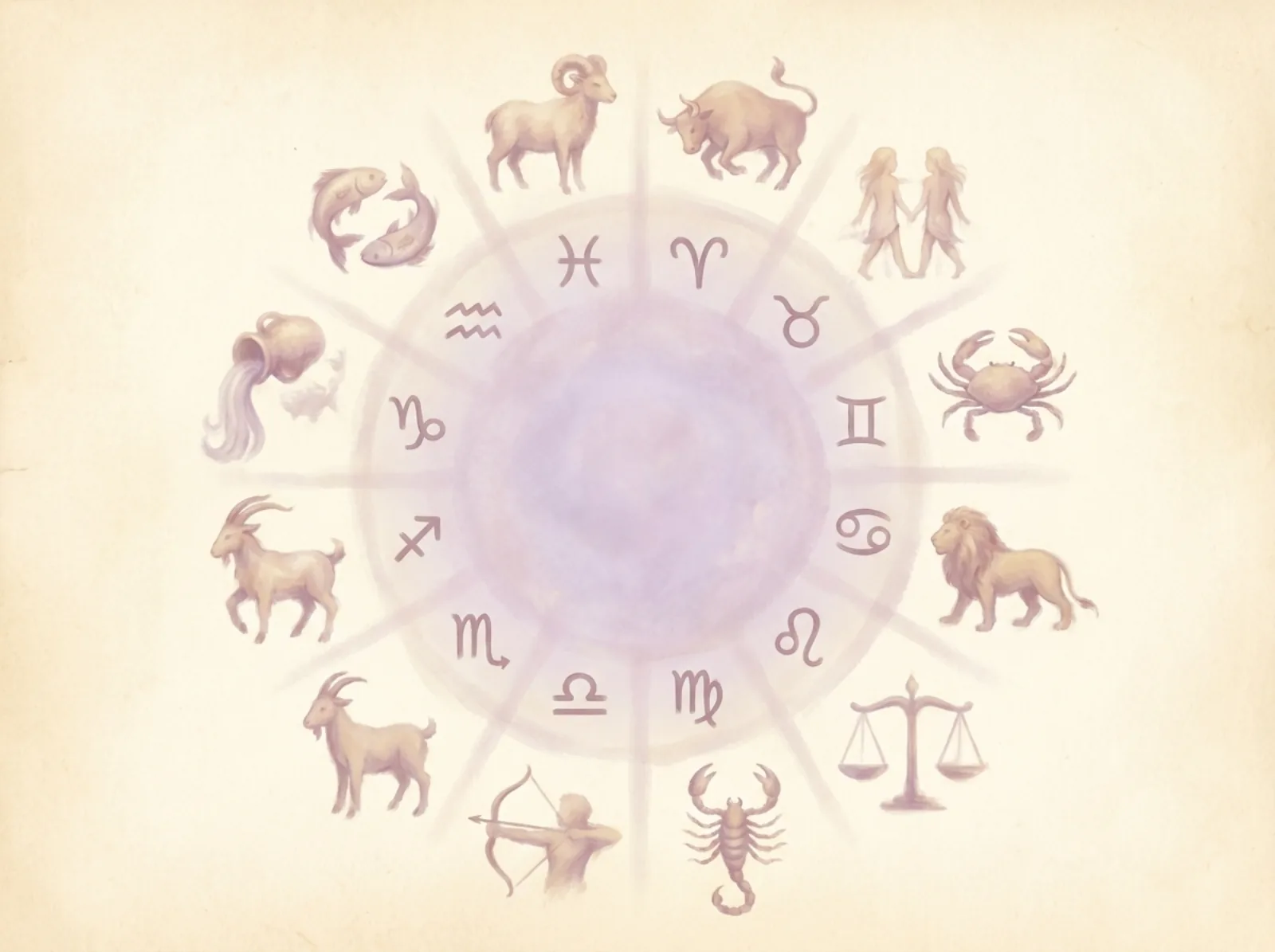
What a Rising Sign Actually Is (And How to Find Yours)
Your rising sign — also called the ascendant — is the zodiac sign that was climbing over the eastern horizon at the exact minute you were born. Unlike your sun sign, which only shifts once a month, your rising changes every two hours or so, which is why birth time matters so much to astrologers. A friend born twenty minutes before or after you can have a completely different ascendant and a completely different first-impression chemistry. Part of our tarot library.
The rising rules the First House in your chart, and the First House is everything about how you arrive: your physical body, your face, your mannerisms, the first fifteen seconds people spend deciding who you are. Think of it as the front door of your personality. Your sun is the living room — where you actually hang out — but your rising is what guests see when they knock.
Why the Rising Matters as Much as Your Sun
If you've ever read your sun-sign horoscope and thought "this isn't me at all," there's a good chance you're identifying more with your rising sign. In traditional astrology, the ascendant was considered the single most important placement in a chart — more important than the sun. It governs vitality, how you meet the world, and what people pattern-match you to before you've opened your mouth. See our best AI tarot app guide.
To find yours, you need three things: your birth date, your exact birth time (within fifteen minutes), and your birth city. A quick free calculator will give you the sign; a full chart will tell you the degree, which starts to matter when you want to go deeper.
- Sun sign: who you are internally
- Moon sign: what you need emotionally
- Rising sign: what the world sees first
Core Capricorn Rising Personality Traits
Capricorn is ruled by Saturn — the planet of structure, time, authority, and limits — so a Capricorn rising wears Saturn's signature on the outside. The impression is composed. Measured. A little bit older than your actual age, no matter how old you are. People meet you and feel like you've thought things through, even when you're winging it as much as everyone else.
The most consistent trait I see in Capricorn risings is a quiet gravity. You don't need to be the loudest person in the room, and you'd actually prefer not to be. You take yourself seriously in a way that reads as adult, and you have a dry, slightly deadpan sense of humor that people either adore or completely miss.
The Saturn Signature
Saturn gives Capricorn risings a few consistent markers:
- Visible ambition. Even if you're not chasing a corner office, there's a sense that you're building toward something.
- Reserved warmth. You're not cold, but you don't give heat to strangers. Your inner circle gets a completely different person.
- A long memory. You remember who showed up and who didn't, which can make you loyal — or quietly unforgiving.
- Early self-sufficiency. Many Capricorn risings describe being "the responsible kid" or feeling older than their peers from a young age.
- Natural authority. People assume you're in charge. You might as well lean in.
The trade-off: Capricorn rising can feel like you're constantly being read as serious, even when you're genuinely having fun. If you've ever been told to "smile more" or asked if you were okay when you were already having a great time, welcome to the club.
Physical Appearance and Style Associations
Astrology isn't a science of noses, but there are patterns people notice across Capricorn risings often enough that they're worth naming. The appearance tends toward structure: a defined jawline, strong brow bones, pronounced cheekbones, and features that read as classic rather than trendy. Many Capricorn risings have what photographers call a "good bone structure" — their faces hold up at every angle because the architecture is there.
Height varies, but the frame often reads as lean, upright, and slightly serious even in motion. You tend to carry yourself vertically rather than loosely. Dancers and long-distance runners often have Capricorn placements. There's also a classic Capricorn rising pattern: looking older than you are as a kid, then aging in reverse. By your forties and fifties, you often look younger than people the same age — Saturn rewards those who paid their dues early.
The Capricorn Rising Wardrobe
Style-wise, Capricorn risings gravitate toward timeless over trendy. The default closet skews:
- Clean lines, structured tailoring, natural fibers
- Neutral palettes — black, charcoal, navy, camel, ivory, bone
- Quality over quantity, with a willingness to spend on one good coat
- Minimal, intentional jewelry — often a single heirloom piece
- Shoes that look like they'd survive a decade
You're not immune to a bold moment, but you want it to mean something. Capricorn risings don't do fast fashion well; the aesthetic rewards investment pieces and a signature. The giveaway in a crowd: you look like you dressed for the version of your life you're building toward, not the one you're currently in.
First Impressions and Social Persona
Here's the paradox of Capricorn rising: you often come across as more intimidating than you feel. Internally you might be anxious, warm, or genuinely trying to connect. Externally you read as cool, contained, and a little hard to approach. The gap between those two is where most of the social friction of this ascendant lives.
New people meet you and often think you're:
- Older than you are
- More important than you feel
- Judging them (you're not — usually)
- Already successful at whatever you're doing
- Not interested in small talk (fair)
Why People Call You Intimidating
Capricorn rising comes with a resting face that defaults to focused rather than open. You listen more than you talk at first. You don't fill silences out of politeness. You make eye contact deliberately. All of these are strengths in a leadership setting and liabilities at a loud party where people are trying to flirt.
Your social persona softens dramatically with time. Once someone makes it through your initial filter — usually by being competent, kind, funny, or all three — you become one of the warmest, most consistent friends they have. The problem is that the filter is real, and some people never push through it.
A tip from someone who's spent hundreds of hours writing reflection prompts for Capricorn risings in Raka: a small, deliberate smile within the first ten seconds of meeting someone changes everything about how they experience you. You don't need to be bubbly. You just need to let your face admit you're glad to be there.
Capricorn Rising at Work, in Love, and Under Stress
At work, Capricorn risings tend to end up in charge whether or not they planned to. You're often the person who notices what's not getting done, picks it up quietly, and three months later the team realizes they can't function without you. You're long-game by instinct — you'll grind on something for years if the finish line matters. You read as managerial even in entry-level roles, which can be a gift (fast promotions) or a curse (resentment from peers who feel measured by you).
In love, you're a slow burn. You don't say "I love you" easily, you don't trust fast chemistry, and you're warier of grand gestures than most other risings. What you offer, when you offer it, is remarkable: showing up on the hard days, remembering the small things, building a life rather than performing one. People who date Capricorn risings often describe them as "the one who actually followed through."
Under stress, you don't dramatize — you compress. You go quieter, work harder, and start treating your own needs as logistical problems to solve later. The classic Capricorn rising stress response is to over-function: taking on more while asking for less, until you crash in private.
The Over-Functioning Trap
If you've ever handled a crisis by making a spreadsheet about your feelings instead of actually feeling them, you've met the trap. Over-functioning looks competent from the outside and feels like dissociation on the inside. The signs:
- Taking on other people's problems before addressing your own
- Treating rest as something you have to earn
- Equating being needed with being loved
- Confusing exhaustion with virtue
The work for Capricorn risings isn't more productivity. It's the willingness to be seen struggling before you've figured it out.
Compatibility: Which Rising Signs Pair Well With Capricorn Rising
A quick caveat first: compatibility in astrology is a conversation, not a verdict. Two Capricorn risings can love each other or drive each other up the wall; a Capricorn and a Sagittarius rising can clash hard or complement each other beautifully. What rising-sign compatibility actually describes is how you meet each other — the body language, the pace, the first-impression chemistry — not whether you'll last.
That said, Capricorn rising tends to pair most easily with:
- Taurus rising: Shared earth element. Both of you move at a considered pace, value physical reality, and don't need to be entertained constantly. Taurus rising softens Capricorn's severity; Capricorn gives Taurus structure.
- Virgo rising: The other earth sibling. Both are competent, dry-witted, and quietly observant. You'll feel instantly understood.
- Scorpio rising: Different element, same depth. Both of you take time to open, both of you remember everything. The intensity reads as safety rather than drama.
- Pisces rising: Classic sextile pairing. Pisces softens you; you ground them. You offer the structure they need; they offer the tenderness you forget to.
- Cancer rising: Your opposite on the chart. High-potential pairing — Cancer is the emotional home you don't let yourself admit you want. Also the one most likely to call you out when you're over-functioning.
Why Fire Risings Can Feel Overwhelming
Aries, Leo, and Sagittarius risings aren't incompatible with Capricorn rising, but the pacing is different. Fire risings arrive fast, express immediately, and don't love being studied before being trusted. Capricorn rising studies first and trusts later. Both styles work, but the entry can feel like a mismatch — until you give it time, which fire risings sometimes don't.
Celebrities With Capricorn Rising
Birth-time data for public figures is often approximate, but a handful of names come up consistently in astrology databases with Capricorn rising, and they're useful because they let you see the ascendant in action.
- Denzel Washington — the gold-standard example. The gravitas, the controlled charisma, the sense that he's calculating three moves ahead even when he's smiling, the physical presence that reads as authority before a single line of dialogue. Classic Capricorn rising.
- Elvis Presley — a less obvious one, because people remember the hips, not the ambition. But Elvis was Saturn-structured from the start: the business sense, the discipline through his early career, the slightly older-than-his-years face in early photos.
- Kate Winslet — frequently listed as Capricorn rising. Watch any interview and the signature is there: measured answers, dry humor, no interest in performing for the camera, a face that aged beautifully in the opposite direction most Hollywood faces do.
- Richard Nixon — a cautionary Capricorn rising. Same architecture — the ambition, the control, the reserve — rotated darker.
- Jude Law — commonly cited with Capricorn rising. The classic bone structure, the composed delivery, the sense that he's thinking harder than he's letting on.
What's useful about studying public figures with your rising isn't matching — you're not going to be Denzel Washington. It's watching how the ascendant reads on camera, so you can notice when you're doing the same thing without realizing it. The reserve. The deliberate pacing. The face that looks like it's deciding whether to let you in.
Note on birth times: celebrity ascendants are only as reliable as the birth record. Where sources disagree, I've gone with the time most consistently cited across CafeAstrology, Astrotheme, and Astro-Databank.
The Shadow Side and Growth Edges
Every rising has a shadow — the strength overused, the gift turned brittle. Capricorn rising's shadow is subtle because it looks like competence from the outside.
- Chronic self-sufficiency. You hate asking for help so much that you'll suffer for weeks before saying anything. Your friends want to show up for you — they just can't find the door.
- Workaholism as identity. If you don't know who you are outside of what you're building, Saturn will keep raising the stakes until you're forced to find out.
- Pessimism dressed as realism. You call it "being practical," but sometimes it's armor against being disappointed.
- Age-as-performance. Capricorn risings often perform maturity before they feel it. You skipped parts of your own youth to look like you had it together.
- Measuring yourself by output. If a day doesn't produce something, you quietly feel like you failed.
The Permission to Rest
The growth edge for most Capricorn risings is the same: rest without earning it first. Softness without a reason. Letting someone else take care of you without turning it into a transaction. The hardest sentence for this ascendant to say and mean is "I don't know."
Astrologers often say Capricorn rising ages in reverse because once you stop performing maturity, you get access to the playfulness you skipped. It's not that you become less serious — it's that the seriousness stops costing you.
How to Work With Your Rising Sign in Daily Life
Knowing your rising sign is cute. Working with it is where the actual change happens. Here are the practical moves I give Capricorn risings in Raka's reflection prompts:
Build a morning ritual that isn't productive. Capricorn rising wants to start the day with a to-do list. Try starting with something slower — coffee without your phone, five minutes of stretching, a walk around the block. The point is to let yourself exist before you start performing.
Schedule rest like you schedule meetings. If it's not on the calendar, it won't happen. Put "nothing" on your calendar on purpose, and treat it like an unmoveable commitment.
Journal the gap between what you project and what you feel. Capricorn risings often mask hard emotions behind "I'm fine, just busy." A journaling practice gives you a private space to admit otherwise. In Raka, I use prompts specifically written for earth-rising charts — the goal is to catch the mask before it becomes the whole face.
Five Reflection Prompts for Capricorn Rising
- Where in my life am I performing competence I don't actually feel?
- Who have I been punishing with silence for not meeting a standard I never said out loud?
- What would I do today if I'd already proved I was serious?
- Where am I confusing being needed with being loved?
- What part of me did I skip to look like a grown-up early?
The Capricorn rising upgrade isn't about becoming less ambitious. It's about ambition that stops costing you your softness. These prompts aren't predictions and they aren't a replacement for a therapist — they're a mirror. That's all a good rising-sign practice needs to be.
When Your Rising Feels Wildly Different From Your Sun Sign
Here's where things get interesting. If you're a Pisces sun with Capricorn rising, or a Leo sun with Capricorn rising, you may feel like you're running two different operating systems at once. Internally dreamy and sensitive; externally structured and reserved. Internally theatrical and warm; externally cool and measured. People meet you and build an entire story based on your rising, then meet the sun months later and feel confused — or betrayed.
The honest answer is: both are you. Your rising is the room; your sun is who you are once you're inside it. The mask isn't a lie. It's the way you've learned to enter.
The Mask Isn't Fake
A lot of Capricorn risings grow up being told their "real" self is their sun sign, and the ascendant is just a performance. That's half right. The rising isn't your deepest self, but it's not fake either. It's the self you built — often early, often protectively — to meet a world you didn't fully trust yet.
Three practical reframes:
- Your rising is not your enemy. It got you here. Honor it.
- Your sun gets to come out at home. Build the people and spaces where you don't have to be in Capricorn-rising-mode.
- The gap narrows with age. By your mid-thirties, most people stop needing their rising to carry the whole weight.
If you want to go deeper on how your sun, moon, and rising talk to each other, that's exactly the kind of multi-layered reading Raka is built for — an AI companion for self-reflection, not a predictor. It won't tell you who to marry or when to quit your job. It'll help you notice the gap between the mask and the self, which is where most of the real work lives.
Frequently asked questions
How do I find my rising sign without my exact birth time?
You can't, reliably. The ascendant changes every two hours, which means a one-hour difference can flip you between two signs. If your birth certificate doesn't list the time, try asking a parent, requesting your hospital record, or looking at a baby book. If you really can't find it, some astrologers do "chart rectification" — working backward from life events to estimate your rising — but it's an art, not a shortcut, and the results vary by practitioner.
Does my rising sign change over time?
No. Your rising is fixed at the moment of your first breath — it doesn't update like a solar return or your transiting moon. What can change is how much of your rising people see. Many Capricorn risings describe growing into their mask through their twenties and softening out of it in their forties. The sign is the same; your relationship to it evolves.
Why do I relate more to my rising than my sun?
Because your rising is the part of you the world has been rewarding or punishing publicly your whole life. If you're a sensitive sun hidden behind a reserved ascendant, you've probably been praised for the mask and sometimes misread when the softer self came out. Over time, you start to over-identify with the version that got reinforced. It doesn't mean the sun is wrong — it means the sun's been protected.
Can two people with the same rising look totally different?
Yes. Rising-sign appearance is a pattern, not a template. Factors that break the pattern: planets conjunct the ascendant (Mars conjunct your Capricorn rising will add Aries energy; Venus will add softness), the condition of Saturn in your chart, and basic human variation like genetics and ethnicity. The ascendant describes a quality of presence more than a facial checklist.
Is Capricorn rising harder on women than men?
In practice, often yes — mostly because of cultural expectations. A woman with Capricorn rising frequently gets labeled "intimidating," "cold," or "too serious," while a man with the same ascendant gets called "composed" or "serious-minded." The energy is the same; the social reward isn't. If you're a Capricorn-rising woman, part of the work is deciding you're not going to shrink to be more palatable.
At what age does Capricorn rising come alive?
Astrologers often point to the Saturn Return (around ages 28-30) as the moment Capricorn risings stop performing maturity and start embodying it. After the Saturn Return, many describe finally feeling at home in their own seriousness. The second big shift is around the Saturn Opposition (early forties), when a lot of Capricorn risings finally give themselves permission to lighten up.
Does Raka tell me my rising sign?
Yes — Raka reads your full chart (sun, moon, rising, and the planets) and uses it to generate reflection prompts tailored to how your ascendant shapes your daily life. Raka is an AI companion for self-reflection, not a predictor or a replacement for professional support, especially for anything medical, financial, or legal. Use it the way you'd use a well-designed journal: for noticing, not for forecasting.