What Traditional Astrology Says About the Scorpio Body
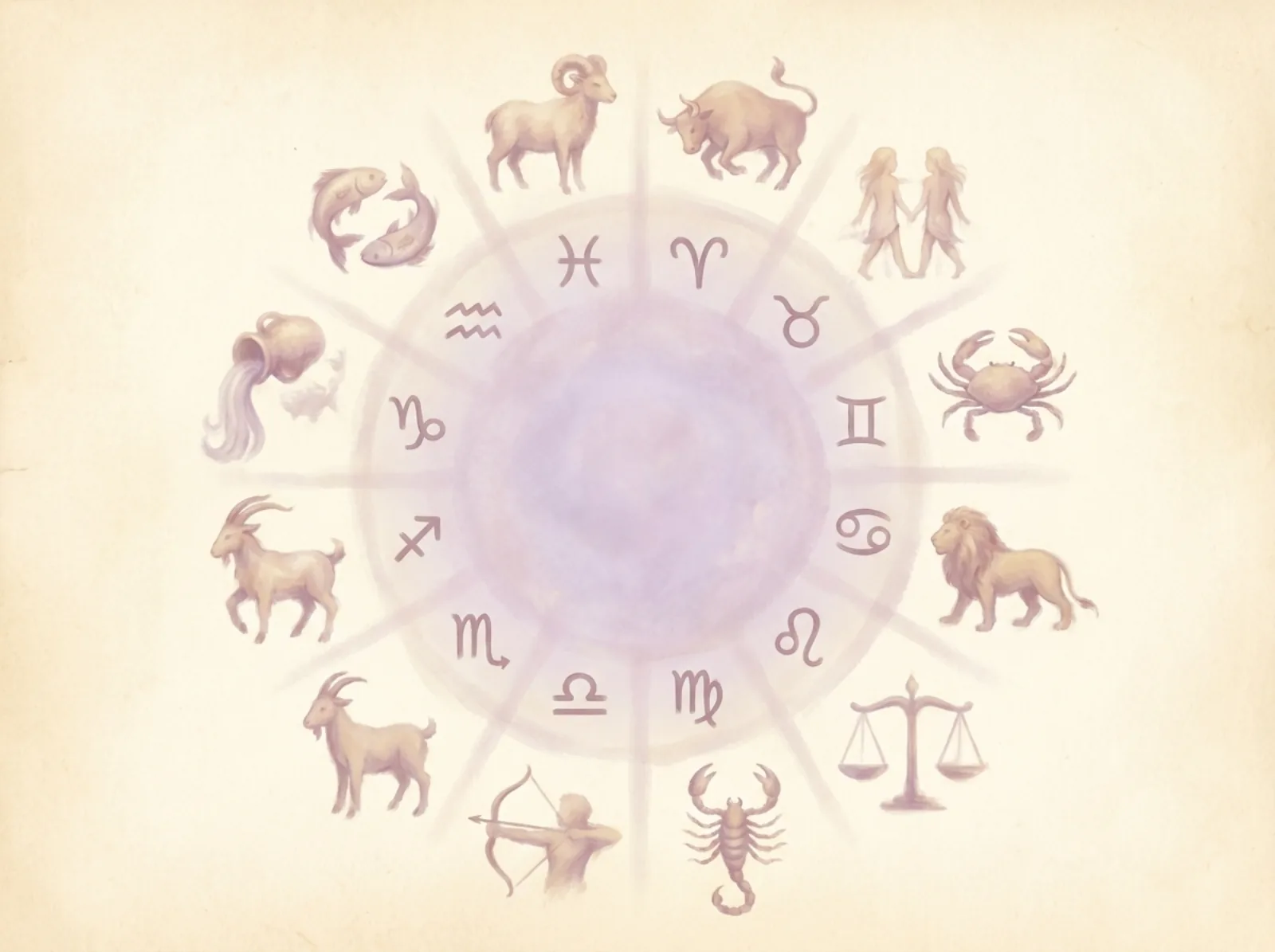
Medical astrology is one of the oldest symbolic systems in the Western esoteric canon, and it's been around long enough to have earned a seat at the symbolic table even if it never earned one in a hospital. The core idea is called 'melothesia' — the mapping of the twelve signs onto twelve regions of the body. Aries rules the head and face. Taurus rules the throat and neck. Gemini got the arms, hands, and lungs. Cancer got the chest and stomach. Leo took the heart and upper back. Virgo got digestion and the intestines. Libra rules the kidneys and lower back. Sagittarius got the hips and thighs. Capricorn claimed the knees and skeletal structure. Aquarius rules the ankles and circulatory system. Pisces got the feet and the lymphatic system. And Scorpio — because of course Scorpio — rules the reproductive organs, the bladder, the colon, and what classical texts delicately called 'the parts of generation and elimination.' In other words, the pelvic bowl and the exit systems. This mapping is thousands of years old and it reflects something real about how pre-modern cultures thought about the body and the cosmos as a single interconnected whole. It does not reflect anything about actual anatomy, physiology, or disease. A Scorpio does not have a 'different' reproductive system than a Libra. A Capricorn is not more prone to knee injuries than a Pisces. Please read that sentence again. The usefulness of the melothesia map is as a reflection prompt. Scorpio's rulership over the eliminative and reproductive systems is thematically aligned with the sign's archetypal territory: release, regeneration, intimacy, taboo, transformation. If I'm trying to understand my own patterns around what I hold onto, what I refuse to let go of, and what shame-coded parts of my life I'm avoiding, the Scorpio body-rulership map is a decent mirror. If I'm trying to understand whether a symptom I'm having is dangerous, the map is actively dangerous. Use it as poetry, not pathology.The Scorpio Energy Pattern: Hyperfocus, Then Crash
Here's what nobody says in a cute horoscope reel: the defining feature of Scorpio energy isn't intensity. It's uneven intensity. Scorpio is a fixed water sign — fixed meaning the energy locks in and stays, water meaning the medium is emotional and receptive. The combination produces a person who can hyperfocus on one project, relationship, or obsession for weeks at a time with monk-like discipline, and then crash into a two-week fog where they can't answer a text message. Drake has talked publicly about disappearing into studio sprints for months. Leonardo DiCaprio reportedly stays on set for 14-hour days during production and then vanishes into climate work and ocean research during off cycles. Winona Ryder has described cycles of hyperfocus and withdrawal in her own creative process. These are extreme versions of a pattern most Scorpios run in miniature every week. The lifestyle implication is that willpower is not the Scorpio health lever most self-help content assumes it is. We have plenty of willpower. We have too much, actually. What we lack is pacing. The fix is not 'push harder.' The fix is building scheduled recovery into the sprint cycle — the same way an athlete deloads, the same way a surgeon takes rest days. If you're a Scorpio who 'runs out of gas' every three weeks, you're not broken. You're running an engine that was designed for sprints as if it were a sedan on a highway. Match the design. Sprint, recover, sprint, recover. Fight the Scorpio instinct to feel guilty about the recovery part. The recovery is the work.Common Scorpio Lifestyle Habits (The Good and the Not-So-Good)
The honest list, written by a Scorpio for Scorpios, with no horoscope-brand flattery. On the strong side: when a Scorpio decides a habit matters, we commit at a level that confuses people. We'll read every book on sleep. We'll crush the first 90 days of a new workout program. We'll track our food, our mood, our training load, our ovulation cycle, our heart rate variability, and our hydration without complaining because the data gives us a sense of control over an inner world that often feels chaotic. Julia Roberts has talked about her commitment to transcendental meditation; Anne Hathaway has publicly described disciplined training protocols for roles. That's Scorpio energy properly channeled. On the weaker side: we binge the habit, then abandon it when it stops producing dramatic results. We stay up late because the night feels private and the day feels performative. We eat too little when we're emotionally activated and too much when we're numbing. We hold grudges in our bodies — jaw tension, shoulder knots, pelvic floor tightness, gut distress — because we don't vent, we compost. We fitness-as-revenge, dieting to prove something to someone who didn't ask. We mistake intensity for commitment and then wonder why we're exhausted. The lifestyle intervention isn't adding more structure. It's adding the right structure in the right places: regular meals even when we don't feel like eating, consistent sleep times even when the night calls to us, movement that doesn't require motivation, and permission to do things at 60% effort without declaring them a failure. 60% effort, 7 days a week, beats 110% effort for 10 days followed by a two-week collapse. That math is boring. Live by it anyway.Best Workouts for Scorpio: Match the Intensity
If you've ever tried to drag a Scorpio to a low-impact mobility class designed around the phrase 'listen to your body,' you've watched a person die inside in real time. Scorpios need training that has teeth. The best workout for a Scorpio is one that produces a measurable before and after — a weight lifted, a round survived, a distance covered, an opponent respected. In practice, that tends to look like strength training with real loads, martial arts of any flavor (boxing and jiu-jitsu are classics for a reason), kickboxing, long-course swimming, hot yoga, trail running with elevation, and heavy sled or farmer's carry work. Water-based training deserves a special mention because Scorpio is a water sign, and whether or not you buy the elemental symbolism, there's something physiologically regulating about being submerged. Scarlett Johansson has publicly described boxing as part of her training routine for action roles. Ryan Gosling trained in classical dance and gymnastics for La La Land and the stunt work in his later films, which is not what most people picture when they picture Ryan Gosling, which is exactly my point. The Scorpio drive loves hidden skill-building. The thing to avoid is anything that feels like performance without substance — classes designed around a mirror wall, instructors who scream encouragement, workouts that promise transformation in six weeks. We can smell the sales pitch. We will leave. What actually works long-term is choosing one strength modality and one cardiovascular modality, pairing them with two full rest days a week, and letting the volume creep up slowly over months. Scorpios respond beautifully to progressive overload because we love data. We respond terribly to novelty for its own sake because novelty feels like a scam. Program accordingly.Nutrition Patterns for Scorpio (Not a Diet)
I'm not going to tell you what to eat because I'm not qualified to and neither is a horoscope. What I can describe is a nutrition pattern that most Scorpios recognize once it's named: we eat according to emotional state, not hunger signals, and that pattern tends to produce either chronic under-eating during focused work sprints or chronic over-eating during emotional crashes. Both ends of the swing are the same problem — a disconnect between what the body is asking for and what the mind is permitting. The lifestyle intervention is not a diet. It's the regularization of eating as a non-negotiable rhythm. Three meals and a snack. Protein at every meal because the Scorpio nervous system runs hot and depletes amino acids faster than most people realize. Enough carbs to actually fuel the training load (Scorpios chronically undereat carbs and then wonder why their sleep is garbage). Fermented foods, bitter greens, and fiber because the sign's traditional rulership over the eliminative system is a nice reminder that gut health is a real, non-mystical health lever. Water, not just coffee. Minerals, especially magnesium and iron, if your clinician agrees you need them — don't start supplementing based on an article. Alcohol is worth examining honestly. Scorpios tend to use it as an off-switch when the natural off-switch isn't working, and it degrades sleep more aggressively than almost any other substance. Katy Perry has publicly talked about taking long breaks from alcohol. Matthew McConaughey has described disciplined dietary phases for roles. These aren't templates. They're reminders that even high-functioning Scorpios have to actively engineer their relationship with food and substances, because the default pattern is dysregulation. Set up the structure once. Follow it even when you don't feel like it. That's the whole trick.Sleep and Recovery: The Scorpio Blindspot
If I had to pick one health lever that would transform the life of 90% of Scorpios reading this, it would be sleep. Not nutrition. Not workouts. Not supplements. Sleep. Most of us are catastrophically underslept and we've convinced ourselves it's a personality trait. 'I'm just a night person.' 'I do my best work after midnight.' 'I only need six hours.' Some of this is true. Most of it is a story we tell ourselves because the night feels like the only time we're not performing. The Scorpio archetype is private, internal, and allergic to being observed; night is when the observation stops. That's real. It's also costing you years of your life and the quality of the years you have left. The clinical science is clear even if the astrology isn't: adults need between seven and nine hours of sleep per night, and sleep debt accumulates in ways that affect mood, cognition, metabolism, immune function, and emotional regulation. For a sign that already struggles with emotional regulation, sleep deprivation is a direct accelerant. The lifestyle fix is boring and effective. Fixed sleep window, protected. No screens in the last 60 minutes before bed, no exceptions, no 'but I'm just checking one thing.' Cool room, blackout environment, no caffeine after noon if you want to be dramatic about it or 2 p.m. if you want to be reasonable. Alcohol tanks REM sleep, so limit or eliminate it on nights before days that matter. Nap strategically — a 20-minute nap in the early afternoon can rescue a bad night, but anything over 30 minutes starts eating into your nighttime sleep. If you've been chronically underslept for years, you will not fix this in a week. Give it a month. Watch what happens to your intensity when it's resourced properly.Scorpio Stress Response and How to Downshift
The Scorpio stress pattern has a specific shape, and once you see it in yourself you can't un-see it. Something happens — a slight, a disappointment, a conflict, a professional setback, a loved one pulling away. Instead of reacting externally, the Scorpio nervous system takes the input and begins processing it internally, often for days or weeks. We replay the conversation. We construct detailed mental cases. We rank the people involved by how we now feel about them. We don't vent to friends because we don't want to be visible in the vulnerable state. We absorb and compost. Physiologically, this looks like clenched jaw, held breath, tight pelvic floor, shallow sleep, digestive disruption, and a baseline cortisol level that stays elevated even in objectively calm periods. If you've ever wondered why your body feels wound tight even when nothing is wrong, it's because something was wrong three weeks ago and you haven't released it. The downshift is not relaxation. Relaxation is for Pisces. The Scorpio downshift requires controlled, intentional discharge. Cold water (showers, plunges, open-water swims) resets the vagus nerve and signals safety to a nervous system that's been in low-grade threat mode. Breathwork — specifically long-exhale practices like 4-7-8 or box breathing — activates the parasympathetic response in a way that passive meditation often doesn't for us. Hard training discharges stored tension into something productive. Honest conversation with one trusted person, where you actually say the thing you've been composting, releases the loop faster than any wellness practice. Sex, if the context is right and the partner is safe, is a legitimate and underrated nervous system reset for this sign. Grief, when it's warranted, is medicine. Laughter in a room full of people you trust is medicine. What doesn't work is performing calm you don't feel. We're bad at it, and the body knows.Mental Health Reflection for Scorpio (Not Diagnosis)
A note before this section: I'm not a therapist, this isn't a diagnosis, and the next few paragraphs are a reflection on the Scorpio archetype as it relates to mental health patterns, not a substitute for actual care. If anything in this section rings bells for you, please talk to a licensed professional. Okay. The Scorpio psychological signature includes depth of feeling, long emotional memory, suspicion of surface-level connection, a tendency toward rumination, powerful intuition that can tip into paranoia under stress, and a baseline comfort with darker material that other people find overwhelming. These traits are not pathological. They're the operating system. Properly resourced, this operating system produces therapists, surgeons, writers, researchers, investigators, and the kind of friend who shows up at 3 a.m. when your life is collapsing. Underresourced, this operating system produces burnout, isolation, obsessive thought patterns, and depressive episodes that we tend to hide so successfully that even close friends don't notice until the recovery phase. Jodie Foster, Winona Ryder, and other publicly introspective Scorpio figures have spoken over the years about the inner weight of this temperament. Therapy, when it's the right kind, is a Scorpio-friendly intervention because we love depth and we tolerate discomfort. Modalities that go deep — psychodynamic therapy, Internal Family Systems, somatic experiencing, EMDR for trauma — tend to resonate more than purely cognitive approaches. The thing to watch for is the difference between a Scorpio dark phase (which passes and is part of our rhythm) and clinical depression (which doesn't pass without intervention). If low mood, loss of pleasure, sleep disruption, appetite changes, or hopelessness persist for more than two weeks, that's not an archetype moment. That's a signal to call a clinician. Suicidal ideation is always a signal to call a clinician, immediately. The archetype can be a mirror. It cannot be a shield against actual illness. Use the mirror. Call the professional. Both things are true.When to See a Real Doctor (Astrology Is Not Medicine)
This is the section I would make mandatory reading before anyone was allowed to type the word 'health' next to a zodiac sign. Astrology, including everything in this article, is a lifestyle reflection framework. It is not medicine. It cannot diagnose anything. It cannot replace a physical exam, bloodwork, imaging, a specialist consultation, or a licensed therapist. The traditional body-rulership map is symbolic poetry, not anatomy. Any Scorpio who reads an article about 'Scorpio and the reproductive system' and uses that as a reason to delay seeing a doctor about actual pelvic pain, menstrual changes, urinary symptoms, bowel changes, or anything else in that body region is making a decision that could seriously harm them. Please don't. The appropriate use of astrology in a health context is as a journaling and self-awareness tool that sits next to, not instead of, a real medical team. A good care team for an adult Scorpio probably includes a primary care clinician you actually see once a year for a physical, a dentist, an eye doctor, access to a therapist when needed, and specialists as life stages require (gynecologist, urologist, dermatologist, cardiologist, whatever's relevant). Red flags that mean 'go now, don't wait': any new or severe pain, unexplained weight loss, bleeding that isn't normal for your body, chest pressure or shortness of breath, neurological symptoms (sudden headaches, vision changes, numbness), mood symptoms that interfere with your daily functioning, and anything that scares you. Trust the fear. Scorpios have excellent intuition about our own bodies. Use that intuition to show up at the doctor's office, not to self-diagnose from a horoscope. If you're in crisis, call a crisis line immediately (988 in the United States, 111 in the UK, 1737 in New Zealand, 13 11 14 in Australia for Lifeline, 1-833-456-4566 in Canada for the Suicide Crisis Helpline). The archetype is a mirror. The healthcare system is the healthcare system. Use both. Confuse neither.Journaling With Raka for Pattern-Tracking (Lifestyle, Not Medicine)
Here's where the archetype actually earns its keep: as a daily reflection tool that helps you notice patterns in your own life before they become problems. Raka is a tarot and self-reflection app designed around the premise that you don't need predictions, you need prompts — a card to sit with, a question to answer, a few seconds of attention in a day that otherwise rushes past you. For Scorpio health specifically, I use Raka in a very specific way, and I'll share the practice in case it's useful. Every morning, before I check my phone for anything else, I pull one card and write one sentence about how my body actually feels. Not how I want it to feel. Not how I'm going to force it to perform. How it actually feels. Tired. Wired. Full. Hungry. Tight in the shoulders. Soft in the belly. One sentence. Then I pair the card and the sentence in a note. Over three or four weeks, patterns emerge that I would never have seen otherwise. Certain cards show up when I've been underslept. Certain cards cluster around the premenstrual week. Certain cards reappear when I've been avoiding a conversation I need to have. The cards aren't predicting anything — they're a symbolic hook that makes the daily check-in feel interesting enough that I actually do it. Pair that practice with basic data (sleep hours, workouts logged, mood on a 1-10 scale) and you've built a self-tracking system that's free, portable, and uniquely suited to a Scorpio brain that loves depth, data, and symbolic language. Try Raka for a week. Pull one card. Write one sentence. Watch what you notice. And a last reminder, because it's the whole point of this article: everything above is lifestyle reflection written through the lens of the Scorpio archetype. It is not medical advice. If you have symptoms, see a doctor. If you have mental health concerns, see a therapist. Use the archetype as a mirror. Take the actual body and the actual mind to the actual professionals. Both things are allowed. Both things are necessary.Frequently asked questions
Does astrology actually determine my health as a Scorpio?
No. Full stop. Astrology is a symbolic language for self-reflection, not a diagnostic system. Your sun sign doesn't give you ulcers, cause migraines, or protect you from the flu. What traditional astrology does offer is a lens for noticing patterns — like whether you tend to internalize stress, push through pain, or neglect sleep when you're hyperfocused. Those patterns are real and worth examining. Use the Scorpio archetype as a mirror for self-awareness, then take any actual symptom to a licensed clinician. The second you treat your horoscope like a prescription pad, you've broken the one rule that keeps astrology useful. Part of our astrology library.
What part of the body does Scorpio traditionally rule?
In classical medical astrology (which dates back to Hellenistic and medieval traditions), each sign is associated with a region of the body. Scorpio rules the reproductive organs, the bladder, and the eliminative system — essentially, the pelvic bowl and everything that processes what the body no longer needs. Aries got the head, Taurus the throat, and Scorpio got the parts most cultures refuse to talk about at dinner. This isn't anatomy. It's symbolism. The association reflects Scorpio's archetypal themes of regeneration, release, and what's hidden under the surface — not an actual medical correlation. Still, it's useful as a reflection prompt.
What workouts are best for a Scorpio?
Anything that matches the intensity. Scorpios tend to hate pointless cardio but love training that feels like it has stakes — martial arts, kickboxing, heavy lifting, hot yoga, open-water swimming, long runs with real distance goals. We don't want to float through a workout. We want to leave different than we arrived. Water-based training (swimming especially) is a nice nod to the sign's elemental association and tends to feel regulating. Avoid group fitness classes that are purely performative; we see through them in about four minutes. The one caveat: Scorpios also need recovery, and we're terrible at it. Match hard sessions with real rest.
Why do Scorpios have such intense stress responses?
Because we don't vent, we accumulate. Scorpio is a fixed water sign — fixed meaning we hold, water meaning we feel. The combination is a nervous system that absorbs everything and releases almost nothing until something gives. Stress tends to live in the jaw, the shoulders, the pelvic floor, and the digestive tract. We ruminate, we replay, we build private cases against people in our heads at 2 a.m. The downshift isn't about forcing calm — it's about creating controlled release valves. Cold water, hard training, breath practice, honest conversation, sex, grief, laughter. Anything that physically moves energy through the body instead of letting it sit.
Is it true Scorpios need more sleep than other signs?
There's no clinical evidence that any zodiac sign needs more sleep. What's true is that many Scorpios behave in ways that create chronic sleep debt — late-night work sprints, hyperfocus loops, difficulty shutting the brain off, and a complicated relationship with being 'off-duty.' If you identify with the Scorpio archetype and you're exhausted, the honest answer is probably that you're not sleeping enough, not that your sign requires more. Aim for 7 to 9 hours, protect the hour before bed, and stop treating sleep like something you'll do when you're done. You're never done. Sleep anyway.
When should I ignore astrology and just see a doctor?
Always, when something is actually wrong. Astrology is journaling fuel, not healthcare. If you have persistent pain, unexplained weight changes, bleeding that isn't normal for you, chest pressure, breathing issues, mood symptoms that interfere with your life, suicidal thoughts, or any symptom that scares you — go to a doctor. Go to a therapist. Get the bloodwork. Get the scan. The Scorpio archetype's gift is pattern recognition; use that gift to notice when something is off and advocate for yourself inside an actual medical system. Horoscopes don't catch tumors. Doctors do.
How can I use Raka to track my health patterns?
Pull a daily card and journal one sentence about how your body actually feels — not how you wish it felt. Over a few weeks, patterns emerge: certain cards tend to show up on days you've slept badly, certain cards cluster during premenstrual phases or high-stress weeks, certain cards reappear when you've been avoiding something. Raka isn't predicting anything. You're using the symbolic prompt to slow down and notice. Pair the pulls with basic data (sleep hours, workouts, mood on a 1-10) and you've built a free, surprisingly accurate self-tracking system. The cards are the mirror. The patterns are yours.