The planet that waits in the basement
My first real encounter with Pluto was not in a textbook. It was in a brightly lit kitchen in Brooklyn in late 2017, where a client named not-her-real-name Priya was telling me, almost apologetically, that she had set fire to her own career. She was a corporate lawyer. She had walked into her partner's office six months earlier, resigned without a plan, and had just finished training as a hospice nurse. Her mother had stopped speaking to her. Her partner had moved out. She looked, I remember clearly, more alive than any client I had seen that year. Part of our tarot reference.
I had her chart open on my tablet. Pluto, by transit, was sitting exactly on her natal Sun in Capricorn. Her natal Pluto, in Scorpio in the eighth house, had just received a square from transiting Uranus. The textbook word for what was happening to her was annihilation. The felt sense in that kitchen was closer to the Phoenix myth her Tamil grandmother had told her as a child, the one about ash and feathers. That is Pluto in astrology, in one sentence: the slow, non-negotiable composting of a self you have outgrown, so that something truer can grow in the heat.
Pluto, in Western tropical astrology, is the planet of transformation, power, death and rebirth, buried instincts, deep psychology, obsession, taboo, and regeneration. It rules the sign of Scorpio and co-rules the eighth house. Astronomically, it is a dwarf planet, demoted by the International Astronomical Union in 2006. Astrologically, that reclassification changed nothing. Pluto has kept doing what it has always done in charts: forcing contact with what we would rather bury, and refusing to let us leave the room until we have met it face to face. See our best AI tarot app guide.
This guide will walk you through Pluto's mythology, its glyph, how it behaves in each of the twelve signs and each of the twelve houses, its major aspects, its retrograde cycle, and the famous charts where its fingerprints are impossible to miss. It is written for self-reflection, not fortune-telling. Pluto will not tell you when you will die or how many times you will marry. It will, if you let it, tell you where in your life you are being asked to grow up, grieve honestly, and claim a kind of power you have been afraid to touch.
Pluto at a glance: ruler, glyph, mythology
Modern Western astrologers assign Pluto rulership of Scorpio and co-rulership of the eighth house, the house of shared resources, intimacy, inheritance, death, and depth psychology. Before Pluto was discovered in 1930, Mars ruled Scorpio alone, which is why older traditional and horary astrologers still work with Mars as the sign's primary ruler. Most contemporary psychological, evolutionary, and modern Western astrologers, including Steven Forrest, Liz Greene, and Jeff Green, treat Pluto as Scorpio's modern ruler and build their frameworks accordingly.
Pluto's glyph, which looks like a small circle floating above a crescent cup that sits inside a cross, is often read as spirit (the circle) rising out of soul (the cup) grounded in matter (the cross). The alternative glyph, a stylized PL that doubles as the initials of Percival Lowell, the astronomer who predicted Pluto's existence, is less commonly used in natal work. If you are new to chart reading, look for the circle-over-cup-over-cross symbol in your natal wheel.
Mythologically, Pluto is the Roman name for the Greek god Hades, lord of the underworld, keeper of the dead, and reluctant husband of Persephone, who was taken from a sunlit field into the dark and who ultimately became a sovereign queen there. Richard Tarnas, in his 2006 book Cosmos and Psyche, builds a compelling historical case that Pluto correlates with Dionysian forces of elemental intensity, destruction, and regeneration. Carl Jung, long before the planet was mapped into psychology, called this same territory the shadow, the parts of the self the conscious ego refuses to admit it contains.
A useful shorthand: Mars gives us the heat of a single flame. Pluto gives us the slow pressure that turns coal into diamond. One moves fast; the other moves inevitable.
How to find your Pluto placement in five steps
Because Pluto moves through a single zodiac sign for anywhere from twelve to roughly thirty-one years, your Pluto sign is largely a generational marker. The house Pluto occupies in your birth chart, however, is highly personal, and that is where the real individual reading begins. Here is how to locate both.
1. Gather your exact birth data: date, place, and time of birth down to the minute if you have it. If you do not know your birth time, you can still find your Pluto sign, but the house will be unreliable.
2. Open a reputable free chart calculator. Astro-Seek, Astro.com's extended chart service, and the Raka app all compute natal Pluto using the Swiss Ephemeris, which is the same ephemeris professional astrologers use.
3. Generate your natal chart. Look for the planet glyph described above (circle on crescent on cross). It will be sitting in one of the twelve signs and one of the twelve houses.
4. Note three things: the sign Pluto occupies, the house it occupies, and any major aspects (lines drawn across the wheel) it makes to your Sun, Moon, Ascendant, Venus, or Mars. These are the five contact points where Pluto's influence tends to feel most personal.
5. If your birth time is uncertain, book one session with a professional astrologer who does chart rectification. A rectified chart from a trained practitioner is far more useful than a confidently wrong house placement.
Pluto through the twelve signs: a generational map
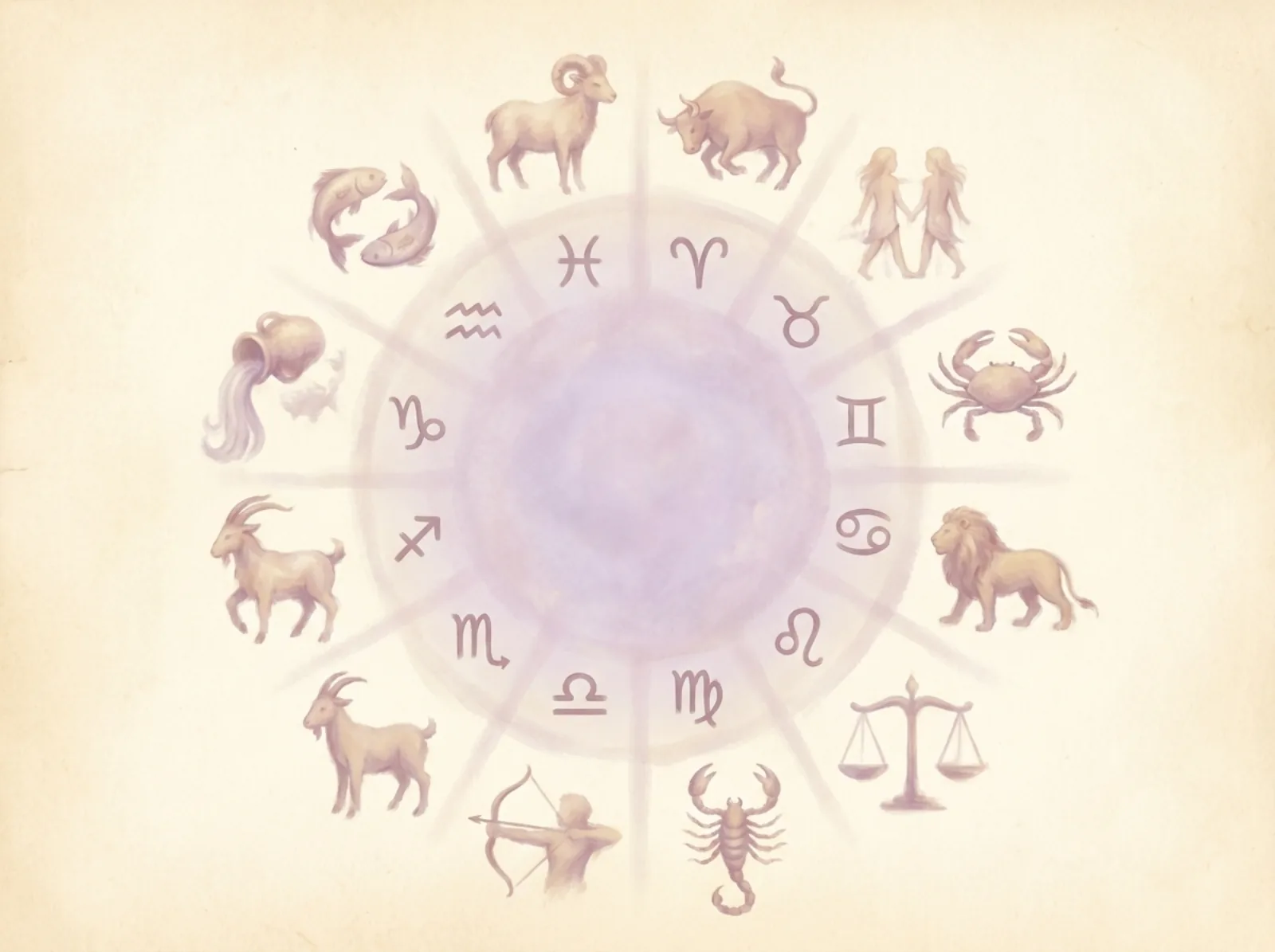
Pluto's elongated orbit means each generation inherits a shared Plutonian theme. These are the collective underworlds a cohort is asked to compost. Dates below are approximate; cuspal births should pull a full chart.
Pluto in Aries (1822-1853) brought pioneering violence and sovereignty, the US Civil War, the European revolutions of 1848, and industrial expansion into Indigenous lands. Pluto in Taurus (1853-1884) transformed money, land, and the body through robber barons, the gold standard, and the first mass-produced consumer goods. Pluto in Gemini (1884-1914) was the explosion of communication via telephones, mass newspapers, and early cinema, with propaganda as the shadow.
Pluto in Cancer (1914-1939) put home and nation under siege through two world wars and the Great Depression, carrying both fierce love of roots and the shadow of nationalism. Pluto in Leo (1939-1957) created the cult of the individual, celebrity culture, rock and roll, and the civil rights movement; its gift is creative authority, its shadow is narcissism.
Pluto in Virgo (1956-1972) transformed work, health, and systems through automation, HIV/AIDS, and personal computing. Pluto in Libra (1971-1984) restructured partnership and justice through no-fault divorce, second-wave feminism, and same-sex rights movements. Pluto in Scorpio (1983-1995), the sign of its rulership, surfaced deep intensity in the open through the internet, 9/11, and the normalization of therapy.
Pluto in Sagittarius (1995-2008) broke down inherited belief as religion, journalism, and higher education lost authority, forcing self-authored meaning. Pluto in Capricorn (2008-2024) collapsed and remade institutions through the 2008 financial crisis, pandemic, and climate reckoning, carried by Gen Z and Gen Alpha.
Pluto in Aquarius (2023-2044) is only just beginning. Its themes are technology, collective power, and the redefinition of the human. The gift is genuinely new forms of community; the shadow is surveillance and ideology. Pluto in Pisces (2044-2068) will carry the transformation of consciousness itself and the dissolution of boundaries only now beginning to be felt.
Where Pluto lives in your chart: the twelve houses
If the sign tells you what Pluto is composting generationally, the house tells you which room of your personal life it has set up a workshop in. This is where the reading becomes intimate.
Pluto in the first house makes your identity itself the project; people sense an intensity about you before you speak. Pluto in the second house works through money, body, and self-worth, forging unshakeable material resourcefulness through financial deaths and resurrections. Pluto in the third house shapes mind, siblings, and early schooling; you may have been the family truth-teller, or the one who went silent.
Pluto in the fourth house surfaces ancestral patterns through home, lineage, and mother. Howard Sasportas writes with particular tenderness about this placement in The Twelve Houses. Pluto in the fifth house makes creativity, romance, and children operatic, with love affairs that carry unusual force. Pluto in the sixth house transforms daily work and health; burnout, chronic illness, or a career overhaul before forty is common.
Pluto in the seventh house attracts the catalytic other; you become the person who makes partners more real, or vice versa. Pluto in the eighth house is Pluto at home, dominated by intimacy, inheritance, grief, and shared resources; natural therapists, investors, surgeons, and tantric practitioners live here.
Pluto in the ninth house collapses and rebuilds belief, travel, and higher education; dogma gives way to self-authored philosophy. Pluto in the tenth house produces powerful public lives often marked by dramatic rise and fall and rise, as in Oprah Winfrey's chart.
Pluto in the eleventh house transforms friendships, groups, and future vision; natives may walk away from entire communities to midwife movements. Pluto in the twelfth house works through the unconscious, hidden grief, and spiritual retreat; the shadow is addiction and self-undoing, the gift is contemplative and mystical depth.
The aspects: how Pluto talks to the rest of your chart
Aspects are the geometric relationships between planets in your natal chart. Pluto's aspects to personal planets (Sun, Moon, Mercury, Venus, Mars) and to the Ascendant and Midheaven are usually the ones you feel most. A few words on each major aspect.
Pluto conjunct a personal planet: fusion. The planet is permanently steeped in Plutonian themes. Sun conjunct Pluto often indicates someone who was given adult-sized responsibilities as a child, or whose father carried intense power. Liz Greene writes about this in The Astrology of Fate (1984).
Pluto trine a personal planet: easeful access to depth. These natives often become therapists, investigators, researchers, or crisis workers without finding the work unusually heavy. The gift is already integrated.
Pluto sextile a personal planet: a quieter version of the trine. Opportunity rather than inevitability. You have to reach for it.
Pluto square a personal planet: friction, repeated crises. The classic Pluto square Sun or square Moon often appears in charts of people who had to psychologically separate from a controlling parent. The square is where the character gets built.
Pluto opposition a personal planet: the theme shows up through other people. You keep meeting Plutonian figures until you integrate the energy yourself.
Pluto quincunx (inconjunct) a personal planet: a chronic itch. Something must be adjusted but no obvious bridge exists. Often shows up in health, work, or relational patterns that will not stop demanding attention.
Pluto retrograde: five months of inward excavation each year
Pluto spends roughly five months of every year in apparent retrograde motion, which means from Earth it looks like it is traveling backward through the zodiac. That is a long window, which is why Pluto retrograde does not feel dramatic the way Mercury retrograde does. It feels, instead, like a long slow turning inward.
Astronomically, this is an optical effect caused by Earth and Pluto's relative orbital speeds. Nothing is actually reversing. But astrologically, the symbolic correspondence is useful. During Pluto retrograde, outer power struggles tend to quiet down. Inner ones tend to amplify. Therapists often report that clients bring deeper, older material during these months.
If you were born with Pluto retrograde natally, which about half of all people are, you are not cursed. It generally indicates that the Plutonian work of your lifetime is more introspective than external. You tend to transform yourself first, and the world around you reorganizes in response.
A practical note: Pluto retrograde is a good time for therapy, estate planning, ancestral research, journaling about shame, and finishing books by Jung or Steven Forrest you started last year. It is a poor time for forcing power confrontations. Wait for the direct station if you can.
Famous charts: Pluto in the spotlight
Theory is thin without faces. Here are a few well-known people whose Pluto placements are striking, drawn from publicly available birth data on Astro-Databank (ADB), which rates data quality so you can trust the sources.
Frida Kahlo, born July 6, 1907, had Pluto in Gemini in the ninth house conjunct her North Node. Her work, her political philosophy, and her chronic bodily pain all read as a lifelong wrestling with Plutonian depth channeled through visual language. ADB rates her data A.
Nelson Mandela, born July 18, 1918, had Pluto in Cancer conjunct his Ascendant (in Rodden-rated AA data). Twenty-seven years of imprisonment and the subsequent dismantling of apartheid is Pluto on the Ascendant lived at full scale. He did not just survive the underworld; he reorganized a country after it.
Oprah Winfrey, born January 29, 1954, has Pluto in Leo in the tenth house in most published charts. Her public career, including the televised disclosure of childhood sexual abuse in 1986, is a textbook example of Pluto in Leo in the tenth: creative sovereignty forged through publicly transformed trauma.
Kurt Cobain, born February 20, 1967, had Pluto in Virgo square his Sun in Pisces. The Pluto-Sun square often correlates with figures who feel both chosen and crushed by their own public role. His life, and the way it ended in 1994, is often discussed in evolutionary astrology circles as a cautionary study in unintegrated Pluto.
Beyonce, born September 4, 1981, has Pluto in Libra tightly conjunct her Virgo Sun. Her careful control of image, timing, and narrative, and the way her work consistently names power dynamics around race, gender, and labor, is Pluto-Sun power used with discipline rather than against the self.
These are not predictions. They are illustrations of how Pluto energy, once named, becomes legible across very different lives.
A scenario from the consulting chair
Let me give you a composite scenario, built from several real client sessions I have run with details changed. Call her Rachel. She is a 42-year-old product manager at a tech company in Austin. She came to me in early 2024 because she could not stop thinking about her high school boyfriend.
Her natal chart showed Pluto in Libra in the seventh house. Transiting Pluto, having just entered Aquarius, was forming a square to her natal Pluto. This is a once-in-a-lifetime transit that lands in the early forties for most people and is sometimes called the Pluto square Pluto crisis.
The high school boyfriend was not actually the point. He was the symbol. What was underneath the obsession was a question Rachel had never been allowed to ask: what if the committed, stable, admirable partnership I built in my twenties is quietly suffocating me? Pluto in the seventh house square itself was tearing the mask off a Libra default of keeping the peace.
We did not spend our sessions on whether she should leave her marriage. That was not my job. We spent them on which parts of her partnered self were genuinely hers and which parts had been assembled to avoid conflict. By the time Pluto stationed direct that October, Rachel had started couples therapy, told her husband the truth about the previous eighteen months, and reopened a creative-writing practice she had abandoned at twenty-four. Her marriage, as it turned out, survived. Her compliance did not. That is what Pluto work actually looks like.
Shadow and gift: the two faces of every placement
Every astrological placement has what evolutionary astrologers call a shadow expression and a gift expression. Pluto's are unusually stark because the planet itself trades in extremes. The shadow is what happens when Pluto's energy is unconscious and projected outward. The gift is what happens when it is integrated and used in service.
The shadow face of Pluto looks like: controlling behavior disguised as love, obsessive jealousy, political authoritarianism, financial exploitation of the vulnerable, spiritual bypassing of grief, chronic manipulation, revenge fantasies that outlive their origin, and the kind of silence that uses withdrawal as a weapon. If you catch yourself here, the question is not what is wrong with me. The question is what wound am I defending by behaving like this.
The gift face of Pluto looks like: trauma therapy that actually works, investigative journalism that topples real abuse, medicine that holds the dying, grief groups, honest sexuality, financial advising for people in crisis, meditation practices that go into the body, and the quiet confidence of someone who has survived their own worst and can therefore be fully present with yours. These are not accidents. They are what happens when Pluto has been metabolized.
Chani Nicholas, in her 2020 book You Were Born for This, puts it plainly: the planets do not force a story on us. They offer a landscape. We decide, over and over, whether to inhabit it as prison or as pilgrimage.
In Vedic astrology, a related territory is covered by the lunar node Ketu and by the eighth house, though the mapping is not one to one. I mention this once, as promised, because Western and Vedic systems describe overlapping terrain in genuinely different languages, and conflating them produces mush. Pick a system and stay with it for a reading.
What Pluto is not, and what not to confuse it with
Because Pluto's reputation precedes it, people often attribute to Pluto things that belong to other planets or to no planet at all. A short list of common confusions.
Pluto is not fate in the fortune-telling sense. It will not tell you whether your startup will succeed or whether your crush will text back. It describes the deep psychological and spiritual stakes of a season, not the surface events.
Pluto is not Mars. Mars is heat, impulse, the sudden fight. Pluto is pressure, inevitability, the slow turning of the screw. If something is loud and over in a week, that is Mars. If something is quiet and over in seven years, that is Pluto.
Pluto is not Saturn. Saturn is the architect of structure, duty, and time. Pluto is the demolition crew that shows up when the structure has rotted. The two often work in sequence, which is why midlife (Saturn return at 29, Uranus opposition at 42, Pluto square at 40-44) can feel like a stacked crisis.
Pluto transits are not a diagnosis of anything clinical. If you are experiencing suicidal ideation, severe depression, psychotic symptoms, or abusive behavior from a partner, Pluto in your chart is not a replacement for a licensed clinician, a crisis line, or law enforcement if you are in danger. Astrology can be a wonderful companion to therapy. It is not a substitute for it.
Finally, Pluto's demotion to dwarf planet in 2006 by the International Astronomical Union is often brought up as evidence that Pluto is no longer astrologically significant. Astrologers across traditions, from Steven Forrest to Richard Tarnas, continue to treat Pluto as a full outer planet in natal and mundane work. The astronomical category and the astrological symbol are different kinds of claim.
Working with your Pluto: a practical starting kit
If you have read this far and want to actually do something with your Pluto placement, here is a short practice I give to new clients. It is not a replacement for therapy or a reading. It is a doorway.
First, write down the sign and house your natal Pluto occupies. Then write down, in two short paragraphs, the shadow and gift versions of that placement as you understand them from the sections above. No one else needs to see this.
Second, name one person in your life who most carries the shadow face of your Pluto placement for you. A parent, an ex, a boss, a sibling. This is not to blame them. It is to notice where you have been outsourcing the work.
Third, name one experience in your life, however small, where you have touched the gift face of your Pluto placement. A conversation, a project, a moment of truth-telling. This is proof of concept. Your Pluto is not theoretical.
Fourth, for the next six weeks, keep a short journal entry when something in the territory of your Pluto house comes up. If you have Pluto in the second house, write about money and body. If Pluto is in the seventh, write about partnership. You are not trying to solve anything. You are trying to listen.
Fifth, if the material gets heavier than you can hold alone, get help. A trauma-trained therapist, an evolutionary astrologer, a somatic practitioner, or a trusted spiritual director can all walk this territory with you. The American Psychological Association's Psychologist Locator and the International Society for Astrological Research's directory are two places to start.
When to consult a professional astrologer or therapist
A quick guide to when self-study ends and professional help begins. Most readers will land in the first two tiers, which is where this article is designed to serve. The last two are not optional.
Tier one, self-study: you are curious about your Pluto placement, you want vocabulary for a life phase, you enjoy reading and journaling. This article, Steven Forrest's The Book of Pluto, and the Raka app are reasonable companions.
Tier two, one or two consultations: a specific life event (a move, a divorce, a career change, a 40-44 Pluto square) has you wanting more precision than general reading can give. A single ninety-minute session with a qualified astrologer is often enough.
Tier three, sustained therapeutic work: you are noticing repeated patterns that astrology helps name but does not resolve. Family-of-origin wounds, chronic relational struggles, grief that will not integrate, substance patterns. This is therapy territory. Astrology can run alongside, not instead.
Tier four, immediate professional help: you are experiencing active suicidal ideation, abuse, or symptoms of a diagnosable disorder. In the United States, call or text 988 for the Suicide and Crisis Lifeline. In the United Kingdom, call Samaritans at 116 123. In Australia, call Lifeline at 13 11 14. In Canada, call or text 988. Astrology is not an emergency service. Please use the right tool.
A reasonable 2023 Pew Research Center survey found that about 30 percent of US adults consult astrology, tarot, or horoscopes at least sometimes, up noticeably from previous decades. The practice is widespread. The misuse of the practice to avoid real care is also widespread. You deserve both the symbolic companionship and the clinical safety net. Use them together.
Closing: the dignity of the long work
Pluto is slow. It does not care about your calendar. A full Pluto transit through a single house can take a decade or more. The impatience most of us feel when we first start studying this planet is itself part of the material. Pluto's work is adult work, and adulthood, in the astrological sense, is less about age than about willingness to stay in the room with what hurts until something true gets born.
The clients I have watched do this work well share one trait. It is not intelligence, or wealth, or privileged circumstance, though those help. It is the willingness to let a part of themselves die on schedule, instead of fighting the composting with everything they have. That willingness is not natural. It is practiced. Astrology, at its best, is a slow practice for that willingness.
If you have a Pluto transit active right now, or a tender natal placement that has started to make itself heard, I will say what I say in every session I close. You are not being punished. You are being invited into a larger version of yourself than the one that got you to this chapter. The invitation will be issued whether you accept it or not. The gift is in choosing to RSVP.
Frequently asked questions
What does Pluto represent in astrology?
In Western astrology Pluto represents transformation, power, death and rebirth, the unconscious, taboo, and regeneration. It rules Scorpio and co-rules the eighth house. In a natal chart, Pluto shows where in your life you are being asked to compost an outgrown identity so that a truer one can grow. Think of it as the planet of inevitable, non-negotiable growth that works on a scale of years rather than days.
Is Pluto still considered a planet in astrology?
Yes. The International Astronomical Union reclassified Pluto as a dwarf planet in 2006, but astrologers across traditions, including Steven Forrest, Liz Greene, and Richard Tarnas, continue to treat Pluto as a full outer planet in natal, transit, and mundane work. The astronomical category and the astrological symbol are different kinds of claim, and Pluto's symbolic weight has not changed.
How long does Pluto stay in one sign?
Pluto's orbit is highly elliptical, so it spends anywhere from roughly twelve to thirty-one years in a single zodiac sign. Pluto was in Capricorn from 2008 to 2024 and entered Aquarius in 2023 and 2024 in a staggered ingress. Because the planet moves so slowly, your Pluto sign is a generational marker shared with everyone born within that long window.
What is a Pluto transit?
A Pluto transit is a period when Pluto, by its current motion through the sky, forms a significant angle to a planet or point in your natal chart. These transits unfold over one to three years because Pluto moves slowly and often retrogrades back and forth across the same degree. They tend to correlate with deep, structural life changes rather than quick events.
What does the Pluto square Pluto transit mean?
The Pluto square Pluto transit happens in your early forties when transiting Pluto forms a ninety-degree angle to your natal Pluto. It is a once-in-a-lifetime midlife passage that often brings suppressed truths to the surface in relationships, career, and identity. Astrologers like Howard Sasportas describe it as a mandatory audit of what in your life is genuinely yours.
Is Pluto retrograde dangerous?
No, Pluto retrograde is not dangerous. Pluto spends about five months each year in apparent retrograde motion, which is an optical effect, not a reversal. Symbolically, this period favors inner excavation over outer confrontation. It is generally a useful time for therapy, journaling, ancestral research, and reflection, and a poor time for forcing power struggles with other people.
What is the difference between Pluto in Scorpio and Pluto in the eighth house?
Pluto in Scorpio describes a generational mood. Everyone born between 1983 and 1995 shares it. Pluto in the eighth house, by contrast, is a personal placement based on your exact birth time and location. The sign tells you the collective theme Pluto is composting. The house tells you which room of your individual life it has set up its workshop in.
Can I interpret my Pluto placement without a professional astrologer?
You can begin, especially using resources like Steven Forrest's The Book of Pluto or Liz Greene's The Astrology of Fate. For specific life decisions, major transits, or recurring patterns, a session with a trained evolutionary or psychological astrologer adds precision. For clinical mental health concerns, please see a licensed therapist. Astrology is a reflective companion, not a substitute for professional care.