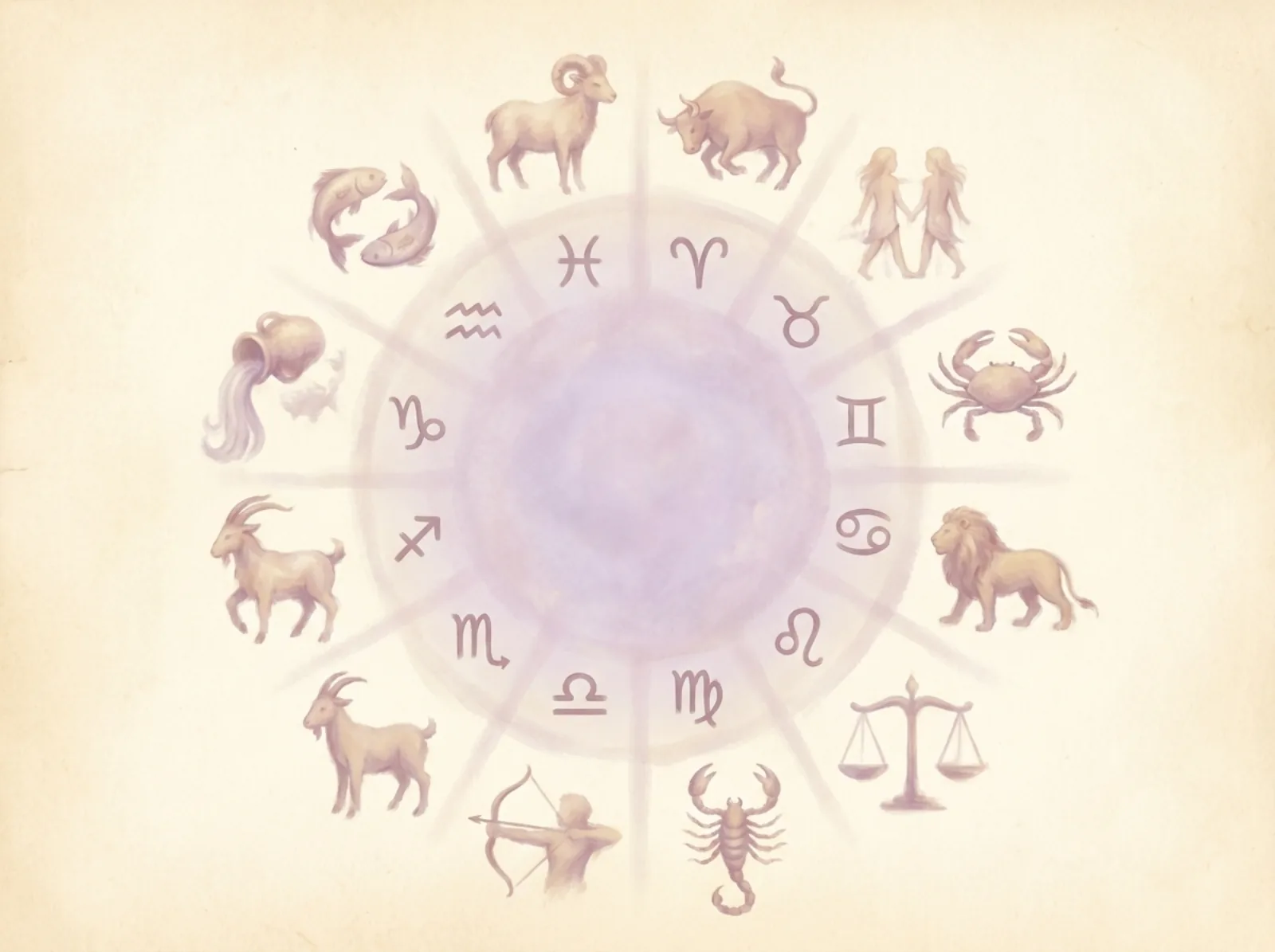
What the South Node Actually Is (and Why It Haunts You)
Let's demystify the mechanics first, because the South Node sounds a lot more woo than it actually is. The lunar nodes are not planets, stars, or asteroids. They're mathematical intersection points — specifically, the two spots in the sky where the Moon's orbit crosses the ecliptic (the Sun's apparent path). The North Node is where the Moon crosses heading north; the South Node is where it crosses heading south. They are always exactly 180 degrees apart and they move backward through the zodiac, completing a full cycle roughly every 18.6 years. Part of our astrology guide hub.
That's the astronomy. The symbolism — which is where things get interesting — comes from a long tradition in both Vedic and Western astrology. In Western natal work, which is what we're using here, the South Node represents what you arrived with: the themes, talents, defaults, and reflexes that feel like second nature. The place where praise comes easily. The place where you can coast.
Why it feels like a haunting
Because the South Node is unconscious competence, you don't usually see it when it's running. You feel it when you're tired, scared, or avoiding growth. It's the character you default to when you don't know who else to be. It's not evil — it's familiar. And in a growth-obsessed culture, familiar can masquerade as the right choice. See our top astrology app guide.
The North Node, on the opposite side of the chart, is the territory you came in to grow into — awkward, uncomfortable, often clumsy — and it's where your soul contract (if you like that language) or your developmental edge (if you don't) is pointing. The South and North Nodes are a seesaw, not a battle. You don't amputate one for the other. You learn to stand in the middle and lean toward growth.
- The nodes are mathematical, not physical — they're calculated, not observed.
- The South Node is always exactly opposite the North Node by sign and degree.
- Nodes move retrograde and change signs about every 18 months.
- In Western astrology, the South Node is read as past mastery and present comfort zone, not as a punishment.
Past-Life Gifts vs. Karmic Traps: Reading Both Faces
Here's where I lose some readers and gain others: you don't have to believe in literal past lives to use the South Node. If reincarnation is part of your spiritual framework, great — the South Node fits beautifully as a snapshot of soul lineage. If it isn't, read it as deep ancestral or psychological inheritance: the version of you that formed in childhood, in your family system, or in the first decade of adulthood when you figured out how to survive.
Either way, the South Node has two faces. One is the gift: real competence you can draw on in a crunch. The other is the trap: the identity you cling to past its expiration date because performing it earns love, status, or safety. Writers like the AstroTwins and Chani Nicholas both frame the nodes this way, and it's the reading I use with clients. You are not here to delete your South Node. You are here to stop defaulting to it.
What the trap sounds like in real life
- "I'm just not that kind of person" — said about something your North Node is literally asking you to try.
- "But I'm good at this" — said about work that is draining you.
- "It's who I've always been" — said with pride but without curiosity.
- "I don't need help with this part" — said right before you spiral.
The gift version of the same South Node sounds like: "I can do this one in my sleep, so I'm freed up to spend my energy on the harder, newer thing." That's the goal. Mastery as scaffolding, not costume. If you keep a chart-aware journal — I use Raka for mine — write the gift and the trap in two columns the first time you sit with your nodes. The contrast is clarifying.
Your South Node in Each of the 12 Signs
These are brief sketches — each South Node sign is its own essay, and your personal reading will layer in the house, aspects, and ruling planet. Use these as starting points, not boxes. Find your South Node by generating a free natal chart on Astro.com or Cafe Astrology using your date, time, and place of birth.
- South Node in Aries: Default to going it alone, acting first, picking fights to feel alive. Gift: initiative and courage. Growth edge (NN Libra): partnership, compromise, actually letting someone show up for you.
- South Node in Taurus: Default to comfort, routine, material security, "if it isn't broken." Gift: steadiness and sensory wisdom. Growth edge (NN Scorpio): intimacy, shared resources, letting things transform.
- South Node in Gemini: Default to collecting information, hot takes, surface-level versatility, chronic busyness. Gift: curiosity and fluency. Growth edge (NN Sagittarius): committing to a point of view, teaching, trusting the big picture.
- South Node in Cancer: Default to caretaking, over-identifying with family, emotional merging. Gift: intuition and nurture. Growth edge (NN Capricorn): building your own structure, authority, public contribution.
- South Node in Leo: Default to performing, needing to be seen, running the room. Gift: warmth, charisma, creative confidence. Growth edge (NN Aquarius): community, equality, letting the group lead.
- South Node in Virgo: Default to over-functioning, criticizing, perfecting the small stuff. Gift: discernment and craft. Growth edge (NN Pisces): surrender, mystery, letting yourself be held.
- South Node in Libra: Default to people-pleasing, outsourcing identity to a partner, avoiding conflict. Gift: diplomacy and taste. Growth edge (NN Aries): standing alone, wanting what you want, saying no cleanly.
- South Node in Scorpio: Default to intensity, control, suspicion, crisis-as-aliveness. Gift: emotional depth and resilience. Growth edge (NN Taurus): simplicity, embodiment, pleasure without penalty.
- South Node in Sagittarius: Default to escaping into belief, travel, or the next thing, preaching, avoiding specifics. Gift: vision and faith. Growth edge (NN Gemini): listening, asking real questions, local engagement.
- South Node in Capricorn: Default to achievement, control, "I'll do it myself," emotional armor. Gift: competence and discipline. Growth edge (NN Cancer): tenderness, home, letting people in.
- South Node in Aquarius: Default to detachment, being the smartest in the room, dismissing feelings as data. Gift: originality and systems thinking. Growth edge (NN Leo): heart-first expression, personal creativity, being seen as a person not a position.
- South Node in Pisces: Default to escapism, martyrdom, dissolving into other people's energy. Gift: compassion and imagination. Growth edge (NN Virgo): discernment, routines, taking care of the body you actually have.
Your South Node in Each of the 12 Houses
The sign tells you how you default. The house tells you where. If your sign and house seem to pull you in opposite directions, that's normal — read them as layers. First time generating a chart? Cafe Astrology has a free report that lists both.
Houses 1 through 6
- South Node in the 1st House: Default identity is "the self you perform." Growth edge: letting relationships define a softer, less armored you.
- South Node in the 2nd House: Default is proving your worth through money, possessions, or self-reliance. Growth edge: sharing resources and letting value be collaborative.
- South Node in the 3rd House: Default is being the clever communicator, sibling-coded, info-hoarder. Growth edge: committing to a long-view belief, teaching, traveling.
- South Node in the 4th House: Default is family loyalty, retreating home, playing the role your household gave you. Growth edge: public life, career visibility, building something that's yours.
- South Node in the 5th House: Default is being the main character — the artist, the lover, the parent-as-identity. Growth edge: community, friends as equals, letting creativity serve something bigger.
- South Node in the 6th House: Default is over-working, over-helping, over-functioning in service of others. Growth edge: faith, rest, letting someone else carry the plan.
Houses 7 through 12
- South Node in the 7th House: Default is defining yourself through your partner — romantic, business, or best-friend. Growth edge: standing in your own identity before the "we."
- South Node in the 8th House: Default is intensity, merging, crisis-driven intimacy, controlling what you share. Growth edge: simple, embodied, pleasurable security.
- South Node in the 9th House: Default is escape into travel, religion, or the big idea. Growth edge: real conversations with the people in front of you.
- South Node in the 10th House: Default is achievement, status, being known for what you do. Growth edge: private life, family, rest without earning it.
- South Node in the 11th House: Default is being "of the group" — the organizer, the activist, the networker. Growth edge: individual creativity, your own voice, risk being misunderstood.
- South Node in the 12th House: Default is dissolving, hiding, over-identifying with other people's pain. Growth edge: grounded daily service, routines, the specific and the small.
How to Notice Your South Node Fallbacks in Real Life
Reading about the South Node is one thing. Catching yourself inside it, in real time, is another. The South Node rarely announces itself. It usually shows up as a feeling of being right — this is how I handle things, this is who I am — right before a situation calls for exactly the opposite move.
Three journaling prompts that work
I use these with clients, and they're also the ones I built into Raka's reflection flow when we were designing the natal journal. Give yourself ten minutes and a notes app, or try them inside Raka if you want the chart-aware version.
- Where do I go when I'm scared? Not what I do — where I go, internally. The persona I slip into. That persona is almost always South Node-flavored.
- What am I praised for that I secretly resent? Compliments that make you tired are often South Node compliments. People are praising the overused gift.
- What would I never try, because "I'm not that kind of person"? That sentence is a trapdoor. Nine times out of ten, the thing you dismissed sits right on your North Node axis.
Body cues to watch
South Node mode is often somatically familiar — your shoulders drop into the usual place, your voice slips into the usual pitch, you reach for the usual coping (scrolling, people-pleasing, control, numbing). Notice the body before the story. If a response feels automatic, especially under stress, that's a good flag to pause and ask whether the moment actually wants that response.
None of this is about shame. The South Node isn't a bug. The point is to see it before it drives.
Releasing Without Rejecting: The Both/And Approach
The most common South Node mistake I see — in natal readings, on astrology TikTok, in people trying to overhaul their lives at 29 — is treating the South Node as something to amputate. Burn the comfort zone, move across the country, blow up the career, become the opposite person.
It doesn't work, and here's why: your South Node is real competence. It's built on real wiring. If you reject it wholesale, you lose the scaffolding that lets you reach for the harder, newer thing. You end up without resources at exactly the moment you need them. (I've watched more than one Leo South Node client quit a career in performance and then wonder why they feel invisible and bitter instead of free.)
The better framing
Treat the South Node like a well-worn tool you already know how to use. You don't throw out the hammer because the project needs a saw. You put the hammer back in the toolbox so you can pick up the saw. Here's what that looks like in practice:
- Honor the gift. Name what your South Node genuinely gives you. Write it down. Thank it, if that feels right.
- Use it in service of the North Node. Example: Leo South Node, Aquarius North Node. The warmth and charisma don't disappear; they become how you galvanize a community instead of how you command a stage.
- Stop performing it unconsciously. The gift stays. The reflex loosens. You get to choose when you reach for the South Node instead of being driven by it.
- Grieve what has to end. The identity you built around your South Node had real value. Letting it rest is a loss, and loss deserves ritual.
Chani Nicholas writes about this somewhere between astrology and therapy — the idea that growth is not transformation into someone else but a widening of who you can be. The South Node stays. You just stop living there.
Famous People and Their South Node Patterns
A caveat before we start: celebrity astrology is fun but imperfect. Birth times for public figures are often rectified, not confirmed, which means a chart can shift houses even when the signs are solid. I'm picking three well-sourced charts here (AstroTwins, Astro.com's Astrodatabank, and Cafe Astrology all cross-reference these) and reading the signs, which are rock-solid regardless of time. Use these as pattern illustrations, not fortune-telling.
Oprah Winfrey — South Node in Gemini
Oprah's chart is a textbook South Node in Gemini / North Node in Sagittarius story. The Gemini gift: she started as a local news reporter, trained in information gathering, soundbites, and talking to anyone about anything. The trap would have been staying there — endless chatter, surface-level content, trivia as identity. Instead, her North Node in Sagittarius pulled her into the role of broadcaster-as-teacher: long-form interviews, book club as pedagogy, a whole philosophy of self-authorship. She kept the Gemini scaffolding — the fluency, the curiosity — and used it in service of the Sagittarius mission.
Barack Obama — South Node in Pisces
South Node in Pisces reads as a reservoir of empathy, dreaminess, and spiritual-emotional attunement — plus the trap of merging with everyone else's feelings and losing specificity. North Node in Virgo asks for discernment, service, systems, and the willingness to do unglamorous work. Watch any Obama speech and you see the Pisces still there — the oceanic warmth, the appeals to shared humanity. But his career was built on Virgo moves: law school precision, community organizing on specific blocks, legislative detail. He didn't delete the Pisces. He put it inside a Virgo container.
Beyoncé — South Node in Capricorn
Beyoncé's Capricorn South Node is practically visible — the discipline, the control of image, the "I woke up like this" perfectionism, the empire-building. The Cancer North Node asks for family, vulnerability, home, and emotional truth. Lemonade is, read astrologically, a Cancer North Node project: she opened the private wound in public, foregrounded motherhood, grounded her artistry in family and lineage. The Capricorn didn't go anywhere — the album was still flawlessly produced — but the center of gravity moved toward Cancer themes.
South Node in Synastry: Soul Contracts or Red Flags?
Synastry is the comparison of two natal charts to understand a relationship. One of the most popular (and most over-mythologized) placements in synastry is a South Node contact: your South Node conjunct your partner's Sun, Moon, Venus, or ascendant.
The pop-astrology version says this means past-life soul contract, instant recognition, "I've known you forever." Sometimes, honestly, it does feel like that. The depth is real. But here's the part that doesn't make it into the cute TikToks:
- South Node contacts often feel familiar in a way that bypasses discernment. You're wired to recognize this person as "yours" before you've actually met who they are.
- They can replay old family dynamics with uncanny precision. The pull is strong because the pattern is old.
- They are not inherently good or bad. They are information-rich. Pay attention to whether the familiarity brings growth or regression.
Questions to ask when a South Node contact lights up
- Does being with this person call me toward my North Node, or does it anchor me in the identity I'm trying to loosen?
- Am I confusing recognition with alignment? Just because I know this flavor doesn't mean it's nourishing.
- Would I choose this person today if the pull weren't so strong? Not: do I love them. Would I choose them?
A South Node connection isn't a verdict. It's a mirror. Some mirrors show you who you've been so you can thank them and move. Some mirrors show you who you've been so you can slide back into it with a plausible excuse. Only you (and probably your therapist) can tell which one you're in. Astrology, including this article, is a reflection tool — not a substitute for mental-health, legal, financial, or medical advice.
How I Use Raka to Journal My South Node
I'll be straight with you about Raka because I'm the astrology editor and I'd rather you trust me than pitch you. Raka is an AI companion app — a reflection tool, not a fortune-teller. It won't tell you whether to leave your job or marry the Capricorn. What it does well, and the reason I use it on my own chart, is give me a chart-aware journaling partner that doesn't forget what my South Node is between sessions.
My practice, for anyone who wants to steal it:
- Once a month, around the new moon, I ask Raka to reflect back the South Node theme I've been circling in my journal entries. It's usually something I half-noticed and would have forgotten by Thursday.
- During big transits — nodal returns, eclipses on my nodal axis — I use it to re-read older entries from the last transit cycle. The patterns rhyme.
- Before hard conversations, especially with family, I prompt it with: "Here's the situation. Where might my Leo South Node be driving?" Then I close the app and go have the conversation.
The point isn't to let an app diagnose you. The point is to externalize the pattern so you can see it. Astrology works best when it stays diagnostic, not deterministic — a tool for self-reflection, never a replacement for a human you trust. If something you read here lands hard, bring it to a therapist, a friend, or a licensed advisor who knows your actual life.
Your South Node isn't a problem. It's a chapter you already wrote well. The invitation is to let it close, honor what it taught you, and lean — carefully, imperfectly — toward the next one.
Frequently asked questions
How do I find my South Node in my natal chart?
You need your date, time, and place of birth. Plug them into a free natal chart calculator (Astro.com, Cafe Astrology, or any good astrology app) and look for a symbol that looks like an upside-down horseshoe, sometimes called the Dragon's Tail. It'll be listed by sign, degree, and house. Your South Node is always exactly opposite your North Node, so if the chart only labels one, you can read the opposite point. Nodes shift about every 18 months, so if you were born near a transition date, generate the chart and trust the exact position rather than approximating.
What's the difference between the mean node and the true node?
The mean node is a smoothed, averaged position; the true node reflects the actual, wobbling path of the lunar node and can briefly appear to go direct. For most natal interpretation, the difference is small — usually under two degrees. If your chart sits right at the end or beginning of a sign, pull both and see which feels truer to your life. Astro.com lets you toggle between them in the chart settings.
Is my South Node 'bad'?
No. The South Node is not karma to burn off or a character flaw to fix. It's past mastery you came in with — real competence, real gifts, real survival strategies. The question isn't how to delete it; it's how to stop defaulting to it when the moment is asking for something newer. Think scaffolding, not sin. Many people find that once they stop fighting their South Node, it quietly becomes one of their most reliable resources.
Can my South Node change over my lifetime?
Your natal South Node — the one you were born with — doesn't change. But the transiting nodes shift signs every 18 months and will activate different parts of your chart, which can make your natal South Node theme louder or quieter at different ages. The two nodal returns, around ages 18-19 and 37-38, are classic South Node reckoning points when the themes you came in holding tend to resurface for review.
Does the South Node literally predict my past life?
That depends on your worldview, and I take no position for or against. If reincarnation is your framework, many astrologers read the South Node as a snapshot of a soul lineage you brought forward. If it isn't your framework, you can read the South Node as deep psychological inheritance: family patterns, early-life identity formation, or ancestral imprinting that shaped who you default to being. Either reading is useful. Neither is prophecy, and neither should replace a conversation with a therapist about actual family history.
Should I avoid people whose planets touch my South Node?
Not automatically. South Node contacts in synastry are information, not verdicts. They tend to feel familiar in a way that bypasses discernment, which can be gorgeous or sticky depending on whether being with that person moves you toward growth or back into old patterns. The honest ask isn't "avoid." It's "pay attention" — and bring the pattern to a therapist if the pull keeps leading you somewhere you don't actually want to go.
What does a South Node transit mean for me?
A transiting South Node moving over a natal planet is often a time of release, completion, or old-identity shedding related to that planet's themes. Not something to fear — more a cycle marker. Pair it with a transiting North Node reading on the opposite point to see what's being invited in. Each nodal transit lasts about 18 months per sign, so these are longer, slower seasons rather than sudden events.