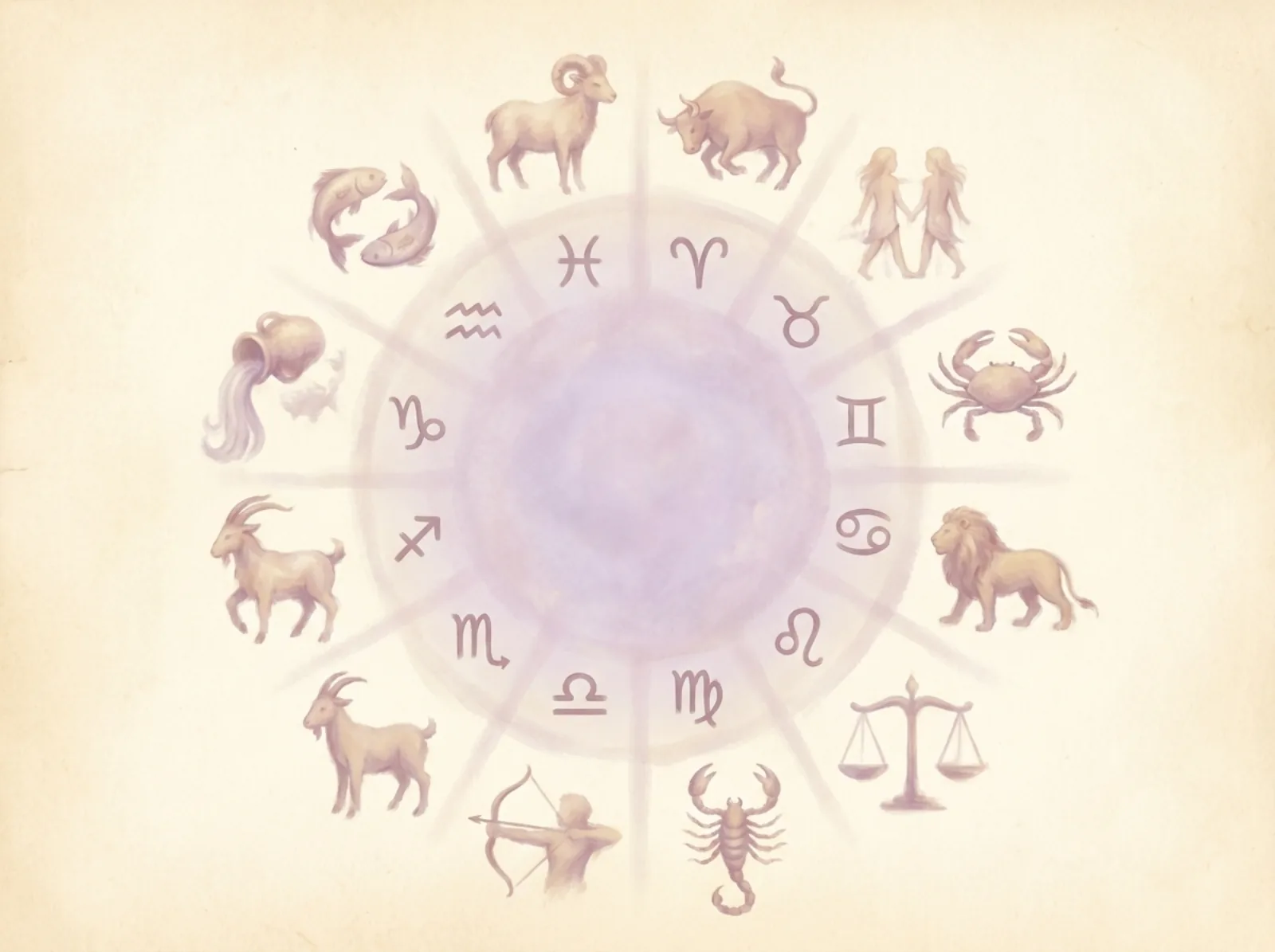
A note from Maya before we go into the eighth room
I remember the first client I ever read for who had four planets in the 8th house. She came in wearing a cream linen blazer, poured her tea without spilling a drop, and inside of three minutes told me she had buried both parents in the same calendar year and was quietly managing the estate for an entire extended family while running a surgical practice. She asked, politely, whether her chart had anything to say about that. It had everything to say about that. Part of our astrology library.
The 8th house gets reduced to sex and death in the pop-astrology internet, and I understand why — those two words are catchy, and they do live here. But after fifteen years of reading charts for clients in London, Boston, and increasingly over video with women across the United States and the UK, what I actually see in this house is a quieter and stranger thing. The 8th house is where you learn that you are not the only person in your life. It is where you fuse. It is the room you walk into when a doctor says the biopsy result, when a partner says the word divorce, when a parent dies and the will arrives, when you fall in love so hard you cannot locate the edge of yourself anymore.
This article is a working guide, not a tarot reading. It will tell you what the 8th house rules in Western tropical astrology, what each of the twelve signs looks like on its cusp, what the classical personal planets do when they live inside it, how to read transits through it, how to interpret an empty 8th house (which about half of us have), and which famous charts are useful study material. You can take what maps and leave what does not. Let's go in. See our best AI astrology app guide.
What the 8th house actually rules (the direct answer)
In Western tropical astrology, the 8th house rules transformation, intimacy, shared resources, inheritance, taboo, and psychological depth. It is traditionally co-ruled by Mars and modernly by Pluto, and it sits opposite the 2nd house of personal money and possessions. Where the 2nd house asks what is mine, the 8th house asks what is ours — financially, emotionally, sexually, karmically. Any time you cannot complete the transaction alone, you are standing in the 8th house.
The classical list of 8th house topics includes other people's money (joint accounts, spousal income, business partnerships, inherited wealth, taxes, insurance payouts, loans, mortgages, trusts), merged intimacy (sexual fusion, deep emotional vulnerability, the surrender of autonomy inside a close bond), psychological death and rebirth (therapy, shadow work, grief, trauma processing, radical identity shifts), occult or taboo material (anything culture does not want discussed openly — death rituals, kink, forensic work, the paranormal, generational secrets), and surgery, crisis, and investigation (literal cutting into the body, deep research, detective work).
Modern astrologers add a layer the ancients did not have language for: psychological transformation itself as a lifelong curriculum. Howard Sasportas, in his classic text The Twelve Houses, frames the 8th as the house where we are initiated into the limits of the ego — the places where life forces us to acknowledge that we are not fully in control, and that other people have real power over our wellbeing. Liz Greene calls it the house of the complex, the stuff that lives below the conscious floorboards. Richard Tarnas, in Cosmos and Psyche, writes about Pluto (the 8th's modern ruler) as the archetype of elemental intensity and depth — the compulsive, the chthonic, the regenerative. The 8th house is where all of that becomes personal biography.
If you want a short answer to quote: the 8th house in astrology is the chart sector governing merged resources, intimate transformation, and the aspects of life that require you to surrender control — including sex, death, shared finances, inheritance, psychological depth, and the taboo material a culture refuses to name.
How to find your 8th house in under five minutes
You cannot read your 8th house without a birth chart, and you cannot cast an accurate chart without three pieces of information. Here is the shortest workflow I give new clients.
1. Gather your birth data. You need the date of birth, the exact time of birth (ideally from the birth certificate — a close guess like 'morning' is not enough; houses move roughly one degree every four minutes), and the city and country of birth.
2. Choose a chart calculator. Astro.com's free chart service, TimePassages, io Astrology, or the Raka app on Google Play all work. If you are brand new to this, use the Placidus house system — it is the default across most Western astrology software and the system almost every modern book is written in. Equal House and Whole Sign produce different 8th house boundaries; stay with Placidus for your first pass.
3. Locate the 8th house cusp. On the chart wheel, start at the Ascendant (the 9 o'clock position) and count counterclockwise through the houses: 1st at the Ascendant, 2nd below it, 3rd, 4th at the bottom, and so on. The 8th house sits roughly in the upper-right quadrant, between the 7th cusp (the Descendant) and the 9th cusp. The sign that falls on that cusp line is the sign ruling your 8th house.
4. Note the ruling planet. Every sign has a classical ruler. If your 8th cusp is Scorpio, the ruler is Pluto (modern) or Mars (classical). If it is Taurus, Venus rules. Where that planet sits in your chart tells you where 8th-house themes get activated.
5. List any planets inside the 8th house. Any planet whose degree falls between your 8th cusp and your 9th cusp is a tenant of this house, and it will carry an 8th-house flavor for your entire life.
6. Note the condition. Is the ruler aspected harmoniously (trines, sextiles) or under tension (squares, oppositions)? Is any planet in the 8th conjunct the cusp? These are the pressure points. Nothing more is needed for a solid first read.
The 8th house through all twelve signs
The sign on your 8th cusp describes your style of fusion — how you handle intimacy, inheritance, and transformation. Everyone has one of these; it is simply a matter of which Ascendant you were born with.
Aries 8th house (Libra rising) charges into intimacy with forward heat, loses itself in the first weeks of a bond, and tends to open joint accounts fast. Growth comes from pacing. Taurus 8th house (Scorpio rising) merges slowly, demands tangible stability like a shared mortgage, uses sensuality as currency, and risks possessiveness. Gemini 8th house (Sagittarius rising) processes intimacy by talking it to death, often entangles with multiple people's finances, and treats journaling and therapy as literal 8th house activities. Cancer 8th house (Capricorn rising) is marked by family money and ancestral wealth; emotional fusion runs deep through care and feeding, and the task is not to confuse love with being needed.
Leo 8th house (Aquarius rising) wants theatrical, fully-seen surrender and leaves relationships that reduce it to background. Virgo 8th house (Pisces rising) analyzes what should be felt — spreadsheets after sex, research papers after grief; done well it produces great therapists and surgeons, done anxiously it produces insomnia. Libra 8th house (Aries rising) wants the prenup and the explicit agreement, and improves at depth once fairness is negotiated. Scorpio 8th house (Taurus rising) is the classical signature — intensity, resourcefulness, a lifelong relationship with transformation, and lifelong tests on power.
Sagittarius 8th house (Gemini rising) expands worldview through intimacy — foreign partners, cross-cultural inheritances, a breakup that becomes a doctorate. Capricorn 8th house (Cancer rising) takes the long view — pensions, trusts, serious estate planning; intimacy is earned, grief arrives with duty attached. Aquarius 8th house (Leo rising) rewrites the rules of merging through open relationships, chosen family, communal property, and unconventional estates; the risk is detachment from the body. Pisces 8th house (Virgo rising) is permeability — absorbing partners' grief and inheriting psychic as well as financial material; conscious, this is the mystic and the healer; unconscious, it is enmeshment.
Planets in the 8th house — what each one wants
Any planet in the 8th house is a tenant with an agenda. Here is how each classical personal planet behaves when it lives in this room, drawing on readings I have done and the frameworks of Sasportas, Forrest, and Chani Nicholas.
Sun in the 8th house: Identity is forged through transformation. You do not fully know who you are until you have been through at least one major death-rebirth cycle — a serious loss, a dissolved marriage, a complete career pivot, a confrontation with mortality. Sun 8th people often look back and realize their adult self was born in a specific crisis year. Vocationally, they do well in work that handles other people's crisis: therapy, hospice, forensics, surgery, investigative journalism, high-stakes finance.
Moon in the 8th house: You feel safe when you can go deep. Small talk makes you tired; intimacy regulates your nervous system, which is a strange sentence until you have lived it. Early life often involved a parent (usually the mother) carrying unspoken grief or power dynamics the family did not discuss. Adult healing involves learning that merging is not the only route to emotional safety — solitude is also medicine.
Mercury in the 8th house: The investigative mind. You cannot leave a thread unpulled. Research, psychology, true crime, depth journalism, scientific inquiry into taboo subjects — this is Mercury 8th territory. In conversation you are the person who asks the real question after the small-talk opener. Shadow: using analysis to avoid the feeling you are analyzing.
Venus in the 8th house: You love intensely or not at all. Casual relationships bore you quickly; you want the full merge, the shared bank account, the morning-and-night access. Venus here can also indicate wealth through partnership, inheritance, or the arts of other people — royalties, estate management, bringing beauty to difficult subject matter. Classical texts warned about jealousy; modern reading sees the gift as loyalty.
Mars in the 8th house: Drive channeled through transformation. These people fight their way through crisis, often emerging stronger. Sexuality is a significant arena for self-expression. Professionally, Mars 8th excels at anything requiring courage with the dark — ER medicine, trauma therapy, special-forces work, estate litigation. Shadow: compulsive conflict, especially with intimate partners, because the fight feels like the connection.
Jupiter in the 8th house: Growth through depth. You learn through loss, through intimacy, through other people's resources. Jupiter 8th is one of the classical signatures of inheritance or sudden financial gain through partnership, though modern astrology is careful to note that the gain usually comes with real emotional cost. Spiritually, this is a seeker's placement — you cannot stay surface for long.
Saturn in the 8th house: The reckoning placement. Saturn here demands maturity around shared resources, intimacy, and mortality. Early life often features a serious encounter with loss or financial responsibility — a parent's illness, a family debt, a death too young. The gift of a mature Saturn 8th is extraordinary emotional stability under pressure. These are the people who handle the funeral, read the will, and keep the family functional. The task is to let other people in, because Saturn 8th will try to carry it alone.
The outer planets in the 8th and why they are generational
Uranus, Neptune, and Pluto move slowly — Uranus takes seven years to cross a sign, Neptune fourteen, Pluto between twelve and thirty depending on orbital speed. When they land in an 8th house, they usually describe themes an entire generation of people are working on, not just you.
Uranus in the 8th house: Rebellion against conventional intimacy structures. Open relationships, chosen family, inheritance disruption (the family money that was supposed to go one way and did not), sudden financial windfalls or losses, breakthrough work in psychology or research. Uranus 8th people often rewrite the rules of how merging works — and often learn by first following the conventional rules and finding them unlivable.
Neptune in the 8th house: Mystical fusion. The dissolve. These charts can produce extraordinary psychics, grief counselors, hospice workers, and artists who make meaning out of the unspeakable. The shadow is enmeshment, financial fog with partners (you did not read the fine print of the joint account), and vulnerability to deception by people who sense how badly you want to merge.
Pluto in the 8th house: The archetypal home position. Pluto in its own natural house doubles down on themes of power, transformation, and depth. These charts produce the most intense versions of 8th house work — the therapists who handle the hardest cases, the investigators who do not look away, the people who inherit vast estates and must decide what to do with that power. Pluto 8th is also where generational trauma gets consciously metabolized rather than passed down.
Transits through the 8th house — the weather, not the fate
When a transiting planet moves through your 8th house, it activates the themes of that house for the duration of its transit. These are not predictions of specific events; they are descriptions of symbolic weather. What you do inside that weather is yours.
A Sun transit through your 8th house happens every year for about a month and tends to coincide with a quieter, more inward period — you may notice yourself less socially available, more drawn to deep conversations, more aware of mortality. Many people experience a mild annual grief wave here that they cannot explain. It usually resolves when the Sun crosses into the 9th. Mars through the 8th every two years can activate conflict around shared resources, intensify sexual energy, and in some cases coincide with surgery or physical procedures.
Jupiter through the 8th (roughly a year, once every twelve) is one of the more useful 8th house transits — expansion of intimacy, growth through therapy, often a bump in shared financial resources (a partner's raise, an inheritance, an insurance resolution). Steven Forrest describes Jupiter 8th transits as the time to go deeper, not wider.
Saturn through the 8th (about two and a half years, once every twenty-nine) is the serious one. Saturn here demands financial maturity (debt gets paid or confronted), intimate maturity (marriages either consolidate or dissolve), and existential maturity (people often make a conscious peace with mortality during this transit). It is not a fun transit. It is a defining one.
Uranus (seven years), Neptune (fourteen years), and Pluto (twelve to thirty years) through the 8th house are generational and life-defining. A Pluto transit through the 8th house, in particular, is one of the most transformative experiences in the chart — relationships end, careers end, old selves end, and something structurally different is built. If you are in one, get a good therapist and a good astrologer; you will want both.
The empty 8th house — what it does and does not mean
Roughly half of all natal charts have no planets in the 8th house, because the ten classical planets have to distribute across twelve houses and many houses end up empty. An empty 8th house does not mean you lack transformation, intimacy, or inheritance in your life. It means the themes play out through other channels.
Three things still matter in an empty 8th house. First, the sign on the cusp — that still describes your style of handling 8th house material. Second, the ruler of that sign and where it sits in the chart — if your 8th cusp is Aries and Mars sits in your 10th house, your transformation themes often get expressed through career crises and public reckonings. Third, aspects to the 8th house cusp from other planets — a planet conjunct, square, or opposing the cusp activates the house even if it does not technically live inside it.
The quiet truth of an empty 8th house is that these clients often process intensity through other people. A spouse becomes the carrier of depth. A business partner handles the finances. A therapist becomes the room where transformation happens. There is nothing wrong with this — it is simply the architecture. The invitation is to notice when you are outsourcing an entire category of life experience and to decide whether that is still working for you.
Famous charts with notable 8th house placements
I use well-known charts as teaching material because the data is public and the biographies are documented. These are illustrations, not endorsements.
Sigmund Freud (1856, Freiberg): Freud's chart is often cited as a textbook 8th house signature — his life's work was literally the invention of a method to make the unconscious conscious, which is 8th house material in professional form. Astro-databank lists Freud with a Taurus Sun and Scorpio Moon; the Scorpio Moon alone would qualify him as a lifelong student of the house's themes, and biographers like Peter Gay have documented his personal reckoning with grief, death, and sexuality as foundational to the clinical theory.
Frida Kahlo (1907, Coyoacán): Kahlo's chart is widely studied for its concentration of Scorpio and Taurus-Scorpio axis emphasis. Her art — the physical body as site of pain, transformation, and merged identity with Diego Rivera — is 8th-house biography made visible. Her placement is frequently cited by Liz Greene and other depth astrologers as a working example of Pluto-flavored creativity.
Anonymized client example 1 — the executor: A client I will call R, a Capricorn rising with Saturn, Pluto, and the Moon in her 8th house, lost both parents in her early thirties and became the executor of a complicated estate that took four years to settle. She later retrained as an estate attorney. Her chart did not cause this; it described the shape of the material she would be given and how she would metabolize it.
Anonymized client example 2 — the therapist: Another client, a Pisces rising with Sun and Mercury in the 8th in Libra, left a corporate marketing career in her late thirties to retrain as a trauma therapist. She reported that she had always been the person her friends called at 2 a.m. and had always wondered what to do with that capacity. The chart simply told us she had been in training for the role her entire adult life.
What NOT to confuse the 8th house with
Not the 12th house. The 12th is dissolution, service, the unconscious, and transcendence — the surrender of self to something larger. The 8th is fusion with another specific person or situation. Both involve surrender; the 12th surrenders to the collective and the divine, the 8th surrenders to the beloved and the shared.
Not the 4th house. The 4th is family of origin, home, roots, and the private self. Inherited material from the 4th is emotional and ancestral — your grandmother's recipes, your father's temper. Inherited material from the 8th is legal and financial — the will, the trust, the house that gets left to someone. The two often overlap in practice (an inheritance from a parent is both 4th and 8th), but the lenses are distinct.
Not Scorpio. Scorpio is a sign; the 8th house is a life area. They share a ruler and themes, but they are not interchangeable. You can have a chart full of Scorpio and an empty 8th house, or a chart with no Scorpio planets and a loaded 8th.
Not Pluto alone. Pluto is one of the 8th house's rulers, and its archetype resonates strongly, but Pluto in another house (say the 2nd) is a Pluto theme in that house's territory, not an 8th house theme. Keep the geography and the archetype separate in your reading.
How to use your 8th house for self-reflection
Astrology is a mirror, not an oracle. Here is how I use the 8th house as a reflective tool with clients.
First, name what the house rules in your actual life. Write down who you share money with, who you share a bed with, whose grief you carry, what inheritance (financial, emotional, or psychological) you have received or expect to receive, and what parts of your life feel taboo to discuss. That list is your 8th house in literal form.
Second, cross-reference the sign on your cusp. Does your style match? If your 8th is Virgo, do you overthink intimacy? If it is Pisces, do you merge too easily? If it is Capricorn, do you handle other people's crises so competently that no one notices when you need help? The sign is not a verdict; it is a hypothesis to test against your biography.
Third, look at the planets inside and the ruler's placement. Where does the 8th house story get played out? If your 8th house ruler is in your 10th, the material shows up at work. If it is in the 5th, in your creative life or with children. If it is in the 7th, through your partner.
Fourth, ask what you are still avoiding. The 8th house is where the untouched material lives. Chani Nicholas calls this house the one that asks us what we still have not grieved, what we have not forgiven, what we have not claimed. That question, honestly answered, is a year's worth of inner work.
Fifth, decide what action to take. Self-reflection without application is just rumination. Common 8th house actions include starting therapy, having the money conversation with your partner, writing a will, researching your family history, ending a relationship that has quietly died, or accepting one that is asking for more commitment than you have given.
When to consult a professional — and the difference between an astrologer and a therapist
This is the caveat I give every reader. Astrology is a symbolic language. It can describe weather patterns, archetypal pressures, and useful questions. It cannot diagnose, treat, or replace clinical mental health care.
See a licensed therapist, counselor, or physician when the 8th house material is clinical in nature. If you are grieving in a way that is disrupting daily function, if intimacy is marked by compulsive patterns or avoidance that cause real harm, if a transit is coinciding with a serious health concern, if there is active trauma material surfacing, or if you are experiencing suicidal ideation — call a professional trained in care, not an astrologer. In the US, the 988 Suicide and Crisis Lifeline is available 24/7. In the UK, Samaritans is 116 123. In Australia, Lifeline is 13 11 14.
See a professional astrologer when you want context on a specific transit, a full chart synthesis you can act on, or someone trained to hold the symbolic layer without pathologizing it. Many of my clients work with both — therapist for the inner process, astrologer for the frame. Look for astrologers trained through established programs (ISAR, OPA, the Faculty of Astrological Studies) and avoid anyone who tells you fate is fixed or that you need to pay thousands to undo a curse. That is not astrology; that is a scam, and it is often targeted at people in genuine 8th house crisis.
Pew Research Center's 2022 reporting on US religious belief found that 29% of US adults say they believe in astrology, a figure that has stayed roughly stable over the past decade. That is a lot of people navigating this material. Treat yourself as one of them — curious, deserving of good resources, and worthy of both symbolic understanding and real human care when the house opens its deepest door.
A final observation from the reading room
The client I mentioned at the start of this article — the surgeon with four planets in her 8th house — came back two years later. She had closed her practice, done a year of grief therapy, and reopened a smaller practice that only took on hospice patients. She had, in her own words, finally stopped running from the room her whole chart had been pointing at.
This is what the 8th house does, in the end. It does not kill you. It kills the version of you that cannot hold the full weight of being alive — the ego that thinks it can control intimacy, outrun grief, manage mortality through busyness, or merge with another person without being changed by them. What is left after that house has had its way with you is quieter, slower, and more honest.
Your 8th house is not a problem to solve. It is a room in your chart with the lights off. Walk in with a candle, not a floodlight. Ask what wants to be known. The answers that come back — about who you share your life with, what you have inherited, what you have not grieved, what you still have not said — are the beginning of the real reading. The rest of the chart is just preparation.
If you want to look at your own 8th house with a bit more structure, you can cast a free chart at Astro.com, read Howard Sasportas's The Twelve Houses or Steven Forrest's The Inner Sky as a slow next step, and pair that with a working journal. The Raka app on Google Play will walk you through the basics with daily reflections if you prefer a more guided path. Whichever route you take, go gently. This is the house that rewards slowness. — Maya
Frequently asked questions
Is the 8th house really the 'house of death'?
Not in the way old textbooks make it sound. The 8th house rules endings, transformations, and psychological death-rebirth cycles — the ego structures that have to collapse so something truer can grow. Modern astrologers like Steven Forrest and Howard Sasportas read it as the house of initiation and depth psychology. Literal death is rare in chart interpretation; symbolic death — the end of a marriage, a career identity, a false self — is the daily material of this house.
What does an empty 8th house mean?
An empty 8th house means no planets live there, not that transformation is absent from your life. You still have the sign on the cusp (which shows your style of handling intimacy and shared resources) and the ruling planet (which carries the 8th house story to wherever it sits). Roughly half of all charts have an empty 8th house. It often indicates the themes play out through other people — partners, financial dependents, inherited situations — rather than as a dominant internal driver.
How do I know which sign rules my 8th house?
You need your birth date, exact birth time, and birth city. Enter them into any accurate chart calculator — Astro.com, TimePassages, or the Raka app on Google Play — using the Placidus house system by default. Count seven signs forward from your Ascendant; that is the sign on your 8th house cusp. If your rising is Aries, your 8th is Scorpio. If your rising is Libra, your 8th is Taurus. Any planets between that cusp and the 9th house cusp are 8th-house planets.
Is the 8th house always about sex?
Sexuality is one dimension, not the whole room. The 8th house rules fused energy of any kind — financial, emotional, psychological, sexual. Chani Nicholas describes it as the house of what we share, including vulnerability. Sex belongs here because it is one of the few places humans routinely merge with another person. But grief, therapy, inheritance, joint tax returns, and surgery live in the same house for the same reason: they all require you to drop the boundary between self and other, or self and the unknown.
Why do people with strong 8th houses seem intense?
They often lack access to small talk. A loaded 8th house — multiple planets, a stellium, or Pluto conjunct an angle from here — tunes the nervous system to subtext. These people clock what you are not saying, feel the room's grief before anyone names it, and get bored by surface conversation. The intensity is not performance; it is the perceptual bandwidth they were born with. Learning to let shallow interactions be shallow is part of their adult work.
Can transits through the 8th house be dangerous?
Dangerous overstates it. Transits through the 8th house are uncomfortable because they ask you to end something — a belief, a relationship, a self-image — before you feel ready. Saturn through the 8th is often a reckoning with debt, mortality, or power imbalances. Pluto through the 8th (a generation-long transit) can rebuild your entire relationship with intimacy and money. The transits are not fate. They are curriculum. The question is whether you participate consciously or get dragged.
What's the difference between the 8th house and Scorpio?
Scorpio is a sign — a specific flavor of energy. The 8th house is a life area — a specific room in the chart. They share a ruler (traditionally Mars, modernly Pluto) and overlap thematically, which is why texts conflate them. But you can have Scorpio with no 8th house planets, and you can have a Libra 8th house with Mars and Venus inside. The sign tells you the style; the house tells you the stage; the planets tell you the actors.
When should I see a professional astrologer or therapist about 8th house themes?
See a therapist when the material is trauma, grief, intimacy avoidance, compulsive behavior, or anything that disrupts daily function — astrology is a mirror, not a treatment. See a professional astrologer for context on a specific transit, a chart synthesis, or when you want someone trained to hold the symbolic layer without pathologizing it. Many clients benefit from both. Astrology helps you name the archetypal weather; therapy helps you actually walk through it.