The Primary Pisces Spirit Animal: The Fish (and the Koi)
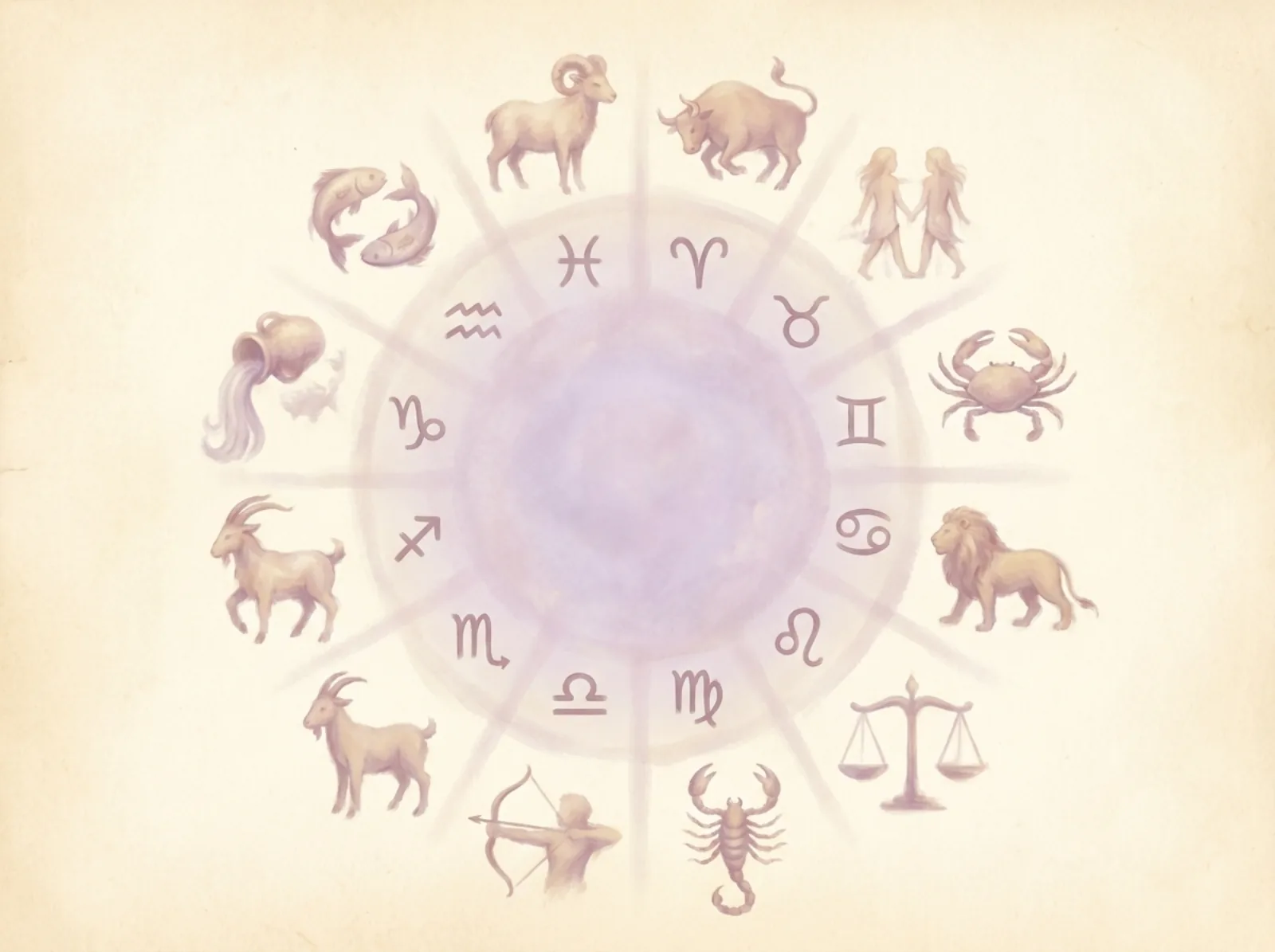
Here's the obvious one, and the obvious one is correct: the fish. Pisces is the fish. The glyph is two fish swimming in opposite directions, tied together — a Greek myth tells us that Aphrodite and her son Eros turned into fish to escape the monster Typhon, binding their tails so they wouldn't lose each other in the water. That's your spirit animal origin story. Not a lone predator. A pair bound in retreat. But here's where I think a lot of generic astrology writing stops short. The two fish aren't the same fish. They're swimming in opposite directions. If you've ever felt pulled between two futures, two moods, two versions of yourself — one that wants to disappear into a hot bath and never emerge, and one that wants to help every stranger on the subway — that's the glyph. That's not a flaw. That's the animal itself. The koi is the Pisces spirit animal I actually see showing up in dreams, art, and tattoo requests from Pisces clients. In Japanese and Chinese tradition, the koi swims upstream and transforms into a dragon when it reaches the top of the waterfall. That's a lot of symbolic weight to hand a Pisces, and I don't throw it around lightly, but the imagery fits: a creature that moves through resistance by softness, not force, and comes out of the struggle changed into something else entirely. If you're a Pisces reading this and feeling like 'the fish' sounds boring, I'd push back. The fish doesn't drown. The fish moves through a medium you can't breathe. It senses pressure, temperature, chemical shifts in the water the rest of us wouldn't register. It's not weak. It's just operating on information the land animals can't access. That's the Pisces superpower, and it's also what tires you out, because you're reading a room on frequencies most people don't notice. So yes — fish. But let the imagery be the koi climbing the waterfall, or the deep-sea fish that generates its own light, or the pair in the glyph swimming in different directions. Not the goldfish in the bowl.Why This Animal Matches Pisces Energy
Pisces is a water sign and a mutable sign. Water, in astrology, is the element of emotion, intuition, memory, and the subconscious. Mutable means you adapt — you take the shape of your container. Put those two together and you get an archetype that is permeable, emotionally fluent, and shape-shifting almost against its will. A fish is the perfect symbol for this because a fish is literally defined by the medium it lives in. A fish out of water isn't just uncomfortable, it's non-functional. Pisces people often tell me they feel non-functional in environments that don't match their emotional temperature — fluorescent-lit offices, aggressive meetings, group chats that run on sarcasm. The fish needs the right water. That's not fragility. That's biological specificity. The fish also moves without visible effort. You've probably been told you're 'lazy' or 'spacey' at some point if you're a Pisces, and I'd argue what people are actually registering is that you don't thrash. You conserve. You wait for the current. When you do move, it's with a precision that looks accidental to people who are used to flailing their way through decisions. And then there's the sensory thing. Fish have a lateral line — an organ that runs down their body and senses vibration in the water. They know what's coming before they see it. Pisces people are, in my experience as a reader, uncanny at this. You walk into a room and know which couple just had a fight. You read a text and feel the tone the sender didn't type. That's your lateral line. The downside of being this permeable is that you absorb things that aren't yours. Grief, anxiety, other people's unprocessed stuff. The fish symbol doesn't fix that, but it names it. You're not broken for coming home from brunch exhausted. You're a water creature who just swam through someone else's current. If you take one thing from this section, let it be this: your sensitivity isn't a bug. It's the whole animal. The work isn't to toughen up. The work is to figure out which waters are yours and spend more time there.Five Secondary Spirit Animals for Pisces
The fish is primary, but Pisces clients often get other animals showing up in dreams, meditations, or those strange moments when you keep seeing the same creature everywhere. Here are five that come up a lot, and what I think each one is pointing at. **The seahorse.** The seahorse is a slow, patient fish that mates for life and whose males carry the young. For Pisces, I read this as the 'committed devotion' totem — the part of you that bonds deeply and parents everyone around you, sometimes to your own exhaustion. If the seahorse keeps showing up, I'd ask yourself where you're carrying something that isn't yours to carry. **The dolphin.** Dolphins are the Pisces totem for people who've found their pod. Social, playful, deeply intelligent, and known for cooperative hunting and grief rituals in the wild. If the dolphin is your secondary, it's often a sign that your spiritual work is relational — you grow through connection, not isolation. The caveat: dolphins also strand themselves on beaches when something is wrong in the ocean. Watch for that in your own life. **The swan.** The swan comes up a lot for Pisces with strong Venus placements or artistic streaks. Swans are water birds, so they bridge your element with the air of expression and communication. The swan totem is about transformation — the ugly duckling story is a Pisces story, and most Pisces clients I read for have a version of it in their past. If the swan is showing up, it may be pointing at a creative or self-presentation shift that's overdue. **The owl.** This one surprises people because owls are land creatures, not water. But Pisces has a nocturnal side — a lot of you do your best thinking after midnight, and a lot of you have dreams you remember with disturbing clarity. The owl totem is the intuitive-at-night Pisces, the one who sees in the dark. If owls keep appearing, I'd pay attention to what your dreams are trying to tell you right now. **The wolf.** The wolf is a wild card for Pisces, but it shows up often for Pisces people who've been forced into independence young — single parents, people who left home early, anyone who learned to self-protect before they learned to self-soothe. Wolves are pack animals who've learned to survive alone when they have to. If the wolf is your secondary, you're probably more guarded than the standard Pisces write-up admits, and that's okay. The pack still finds you eventually. None of these are better or worse than the fish. They're different frequencies of the same water. When I read for Pisces clients, I pay attention to which of these keeps surfacing in their language — not just the imagery, but the verbs they use. 'I'm drowning,' 'I'm floating,' 'I'm hunting,' 'I'm hiding.' The verb tells me the animal.How Your Pisces Spirit Animal Shows Up in Dreams
Pisces dreams are, in my experience, more vivid, more frequent, and more surreal than other signs' dreams. If you're a Pisces, you've probably had the experience of waking up and needing twenty minutes to figure out what was dream and what was yesterday. That's your water-sign brain doing overtime on symbol processing. Your spirit animal — whichever it is — tends to show up in dreams in three main ways, and knowing which pattern yours uses can save you a lot of confused googling at 3am. **Pattern one: the recurring visitor.** You keep dreaming about the same animal, maybe for weeks. It's not doing anything dramatic. It's just there — a fish in a pond you walk past, a seahorse in an aquarium you keep visiting in dreamland, a wolf at the edge of a treeline. This is the 'I'm here, keep listening' pattern. The animal isn't telling you something specific yet. It's establishing a channel. **Pattern two: the active symbol.** The animal is doing something clear — swimming upstream, dying, giving birth, speaking to you, chasing you, saving you. This is when I pull out a journal, because something in your waking life is being compressed into a story your conscious mind can't yet articulate. The dream is giving you the headline. Your job is to write the article. **Pattern three: the embodiment.** You are the animal. You dream from inside its body. You know what it's like to breathe water, to see with sonar, to feel wind through feathers. These are the rarest and, in my opinion, the most useful dreams Pisces people have. They're not predictions. They're perspective shifts. Your subconscious is handing you a view of your own life from an angle you can't access awake. I don't believe in prescriptive dream dictionaries — the kind of book that tells you a fish means pregnancy and an owl means a death in the family. Dreams are personal. What a wolf means in your dream life depends on your relationship to wolves, dogs, aloneness, teeth, and whatever episode of nature television you watched when you were nine. Pay attention to how the animal makes you feel on waking, not what some stranger wrote about it in 1973. Keep a dream journal by the bed. The animal usually only comes back if you write it down.Working With Your Spirit Animal in Meditation and Journaling
Alright, so you've identified your Pisces spirit animal — or at least you've got some candidates. What now? I'll give you three things that actually work, based on seven years of walking clients through this and watching what sticks. **Journaling prompt one: the animal letter.** Sit down with your notebook. Write a letter from your spirit animal to you. Not from you to the animal — the other way. Let the animal speak. This feels profoundly weird the first time, and most people's first draft is cringey. Keep going. By the third or fourth paragraph, something usually breaks loose and the voice stops sounding like you performing wisdom and starts sounding like someone else actually talking. That someone else is you — but it's a part of you that doesn't usually get the microphone. **Journaling prompt two: the day as the animal.** Pick one day. Live it from the perspective of your animal. If your spirit animal is a fish, how does a fish spend Tuesday? What does a fish worry about? What does a fish eat for lunch? This sounds silly but it's actually a useful exercise in de-centering your human neuroses. Fish don't catastrophize about emails. Fish deal with real currents. Translating your actual day into animal logic forces you to ask what currents you're actually in versus what you're imagining. **Meditation practice: the water visualization.** You don't need to be good at meditation for this. Sit comfortably. Close your eyes. Imagine the body of water where your animal lives — river, ocean, pond, lake, aquarium if that's what your subconscious hands you. Don't force it. Watch for your animal to appear. When it does, just notice it. Don't ask it questions on day one. On day two or three, start asking one question — short, direct, no hedging. 'What am I avoiding?' 'Who do I need to call?' 'What hurts?' Then listen. Not for a voice. For a feeling, an image, a sense of direction. The point of all of this isn't to receive mystical downloads. It's to externalize a conversation with yourself that's hard to have in regular self-talk. Your spirit animal is a vehicle for self-honesty. It's hard to lie to a fish. If you want structure around this, Raka's reflection prompts include a few that pair with animal totem journaling and dream work — not as predictions, but as scaffolds for your own writing. Use them, don't use them. The notebook is the main technology. The app is just one way in.When to Call on Your Animal Totem
I'm picky about the phrase 'call on.' It gets used loosely in a lot of spirit-animal content, often in ways that borrow from traditions the writer doesn't belong to. So let me say what I actually mean when I say 'call on your totem,' which is a specific, modest, non-mystical practice. Calling on your animal totem means deliberately bringing the symbol into your mind during moments when its qualities would help you. That's it. It's a mental anchoring technique that uses imagery you've already built a relationship with. Here's when it's useful for Pisces: **Before difficult conversations.** If your totem is the swan, you might remember the swan's long neck and composed glide before you walk into a hard talk. If it's the wolf, you might remember the wolf's steady eye contact. You're not channeling anything supernatural. You're borrowing a posture. **In emotional overwhelm.** Pisces people flood. When you're flooding, bringing to mind the image of a fish in deep calm water can help slow your breathing down. This isn't woo. Guided imagery is a well-known self-regulation technique, and animal imagery works for a lot of people as an anchor. **At the start of creative work.** Writers, artists, and musicians who are Pisces often use spirit animal imagery as a creative on-ramp. The koi climbing the waterfall is a useful image to hold at the start of a long project. The owl is a useful image at the start of edit work that needs night vision. **When making a boundary.** If you struggle with saying no — a very Pisces struggle — borrowing your totem's refusal pattern helps. The dolphin pod doesn't let outsiders in. The seahorse holds its spot in the reef. The wolf shows teeth. Pick the refusal that fits. Calling on your totem is not prayer and it's not a spell. It's a focused imagination technique using symbolism you've chosen. That's a legitimate tool, and I use it myself. Just don't dress it up in borrowed robes.Pisces and the Chinese Zodiac Animal Equivalent
If you're interested in how Pisces maps across different astrological systems, the Chinese zodiac is a common comparison point. The honest answer is that it doesn't map one-to-one — Western and Chinese astrology are different systems with different foundations — but there are rhyming energies worth exploring. The animal most often paired with Pisces in these cross-system discussions is the **Rabbit** (sometimes called the Hare in older sources). Rabbits in the Chinese zodiac are described as gentle, sensitive, intuitive, artistic, and prone to retreat. They have a reputation for being peacemakers, for avoiding conflict, and for being deeply observant. That's a lot of Pisces vocabulary. Rabbit years in the Chinese calendar roll around every twelve years — recent and upcoming Rabbit years include 1999, 2011, 2023, and 2035. If you're a Pisces born in a Rabbit year, a lot of Pisces clients I know with that combination describe themselves as feeling the sensitivity 'doubled.' Make of that what you will. Some astrologers also pair Pisces with the **Pig** (also called the Boar), another sensitive, generous, somewhat indulgent sign in the Chinese tradition. The Pig's reputation for enjoying beauty, food, art, and comfort fits a certain Pisces archetype — the aesthete who feels deeply and lives for pleasure. Neither mapping is official or universally agreed on, and I want to be clear: these are rhymes, not translations. Chinese astrology uses lunar months and a sixty-year cycle built on five elements and twelve animals. Western astrology uses the solar year and a twelve-sign zodiac tied to constellations. The systems are talking different languages. What I'd say is: if the Rabbit resonates when you read about it, it's worth sitting with. If it doesn't, drop it. The point of cross-cultural astrology isn't to force one system to validate another. It's to see what archetypes keep showing up for your particular person-shape in multiple traditions. If gentleness and retreat show up in both your Sun sign and your lunar year, that's not a coincidence. That's data about you.Native American Zodiac Animal — A Note on Respect
I'm going to be direct here because I've seen a lot of spirit-animal content handle this part badly. There is no single 'Native American zodiac.' That phrase is a modern invention, mostly used in the New Age publishing boom of the 1980s and 90s, and most of the 'Native American zodiac' charts you'll find online are not derived from any specific tribe's traditions. They're a syncretic blend that non-Indigenous authors assembled, often without permission or consultation from the Nations whose spiritual practices they borrowed from. The chart most commonly circulated associates Pisces (roughly February 19 to March 20) with the **Wolf**. In those charts, the Wolf is described as deeply emotional, intuitive, loyal, and sometimes isolated — which, fine, that rhymes with Pisces. But I want to flag: the Wolf as a sacred animal has specific, non-interchangeable meanings in Lakota, Anishinaabe, Pawnee, and many other Nations' traditions. Those meanings aren't up for grabs by horoscope writers. What I'd suggest if you're drawn to the wolf imagery as a Pisces: **Use it as personal symbolism, not as borrowed sacred practice.** You can love wolves. You can see yourself in them. That's your own symbolic life. What you shouldn't do is claim to be practicing a Native American tradition when you're actually practicing a repackaged version written by someone who wasn't initiated into one. **Read Indigenous writers directly if you want to understand Indigenous relationships with animals.** Robin Wall Kimmerer's *Braiding Sweetgrass*, Daniel Wildcat's work, and reporting from Indigenous-led outlets are good starting points. These are serious thinkers writing about their own traditions. They are not writing about zodiac charts. **Don't buy 'spirit animal readings' from non-Indigenous practitioners who claim shamanic lineage.** This is a cottage industry built on appropriation and it continues to harm Native communities whose actual spiritual leaders don't profit from it. For my part as a reader, I use the word 'totem' cautiously and 'spirit animal' sparingly, because both terms carry weight they didn't originate with me. When I talk about animal symbolism in Pisces readings, I'm doing symbolic literary analysis of mythology, zodiac imagery, and dream content — not practicing a sacred tradition I don't belong to. I'd encourage you to do the same, and to be suspicious of anyone selling you otherwise.Pisces Celebrities and the Animals They Embody
Celebrity astrology is pop fun, not science, but it's a useful shorthand for showing how Pisces energy actually looks in public life. Here are five real Pisces celebrities and what I'd call their dominant animal expression based on their public personas. These are my readings as a tarot reader doing symbolic analysis, not claims about these people's inner lives. **Rihanna** (born February 20, 1988). Classic koi energy. She came up through adversity, kept transforming, and now does whatever she wants on her own schedule. The waterfall-to-dragon arc fits her career almost too neatly. Also: the 'I take years between albums because I'm doing other things' approach is deeply Pisces time. **Kurt Cobain** (born February 20, 1967). Owl energy, in my reading. Nocturnal, hyperaware, deeply tuned to signals most people weren't picking up. The over-sensitivity to noise and attention he described in interviews was the Pisces lateral line turned up too loud. **Albert Einstein** (born March 14, 1879). Dolphin, if we're going by his famously collaborative scientific relationships, or deep-sea fish if we're going by his ability to live in his own mental medium for long periods and come back with something luminous. The 'I think in pictures' quality he described is extremely Pisces. **Trevor Noah** (born February 20, 1984). Dolphin, hands down. Social intelligence, cross-pod communication, the ability to swim in multiple cultural waters at once. Watch any interview he's done and you can see the lateral-line sensitivity at work in real time. **Elizabeth Taylor** (born February 27, 1932). Swan. The transformation arc, the public beauty, the private depth, the serial commitment to love and loss. If any Pisces lived a swan life, it was her. I'd note that all of these people also had non-Pisces placements that shaped them heavily — Rihanna's Aquarius Moon, Einstein's Capricorn Moon, Cobain's Leo Moon all matter. Sun sign alone is a cartoon. But if you want to feel out what Pisces energy looks like in the wild, these are useful public examples to study.Spirit Animal Journaling via Raka — and an Honest Closing Note
I've mentioned Raka once already, so let me say briefly what it actually is and how it fits with this material. Raka is a free tarot-and-reflection app I helped build with the intention of making tarot less performative and more useful as a journaling tool. It has daily draws, intention-setting prompts, and reflection questions that lean into self-honesty rather than prediction. For Pisces readers interested in spirit animal work, a few of its prompts pair naturally with animal totem journaling. The way I'd suggest using it: do a one-card pull in the morning. Sit with the card. Then write one paragraph in your own notebook from the perspective of your spirit animal responding to the card. That combination of tarot imagery and animal perspective turns out to produce surprisingly useful insight, because both are symbolic systems that bypass your rational self-defense. You can also use the dream journaling feature to log the animal appearances I described earlier. Over a few weeks, you start seeing patterns — which animals come up when, what cards they correlate with, what weeks of your life produced which creatures. That data isn't magical. It's just you, paying attention to yourself, in a format that doesn't require you to know what you're doing before you start. I'll say what I say about every tool: it won't do the work for you. The notebook, the attention, and the honesty are the actual work. The app is scaffolding. If a plain paper journal and a borrowed tarot deck work better for you, use those. And then a few honest closing notes, because I want you to know what you're reading. **Spirit animal work is symbolism, not prediction.** When I say the fish is the Pisces totem, I'm not claiming there's a cosmic fish watching over you. I'm saying fish imagery has been attached to the Pisces archetype for thousands of years, and engaging with that imagery is a legitimate way to think about yourself. Symbolism is powerful. It's also not magic. **None of this is a substitute for mental health care.** If you're struggling — if you're in depression, in grief, in crisis — journaling about fish is not treatment. Please talk to a therapist or your doctor, and if you're in acute distress, reach out to a crisis line in your country. The animal totem work is a complement to a well-supported life, not a replacement for professional care. **Respect the traditions you're borrowing from.** If you're drawn to a tradition that isn't yours — Vedic, Yoruba, Celtic, whatever — study it from its own sources and practitioners, not from Instagram infographics. Appropriation is sloppy and it harms the communities whose practices get flattened into aesthetic. **Your relationship with your animal is yours.** Despite everything I've written here, the one authority on what your spirit animal is and means for you is you. I've given you frameworks and vocabulary. The actual work is you sitting with the animal and figuring out what it says. Pisces, you're the most permeable sign in the zodiac. That means you're going to encounter a lot of mystical content and some of it is going to feel true. Keep the stuff that helps you be honest with yourself. Discard the stuff that makes you feel small. Trust the fish. The fish knows.Frequently asked questions
What is the Pisces spirit animal?
The primary Pisces spirit animal is the fish — specifically the two bound fish of the zodiac glyph, which come from a Greek myth about Aphrodite and Eros transforming into fish to escape the monster Typhon. In practice, I think the koi (the fish that swims upstream and transforms in East Asian tradition) is the most useful image, because it captures the Pisces capacity to move through resistance by softness rather than force. The fish isn't just a lazy mascot — it's a creature defined by living in a medium (water, emotion, intuition) that most people can't breathe in. Part of our astrology guide hub.
Is the Pisces spirit animal the fish or something else?
The fish is primary, but Pisces people often have secondary totems that show up strongly in dreams and life patterns. The most common ones I see are the seahorse (devotion and carrying others), the dolphin (connection and the found pod), the swan (transformation and artistic expression), the owl (nocturnal intuition and dream work), and the wolf (independence forged early). None of these replace the fish — they're different frequencies of the same water. You can have more than one, and the one that resonates most often reflects a current life chapter rather than a permanent identity.
Can my Pisces spirit animal change over time?
Yes. In my experience reading for Pisces clients over about seven years, the animal that shows up in their dreams and language shifts with life phases. A Pisces in a long caretaking stretch often has seahorse energy. A Pisces coming out of a hard transformation often moves into koi or swan imagery. A Pisces who's recently become independent after a breakup frequently gets wolf dreams. The fish is the baseline Pisces archetype, but the specific creature your subconscious is working with can rotate. Pay attention to what shows up most in a given season rather than fixing yourself to one answer forever.
What does it mean if I keep dreaming about my spirit animal?
Recurring animal dreams are usually your subconscious establishing or maintaining a symbolic channel. Three patterns are common: the recurring visitor (same animal, no drama, just presence), the active symbol (the animal is doing something clear like swimming upstream or dying), and the embodiment dream (you are the animal). The first is a signal to keep listening. The second usually means a waking situation is being compressed into dream story — journal it. The third tends to be the most useful, because it hands you a perspective on your life that you can't access awake. Avoid prescriptive dream dictionaries; your relationship to the animal matters more than any generic meaning.
Is 'spirit animal' a culturally appropriate term to use?
This is complicated and worth being honest about. The phrase 'spirit animal' as it's used in pop astrology comes mostly from mid-twentieth-century syncretic writing that borrowed loosely from Native American spiritual traditions without permission from the Nations involved. If you're using the phrase casually, it's worth knowing where it comes from. I personally use 'totem' and 'spirit animal' cautiously and prefer to call this symbolic work by what it actually is — literary and psychological symbolism informed by mythology and dream content. If you're drawn to Indigenous traditions specifically, read Indigenous writers directly rather than New Age repackagings, and don't buy readings from non-Indigenous practitioners claiming shamanic lineage.
How do I find my personal Pisces spirit animal?
Keep a dream journal for about three weeks and note every animal that appears, no matter how briefly. Separately, pay attention to the verbs you use about your life — 'I'm drowning,' 'I'm hunting,' 'I'm hiding,' 'I'm floating' all point at different creatures. Try the animal letter exercise: sit down and write a letter from your spirit animal to you, letting the voice be whatever shows up by the third or fourth paragraph. If the same creature keeps turning up across dreams, verbs, and the letter, that's your current totem. It's not an initiation. It's pattern recognition on your own inner life.
Can non-Pisces people have the fish as their spirit animal?
Of course. The Pisces-fish association is traditional and useful, but animal symbolism doesn't belong to Sun signs. Plenty of non-Pisces people have strong Pisces placements elsewhere in their chart — a Pisces Moon, a Pisces Rising, a packed twelfth house — and will relate to fish imagery deeply. And plenty of people with no Pisces at all have personal reasons to resonate with fish, from childhood experiences near water to current emotional landscapes. The zodiac gives you an archetypal starting point. Your actual spirit animal is whatever your inner life keeps handing you, Sun sign or no Sun sign.