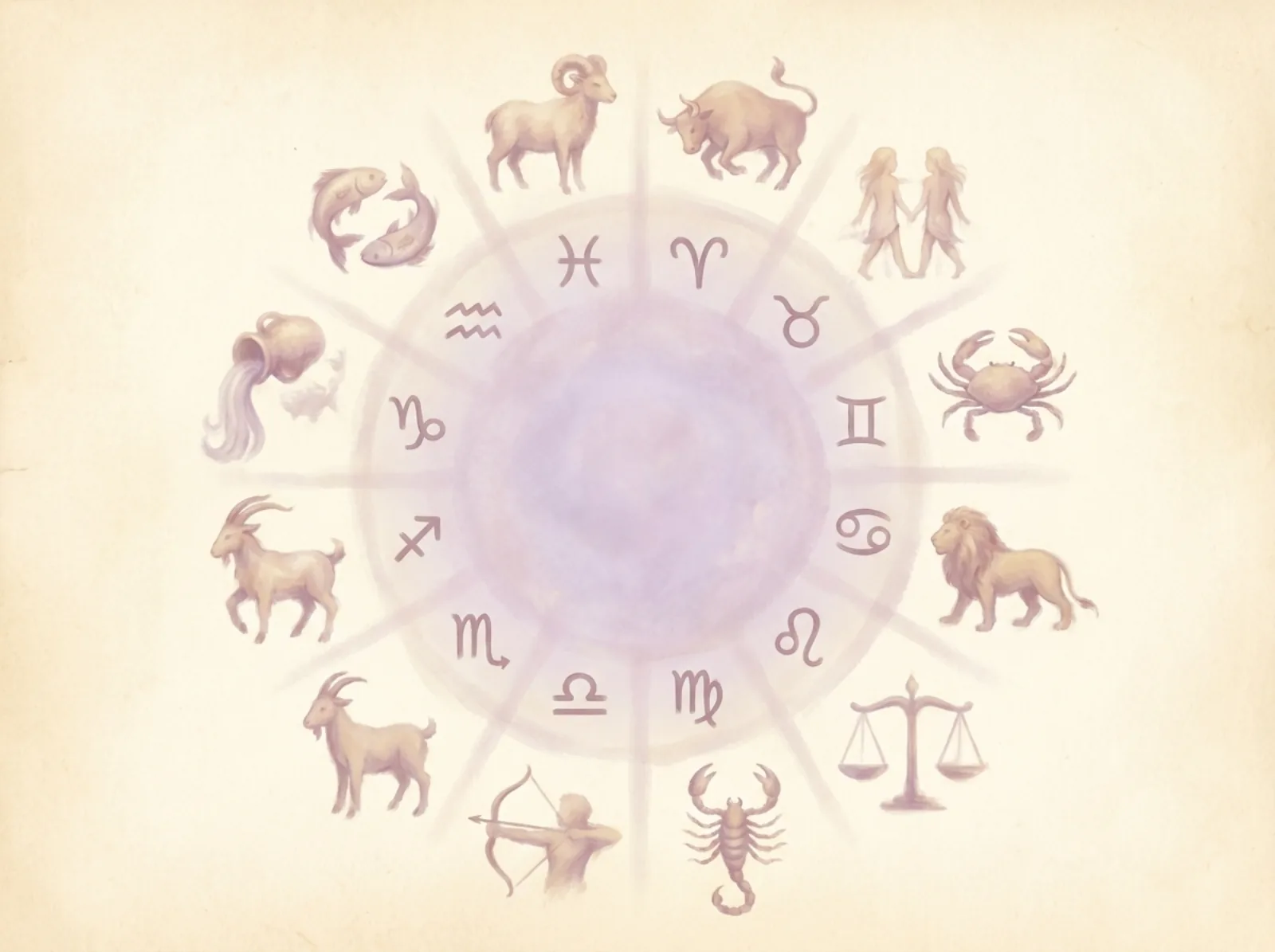
The Ram: Why Your Primary Aries Spirit Animal Isn't Really Up for Debate
If you've ever searched 'Aries spirit animal' and bounced between twelve different sites claiming the lion, the tiger, or weirdly the panda, let me save you the browser tabs. The ram is the primary spirit animal for Aries, and it isn't a close vote. The word Aries is Latin for 'ram,' full stop. Before Latin, the Greeks called the same constellation Krios, which also means ram. Before that, Mesopotamian star catalogs mapped the same stretch of sky to a horned sheep. We're talking about a symbolic through-line that predates the alphabet most of my readers are using to doomscroll astrology content. The myth that cemented the association comes from the Jason and the Argonauts cycle. The ram in that story — Chrysomallos, the golden-fleeced ram — flies two children across the sea to safety, then sacrifices itself and gets hung in the sky by Zeus as the constellation Aries. That's the origin: a creature that charges forward on behalf of someone vulnerable, pays a price for it, and gets memorialized in the stars. If that doesn't ring a bell for how your Aries friend behaved during a group project in college, you weren't paying attention. What the ram brings as a totem is pretty specific. It's a climbing animal built for uphill terrain. It leads with its head — not its paws, not its tail, its head. It headbutts when threatened, which is both a brilliant defense and the single stupidest offense in the entire animal kingdom. Rams don't dodge. Rams don't negotiate. Rams spot the problem, align the horns, and charge. Every Aries I've ever sat with has done the human equivalent of that at least once a season, and the ones who've learned to time it well tend to run their own lives. The ones who haven't are usually in therapy for burnout, and I say that with love.Why the Ram Fits Aries Energy So Precisely
There's a reason the ram-Aries pairing has survived three thousand years of astrological rebranding. The animal maps the sign's three defining elements almost without edits. First, cardinal fire. Aries is a cardinal sign, meaning it initiates — it opens a season, it starts the zodiac wheel, it goes first. The ram is an initiator too. In the mating season, rams literally charge each other to establish who leads the herd. The animal that lives in the symbol doesn't wait for consensus. Combine that with fire — the element Aries shares with Leo and Sagittarius — and you get a creature made of forward motion and heat. Rams don't hibernate. Rams don't drift. If you've ever been accused of 'running at life,' this is the astrological fingerprint of that habit. Second, the Mars rulership. Mars is the planet associated with action, assertion, anger, courage, and sometimes war. Mars-ruled signs feel the push to act before they feel the push to analyze. The ram, in both biology and myth, is a Mars creature — horned, male-coded in classical sources, and defined by its willingness to collide with obstacles rather than detour around them. When an Aries client of mine says 'I don't know why I did it, I just did,' that is the Mars-ram axis talking. Third, the head association. In classical astrology, Aries rules the head — literally, the skull, the face, the brain's forward spaces. The ram, again, leads with its head. The physical gesture of the animal and the body part the sign governs are the same body part. That's not a coincidence anyone invented in 2003 to sell oracle decks. That's a correspondence baked in from the Hellenistic period, and it's part of why Aries folks are famously prone to migraines, head injuries, and the kind of overthinking that reads as impulsivity because the thought process is happening at ninety miles an hour. So when you work with the ram as your spirit animal, you're not borrowing a cute mascot. You're consciously choosing to study the exact pattern your chart was already running on autopilot.Five Secondary Spirit Animals That Share the Aries Frequency
The ram is your primary totem, but Aries energy is wide enough that one animal can't carry every nuance. Think of secondary spirit animals the way you'd think of secondary planets in a chart — they color the main story. These five show up again and again when I'm working with Aries clients, each illuminating a facet the ram alone doesn't quite cover. The hawk is the first one, and the one I recommend most often. Where the ram is pure forward motion, the hawk adds altitude and precision. Hawks don't charge; they circle, spot the target, and dive. For Aries folks who've been told their whole lives to 'slow down,' the hawk is a translation of that advice into something palatable. You don't have to slow down — you have to climb higher first and see the whole field before you dive. The hawk is Aries with a strategy. The cheetah is the second, and it's the one that feels most physically Aries. Cheetahs are the fastest land animals, but they can only sprint for about thirty seconds before overheating. That constraint matters. Cheetahs have to pick their moment, commit fully, and then rest. Aries folks who refuse the rest half of the equation burn out spectacularly, and the cheetah is the archetype that explains why. If you've ever gone from one hundred to zero in a single bad week, you've been cheetah-pattern. The lion cub is the third, and this one surprises people because they expect the full lion. But Aries isn't quite the full lion — that's Leo territory. Aries is the lion cub: curious, scrappy, overconfident, and unaware of its own softness. Lion cubs wrestle with their siblings, pounce on things ten times their size, and get bopped on the head by their mother more than any other big-cat juvenile. The Aries who leads with 'I can take anyone in this room' is usually running cub energy, not full-grown lion. The honey badger is the fourth. Yes, I know, the honey badger has become an internet joke. The reason it still works as a totem is that the actual animal is one of the most fearless creatures alive — it will fight cobras, raid lion dens, and take on predators five times its size with zero visible calculation of odds. For Aries folks who have the 'why not me' response to obstacles everyone else is backing away from, honey badger is the archetype you're channeling. It's reckless-looking from the outside and completely rational from the inside. The tiger is the fifth and most contested. Some astrologers assign the tiger to Leo exclusively, but I disagree. The tiger is solitary, territorial, and willing to go on long patient hunts — qualities Aries carries that Leo often doesn't. If the ram is your charge-forward self and the hawk is your strategic self, the tiger is your solo-work self. The Aries who disappears for two weeks to finish a project nobody else believed in is running tiger.When Your Aries Spirit Animal Shows Up in Dreams
Clients ask me about dream animals constantly, and I want to be honest about what I think is going on. I don't believe your dreams are being piped in from a mystical server. I think your brain is doing a weirdly good job of surfacing the symbols you've been chewing on while you weren't looking. Which means when a ram, a hawk, or a cheetah shows up in your dream, your brain picked it for a reason worth decoding. A ram in a dream usually arrives when you're sitting on a decision that requires head-on confrontation. The specifics matter — a ram grazing peacefully suggests your assertiveness is balanced and the dream is confirming it. A ram charging you may be pointing at a part of yourself you've been attacking rather than listening to. A ram you're riding, strangely, often shows up for Aries who are learning to work with their aggression rather than against it. One client dreamed she was riding a ram up a mountain the week she accepted a promotion she'd been afraid of. We didn't need Freud for that one. A hawk in a dream, for an Aries, almost always means perspective. Hawks fly, they see wide, they spot things from above. If a hawk lands near you in a dream, it's often a nudge that you have information you haven't let yourself look at yet. If you become the hawk — if you're flying — the dream is giving you permission to zoom out. Aries folks tend to get stuck in close-range decisions. Hawk dreams are the subconscious offering altitude. A cheetah dream is usually about timing. The animal is a sprinter, not a marathoner. Dreaming of a cheetah running toward prey can mean a window is open. Dreaming of a cheetah lying in the shade can mean the window has closed and you're being asked to rest, not pursue. I've had Aries clients who dreamed cheetahs the exact week they got the 'wrong' feedback at work and refused to update their approach. The cheetah was telling them to pivot. They heard it as pressure to run faster. I want to be clear: this is interpretive, not prescriptive. Nothing in a dream is a prophecy. The reason dream work has value is that your subconscious has already noticed something you haven't admitted to yourself, and the animal is a packaging mechanism. Open the package, read the note, decide what to do.Working With Your Spirit Animal Through Meditation and Journaling
If you want this to be more than a fun fact at a dinner party, you need a practice. I'm going to describe the two I actually use with clients, because they work and they don't require you to buy anything. The meditation is five minutes. Sit somewhere you won't be interrupted. Close your eyes. Picture the animal you're working with — ram, hawk, whichever one is loudest this week. Don't force a scene. Let the animal appear in whatever setting your brain offers. Then ask it, silently, one question: 'What do you want me to see?' And wait. You're not waiting for a voice. You're waiting for an image shift, a bodily sensation, or a thought that doesn't feel like your usual chatter. Most people get something within ninety seconds. Some get nothing the first few times and get everything the fifth time. The practice is in the showing up. I know that sounds suspiciously spiritual for a piece I promised wouldn't be mystical. Here's the mechanism I think is actually operating: your brain uses symbol as a shortcut to access patterns it can't put into words yet. When you give it a vivid animal and a specific question, you're bypassing the verbal processor and letting the pattern-recognition engine do its job. The animal isn't delivering a message. Your own subconscious is, and the animal is the delivery truck. That framing lets you keep the practice without needing to believe in anything metaphysical. The journaling practice is weekly. Pick one evening — Sunday works for most people — and answer three prompts. One: where did my spirit animal show up this week, literally or symbolically? Two: what pattern did I run that matched its archetype? Three: what pattern did I run that contradicted it? That third prompt is the one that does the actual work. For Aries folks, the contradiction between the ram archetype (bold, direct) and the actual behavior (avoidant, defensive) is where the growth lives. Writing it down for twelve consecutive weeks will teach you more about yourself than any birth chart reading. Some Aries clients use a physical notebook. Others use a notes app. The medium matters less than the regularity. If you want the practice to lock in, pair it with something you already do every Sunday — your coffee, your laundry, whatever. Habit stacking beats willpower.When to Actually Call on Your Animal Totem
There's a version of this question that I get a lot and that I want to answer directly: when should I 'call on' my spirit animal? And the honest answer is, almost never in the dramatic sense people imagine. You don't need to invoke anything. You need to remember. The moments where remembering your animal actually helps are the ones where your default pattern is about to work against you. For Aries, the default pattern is charge. You see the obstacle, you align the horns, you go. That's your ram. The problem is that about forty percent of life's obstacles don't yield to being headbutted, and some of them hit back harder than the ram does. In those moments, calling on your animal is really a mental cue to ask: is this a ram situation, or is this a hawk situation? Do I need to charge, or do I need to climb? I tell clients to use their secondary animals as decision filters. If the obstacle is a person who's being unreasonable, run hawk — gain altitude, see the full relationship pattern, decide whether this is a one-time collision or a recurring dynamic. If the obstacle is a work deadline that requires sustained effort, run cheetah — assess whether you have one sprint in you or whether you need to pace. If the obstacle is a creative project nobody is cheering for, run tiger — accept the solitude, stop asking for validation, finish the thing. If the obstacle is something genuinely scary that no reasonable person would attempt, honey badger — but only after you've checked that your reasons are yours and not inherited. The ram still has its moments. When someone is being unjust to a person you love, charge. When your own body is telling you something is wrong and the professionals keep brushing you off, charge until someone listens. When a long-avoided conversation has reached the point where silence is more expensive than conflict, charge. The ram isn't retired — it just isn't the only tool. The mistake Aries folks make is treating every situation as a ram situation. The practice of working with multiple totems is really a practice of expanding your response repertoire. You don't become less Aries. You become a more flexible version of the same person.The Chinese Zodiac Equivalent: Why There Isn't a Clean Match
Clients born in Aries season frequently ask me what their Chinese zodiac animal is, assuming there'll be some tidy overlap. There isn't, and I want to explain why that's actually fine. Chinese astrology assigns animals by birth year, not birth month. The twelve animals rotate on a twelve-year cycle, so your Chinese sign depends on when you were born, not what month. An Aries born in 1990 is a horse. An Aries born in 1991 is a goat. An Aries born in 1992 is a monkey. These aren't translations of your Aries sign — they're a completely separate map drawn on a different grid. That said, there are some loose thematic rhymes worth noting. The goat in Chinese astrology — sometimes translated as sheep or ram, depending on the lineage — shares obvious symbolic DNA with the Western ram. Both are horned, both are climbers, both have a reputation for stubbornness and independence. If you happen to be an Aries born in a goat year, you're carrying ram energy in two systems, which is either very on-brand or extremely overwhelming depending on how good you are at taking breaks. The horse year, which catches a lot of Aries folks, is also thematically consonant. Horses in Chinese astrology are known for freedom, movement, and a dislike of being penned in. Pair that with Aries' cardinal fire and you get a person who physically cannot stay in a job, city, or relationship that feels like a cage. If every Aries-horse I know ran a startup by age thirty-two, that would be a statistical anomaly. They don't. They run three. The dragon year catches some Aries too, and dragon energy — ambitious, authoritative, visible — complements ram energy in ways that make for impressive but exhausting people. These are the Aries folks who end up on magazine covers and in therapy, often at the same time. The takeaway isn't to pick one system and ignore the other. The takeaway is that Chinese and Western astrology are two different lenses, and running both tells you more than either does alone. If your Aries ram tells you how you push, your Chinese zodiac animal tells you what fuel you're pushing with.The Native American Zodiac Question, Handled With Respect
If you've searched 'Aries spirit animal' long enough, you'll have hit a system calling itself the Native American zodiac that assigns the falcon or the hawk to Aries. I want to address this carefully because it matters. The system circulating online — the one that neatly matches twelve 'Native American' animals to the twelve Western zodiac dates — is not a traditional indigenous teaching. It's a modern synthesis that gained traction in the late twentieth century, mostly through New Age publishing. It conflates distinct tribal cosmologies that historically had nothing in common with each other and packages them in a Western horoscope format. Many indigenous teachers I've read and talked to consider this misleading at best and appropriative at worst. The actual indigenous relationships to animal symbolism are specific, tribal, and often ceremonial. The Lakota, the Hopi, the Ojibwe, and countless other nations each have their own distinct cosmologies, their own protocols around which animals are discussed with outsiders, and their own frameworks that do not map onto twelve neat monthly slots. Pretending otherwise flattens real cultural knowledge into an easy consumer product. Here's what I think is a respectful approach. If the falcon or hawk resonates with your Aries energy — and it often does, as I covered earlier — work with it as a general archetype grounded in widely shared symbolism across many cultures, including European heraldic traditions, Egyptian mythology, Celtic folklore, and so on. Don't claim it as a Native American totem unless you have been given that teaching by an actual indigenous teacher within a specific tradition, which almost none of us have been. The hawk is a human symbol, not an exclusive property of one culture, and you can honor what it teaches you without borrowing a lineage you weren't offered. The short version: use the archetype, skip the cultural label. The symbol works on its own merit.Celebrities Whose Aries Energy Mirrors the Ram
I pull celebrity examples sparingly because astrology-celebrity content tends to be the shallowest end of the pool, but when the chart genuinely matches the archetype, it's a useful illustration. Here are a few Aries folks whose public behavior reads like ram energy with the volume turned up. Lady Gaga, born March 28, is the clearest case. The whole early-career arc — the willingness to arrive in a meat dress, headline Super Bowl halftime, and pivot from pop into jazz standards without warning — is ram-pattern. Charge forward, create the opening, don't ask for permission. The cheetah secondary is visible in her career too; she sprints hard on each era, then recedes for a while, then sprints again. Mariah Carey, born March 27, is another one, though her ram runs quieter. The decade-long legal fight to control her own masters, the public insistence on specific lighting, the refusal to acknowledge Jennifer Lopez's existence — that's the ram choosing which hills are worth defending and defending them stubbornly. Honey badger secondary, obviously. Robert Downey Jr., born April 4, carries the ram with a notable amount of self-destruction baked in, which is a very Aries pattern. The whole redemption arc — rock bottom, charge back, rebuild the career — is textbook ram-after-collision behavior. Rams don't quit; they also don't always learn to dodge. He eventually did. Maya Angelou, born April 4, is the Aries I bring up when clients want to argue that ram energy is only loud. Her career was a long, patient, uphill climb through dozens of distinct identities — dancer, journalist, poet, memoirist, activist. The ram was there, but it was running the uphill-climb side of the archetype rather than the collision side. That's what mature Aries energy looks like. The point is that the ram shows up differently in different lives, and if you want a useful celebrity touchstone, pick the Aries whose expression of the archetype actually matches where you are in your own life, not just the one you find most glamorous.Journaling With Raka, and the Honest Note on Symbolism
I built a lot of my practice around journaling before I started using any app for it, so I'm not going to tell you that an app is the only way. It isn't. A dollar notebook works. But if you want structure, timestamps, and a way to pattern-match across months without flipping through dozens of pages, Raka is what I use with clients now. The way the spirit animal thread fits inside Raka is simple. You can tag journal entries with the archetype you're exploring that week — ram, hawk, cheetah, whichever. You pull a daily tarot card against that lens, and the card gets logged with the tag. Over a few months, you can scroll back and see which archetypes correlated with your calmest weeks and which ones correlated with the chaos. For Aries folks, the pattern tends to be revealing: a lot of ram-tagged entries during conflict seasons, a lot of hawk entries during career inflection points, a lot of cheetah entries during periods of burnout. I don't use Raka because it does something mystical. I use it because it gives shape to a practice that otherwise lives in scattered Notes app entries and forgotten voice memos. The combination of a daily tarot pull, a journal entry, and an archetype tag is the kind of structure that turns self-reflection into something you can actually learn from. The app doesn't tell you what your spirit animal is. You've already told it. The app just keeps the receipts. And I want to end where I started, because the framing matters. Nothing in this piece is an occult transmission. The ram is not a spirit entity hovering over your left shoulder waiting to deliver guidance. The hawk is not sending you signs through pigeons on your fire escape. Your Aries spirit animal is a symbol — a rich, old, well-tested symbol — that your mind can use to organize information about yourself that would otherwise stay vague. Symbols are powerful because they compress. 'The ram' holds more information than 'bold, impulsive, Mars-ruled, cardinal fire, head-first, confrontation-tolerant, slightly stubborn, Jason-and-the-Argonauts golden-fleece reference.' You don't have to think the whole list every time; you just think ram and the list is already there. That's what the symbol does for you. It's a cognitive shortcut dressed as mythology. Use this as a tool, not a worldview. Don't make big decisions because an animal 'appeared.' Don't tell your doctor you're declining treatment because the hawk told you to; the hawk did not tell you that, and your doctor deserves better than that conversation. Don't pay anyone money to 'activate' your spirit animal, which is a scam I've seen enough times to flag it directly. The symbol is already active. It activated the moment you were born into Aries season. And please — the point I made earlier is worth repeating — if you're drawing from traditions that aren't yours, especially indigenous ones, do it with the humility that the real traditions require. The archetype of the hawk belongs to everyone. The specific ceremonial relationships that particular tribes have with particular animals belong to those tribes. Honor the distinction. The ram will keep showing up for you whether you journal about it or not. Working with it consciously just means you get to steer the pattern instead of being driven by it. That's the whole offer. No crystals required.Frequently asked questions
What is the main spirit animal for Aries?
The ram, hands down. Aries literally means 'ram' in Latin, and the sign's constellation maps the mythological golden-fleeced ram from the Jason and the Argonauts cycle. Every Western astrology text from Ptolemy onward anchors Aries to the ram, so if you're looking for the primary totem associated with your sign, this is it. The ram embodies the headfirst, first-sign-of-the-zodiac energy Aries is known for — climbing uphill, charging obstacles, and refusing to back down from a cliff edge. Part of our tarot library.
Can I have more than one Aries spirit animal?
Yes, and most practitioners actively encourage it. The ram is your primary totem, but secondary animals like the hawk, cheetah, lion cub, and honey badger each illuminate different facets of Aries energy — focus, speed, courage, and stubborn fearlessness respectively. Think of your primary spirit animal as your constellation and the secondaries as individual stars inside it. You're allowed to work with whichever one matches the specific lesson you're sitting with that week.
Is the Aries spirit animal the same in Chinese zodiac?
No, they're different systems. Chinese astrology assigns animals by birth year rather than birth month, so an Aries born in 1990 would be a horse, while an Aries born in 1991 would be a goat. Interestingly, the goat in Chinese astrology shares symbolic DNA with the Western ram — both are horned, both are climbers — so there's a loose thematic rhyme. But treat them as two separate maps of the same person rather than overlapping translations.
What does it mean if a ram appears in my dreams?
In dream symbolism, a ram typically signals that you're being asked to confront something head-on, assert yourself, or stop avoiding a decision that requires your full force. For an Aries specifically, a ram dream often reflects back the quality of your current courage — a healthy ram grazing peacefully suggests balanced assertiveness, while a ram charging at you may be pointing to a pattern where you're attacking yourself. Dream interpretation is deeply personal, so journal the details rather than Google them.
Is it disrespectful for me to use a Native American zodiac animal?
The 'Native American zodiac' circulating online — the one that assigns the falcon to Aries dates — is not a traditional indigenous system. It was synthesized in the late 20th century and conflates distinct tribal cosmologies into a Western-horoscope format, which many indigenous teachers consider misleading. If the falcon resonates with your Aries energy, work with the hawk or falcon as a general symbol rather than claiming a Native American lineage you don't have. Respect the distinction.
How do I actually work with my Aries spirit animal day to day?
Start simple: a weekly journal prompt that asks what your spirit animal would do in your current situation. A short meditation where you visualize the animal walking beside you works too. Some Aries place a small ram figurine or photo on their desk as a visual anchor. The goal isn't to summon anything supernatural — it's to borrow the archetype's clarity when your own gets foggy. Consistency beats intensity here.
Does Raka tell me my spirit animal?
Raka doesn't 'reveal' a spirit animal in any mystical sense, but the app includes a tarot and astrology journal where you can tag entries with the archetype you're exploring that week. If you're working with the ram, you can set it as your focus animal, pull daily cards against that lens, and over time see which situations activate which part of your Aries energy. It's self-reflection with structure, not fortune-telling.