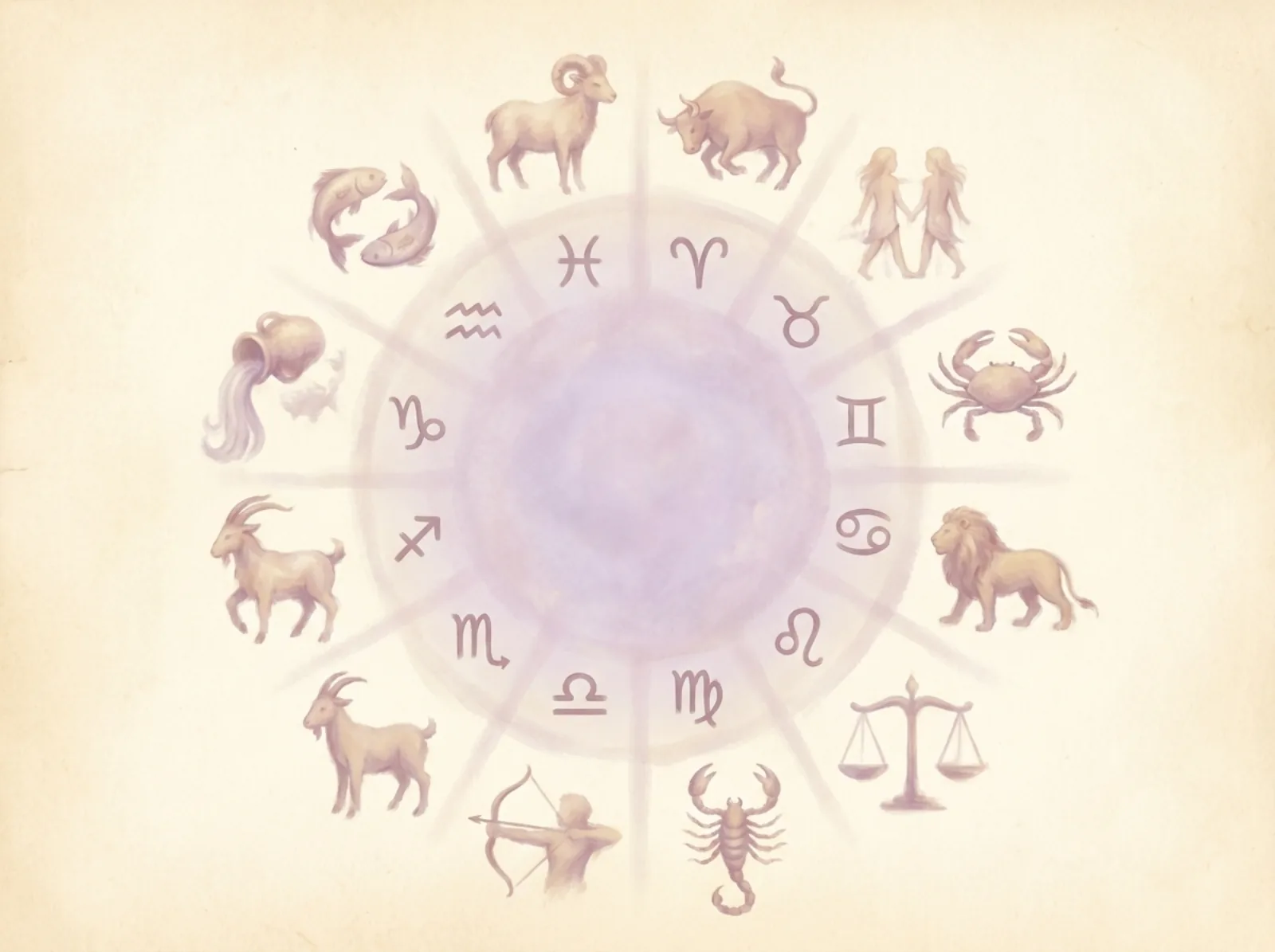
The Primary Sagittarius Spirit Animal: The Horse
If you've ever watched a horse in open pasture — not a trained show horse, a real one with its ears forward and its nostrils flared at a scent on the wind — you've seen Sagittarius in a four-legged body. The horse is the primary Sagittarius totem for a reason you can trace right to the glyph. Sagittarius's symbol is the centaur: human torso, horse body, bow drawn back. In Greek mythology this centaur is most often read as Chiron, the wounded healer who taught Achilles and Asclepius, or as a nod to the broader centaur tribe who were half beast, half philosopher. Either way the lower half is horse. The animal that carries the sign — literally — is the one your subconscious reaches for when it wants a shorthand for who you are. Horses map onto Sagittarius energy on four levels I find useful. **Movement.** A horse is built to run. Not short bursts — long, open-country runs. Sagittarius is the mutable fire sign, which astrologically means it's fire that changes direction, that doesn't settle. You know that itch you get when you've been in one city, one job, one relationship too long? That's horse-brain. It's not disloyalty. It's biology-of-the-sign. **Perception.** Horses have the largest eyes of any land mammal and nearly 360-degree vision. They see what's coming before most animals do. Sagittarius, ruled by Jupiter — the planet of expansion and the long view — thinks in horizons, not inches. Your friends come to you for the ten-year framing of their problem, not the ten-minute one. **Social intelligence.** Wild horses live in bands with complex hierarchies. They're not loners. They're herd animals who happen to be built for distance. Sagittarius is often mislabeled as commitment-phobic — a lot of us are deeply social, just allergic to cages. **Trust that must be earned.** You cannot force a horse to let you ride it. Trust is given to the person who shows up calm, consistent, and non-coercive. Sagittarius intimates read like horses in this one: we open up to the people who don't crowd us. If you only take one thing from this article, let it be this: the horse isn't your spirit animal because it's noble or Instagrammable. It's your mirror because it holds the same tension you do — the need to move, and the need to belong.Why the Horse Matches Sagittarius Energy
Let me go deeper on the match, because 'horses are free, Sagittarians are free' is the TikTok version and we can do better. Astrology works, when it works, as a vocabulary — a set of archetypes that help you name patterns you'd otherwise call 'just how I am.' The horse-Sagittarius pairing holds up because both are described by the same four attributes in the same order. **The archer's bow is a horse's rhythm.** Sagittarius is the sign of the archer, which means its native action is: aim at something far away, release, trust the arrow. A horse's gait does the same thing. A canter isn't a chaotic motion — it's a three-beat rhythm that only works when the animal commits forward. Your Sagittarius projects fail the same way a bad canter fails: when you hesitate mid-release. You already know this about yourself. The horse makes it visible. **Jupiter is a horse-sized planet.** Sagittarius is ruled by Jupiter, which in traditional astrology is the Greater Benefic — the planet of growth, luck, abroad, higher learning, and generosity. Jupiter wants scale. Horses are scale. A fully grown horse weighs 1,000 to 2,000 pounds and can run 25 miles in a morning. If you were going to pick an animal to represent 'the planet that makes things bigger,' you'd pick the biggest social mammal you can ride on the plain. **Fire needs oxygen, and oxygen needs motion.** Sagittarius is a fire sign. Fire that doesn't move suffocates. Horses are the mammals most adapted to continuous motion — their circulatory system, hoof shock-absorption, and lung capacity are all built for miles, not minutes. Fire plus motion equals both. **The shadow matches too.** This is the part the aesthetic blogs skip. A spooked horse bolts. A pushed horse kicks. A lonely horse paces. Sagittarius's less-charming days look exactly like this: you bolt from the hard conversation, you kick at the person asking you to stay, you pace at 2 a.m. because you don't know what you want. The totem isn't flattery. It's the whole animal, including the parts that would hurt someone if they stood in the wrong spot. The pairing works because it gives you a non-shaming container for your own high-energy, high-mileage temperament. You're not 'too much.' You're a mammal built for distance who was raised to apologize for it. Different problem. Different fix.Secondary Spirit Animals for Sagittarius
The horse is the primary, but Sagittarius is a wide sign and one animal can't carry all of it. Four or five other totems show up again and again when I read Sagittarius charts. **The Owl.** Sagittarius loves the big question — meaning, purpose, 'what's it all for?' The owl is the night-vision version of that quest. If you're a Sagittarius who writes at 2 a.m., teaches, studies something esoteric, or asks 'but why' past the point of being polite, the owl is more yours than the horse is. Owls in symbolism are usually paired with Athena-type wisdom — not knowing everything, knowing how to see in the dark. **The Eagle.** The horizon-scanner. Where the horse runs the plain, the eagle sees it from above. Sagittarians who gravitate to strategy, journalism, long-range forecasting, or any job where you're paid to see what others don't see yet — eagles. Eagles are also solitary hunters in a way the horse isn't. If you're a lone-wolf Sagittarius who finds the herd exhausting, the eagle fits better. **The Wolf.** Not the lone-wolf cliché — the pack wolf. Sagittarians who are family-first, friend-group leaders, people who feel their identity dissolve a little when they're not with their people — this is wolf energy. Wolves are intelligent, loyal, and the opposite of commitment-phobic. They're also predators, which is honest: Sagittarius truth-tellers can bite. **The Deer.** The gentle Sagittarius. Mutable fire doesn't only burn, it also warms. If you're the Sagittarius whose friends come to you for softness, who's quietly curious, who prefers forest to arena, the deer carries that. Deer in Celtic lore are associated with the otherworld and with gentle leadership — a decent frame for a Sagittarius who leads by example rather than volume. **The Dolphin.** This one surprises people. Sagittarius is a fire sign, dolphins are water mammals — the match works because dolphins are the social-intelligence-plus-play version of Sagittarius energy. If you're a Sagittarius who thinks best in groups, uses humor to teach hard things, and gets stir-crazy without play, the dolphin's a better fit than you'd think. Pick the one that makes your chest tighten a little when you read the description. That's the one your subconscious already picked. The others are useful too — I keep a short list of three animal frames I rotate through depending on what season of my life I'm in. The totem doesn't have to be forever.How Your Sagittarius Spirit Animal Shows Up in Dreams
Dreams are the honest venue for this. In waking life you can intellectualize the horse symbol into something tidy. In dreams your subconscious casts whatever animal it needs you to pay attention to, and it's usually not subtle. Here's what I see most in Sagittarius dream journals, both my own and the ones friends bring me. **A horse running away from you.** Classic. Usually not a predator chasing it — just a horse leaving, no pursuer. The dream almost always lands in the same week the dreamer is avoiding a decision they already know. The horse isn't abandoning you. It's your own forward-motion walking out because you won't move it yourself. **A horse you're trying to saddle that won't stand still.** This one tracks with trying to force a plan — a job you shouldn't take, a city you shouldn't move to, a relationship with the wrong rhythm. The animal is you. The animal doesn't want to be saddled for that trip. **An owl staring at you from a branch.** Big call. Owl dreams tend to arrive the night before, or the week before, you finally admit something you've been quietly knowing for months. Sagittarians get these before career pivots especially — the owl is often the dream my friends remember right before they quit the job. **An eagle you're flying with, not watching.** Rare and worth noting. If you dream you're flying alongside an eagle, Jungian readers would call it an integration dream — the aerial, strategic part of you is online and cooperating. Sagittarians often dream this at the start of a creative project. **A wolf at the edge of the yard.** Not attacking, not leaving. Just there. Wolf dreams for Sagittarius usually mean a loyalty question is live — someone in your life needs you to show up or stop pretending to. **A deer that lets you approach.** The rarest and the most tender. Deer dreams in which the deer doesn't bolt are often tied to a softening — grief that's finally moving, forgiveness that's finally landing, a kind of self-permission the waking mind has been refusing. None of this is prediction. None of it tells you what to do. Dreams are mirrors, not maps. I keep a short notebook by the bed and write the animal, the setting, and one sentence about what I was avoiding that day. Patterns emerge in two weeks, not two dreams. If you only remember the animal, write the animal — that's enough.Working With Your Spirit Animal in Meditation and Journaling
The honest version of working with a spirit animal has very little to do with incense and a lot to do with questions. I'll describe the two practices I actually use. Both are forty-ish minutes if you do them fully. Both are free. Neither requires you to believe anything metaphysical. You can run them as pure psychological exercises and they still work. **The journaling practice.** Open a notebook. At the top, write the animal you've picked — horse, owl, eagle, wolf, deer, dolphin, whatever landed in your chest reading the section above. Then answer five prompts in long-form, not bullet points. 1. What does this animal need to be well — in terms of environment, pace, company, food? 2. Which of those needs is being met in my current life? 3. Which is being starved? 4. What would it look like to feed the starved one this month? 5. What would I lose if I did? The last question is the key one. People skip it. If feeding the starved need were free, you'd have done it already. Writing the cost in your own handwriting is how the practice earns its keep. **The meditation practice.** Sit, close your eyes, do three slow breaths. Imagine the animal walking toward you from a long way off. Don't force the image. If a different animal shows up — a crow, a snake, a cat — go with that one. Your subconscious knows what it's casting today. When the animal arrives, don't speak to it. Watch it for a minute. Note posture, pace, where it's looking. Then ask it a single question — the question you've been avoiding in waking life. Wait. The answer, if it comes, usually arrives as a felt sense in the chest or stomach, not as sentences. Note it when you open your eyes. I run this practice before writing anything hard — a hard email, a hard essay, a decision I've been pushing off. It takes six minutes. It gets me past the resistance roughly 70% of the time, which is a better success rate than any productivity hack I've tried. The whole thing is non-mystical if you prefer. You're using the animal as a projection surface for your own instinct, which is harder to access when it's wearing its own face. Call it active imagination (Jung's term), parts work (IFS language), or just journaling with a mascot. The animal doesn't mind the framing.When to Call on Your Animal Totem
Not every day. The totem is a tool, not a diary. I use mine on five kinds of days. **Decision days.** Any decision bigger than 'what to eat.' Job offer, apartment lease, saying yes or no to a difficult invitation. I close my eyes, picture the horse, and ask: 'is this a direction you'd actually run?' If the imagined horse hesitates, the decision needs another day. **Confrontation days.** Days you have to have a conversation you'd rather avoid. The totem gives you a non-shaming container for the energy you need. The horse doesn't apologize for being 1,500 pounds. The owl doesn't apologize for seeing in the dark. If you've been raised to shrink before hard conversations, borrowing an animal's unapologetic shape for twenty minutes is a very reasonable prosthetic. **Lonely days.** Specifically the ones where you can't name what's wrong. The animal often names it faster than your prefrontal cortex will. Owl dreams and horse-leaving-the-field dreams tend to cluster in the lonely weeks. **Creative-block days.** The eagle is useful here. Projects stall when you're too close. Imagining the project from above, as the eagle would see it, usually gets me unstuck in under ten minutes. **Grief days.** The deer is for this one. Grief doesn't want advice. It wants company. A deer at the edge of a clearing, not approaching, not leaving, is a decent image to sit with on the hard days. Don't force the animal into days it doesn't belong. If you're having a logistical problem — can't find your keys, missed a deadline — you don't need a spirit animal, you need a calendar. The totem is for the days where the problem is shaped like you, not shaped like a task. A note on frequency: I check in with mine maybe twice a month. If you find yourself consulting a totem daily, you've turned it into a dependency rather than a mirror. The whole point is that it reflects you back. If you can't do a decision without it, something else is going on — and that's a therapist conversation, not an owl one.Sagittarius in the Chinese Zodiac
The Chinese zodiac uses a twelve-year cycle, not a twelve-month one, so there's no direct one-to-one map with Western Sagittarius. But two bridges show up in the comparative literature. **By month.** Chinese astrology also tracks a monthly animal, and the month Sagittarius falls in — roughly November 22 to December 21 — overlaps the Chinese Month of the Rat, which runs approximately from early December in the solar-term calendar. The Rat is clever, resourceful, charming, and famously quick-witted — a decent partial match to Sagittarius's expansiveness, though the Rat is quieter and more strategic where the archer is louder and more frontal. **By element and quality.** Western Sagittarius is mutable fire. Chinese astrology's five-element system (wood, fire, earth, metal, water) doesn't map one-to-one onto Western astrology's four, but when astrologers who work in both traditions pair the systems, Sagittarius's fire often gets read against the Chinese Fire-year Horses — the Fire Horse year, which comes around once every sixty years. The Fire Horse is traditionally the most spirited, independent, and polarising of the Chinese zodiac animals. If you want to feel like Sagittarius has an exact Chinese sibling, the Fire Horse is it. **Honest caveat.** Chinese astrology is its own living tradition with its own cosmology, and pairing it with Western astrology is a modern comparative move, not an ancient one. I treat the pairing as useful shorthand — 'if you liked Western Sagittarius, you'd probably recognize yourself in the Fire Horse' — not as mystical fact. Chinese zodiac practitioners don't owe Western astrology any validation of this crossover. The practical takeaway: if you're drawn to the horse as your Sagittarius totem and you also happen to be born in a Chinese Horse year (1954, 1966, 1978, 1990, 2002, 2014, 2026), you're reading your chart in stereo. That's not supernatural — it's just two systems using the same animal as shorthand for the same qualities, and your biography happens to echo both. Pay attention to it anyway. The echo is interesting information.Native American Zodiac Animals and Cultural Respect
I need to be careful here, and I'm going to show my work. The 'Native American zodiac' you'll find on most astrology sites — the one that lists twelve animals matched to Western birth months, usually assigning the Owl or the Elk to Sagittarius — is a modern invention. It was popularised in the late twentieth century in books aimed at a non-Native Western audience and does not come from any specific tribe's cosmology. Actual indigenous nations across North America have their own distinct spiritual traditions, each with their own clan animals, totemic associations, ceremonies, and protocols around who can learn or share what. The Lakota, the Ojibwe, the Hopi, the Cherokee — these are different peoples with different theologies, and none of them has a 'zodiac' in the Western horoscope sense. Lumping them together under a single 'Native American zodiac' erases that difference. So what do you actually do with this section if you're a Sagittarius born in late November who wants to know their 'Native American spirit animal'? Three honest options. **Option one: skip it.** You can simply not use the modern Native-American-zodiac framing. The Western Sagittarius horse is already a complete symbol. You don't need a second animal from a tradition that isn't yours. **Option two: use it as pop-astrology shorthand, not as spiritual lineage.** If you want to read the pop-astrology version — Sagittarius is often paired with the Owl, sometimes the Elk — you can hold it as a modern Western frame that borrows indigenous aesthetics. Don't call it your indigenous spirit animal. It isn't. **Option three: if you have actual indigenous heritage, go to your actual tradition.** If you have Lakota or Cherokee or any specific ancestry, the real path is through elders of that specific nation, not through a horoscope site. Those traditions have teachers, and the teachers decide what to share. My own position: I use the Owl as a secondary totem for Sagittarius because it works psychologically — night vision, wisdom-seeking, the big question. I don't claim it as a 'Native American zodiac' animal because that's not where it comes from in my life. Clean sources make for clean symbols.Celebrities Whose Energy Echoes the Sagittarius Totem
This is the fun section. Famous Sagittarians whose public personas read like different parts of the horse-and-friends constellation. **Taylor Swift (December 13).** Full horse. The miles — physical and emotional — are the career. The Eras Tour was a horse-shaped marathon. Her songwriting mode is Jupiter in the field: expand, re-tell, re-contextualize, go bigger. Even the leaving-the-ex discography fits the horse-not-cornered pattern. **Jay-Z (December 4).** Eagle. He plays the long game — labels, Roc Nation, strategy, scale. He's famously calm in rooms that are stressful for other people, which is eagle energy: see from above, don't flap unnecessarily. His Sagittarius comes out as horizon-reading, not horse-energy. **Miley Cyrus (November 23).** Horse with a side of wolf. The reinvention cycles are classic horse — she will not be saddled by any previous version of herself. The loyalty to her chosen circle is the wolf part. People who misread her as commitment-phobic are missing the pack-centred piece. **Billie Eilish (December 18).** Owl. The night-work, the whispered vocals, the oversized clothes as a privacy device, the willingness to say the strange true thing in interviews. Sagittarian truth-telling in owl form — quiet, nocturnal, pointed. **Chrissy Teigen (November 30).** Dolphin. Social intelligence as a career, humour as a tool for landing hard truths, plays-in-public energy. If Sagittarius had a mascot for 'how to be chronically online without being chronically annoying,' she'd be it. A note on this exercise: celebrity energy readings are entertainment, not analysis. I don't know these people. I'm reading their public personas, which they curate. The exercise is useful for one reason only — it gives you a vocabulary for the kind of Sagittarius you might be. 'Oh, I'm more Jay-Z than Taylor Swift' is a decent self-sorting prompt. 'Oh, I'm the Billie Eilish owl, not the Miley Cyrus horse' tells you what kind of totem to actually sit with when you journal. Treat the celebrity list as costume rack, not identity card. Try one on, see how it fits, hang it back up.Journaling Your Spirit Animal With Raka
If you want structure for all of this, here's how I use Raka — the tarot and reflection app I write for — to turn the spirit animal frame into an actual practice. Raka isn't a spirit-animal app. It's a tarot and self-reflection app that happens to pair well with the totem frame because both are doing the same thing: giving you a symbolic surface to project your current state onto, then watching what you say about it. My pairing goes like this. Once a week, usually Sunday night, I pull one tarot card in Raka. Then I pick the animal my chest reaches for that night — horse some weeks, owl others, deer when I'm sad. I write three paragraphs. **Paragraph one:** what the card says literally — the figure, the setting, the number. I ignore the interpretive text until later. **Paragraph two:** what my animal would say about the card if it could talk. Not 'the horse represents freedom.' Specifically: 'the horse sees the Three of Swords and would not stop running at it. The horse would go around.' Specific. Weird. Not generic. **Paragraph three:** which of those two voices — the card and the animal — I trust more this week, and why. That third paragraph is the one that gets me somewhere. Most weeks, one voice is clearer than the other, and the week makes sense around that clarity. Raka's journaling and spread-tracking features save the entries so I can look back three months later and see the pattern — which weeks the horse was running away, which weeks the owl was watching, which weeks the deer finally let me approach. The point isn't the app. The point is having a container for the practice so you don't lose it when life gets busy. **A final honest note.** None of this is magic. The horse isn't a messenger from another plane. The owl isn't going to tell you who to marry. You're using symbol as a mirror, which is a very old technology for making the self visible to itself. If the frame helps you make better decisions, keep it. If it stops helping, drop it. Astrology, tarot, totem work — they're all scaffolding, not architecture. You're the building. Respect the traditions you're borrowing from. Don't make medical, financial, or life-and-death decisions based on an animal in a dream. And when a Sagittarius friend tells you they're thinking about moving to another country for the fourth time this year — nod, and remind them that the horse likes to run but also likes to come home.Frequently asked questions
What is the main spirit animal for Sagittarius?
The horse is the primary Sagittarius spirit animal, drawn directly from the sign's own glyph — the centaur-archer, whose lower half is a horse. The horse mirrors Sagittarius's four main traits: distance running, 360-degree perception, herd intelligence, and trust that must be earned rather than coerced. If the horse doesn't resonate, secondary totems like the owl, eagle, wolf, deer, or dolphin each carry a different slice of Sagittarius energy. Part of our astrology guide hub.
Is 'spirit animal' an appropriate term to use?
Not always. The phrase has been casually overused in Western pop culture while being sacred in many indigenous traditions. 'Animal totem,' 'zodiac totem,' and 'power animal' are gentler alternatives. If you're not from an indigenous tradition that uses the exact term 'spirit animal' in a specific ceremonial sense, consider using one of the alternatives — especially in writing or public settings. The symbolism is the same; the respect is cleaner.
What is the difference between a Sagittarius spirit animal and a Sagittarius power animal?
In most modern usage, nothing — the terms are used interchangeably. If you want to split hairs, 'spirit animal' implies a lifetime companion while 'power animal' implies one you call on for a specific situation or season. Many Sagittarians have one lifetime animal (often the horse) plus two or three situational ones they rotate between based on what the current chapter needs.
Can my Sagittarius spirit animal change over time?
Yes. In my own practice I've had three primary animals over fifteen years — a horse through my twenties, an owl through grad school, and a deer through a grief season. The core astrological archetype doesn't change, but which facet of it your psyche needs mirrored back does. If a new animal keeps showing up in dreams or arriving unbidden in meditation, pay attention. The old one isn't gone; it's just not what you need to look at this year.
Do spirit animals actually do anything?
Not supernaturally, no. They don't bring luck, repel bad energy, or communicate across planes. What they do, honestly, is function as projection surfaces that make your own instincts visible. Imagining a horse makes you notice how you move. Imagining an owl makes you notice what you're seeing in the dark. The animal is a mirror with legs. That's enough. Nothing in this frame should replace professional medical, mental-health, or financial advice.
What Chinese zodiac animal matches Sagittarius?
There's no exact one-to-one, because Chinese astrology runs on twelve-year cycles rather than twelve-month ones. The closest matches are the Rat (whose solar-term month overlaps part of Sagittarius) and the Fire Horse (whose cross-system match on element and quality is the strongest). If you're born in a Chinese Horse year and are also a Sagittarius, you're reading your chart in stereo — pay attention.
Should I get a tattoo of my Sagittarius spirit animal?
That's your call, but my honest advice is to live with it as a journaling practice for at least six months before you ink it on. Totems that feel permanent in October sometimes don't feel the same in April. If the horse is still your mirror after a season of actually using it as one, go ahead. If it changed to an owl, you've learned something more useful than a tattoo would have taught you.