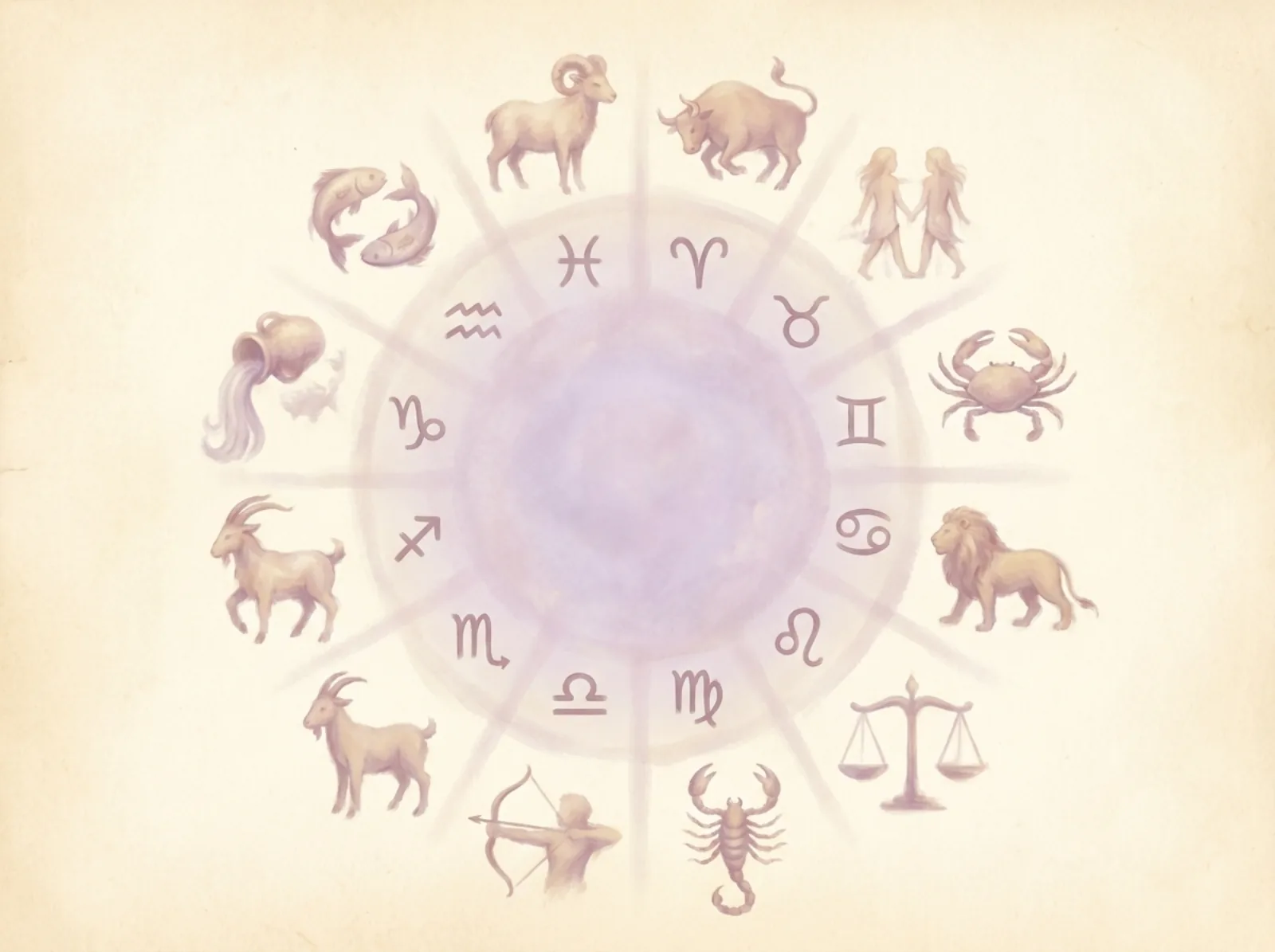
The Butterfly: Gemini's Primary Spirit Animal
Across most modern Western astrology, the animal most commonly paired with Gemini is the butterfly. Not because butterflies are air signs — they're insects, they don't care about elements — but because of what the butterfly actually does and what it has meant to humans for about four thousand years. A butterfly starts life as a caterpillar. Then it dissolves. Inside the chrysalis, the caterpillar's body breaks down into a soup of enzymes and imaginal cells — a term lepidopterists at institutions like the Smithsonian describe as cells that effectively imagine the next version of the organism. The butterfly that emerges is biologically continuous with the caterpillar but structurally almost entirely new. Different mouth. Different legs. Different purpose. Different name. If that doesn't feel Gemini, I don't know what to tell you. Gemini is a mutable air sign ruled by Mercury, the planet of communication, exchange, and movement. Mercury doesn't sit still. Mercury hops. The Gemini mind is wired for parallel tracks — three browser tabs open, four podcast queues, two drafts of the same email in different tones. People accuse Geminis of being 'two-faced,' and the glyph itself is literally two figures standing next to each other. The butterfly honors that duplicity without pathologizing it. The caterpillar isn't lying when it becomes a butterfly. Both are real. Both are the organism. The transformation is the point. Butterflies also pollinate, and this is the part that doesn't make it into most zodiac listicles. They are not just pretty; they are functional. They move pollen between plants that would otherwise never meet. That is, essentially, the Gemini vocational description. The friend who introduces the right people. The journalist who connects dots nobody else saw. The teacher whose brain lives in metaphors because metaphors are literally pollen for ideas. Butterflies are a vector for cross-pollination, and Geminis are, almost pathologically, the humans who do that in rooms full of strangers. So no, the butterfly isn't a cop-out. It's accurate. The reason it feels basic is that popular astrology stripped it of its weight. It got reduced to a Lisa Frank sticker and a Mariah Carey album. The actual symbol — a creature that dissolves itself to become something new, then spends its short life connecting unrelated things — is one of the hardest archetypes to carry well. Most Geminis I know spend their twenties running from it and their thirties quietly growing into it.Why the Butterfly Mirrors Gemini Energy
Let me get more specific about why the butterfly works, because 'they're both airy and fun' is the kind of lazy astrology I think gives the whole field a bad name. Four reasons, grounded in symbolism and in how actual Geminis I've read for actually behave. One: the butterfly's lifespan is short and the Gemini attention span is shorter. Most adult butterflies live between two weeks and a month. Monarchs push it to nine months. Painted ladies clock about four weeks. The butterfly is forced, by biology, to compress enormous meaning into a very short window. That is also what Geminis do with conversations. Thirty minutes with a Gemini and you've been asked about your relationship with your mother, your opinion on quantum mechanics, and whether you've considered becoming a potter. The intensity-to-time ratio is enormous. Two: the butterfly moves non-linearly. Watch one in a garden. It doesn't fly in a straight line. It zig-zags, backtracks, loops, lands, lifts off before you've finished taking a photo. If you try to track a butterfly's path with a pencil, you'll draw something that looks like a Gemini's thought process trying to explain their day: 'So the thing is — wait, no, back up — okay actually it started last week — but also —'. We call this scatterbrained in people and poetic in insects. The behavior is the same. Three: the butterfly's two wings are structurally identical but behaviorally paired. Each wing is a complete half. Neither flies alone. The twin motif of Gemini — Castor and Pollux in the Greek myth, two faces on the glyph — is embedded in the butterfly's anatomy. The lesson, if you want one, is that Gemini duality isn't a flaw. It's load-bearing. Pull one half off and the whole thing crashes. Four: the butterfly is defined by its most radical change. We don't name butterflies for their caterpillar years. We name them for the version that emerged. Geminis, more than any other sign I've worked with, tend to go through at least one identity-level reinvention before thirty. Career pivot. Religious shift. A ruthless rewrite of who their close friends are. The sign's deepest work is learning to honor the dissolution phase — the chrysalis part — instead of panicking in the middle of it and running back to the caterpillar's life. The butterfly isn't basic. It's a four-thousand-year-old technology for self-understanding, and Gemini happens to be the sign that needs it most.Four More Spirit Animals That Belong to Gemini
The butterfly is the main one. But most Geminis I know carry at least one secondary animal — a shadow totem that handles the parts of their life the butterfly doesn't. Here are four I return to most often in sessions. The Fox. Clever, quick, often slightly annoying to larger predators. Foxes are tricksters in almost every folk tradition — the Japanese kitsune, the European reynard, the Native coyote-cousin. They succeed by misdirection, by being underestimated, by moving around a problem instead of through it. If you are a Gemini who built a career out of noticing what everyone else missed — the data analyst who flagged the pattern, the comedian whose jokes are smarter than they look — the fox is probably your co-totem. Foxes also die earlier than their size would suggest; their energy is high and so is their cost. Pace yourself. The Parrot. The least subtle animal on this list. Parrots mimic human speech, bond for life, and get bored faster than any other common pet. If you have a Gemini friend who learned four languages for fun, cycled through nine hobbies in a decade, and will cheerfully explain the Napoleonic Wars to a stranger at a bus stop, the parrot is in there. The warning: parrots in captivity self-harm when under-stimulated. Geminis under-stimulated by their work mirror this pattern. Build variety into your life on purpose or your parrot will start plucking feathers. The Deer. This is the one that surprises people, because deer feel like Pisces or Cancer territory. But deer are twitchy, hyper-alert, built for lateral speed, and symbolically associated with the messenger role across multiple ancient cultures. The Gemini who seems unflappable but privately runs on a nervous system that catalogs every exit in a room — that's deer energy. If social anxiety is in your Gemini blend, the deer is probably doing more work than you realize. Honor it. Don't shame yourself for being wired to notice. The Chameleon. Yes, this one is on the nose. Chameleons change color — not actually for camouflage most of the time, as it turns out, but for communication and temperature regulation. They are reading the room, literally, with their skin. Geminis get accused of being 'fake' because they adjust tone and vocabulary to whoever they're with. I would push back on that framing. Chameleons aren't fake. They are responsive. There is a difference between shape-shifting to manipulate and shape-shifting to connect. Most Geminis are doing the second. Learn the difference and defend yourself when someone accuses you of the first. A note on method: if you're reading this and thinking 'none of those feel like me,' good. Spirit animals aren't a vending machine. They're something you earn through attention. The one that keeps showing up — in dreams, in art you find, in the animal you can't stop photographing on hikes — is probably the real one. The list above is a starting point, not an assignment.How Your Gemini Spirit Animal Shows Up in Dreams
I don't believe dreams predict the future. I believe dreams are the mind filing paperwork. That said, when an animal shows up in a dream repeatedly, it's worth noticing. Jung's framework — which I use because it's the most clinically grounded way to think about dream animals — treats animals in dreams as symbolic compressions of some part of your psyche you haven't fully integrated. A dream butterfly isn't a message from the universe. It's a message from the back of your own head about something you've been avoiding in waking life. Here is how the Gemini-adjacent animals tend to show up, from the dream journals of clients and from my own. Butterflies in dreams usually arrive during a transition the dreamer hasn't admitted to yet. Jobs they're about to leave. Relationships that already ended but haven't been named. A friend of mine dreamt of a butterfly landing on her hand the week before she quit her consulting job — a job she had privately decided to quit two months earlier but was still showing up to. The butterfly wasn't a prophecy. It was her own brain confirming she already knew. Foxes in dreams often mean you are being too clever for your own good. If a fox watches you from a treeline and doesn't come closer, your brain may be flagging that your strategy — your workaround, your clever rephrasing of a hard truth — is being noticed by someone it shouldn't be. Deer in dreams tend to show up around grief or exhaustion. The gentle, startled quality of a deer is what your nervous system looks like when it has been overworked. A deer in your dream is sometimes an invitation to rest. Sometimes it is a reminder of someone you lost. I had a client dream of a deer in the three weeks after her father's funeral, and she described the dream as the first thing in that month that felt like comfort rather than performance. Parrots or chameleons in dreams are rarer and usually bring questions about authenticity. Who are you adjusting for? What voice is yours when nobody is listening? If any of these animals start recurring, I'd suggest keeping a dream journal — nothing fancy, just a note on your phone when you wake up. Patterns across weeks matter more than one vivid night.Working With Your Totem Through Journaling and Meditation
I'm going to be careful here, because this is the area where spirit-animal content on the internet goes most wrong. I don't want you buying crystals, drinking tinctures, or trusting any practitioner who promises your totem will heal physical illness. It won't. If you're sick, go to a doctor. If you're grieving, consider therapy. Animals as symbols can hold a lot. They cannot hold the weight of medical treatment, and anyone who tells you otherwise is selling something. With that disclaimer in place, here is how I actually use animal archetypes in daily practice. Journaling prompt one: name the moment. Pick an animal from this article that resonates. Write one sentence about a time this week you behaved like that animal. Not metaphorically — literally. The butterfly moment where you flitted between three conversations at a party. The fox moment where you noticed the thing nobody else wanted to say. The deer moment where you froze in a meeting. One sentence. The sentence itself is the work. Journaling prompt two: when did I run from it? The animal shows you something true, which means the animal shows you something you sometimes resent. Write about the last time you dismissed that quality in yourself. 'I was being flighty.' 'I was overthinking.' 'I was shape-shifting.' The negative framing you use for the trait is where the integration work lives. Meditation, briefly. I don't do visualization meditations with animals. I find them cheesy and often orientalist. What I do is sit for ten minutes with a specific question — 'where is my attention trying to go?' is my favorite Gemini-adapted prompt — and let the animal arrive if it wants to. If it doesn't, that's fine. The point is the question, not the vision. Correspondence practice. Carry one object that reminds you of your animal. A small ceramic butterfly on your desk. A fox pin on a jacket. The object is a physical anchor for a mental habit. When your eyes land on it, you get a one-second reminder to check in with the quality that animal represents. Am I being too clever today? Am I being too twitchy? Am I letting myself transform, or am I clinging to the caterpillar? None of this is magic. It's attention training. The animals are useful because they're more memorable than abstract concepts. 'Be present' is forgettable. 'Don't be a parrot pulling out your own feathers because your job is boring' is annoyingly specific and will stay with you for weeks.When to Call On Your Animal Totem
I use my animals as checklists, not oracles. Here's when the Gemini totems earn their keep. Call on the butterfly before a transition. The week before you give notice. The month before you move cities. The night before you break off an engagement. The butterfly isn't going to make the decision easier. It is going to remind you that transformation is the species-level job, and that dissolving isn't dying. Call on the fox before a difficult conversation. The exchange where you need to say something true without saying it so bluntly it ends the relationship. The fox is cleverness in service of connection, not cleverness in service of winning. Rehearse the conversation with the fox in mind. What's the lateral path? What's the sentence that lands without wounding? Call on the parrot when you are bored. Specifically, when boredom is making you destructive. Doomscrolling, picking fights, texting the ex. The parrot is a reminder that your species needs stimulation to function, and that choosing good stimulation on purpose is better than letting bad stimulation choose you. Pick up a book you've been avoiding. Learn fifteen words of a new language. Do something your parrot would respect. Call on the deer when you are overloaded. The deer is the animal of alertness and of rest. If your nervous system has been pinging for three days straight, the deer is reminding you that stillness is also a survival skill. Rest isn't a reward. It's maintenance. Call on the chameleon when you feel inauthentic. This one is counterintuitive. People assume the chameleon invites more shape-shifting. In practice, naming yourself as a chameleon helps you distinguish between adaptation (healthy) and self-erasure (not). The question the chameleon asks: am I adjusting because I want this relationship, or because I'm afraid of losing it? None of these are instructions from the universe. They're prompts I give myself when I need to think more clearly. If a different animal does that job for you, use it. The point is the questioning, not the animal.Gemini in the Chinese Zodiac: The Horse Connection
Western astrology and Chinese astrology aren't the same system, so pairing them is always a translation, not an equivalence. I want to be upfront about that. The Chinese zodiac is based on birth year, not birth month. The twelve animals rotate on a lunar calendar — Rat, Ox, Tiger, Rabbit, Dragon, Snake, Horse, Goat, Monkey, Rooster, Dog, Pig — and the correspondence between a Chinese animal and a Western sun sign isn't a one-to-one match. Nobody serious in Chinese astrology would say 'all Geminis are Horses.' That said, the sign most commonly linked to Gemini in cross-system comparisons is the Horse. The reasoning holds up: in Chinese tradition, Horse people are described as sociable, quick, adventurous, slightly impatient, and prone to leaving places before anyone wants them to. If you're a Gemini reading that and nodding, you understand why the pairing shows up. The Horse year also governs certain months — specifically, the lunar month roughly corresponding to late May through late June — which overlaps meaningfully with the Gemini season of May 21 through June 20 in the Western calendar. This is where the two systems do actually brush shoulders. It's not mystical. It's calendrical. What I find more interesting than the Gemini-Horse pairing is what the Chinese tradition does differently. Western astrology talks about a Gemini as a fixed personality type. Chinese astrology layers the animal year with the hour of birth (the 'inner animal'), the month of birth (the 'secret animal'), and the five elements (metal, wood, water, fire, earth). The result is a composite — closer to a chord than a single note. I bring this up because if you landed here looking for one definitive answer about your Gemini spirit animal, you're asking a Western question. The Chinese framing would hand you three or four animals and expect you to understand yourself as the overlap. Which, if we're being honest, is more Gemini anyway. Multiplicity, not monotype. If you're curious about your Chinese zodiac animal, you can calculate it from your birth year — the lunar New Year falls between late January and mid-February, so people born in January or early February are often one year off from what they expect. A good resource is any Chinese almanac or a reputable site that uses the proper lunar calendar rather than approximating.A Note on Native American Zodiac Systems and Cultural Respect
I need to pause here, because the term 'spirit animal' itself has a complicated history that most zodiac websites skip over. The phrase 'spirit animal' entered mainstream English via a mix of translations and misreadings of Indigenous North American practices — Lakota, Ojibwe, Cherokee, and others — in which specific animals serve specific ceremonial, spiritual, and familial roles. These are not interchangeable, not generic, and not available to borrow. The National Museum of the American Indian and multiple Native scholars have been clear for years that 'spirit animal' in the casual Instagram sense is appropriative. I am not Native. I don't practice any of these traditions. What I do, and what this article is doing, is engage with animal archetypes in a Jungian, symbolic sense — the way Carl Jung and later writers like Clarissa Pinkola Estés treated animals as compressed images of psyche. That is a different lineage, and it's one I can engage with ethically. If you're going to work with animal symbolism for self-reflection, I would ask two things of you. One: don't use the phrase 'spirit animal' to describe pop-culture crushes. 'Beyoncé is my spirit animal' is the kind of casual use that specific Native writers have asked people to stop. Say 'icon,' say 'role model,' say 'patronus' if you must. Save 'spirit animal' for serious conversations about serious practices, and when you're doing archetypal work, call it a totem, an archetype, or just 'my animal.' Two: don't buy into zodiac systems that claim to be 'Native American' without a verifiable source. There are many websites selling a twelve-animal 'Native American zodiac' (Otter, Wolf, Falcon, Beaver, Deer, Woodpecker, Salmon, Bear, Raven, Snake, Owl, Goose) and claiming it is traditional. Multiple Native writers have pointed out that this specific system is not drawn from any documented pre-contact tradition and was likely assembled in the twentieth century by non-Native authors. Which doesn't make it worthless — it just makes it inaccurate to describe it as Native. If you like the system, use it as what it is: a modern invention with pretty animals. The Jungian approach I use in this article doesn't claim to be Indigenous. It claims to be psychological. That's a cleaner line, and I think a more honest one.Famous Geminis and Their Spirit Animal Resonance
I resist celebrity astrology for the most part — it flattens real people into cartoon versions of their sign — but it's useful for pattern-recognition. Here are five real Geminis whose public work maps onto the animals above. Marilyn Monroe (June 1, 1926). Pure butterfly. The reinvention from Norma Jeane Mortenson to Marilyn Monroe is one of the most literal chrysalis stories in twentieth-century celebrity. The short lifespan, the cross-pollination between acting and modeling and singing, the public dissolution — the archetype is almost too on-the-nose. Prince (June 7, 1958). Chameleon, obviously, but also fox. The persistent re-invention of persona (Prince / The Artist Formerly Known As Prince / unpronounceable glyph) is chameleon work. The lateral intelligence — the way he worked around industry constraints, famously fighting for control of his masters decades before it became a mainstream artist concern — is fox work. Angelina Jolie (June 4, 1975). Deer, in the alertness sense. Her humanitarian work requires hyper-vigilance to the nervous system of global conflict. Her early public image was all intensity, but the Gemini duality shows up in the pivot — the actor who became a UN envoy and documentary director without abandoning either identity. Kanye West (June 8, 1977). Parrot in the stimulation-hunger sense, fox in the trickster sense. I note his astrology without endorsing his conduct. The pattern is instructive: a Gemini without good stimulation and without good counsel can become a parrot plucking its own feathers, publicly, over years. Venus Williams (June 17, 1980). Butterfly in the long-form sense. The Williams sisters' careers have included multiple reinventions — from juniors in Compton to Grand Slam champions to businesspeople to design-firm principals. Venus specifically has lived through a chronic autoimmune condition and reorganized her career around it, which is a kind of adult butterfly transformation most zodiac listicles don't talk about. Treat these as pattern examples, not personality verdicts. The sign is a frame. The person fills it in.Spirit Animal Journaling With Raka
I built Raka because I wanted the kind of tarot and astrology practice I describe in this article — reflective, honest, grounded in questions — available to people who don't have a weekly reader to visit. If you've gotten this far, you probably already use some kind of journal. The Raka app has a spirit-animal reflection track built into its daily prompt system. You pick an animal (butterfly, fox, deer, parrot, chameleon, and about twenty others), and the app serves you a short Jungian-style prompt once a day. The prompts are mine. They are deliberately short, deliberately unsparkly, and designed to make you think rather than to make you feel like the universe is sending you a push notification. The point of Raka isn't to replace the work. The point is to make the daily version of the work easy enough that you actually do it. Three sentences a day for a month is more useful than a thousand-word journal entry you never write. If you want to try it, download Raka and look for the animal totem track in the reflection section. If you don't want to download anything, honestly, you can do the same practice with a cheap notebook. Both work. The only requirement is that you be willing to tell yourself the truth about what the animal is showing you — and that you don't ask it to do more than it can. The butterfly is not going to make your rent. The fox is not going to pass your exam. The deer is not going to break up with the person you shouldn't be dating. You are. These animals are just the handles you grip the work with. Picked up honestly, they are enough.Frequently asked questions
What is the main spirit animal for Gemini?
In modern Western astrology the butterfly is the animal most often paired with Gemini. The reasoning isn't elemental — butterflies aren't air signs — it's symbolic. Butterflies dissolve inside the chrysalis and emerge structurally new, which mirrors Gemini's mutable, reinvention-driven nature. They also cross-pollinate, which maps onto Gemini's role as the connector who moves ideas and people between unrelated worlds. Part of our complete astrology reference.
Can I have more than one spirit animal as a Gemini?
Yes, and most Geminis I work with carry at least two. The butterfly tends to be primary, but a secondary animal — a fox, parrot, deer, or chameleon — usually handles the parts of life the butterfly doesn't. Chinese astrology actually assumes multiplicity by default, layering several animals from year, month, and hour of birth. Treat your totems like a chord, not a single note.
Is my spirit animal fixed by my sun sign?
No. Your sun sign is a starting point, not a verdict. The animal that keeps showing up in your dreams, in the art you're drawn to, or in the creature you can't stop photographing on hikes matters more than any zodiac listicle's assignment. A Gemini can carry a wolf. A Capricorn can carry a butterfly. The sign is a frame; the person fills it in.
Why is the butterfly associated with Gemini specifically?
Four reasons. One, butterflies live short, intense lives — matching Gemini's compressed attention. Two, they fly non-linearly, which mirrors how Gemini minds move. Three, their two wings are paired but identical, echoing the Gemini twin motif. Four, they're defined by their most radical transformation — a chrysalis dissolution — which is the archetypal Gemini life task.
How do I meet my spirit animal in meditation?
I don't recommend forced visualization meditations where you try to summon an animal — they tend to feel performative. What works better is sitting with a specific question for ten minutes and letting an image arrive if it wants to. 'Where is my attention trying to go today?' is a solid Gemini-adapted prompt. If nothing shows up, that's fine. The question itself is the practice.
Can my spirit animal predict my future?
No, and anyone telling you otherwise is selling something. Animal archetypes are symbolic — a Jungian way to compress parts of your own psyche into a memorable image. They can hand you questions, help you notice patterns, and prompt journaling. They cannot forecast events, protect you from bad relationships, or heal physical illness. If you're sick, see a doctor. If you're grieving, consider therapy.
Is using the term 'spirit animal' cultural appropriation?
It can be, depending on how it's used. The phrase entered mainstream English through loose readings of specific Lakota, Ojibwe, Cherokee, and other Indigenous practices, and Native scholars have asked people to stop using it casually. For archetypal, Jungian self-reflection work like this article, 'totem,' 'archetype,' or simply 'my animal' are cleaner terms. Save 'spirit animal' for serious conversations about actual Indigenous traditions.