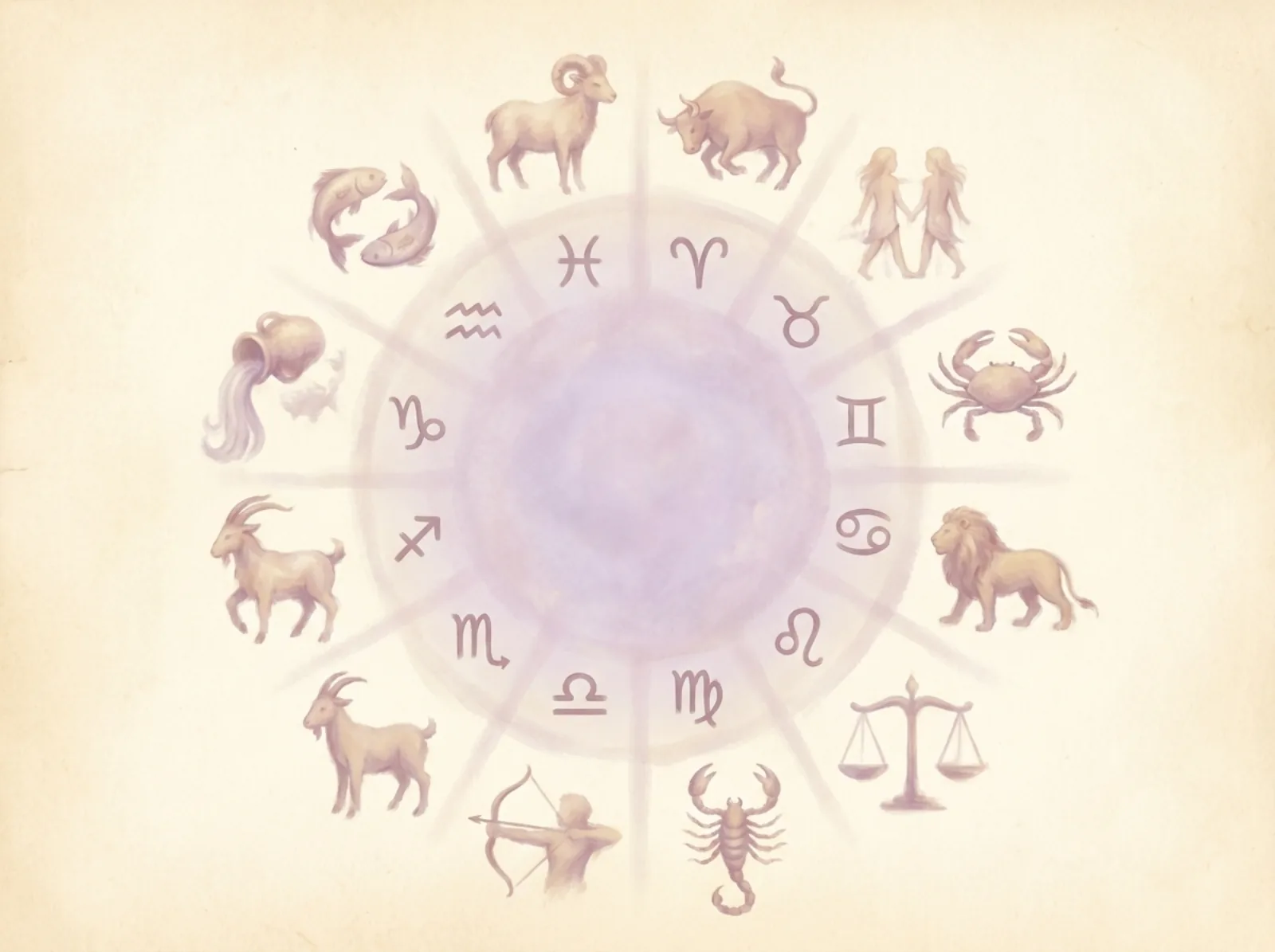
The Lion: Leo's Primary Spirit Animal
Leo's constellation has been linked to a lion for roughly four thousand years. The Babylonians called it UR.GU.LA — 'the great lion.' The Egyptians associated it with the solar deity Sekhmet, often depicted as a lioness. Greek mythology tied it to the Nemean lion, the beast Hercules killed with his bare hands as his first labor. The symbolism has been remarkably stable across civilizations that otherwise disagreed on almost everything. So when astrologers assigned a 'spirit animal' to each sign — a modern construct, I will be clear, grafted onto older zodiac traditions somewhere in the twentieth-century New Age revival — the lion was never in question for Leo. Here is what that actually means in practice. A spirit animal, in the way most contemporary readers use the term, is a totem — an animal whose observed behaviors map onto human traits you want to understand, cultivate, or reckon with. The lion's observed behavior reads like a Leo horoscope written by nature: pride-based social living, a clear leadership structure, a willingness to defend what is theirs, long stretches of lazy indulgence punctuated by bursts of decisive action. The females hunt in coordinated groups. The males broadcast dominance through sound, posture, and a mane that evolution designed as a visibility signal. Leo folks tend to recognize themselves in all of this. Not because the universe decided they should, but because the astrological archetype was built, in part, from the lion's observable life. The symbol and the sign co-evolved. Does that mean every Leo wakes up with the roar of a jungle cat in their chest? Of course not. The lion is a point of reference, not a prescription. Some of the most Leo-coded people I know are quiet, introverted, and allergic to attention. The lion still fits them — just the sleeping, watchful, slow-breathing version of it. The point is not that you are supposed to roar. The point is that you have an archetype available to you, and knowing it is useful.Why the Lion Matches Leo Energy
Astrologically, Leo is a fixed fire sign ruled by the Sun. Four of those words do real work here. Fixed means stable, hard to move, persistent — the kind of person who does not change their mind halfway through an argument. Fire means expression, warmth, visibility, drive. And the Sun — Leo's ruler — governs the ego, the self, the thing that gets up every morning and insists on being somebody. The lion carries every one of those traits. A pride of lions holds its territory for years, sometimes decades, defending it against rivals. That is fixed. Lions are warm-blooded, warm-coloured, the whole aesthetic reads like a sunset. That is fire. And the lion is the only big cat that lives in a group organized around a dominant male whose entire existence revolves around being seen and reckoned with. That is the Sun ruling the ego. But here is the nuance I want you to catch, because it matters for how you use this as a tool. The lion is not the eagle. It is not swooping down for a kill from a great height. It is not the shark either — ruthlessly efficient. The lion sleeps sixteen to twenty hours a day. It is one of the laziest apex predators on earth, by raw hours. When it moves, it moves with purpose. When it does not, it absolutely does not. If you are a Leo and you have been beating yourself up for not grinding every hour of every day, consider: your animal totem is a creature that has mastered the art of looking magnificent while doing nothing. The pressure to be constantly productive is not the lion's. The lion's energy is bursts of brilliance with long rests in between. That is a Leo pattern too, when you are being honest. Second nuance: lions are social, not solitary. The archetypal 'lone lion' is a myth. A real lion without a pride is a vulnerable, often doomed animal. Leo folks who try to go it alone — refusing help, refusing community — are working against the archetype, not with it. The lion wants a pride. So do you.Five Secondary Spirit Animals for Leo
The lion is Leo's headline animal, but it is not the only one. In the way totems get used in practical journaling and self-reflection, people often find that one or two other animals show up repeatedly in their dreams, in their aesthetic preferences, in the stories they cannot stop retelling. For Leo folks, these five come up again and again. **1. The Peacock.** Peacocks and Leos are both accused of vanity, and both are misunderstood. The peacock's tail is not actually about ego — it is a biological signal that says, 'I am healthy, I am strong, I am worth paying attention to.' In humans, the Leo equivalent is a willingness to be visible. If you have ever felt the pull to dress sharply, to speak up, to not shrink yourself in a room full of people, that is peacock energy. It is not shallow. It is self-respect made visible. **2. The Falcon or Hawk.** This is Leo's sharper side — the clear-eyed, high-perspective version of the sign that cuts through confusion and knows what matters. Hawks pair particularly well with Leos who have done a bit of inner work. Where the lion is physical and visible, the hawk is cognitive and detached. If you ever find yourself in a crisis and suddenly become eerily calm, strategic, and able to see three moves ahead — that is hawk showing up through the Leo. **3. The Stallion.** Specifically the wild stallion, not the broken, saddle-trained horse. The stallion is Leo's independence animal — the one that refuses to be domesticated, that runs for the sake of running, that leads not because it wants to but because the herd keeps following. Some of the most Leo-coded people I know have this stallion thing where they cannot tolerate being managed, micromanaged, or boxed in. The job that asks them to clock in and clock out drains them. The job that lets them run is the one where they thrive. **4. The Phoenix.** The phoenix is less common but worth naming. It is a mythological bird, not a real one, which matters — it is a symbolic animal from the start. The phoenix burns down and rises again. Leos go through dramatic reinventions more than most signs. A Leo at twenty is often unrecognizable from a Leo at thirty-five. Not because they are flaky — because they are built for cycles of destruction and renewal. If you have ever rebuilt yourself from scratch after a collapse, the phoenix is yours. **5. The Cheetah.** Where the lion is slow brilliance, the cheetah is explosive speed. Cheetahs cover a hundred metres in under six seconds and then collapse, exhausted. Some Leo folks run on cheetah rather than lion — short, intense sprints of output, followed by a flat crash. If this is you, do not fight it. Plan around it. Protect the rest periods like they are part of the work, because they are. Pick one or two of these that genuinely resonate. You do not need all five. The point of a totem is not collection — it is recognition. The animal that makes you say, 'Oh, that is me,' is the one that will actually be useful to you in a journal entry or a quiet moment of self-reflection.How Your Leo Spirit Animal Shows Up in Dreams
I need to say something up front, because dream interpretation gets wobbly fast. A dream is not a message from the universe. It is your brain, in a low-arousal state, running pattern-recognition on your waking life. That is genuinely useful — the symbols that surface are often ones your conscious mind has been dodging. But it is biology, not prophecy. Keep that frame. With that said, here is what Leo-coded dreams tend to look like, and what they often reflect. **Dreams of lions.** When a lion shows up in a dream, pay attention to its posture and your reaction. A calm, watchful lion that lets you approach often reflects a sense of personal authority settling in — something in your life where you have stopped needing external validation. An aggressive lion, teeth bared, usually points to a conflict with authority, often an authority figure you have not named yet. A caged or injured lion? That is almost always about a part of yourself you have been suppressing. The Leo in you does not like cages. The dream is noticing. **Dreams of fire.** Fire is Leo's element, and Leo dreamers often have more fire-dreams than average. Controlled fire — a hearth, a candle, a bonfire you can walk around — tends to track with creative confidence. Uncontrolled fire — a wildfire, a burning building — usually surfaces when you are overcommitted, overstimulated, or sitting on an emotion you have not let yourself feel. The fire is not a warning. It is a volume indicator. **Dreams of being watched or performing.** This is a classic Leo dream — being on stage, being filmed, being observed. If the dream is positive (people applauding, you performing well), it usually reflects a wish for recognition that you can act on in waking life. If it is a nightmare (you forget your lines, you are naked on stage, the audience turns on you), it is often fear of being judged — specifically the fear that if you let yourself be visible, you will be found wanting. That is a Leo-specific anxiety and worth journaling about. **Dreams of royalty or thrones.** Crowns, kings, queens, palaces — Leo's archetypal territory. If you dream of being crowned, journal the context. Who crowned you? Were you ready? Did it feel earned? These dreams often come up around major life transitions where you are about to take on more authority or visibility than you have before. Keep a notebook by your bed and write the dream down in the first two minutes after waking — longer than that and the detail evaporates. Over a few weeks of recording, you will start to see your own patterns. Your spirit animal, in the end, is the one that shows up most in your own data.Working With Your Spirit Animal in Meditation and Journaling
Here is how I actually use this stuff, stripped of mystique. **Journaling prompts.** Pick your animal — the lion, or one of the five secondary ones that resonated. Then sit with these questions, writing freehand for ten minutes each: - Where in my life this week did I act most like my animal? - Where did I fail to? What stopped me? - If my animal were giving me advice about a current situation, what would it be? - What does my animal need that I have been denying it? The last one is the one that does the real work. For Leos with a lion totem, that answer is often rest, or community, or permission to want attention without apologizing for it. Whatever surfaces — write it down. Do not filter. **Meditation.** You do not need an elaborate ritual. Sit somewhere comfortable, close your eyes, and spend five minutes picturing your animal. Not performing a visualization — just letting the image settle. Notice where it is. What it is doing. Whether it is looking at you or ignoring you. These details are your mind handing you information about your own state. A lion that is hiding is a different message from a lion that is hunting. **Embodiment practice.** This sounds silly and I promise it is not. Once a day, for about thirty seconds, physically embody your animal. If it is the lion, breathe into your chest and let your posture open up. If it is the hawk, lift your chin and widen your field of vision. If it is the stallion, feel the movement in your legs. The point is not to perform the animal. It is to borrow its physical pattern as a reset for your nervous system. It works because your body and your mood are more connected than most self-help wants to admit. **What not to do.** Do not ask your spirit animal what the stock market will do, whether your ex is thinking about you, or whether a job offer is 'the right one.' These are decisions, not questions a symbol can answer. The animal is a mirror for your own reflection — it does not know anything you do not already know. Anyone selling you spirit animal prophecy is selling you a story. The journaling practice is what actually moves the needle. Also: do not force a connection. If none of these animals resonate, that is genuine information. The spirit animal framework is a tool, not a mandate. Some people get much more out of colour symbolism, number symbolism, or no symbolism at all. Use what works and leave the rest.When to Call on Your Animal Totem
There are specific moments in a week — in a life — when pulling the lion (or whichever animal fits) off the mental shelf actually helps. Not because it is magic. Because having a symbolic anchor shortens the gap between the feeling and the response. **Before a hard conversation.** The moment before you have to tell someone a difficult truth — set a boundary, give feedback, end a relationship, ask for a raise — Leo's lion is a useful mental cue. The lion does not apologize for its presence. It does not rehearse what it wants to say twenty times. It opens its mouth when it needs to. A thirty-second breath cycle with the image of a calm, grounded lion can reset you from anxious to steady. That is not supernatural. That is embodied cognition — your mind using a symbol to shift your nervous system. **During burnout.** This is the one most Leos miss. When you are burned out, you do not need more lion. You need the sleeping lion. The one that is doing nothing on a rock in the sun for sixteen hours. Call on the resting animal, not the roaring one. Rest is Leo's unglamorous superpower. **At the start of something creative.** If you are launching a project, starting a draft, opening a notebook on a blank page — the hawk or the lion both work here. The hawk gives you perspective and strategy. The lion gives you confidence. Some people need one, some need both. Try them and see what unlocks. **When you feel invisible.** This is a specific Leo wound, and most Leos who have been through it know it well. If you are in a phase where nobody is seeing you — the work is not being recognized, the relationship feels one-sided, the room keeps looking past you — pulling up the peacock, or the lion with its mane, is a way of giving yourself permission to be visible without needing the external cue. You can see yourself. That is the start. **When you are about to make a decision.** Call on the animal and ask: what would my animal do here? Not because the animal knows. Because the question strips away the social noise and gets you to your own gut answer faster. Nine times out of ten, you already know what you are going to do. The totem just gives you a cleaner way to listen.Leo and the Chinese Zodiac Equivalent
Western and Chinese zodiac traditions are not really translatable — they are built on different cosmologies, different calendars, different purposes — but people ask about the overlap, so here is the honest answer. The Chinese zodiac is based on your birth year, not your birth month, and it rotates through twelve animals in a twelve-year cycle. There is no direct swap between Leo and a single Chinese zodiac animal, because Leo covers one month and a Chinese zodiac animal covers a full year. That said, if you are pattern-matching on symbolism rather than system — the way most people reading a zodiac guide actually are — two Chinese zodiac animals share real territory with Leo. **The Tiger.** This is the closest match. The Tiger in Chinese astrology is bold, courageous, ambitious, charismatic, and prone to drama. Tigers lead, Tigers want to be seen, Tigers burn hot and crash hard, Tigers tend to attract attention whether they want to or not. If a Western Leo were translated into a Chinese zodiac animal purely on vibe, the Tiger is where they would land. The two signs share the fire-energy archetype — fierce, visible, decisive. **The Horse.** The second match, less often named but just as apt. The Horse in Chinese astrology is independent, free-spirited, confident, performative, and craves variety. Horses are social but hate being managed. They are often warm, extroverted, dramatic. All of this maps onto the stallion archetype we covered earlier under Leo's secondary animals. If you are a Leo born in a Horse year, that doubling-up tends to be loud — a lot of Leos born in 1990, 2002, or 2014 have told me they recognize this. Here is what matters: these are not the same system, and treating them as if they were is where New Age astrology gets sloppy. Chinese zodiac has its own logic — the five elements, the yin and yang pairings, the stem-and-branch calendar — and reducing it to 'Leo equals Tiger' flattens a tradition that has thousands of years of its own structure. If Chinese astrology is calling you, read it in its own terms. Do not just use it as a Western-zodiac extension. The animals mean different things in different systems, and the honest move is to learn both separately rather than mashing them into one shape. For a quick starting point, look up your birth year's Chinese zodiac animal and treat it as its own distinct lens on your personality — not a translation of Leo.The Native American Zodiac Context — Approaching With Respect
I need to be careful here, because this is where a lot of zodiac content gets uncomfortable fast. There is no single 'Native American zodiac.' The term usually refers to a system popularized in the twentieth century by writers like Sun Bear — a self-described medicine man of Chippewa descent who published Earth Astrology in the 1980s. That system assigns each sun period to an animal totem. In it, Leo (July 23 to August 22) is linked to the Salmon. Here is the important part: this system is a modern synthesis. It is not a traditional practice of any specific Native American nation. The hundreds of distinct indigenous nations in North America had — and have — their own spiritual traditions, their own relationships with specific animals, and none of them operate on the Western zodiac's twelve-sign calendar. Treating 'Native American zodiac' as a monolithic tradition is both inaccurate and, frankly, disrespectful to the actual peoples whose spiritual practices it borrows aesthetic from without engaging with substance. So — with that disclaimer very clearly stated — here is what the Salmon symbolically represents in the Sun Bear system that is floating around the internet: - Determination and drive — the salmon swims upstream against the current - Natural leadership - Confidence in direction - Passionate and intense emotional life - A tendency to burn out from going too hard You will notice this maps almost one-to-one onto Western Leo traits, which is not a coincidence. Sun Bear's system was built with Western zodiac timing in mind. If this symbolism is useful to you as a journaling prompt — the image of the salmon driving upstream, refusing to go with the current — use it that way. It is a powerful image regardless of its syncretic origin. But if you want to engage with real indigenous spiritual traditions, go to the source. Read indigenous authors on their own practices. Support indigenous-owned bookstores. Do not substitute a 1980s syncretic framework for an actual tradition you have not done the work to learn. The totem concept exists in many indigenous cultures — in genuinely sophisticated, specific forms — but it is not interchangeable with the pop-astrology version. The lion of Western astrology is not the same thing as a clan animal in a Pacific Northwest nation's tradition. One is a loose symbolic tool. The other is a sacred, bounded, culturally specific practice. The honest move is to know which one you are actually using and to never pretend one is the other.Celebrity Leos Who Embody the Lion Archetype
Pop-astrology articles love a celebrity list, so here are five Leos whose public personas genuinely do read as lion-coded, with the caveat that nobody's whole personality fits on a page. **Barack Obama (August 4, 1961).** The textbook Leo lion. Charismatic, naturally authoritative, performs public rhetoric like a theatre actor, and — this is the Leo-specific part — famously good at reading a room while still being the biggest person in it. His memoirs read like a man who knows exactly how he comes across and is comfortable with it. That self-awareness-plus-confidence combination is the mature Leo at its best. **Madonna (August 16, 1958).** The phoenix side of Leo more than the lion. Reinvented herself every three to five years for forty years. Burned down careers and rebuilt them. Treats visibility as a non-negotiable. If you want the Leo-as-perpetual-renewal archetype in human form, she is it. **Jennifer Lopez (July 24, 1969).** The peacock Leo. A triple-threat career built around being watched — dancing, singing, acting, all performance-forward. Also, importantly, a Leo whose public energy has aged into warmth and generosity rather than ego, which is the Leo arc at its healthiest. Early-career Leos often read as flashy. Mid-career ones learn to be regal. **Chris Hemsworth (August 11, 1983).** The straightforward lion. Big, visible, physically imposing, built a career on literally playing a Norse god. But watch his interviews — the actual person is warm, self-deprecating, and generous with his co-stars. That is the lion with the pride instinct intact. He does not need to compete; he is secure. **Mick Jagger (July 26, 1943).** Still on stage, still refusing to be anything other than a performer. The stallion-Leo blend — independent, performative, impossible to domesticate, has outrun basically every rock star of his generation by not letting go of the thing that defines him. Love him or not, that is an archetype running on all cylinders for six decades. I am not making predictions about any of these people's charts in detail — I do not know their rising signs, their moon placements, their aspects. The sun sign is only one piece of a chart. But if you are looking for examples of what Leo energy looks like at scale, these are five people whose public personas have been consistent with the archetype for decades. The archetype is doing some real work.Spirit Animal Journaling With Raka — Plus an Honest Note on Symbolism
If you have read this far and you want to put this into a practice, here is what I would suggest. I write for Raka Tarot, which is an app I use myself (yes, that is a disclosure). What makes it useful for this kind of work is that it holds the journaling prompts in one place, lets you log dreams, and keeps the symbolic language consistent so your reflections build on each other over time. A spirit animal entry today is more useful if it talks to a journal entry from three months ago. Memory, in Raka or in any good journaling app, is where the pattern-recognition happens. A simple practice: once a week, open Raka or whatever journal you prefer, and write under four headers. - One thing my spirit animal would be proud of this week. - One thing my spirit animal would gently question. - One pattern I am starting to notice. - One thing I want to work on before next week. Four questions. Fifteen minutes. Over a few months, you will have a real document of your own evolution, with the animal as a consistent symbolic anchor. That is the practice. That is it. **The honest note I promised at the top.** A spirit animal, as it is used in contemporary zodiac writing, is a symbolic tool for self-reflection. It is not supernatural. It is not predictive. The lion does not actually know what is going to happen in your life, because the lion is a concept you are using as a journaling prompt — a shorthand for a bundle of traits you are trying to understand in yourself. That is genuinely useful. It is also not magic. If anyone — a writer, an app, a reader, a book — tells you that your spirit animal can tell you the future, heal illness, or make decisions for you, walk away. That is not symbolism anymore. That is a pitch. Also: the deeper, culturally specific totem traditions — the ones that genuinely belong to indigenous nations and spiritual lineages that are not pop astrology — are not what you are doing when you journal with the lion archetype on a Tuesday night. They are something else, held by people who have inherited them in context. Respect that distance. Do not claim the depth of a tradition you are not actually inside. Use the lion as a mirror. Use the practice to see yourself more clearly. That is the whole thing.Frequently asked questions
What is Leo's spirit animal?
The lion, grounded in roughly four thousand years of symbolic tradition across Babylonian, Egyptian, Greek, and later European astrology. The lion maps onto Leo's fixed-fire, Sun-ruled archetype — pride-based social living, bursts of decisive action, and long stretches of restful watchfulness. Treat it as a mirror for self-reflection, not a prediction tool. Part of our astrology library.
Can I have more than one spirit animal as a Leo?
Yes. Many Leo folks resonate with a secondary totem alongside the lion — peacock for visibility, hawk for strategic clarity, stallion for independence, phoenix for cycles of reinvention, or cheetah for sprint-and-crash energy. Pick the one or two that make you say 'that is me' and work with them in journaling.
Is the salmon really Leo's Native American spirit animal?
The salmon is linked to Leo in a modern synthesis called Earth Astrology, published by Sun Bear in the 1980s. It is not an authentic traditional practice of any specific indigenous nation. The hundreds of distinct Native American nations have their own spiritual traditions that do not operate on the Western zodiac calendar. Use the salmon as a journaling image if it resonates, but do not confuse the synthesis with actual indigenous spiritual practice.
What does it mean if I dream of a lion as a Leo?
Dream content is pattern-recognition from your waking life, not a message from the universe. A calm, approachable lion often tracks with growing personal authority. An aggressive lion can point to a conflict with an authority figure in your life. A caged or wounded lion usually reflects a part of yourself you have been suppressing. Keep a notebook by your bed and journal the dream within the first two minutes of waking.
Is Leo compatible with the Tiger in Chinese astrology?
The Tiger shares real symbolic territory with Leo — bold, charismatic, drawn to leadership, prone to drama — but the Chinese zodiac is a separate system based on your birth year, not your birth month. The Horse is a second close match. These overlaps are useful as pattern-recognition, but Chinese astrology deserves to be read in its own terms, not treated as a translation layer for Western signs.
How do I actually use my spirit animal in daily life?
Three practical uses: journal weekly with four prompts (what would my animal be proud of, what would it question, what pattern am I noticing, what do I want to work on), spend five minutes a day in meditation picturing your animal and noticing its posture, and briefly embody the animal physically before stressful moments — a thirty-second posture shift to lion or hawk can meaningfully reset your nervous system.
Can my spirit animal change over time?
Yes, and it usually does. Most people find that one animal fits a decade of their life and another fits the next. A Leo in their twenties might run on cheetah energy and shift into lion in their thirties. The symbolism follows your actual development; it is not fixed at birth. Treat the totem as a snapshot of who you are now, not a permanent assignment.