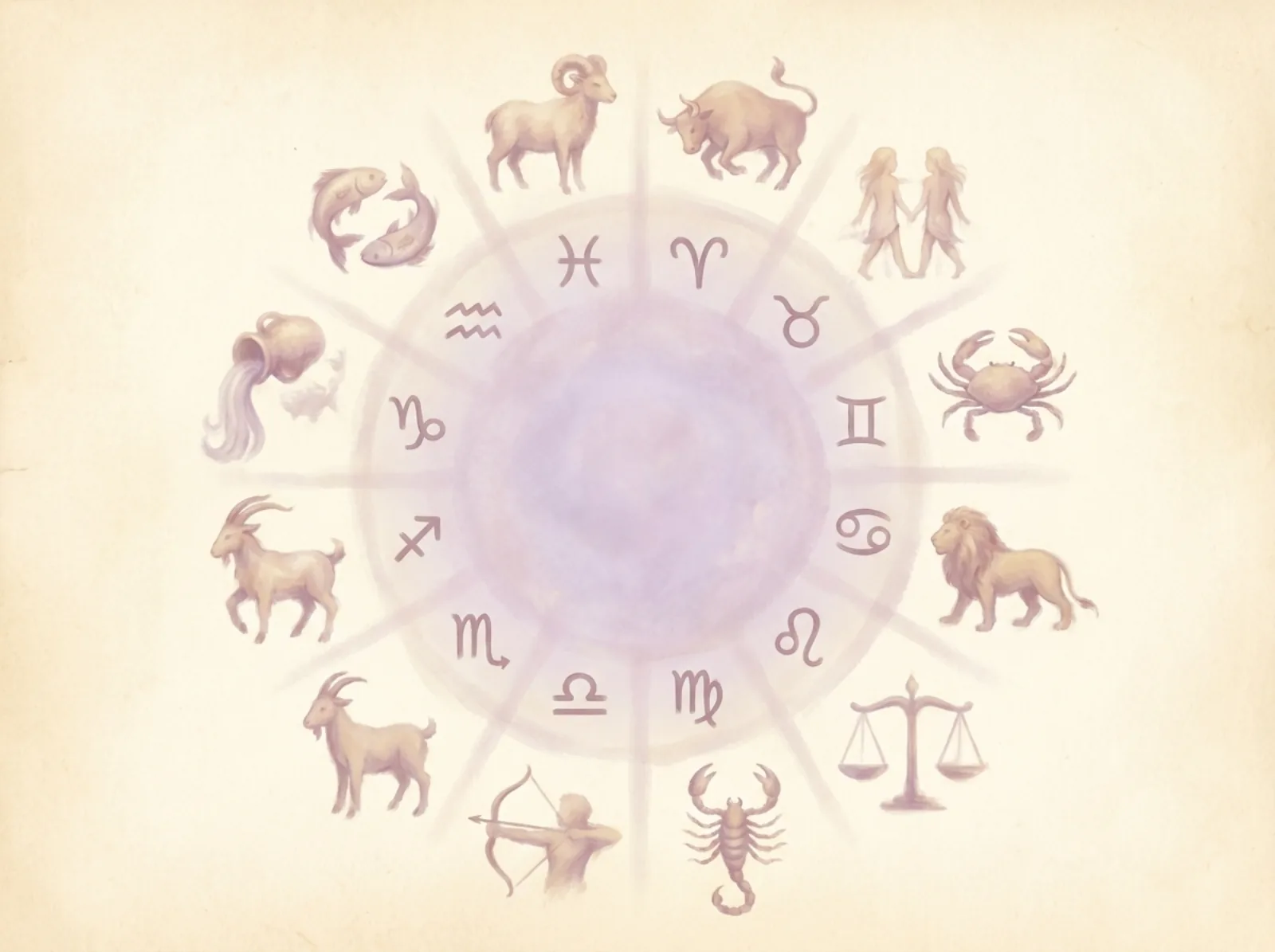
What your Moon sign actually means
In Western astrology, your Moon sign is the zodiac sign the Moon was moving through at the exact moment you were born. The Sun gets most of the headlines — it's the sign everyone knows and the one tabloid horoscopes talk to — but the Moon is where the real inner weather lives. The Sun is your public identity. The Moon is the part of you that eats cereal at 2am. Part of our tarot reference.
Astrologers like Cafe Astrology and The AstroTwins describe the Moon as the body in your chart that governs emotional needs, instinct, memory, mood, nurturing, and your inner child. It's the shortcut your nervous system takes when you're scared or soft. It's also, interestingly, what you need in order to feel full — not what you want to show the world, but what you need in order to come back to yourself.
Why Cancer is such a loaded Moon placement
Here's where it gets interesting for you specifically. Cancer is the only sign the Moon actually rules in traditional astrology. That means when the Moon is in Cancer in a natal chart, it's in its home sign — fluent, maximally expressed, undiluted. Everything the Moon normally does, Cancer does more: more remembering, more feeling, more absorbing, more protecting, more nesting, more withdrawing when the world gets loud. See our best natal chart app guide.
A Cancer Moon isn't a Cancer Sun. You can be a very businesslike Capricorn or a wildly outgoing Leo on the outside and still have this soft, tidal, sometimes wounded inner world. It explains the gap a lot of Cancer Moons feel — the people see me as X but inside I'm Y dissonance that doesn't go away no matter how competent you get. Your Moon is the Y. It's the version of you that only your closest people, your journal, and maybe your dog ever actually meet.
The core emotional profile of a Cancer Moon
Let's get specific. A Cancer Moon is a water Moon in a cardinal sign — meaning you feel deeply and you move on those feelings. You're not a passive receiver of emotion; you organize around it. You cook for people who are sad. You text first after a fight. You remember the exact month someone's parent died and quietly check in on the anniversary.
- Emotionally memory-driven. Cancer Moons remember everything. The compliment someone gave you in 2014, the way the kitchen smelled at your grandmother's house, who stopped texting first in your twenties. Memory isn't a filing cabinet for you — it's a living mood that comes back when the light is a certain color.
- Highly empathic. You feel other people's emotional climates in your body. Walking into a tense room is a physical event. By the end of a long dinner with strangers, you can be exhausted without having said much.
- Nostalgic. You bond deeply with places, songs, foods, routines, and smells. You can be moved to tears by an old sweater, a street you used to live on, or a playlist from a specific era of your life.
- Protective of your people. Once someone is in your inner circle, you'd walk through fire for them. The flip side: it can take a long time to let someone in, and once trust is broken it's genuinely hard to fully rebuild.
- Moody in cycles. Your emotional weather genuinely moves with the lunar cycle, your menstrual cycle if you have one, the seasons, and ambient stress. You are not making it up.
If you've ever been told you're too sensitive, what people usually mean is that you're more permeable than average. A Cancer Moon's inner life isn't a bug. It's the whole operating system — and when it's well-tended, it's also the source of your warmth, your creativity, your loyalty, and the almost supernatural way you know what someone needs before they say it out loud.
What a Cancer Moon needs to feel safe
Every Moon sign has a short list of non-negotiables — things the inner self needs in order to stop bracing. For a Cancer Moon, safe is less about physical security (that's more of an earth-Moon thing) and more about emotional predictability. You need to know where you stand, who's in your corner, and that nobody's going to disappear on you without warning.
The Cancer Moon safety checklist
- A nest. A home base that feels like yours — soft lighting, blankets, snacks within arm's reach, photos of people you love. Cancer Moons are the people who redecorate every rental and know exactly which corner of the couch is theirs.
- Rituals and routines. Sunday dinner, morning coffee from the same mug, a bedtime wind-down you don't skip. Your nervous system calms down when it knows what's coming.
- Emotional honesty from your people. If someone close to you is upset but says I'm fine, you can feel the lie and it unsettles you more than the truth would. You'd rather have the hard conversation than live inside an unspoken one.
- Permission to retreat. You need a reliable off-ramp — a day with no plans, a long bath, a drive alone — to decompress without guilt. Over-scheduled Cancer Moons go feral.
- Being remembered. Not showered in gifts. Just the small stuff: your coffee order, your sister's name, the fact that November is hard for you. Being remembered is love, to you.
What tanks a Cancer Moon's nervous system is the opposite of all this: inconsistent affection, people who vanish and reappear without explanation, environments that are harsh or impersonal, and being around someone who's lying with their face. You will physically crave going home. That craving is intel, not weakness. Many Cancer Moons benefit from a short reflection practice — even five minutes with a journaling app like Raka after a draining day — to separate what I'm picking up from everyone else from what I actually feel underneath it all.
Cancer Moon attachment style and relationship patterns
Astrology isn't a replacement for attachment theory, but Moon signs and attachment styles map onto each other more cleanly than most people realize. The Moon is literally the astrological signature of how we were cared for and how we expect to be cared for. For a Cancer Moon, that often shows up as a strong pull toward secure, consistent, emotionally present partnerships — and a specific vulnerability to the opposite.
The classic Cancer Moon love pattern
Most Cancer Moons bring the same gifts to relationships: deep attunement, loyalty, emotional memory, the willingness to actually show up when things are hard, and an almost domestic kind of romance. Making soup for a sick partner is extremely on-brand. You tend to bond slowly but completely. Once you're in, you're in. You don't do casual as well as you pretend to, no matter how modern you think you've become.
The pattern worth watching is a lean toward anxious attachment, especially if your early caregiving was inconsistent. Cancer Moons with that wound often show up as:
- Over-attuned. You read your partner's microexpressions and preemptively adjust yourself to keep the connection steady, even at the cost of your own needs.
- Reassurance-seeking indirectly. Rather than ask are we okay, you'll do something caring and watch to see if they match the energy. The ask is there — it's just encoded.
- Prone to retreat when hurt. Cancer rules the crab's shell. When wounded, your instinct isn't to confront — it's to go silent and pull inward until the other person comes to find you.
- Mothering as a love language. You care for partners the way you wanted to be cared for. Sometimes this is beautiful. Sometimes it tips into caretaking people who haven't earned it.
The flip of that: a very secure Cancer Moon is an exceptional partner. The emotional intelligence is already installed. All that's needed is a partner who's steady — someone who doesn't make you earn their presence, who doesn't disappear mid-fight, who can tolerate being loved as much as you want to love them. Your work, if you have this placement, is often less about finding the one and more about identifying when familiar chaos is pretending to be chemistry.
Cancer Moon in friendships and family
Cancer Moons are often the emotional center of gravity in their friend groups and families, whether or not they signed up for it. You're the person people call when they get bad news. The one who remembers everyone's birthday. The one who notices your friend has been fine for three weeks in a row and gently asks what's really going on.
Where friendships go right
You're the friend who shows up. Not with elaborate gestures — with a text at the right moment, a meal dropped off, the follow-up question nobody else thought to ask. Your friendships tend to be few, deep, and decade-plus. Cancer Moons often still talk to someone they met at seven and will fly across the country to be there for a hard week.
Where it gets complicated
- Role creep. You can quietly become the group therapist, which eventually drains you and leaves you resentful because nobody asks about your inner life. The role was given to you partly because you let it be.
- Family entanglement. Cancer rules the family of origin. For better or worse, your family's emotional weather still affects you — sometimes well into adulthood, sometimes long after you've physically moved out.
- The mother wound. This placement often comes with unfinished business around a mother or primary caregiver. More on that in the shadow section.
- Keeping score silently. You rarely ask for what you need, so you can end up tracking who shows up for you and quietly withdrawing from people who don't, without ever telling them what went wrong.
A healthy Cancer Moon learns a specific skill: asking out loud for what you want from your relationships, rather than earning it by being endlessly useful. It's an unglamorous skill, and it changes everything. Done repeatedly, it rewires the whole friendship bench — the people who can meet it stay closer, and the people who can't drift, which is information, not loss.
Stress response: how Cancer Moons regulate (or spiral)
Every Moon sign has a signature stress response. Fire Moons tend to combust outward. Air Moons intellectualize. Earth Moons grind. Water Moons flood, and Cancer in particular has one specific stress pattern worth naming.
The Cancer Moon stress cascade
When you're overwhelmed, you don't usually explode. You retreat. You go quiet, cancel plans, stop texting back, and burrow into your home. From the inside, this feels protective. From the outside, it can look like you're ghosting the people who love you. Both can be true at the same time.
Underneath the retreat is usually one of these:
- Emotional overflow. You've absorbed too much other-people's-feeling and have no bandwidth left for your own.
- A perceived rupture. Someone was short with you, canceled plans, or seemed off, and your attachment system is now running worst-case simulations in the background.
- Ambient overwhelm. Noise, crowds, bad news cycles, a cluttered home. Water Moons physically feel environmental chaos.
- Hormonal or seasonal shifts. Cancer Moons are genuinely more sensitive to lunar, menstrual, and seasonal cycles than most placements, and the body often registers it before the mind does.
What actually helps
What doesn't work: trying to think your way out of a feeling. What does work for most Cancer Moons: water (showers, baths, swimming, hydration), home (returning to your nest without apology), food (not fancy — the specific foods you ate as a kid), movement that doesn't require performance (walking, swaying, slow yoga), and processing the feeling instead of outrunning it. Journaling is unreasonably effective for this placement because it externalizes the inner tide. Many Cancer Moons use short daily reflection prompts — in a notebook, in Raka, in the Notes app — to turn the mood into language before it turns into a week-long fog.
Celebrities with a Cancer Moon
Reading about famous people with your placement isn't fate-mapping — it's just useful. You get to see the range of ways a Cancer Moon can show up in a public life. Here are four well-documented ones and what they quietly reveal about this placement.
- Taylor Swift — Sagittarius Sun, Cancer Moon. The Cancer Moon is why the public work ethic produces songs that feel like diary entries. Her entire songwriting method — specific memories, cardigans, scarves, exact dates, the inner emotional archaeology of relationships — is textbook Cancer Moon emotional memory in action.
- Prince William — Cancer Sun, Cancer Moon. A rare double-Cancer public figure. The protective instinct toward his children, the much-noted openness about his mother and grief, and the quieter domestic image he's chosen to cultivate all track with a strongly Cancer-flavored inner life, even in a role that would push most people toward performance.
- Pamela Anderson — Cancer Sun, Cancer Moon. Beyond the public image people grew up with, interviews across the last decade reveal exactly the Cancer Moon pattern: deep attachment to home and family, fierce protectiveness of her sons, and an almost nostalgic sentimentality for the people she's loved. The pivot to garden life and poetry wasn't a surprise — it was the chart doing what the chart does.
- Keanu Reeves — Virgo Sun, Cancer Moon. The famously private, famously kind, famously grief-literate Keanu is a near-perfect Cancer Moon profile. The years spent caring for his sister through illness, the quiet protection of the people around him, and the gentleness that reads so differently from his action-star image all point to the same inner water.
Notice the theme: these are all people with huge public personas and markedly private, home-and-family-centered interior lives. That's not a coincidence. That's the Cancer Moon doing its most honest work.
Cancer Moon compatibility: the Moon signs that soothe you most
Moon-sign compatibility isn't destiny — plenty of people with incompatible Moons build beautiful lives together, and plenty of compatible pairs crash out. But Moon-to-Moon chemistry does describe something real: whether two nervous systems co-regulate or wind each other up. For a Cancer Moon, here's the honest map.
Moon signs that feel like home
- Scorpio Moon. Deep, intense, loyal, and willing to meet you in the emotional deep end. Scorpio Moons don't flinch at your intensity — they respect it and match it. You rarely have to translate yourself.
- Pisces Moon. The other soft water sibling. Pisces Moons are gentler and more diffuse than you, but they understand the emotional texture of being you without needing it explained in paragraphs.
- Taurus Moon. The earth-and-water combo at its best. Taurus Moons are the steady anchor you've always wanted — physical, present, patient, and willing to just sit next to you while you feel things.
- Virgo Moon. A quieter match than people expect. Virgo Moons show care through practical acts — remembering details, taking something off your plate, noticing you haven't eaten — which translates directly to Cancer Moon love.
Moon signs that stretch you
- Aquarius Moon. The classical opposition. Aquarius Moons are emotionally cool and need lots of space to feel like themselves. You can absolutely make this work, but it requires explicit conversations about closeness and reassurance that neither of you can bluff through.
- Aries Moon. Fast, blunt, action-oriented. Can read as emotionally brusque to a Cancer Moon. Great if you're ready to learn directness; brutal if you need gentleness as a baseline.
- Capricorn Moon. The other classical opposition. Capricorn Moons default to competence over feeling. You may feel emotionally alone unless they're actively doing their inner work — and when they are, the pairing can be surprisingly grounding.
Important caveat: this is not a prediction about any specific relationship. People are more than one placement, and so are you. A Cancer Moon dating an Aquarius Moon with a Cancer Venus is a very different situation than a Cancer Moon dating an Aquarius Moon with an Aquarius Venus. Use this as a starting map, not a verdict — and never as a reason to leave or stay. Those decisions belong to lived behavior, not a chart.
The shadow side: moods, hiding, and the mother wound
Every placement has a shadow — the version of itself that shows up when it's unexamined, overwhelmed, or protecting an old wound. The Cancer Moon shadow isn't rage or chaos. It's more subtle and arguably trickier to spot, because so much of it looks like love.
Over-reaction and emotional flooding
Because you feel everything at full volume, small things can hit disproportionately hard. A short text, a canceled plan, a changed tone — and suddenly you're constructing a whole narrative about being abandoned, replaced, or forgotten. The feeling is real; the story on top of it isn't always accurate. Learning to let the feeling exist without letting it editorialize your relationships is one of the big lifelong Cancer Moon pieces of work.
Hiding instead of asking
The Cancer Moon default when hurt is to withdraw and wait to see if the other person notices and comes to find you. Sometimes they do. Sometimes they don't — not because they don't care, but because they're not psychic and you taught them to read your silences wrong. A huge amount of Cancer Moon suffering is caused by expecting people to figure out what you haven't said out loud. Direct asks feel exposing. Direct asks also work.
The mother wound
This is the specific one, and it comes up again and again in Cancer Moon work. The Moon rules the mother or primary caregiver in traditional astrology, and Cancer is the sign most associated with maternal nurture. When early caregiving was warm and consistent, Cancer Moons tend to grow up grounded, giving, and open. When it was inconsistent, cold, enmeshed, or genuinely absent, Cancer Moons often carry a quiet, lifelong hunger for care that no partner, friend, or child can fully fill from the outside.
If this is you, nothing here is a diagnosis — but it's often worth bringing to real therapy. Astrology can name the pattern; a trained human helps you work with it. Reflection practices, including guided prompts in Raka, can help you notice when the wound is driving the car, but they're a companion to professional support, not a replacement for it.
Journaling prompts for Cancer Moon self-work
Because so much of Cancer Moon material is emotional and nonverbal, writing it down is one of the fastest ways to work with it. These prompts aren't predictive. They're mirrors. Pick one, set a timer for ten minutes, and write without stopping or editing — the goal is to see what shows up, not to make it sound good.
- What's one feeling I've been quietly carrying this week that nobody around me actually knows about?
- Which of my current relationships make me feel like I have to earn being cared for — and which ones don't?
- What did I learn as a child about whether it was safe to express needs out loud? How does that still show up in how I ask (or don't ask) now?
- When I retreat, what am I usually protecting? What am I afraid will happen if I stay in the room and keep talking?
- What does home actually mean to me, independent of any specific place or person?
- Where in my life am I mothering someone who hasn't asked for it — and what am I getting from that role?
- If my inner Cancer Moon could ask for one thing today without having to justify it, what would it ask for?
If you want a lighter-touch version, Raka's daily reflection and tarot pulls work as structured prompts — you draw a card, read the reflection, and journal into it from there. The point of any of this isn't to decode your fate. It's to get your inner tide into words so you stop drowning in it quietly and start living with it on purpose.
Frequently asked questions
What does it mean to have a Cancer Moon?
Having a Cancer Moon means the Moon was traveling through Cancer at the exact moment you were born. Astrologically, that places your inner emotional self — your instincts, moods, needs, and nurturing style — in Cancer. It typically shows up as deep sensitivity, strong emotional memory, loyalty to the people you love, a powerful need for home and routine, and a tendency to feel other people's moods in your own body. It's an inner-life placement, so it doesn't override your Sun sign personality — it describes what's happening underneath it.
Is a Cancer Moon rare?
No, a Cancer Moon isn't rare. The Moon moves through all twelve signs roughly once a month, spending about two to three days in Cancer each cycle, so statistically around one in twelve people have this placement. What makes it feel distinctive isn't rarity but intensity. Because the Moon rules Cancer in traditional astrology, this placement expresses the Moon's qualities — feeling, memory, nurture, moodiness — more strongly than most other Moon signs do, which is often why Cancer Moons feel so different from the people around them.
How do I find out my Moon sign?
You need three things: your exact birth date, your birth time, and your birth location. The time matters more than most people realize — the Moon changes signs roughly every two to three days, so being off by a few hours can land you in a completely different Moon sign. Any free birth chart calculator, including Astro.com, Cafe Astrology, or in-app tools like Raka, will give you an accurate reading as long as you enter a precise birth time, ideally pulled from your birth certificate rather than guessed.
What's the difference between a Cancer Sun and a Cancer Moon?
A Cancer Sun is your public identity — how you move through the world, what you're known for, how you present to strangers. A Cancer Moon is your private inner life — how you actually feel, what you need to feel safe, how you process emotion. You can be a very outgoing Leo Sun or a hard-charging Capricorn Sun with a Cancer Moon and come across as sunny or driven in public while being deeply sensitive, nostalgic, and home-oriented in private. The two placements don't contradict each other — they coexist and shape different layers of you.
Who is a Cancer Moon most compatible with?
In Moon-sign terms, Cancer Moons tend to feel most at ease around other water Moons like Scorpio and Pisces, who meet their emotional intensity, and steady earth Moons like Taurus and Virgo, who anchor it. Air Moons such as Gemini and Aquarius can feel emotionally mismatched by default because they default to space and analysis. That said, Moon-to-Moon compatibility is never a verdict. Real relationships are shaped by full charts, lived behavior, communication, and conscious work — not by a single placement.
Why do I feel so emotional during the full moon?
Cancer Moons tend to be more lunar-cycle-sensitive than most placements, partly because the Moon rules your inner emotional system in a very direct way. Full moons tend to surface what's already brewing emotionally — unresolved feelings, grief, longing, nostalgia — rather than cause those feelings from scratch. Many Cancer Moons track lunar cycles alongside sleep, mood, and energy and notice real patterns over time. It isn't superstition; it's data about your own rhythms, and it's worth paying attention to without catastrophizing it.
Can I change my Moon sign through self-work?
No, your Moon sign is fixed at birth and doesn't change. But how consciously you work with it absolutely does. Someone with a healed, examined Cancer Moon shows up very differently than someone running on autopilot — more direct about their needs, less reactive, less likely to retreat into silence as a form of protest, and better at distinguishing their own feelings from everyone else's. The placement is permanent; how it expresses itself in your relationships and daily life is highly flexible with reflection, therapy, and practice.