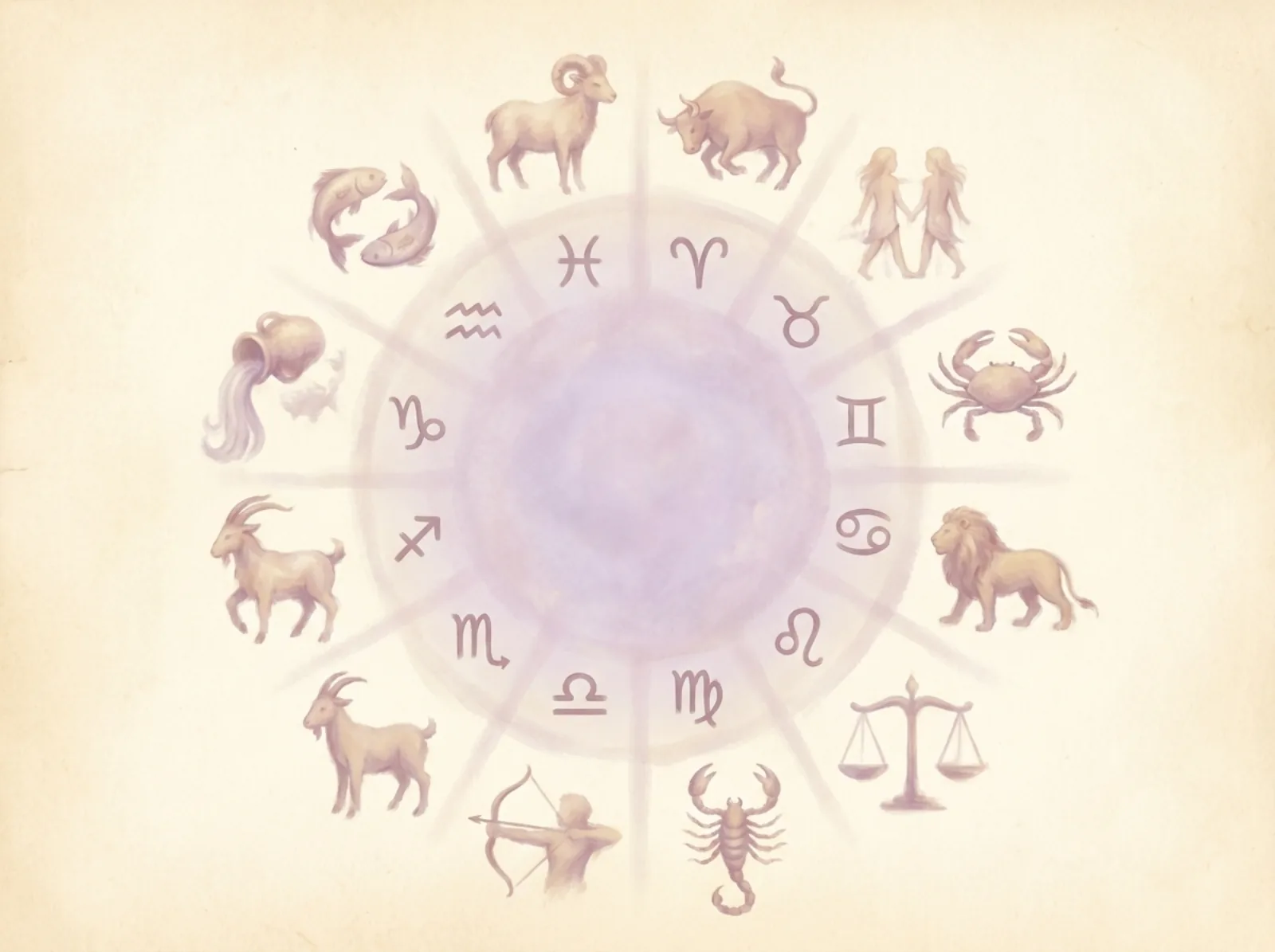
What Uranus Actually Is (and Why This Transit Was Different)
Before we get into Taurus, let's clear up Uranus. In natal astrology Uranus is the planet of rupture, invention, liberation, and awakening — the thing that shows up when a system has calcified past repair and needs a lightning bolt. It is the planet of the sudden exit, the breakthrough idea, the overnight pivot, the unexpected diagnosis, the technology that was unimaginable a decade earlier and is boring now. Part of our complete astrology reference.
Uranus takes about 84 years to loop the zodiac, which means it spends roughly seven years in each sign. Unlike your personal placements — Sun, Moon, Mercury, Venus, Mars — Uranus is generational. Everyone born within a seven-year window shares a Uranus sign, so what you share with your peers is less about personality and more about what you came in to disrupt collectively.
When Uranus changes signs, the thing it was shaking stops shaking and a new thing starts. From 2010 to 2018, Uranus was in Aries, and the collective electricity went into identity, selfhood, startups-as-personality, and the age of the personal brand. In 2018 it moved into Taurus, and the lightning turned toward what Taurus rules: money, land, bodies, food, security, and the physical world. See our best natal chart app guide.
Why outer-planet transits hit different
Outer planets — Uranus, Neptune, Pluto — do not care about your weekly horoscope. They are weather fronts. You cannot beat Uranus any more than you can beat a season. What you can do is notice what it is loosening and decide what you want to let go of before it is pried from your hands. That is the actual value of tracking an outer-planet transit: not prediction, but preparation. Everything else in this article is in service of that one idea.
Uranus in Taurus Dates and Historical Precedent
Here are the actual dates for this transit, since you will see a dozen slightly wrong versions floating around online:
- May 15, 2018: Uranus enters Taurus for the first time.
- November 6, 2018: Retrogrades back into Aries for a few months.
- March 6, 2019: Re-enters Taurus for the long haul.
- July 7, 2025: Enters Gemini, giving us a first taste of the next era.
- November 7, 2025: Retrogrades back into Taurus for a final 20-week integration window.
- April 25, 2026: Leaves Taurus for good and settles into Gemini until 2033.
The last time Uranus was in Taurus was 1934 to 1942. The time before that, 1850 to 1859. The time before that, 1766 to 1775. Three of those windows are instructive.
What the last three cycles actually did
1934 to 1942 was the back half of the Great Depression and the run-up to World War II. The gold standard was redone — FDR's Executive Order 6102 came in 1933, the Gold Reserve Act revalued gold overnight in 1934 — Social Security was invented, agriculture mechanized, and the entire relationship between citizens, governments, and money was renegotiated. Food rationing. Land redistribution. New forms of currency. Sound a little familiar?
1850 to 1859 covered the tail end of the California gold rush, the Panic of 1857 (the first truly global financial panic), the birth of industrial-scale railroads, and massive land seizures across the American West. Again: money, land, and bodies.
1766 to 1775 was the pre-revolutionary tension around taxation, trade, and ownership. The Boston Tea Party is literally a Uranus-in-Taurus story — embodied protest about the price of a crop. So when astrologers in early 2018 said this was about to be a strange seven years for money and the body, they had receipts.
What Uranus in Taurus Meant for the Collective
Taurus is the sign of the body, the earth, the bank account, the garden, the dinner plate, the five senses. It is also the sign most committed to things staying the same. Uranus does not do staying the same. The entire seven-year transit was a slow-motion collision between security as we knew it and security as it was being forced to become.
Look at what actually happened between 2018 and 2026:
- Money got weird. Crypto went from fringe to institutional to ETF to meme and back again. Central banks launched digital currencies. Cash started disappearing. Bank runs that used to take weeks took hours on Twitter.
- Food got political. Plant-based alternatives, lab-grown meat, GLP-1 drugs reshaping the food industry, grocery inflation, local supply chains, and a global reckoning with industrial agriculture.
- Bodies got sovereign. Roe v. Wade overturned in 2022. Trans rights, bodily autonomy, hormonal medication, biohacking, and the weight-loss injections all forced a public argument about who owns your body.
- Land got expensive. Remote work emptied cities and inflated small towns. Climate migration began in earnest. The housing crisis went from a problem to the problem.
- Value itself got questioned. What is a brand worth, what is a job worth, what is an hour worth, what is a dollar worth, what is beauty worth. Taurus questions, every one.
You can disagree with how any of these shook out. What is harder to disagree with is that they shook out at the same time and in a Taurean register. That is what outer-planet transits do: they rhyme. The content varies, the themes do not.
Sector by Sector: Technology, Politics, Economy, Culture, Relationships
Technology
Uranus in Taurus poured its rupture energy into fintech and biotech. Buy-now-pay-later. Stablecoins. Open banking. CRISPR. Continuous glucose monitors on healthy people. Wearables that measure sleep, heart rate, breath, nervous-system variability. The GLP-1 drugs. The common thread is that technology moved out of the screen and into the body and the wallet.
Politics
Politics inherited the Taurean obsession with borders, resources, and ownership. Supply-chain nationalism. Energy independence as a security question. Food sovereignty movements. Trade wars over semiconductors (silicon is literally sand, which is literally Taurus). The populist parties that surged between 2018 and 2026 almost all ran on some version of "we are being bodily and economically replaced."
Economy
Inflation returned after a 40-year nap, interest rates spiked, housing seized, and a whole generation realized they would not own a home the way their parents did. The gig economy ate wage work. Pensions kept dying. The economy of 2026 is not the economy of 2018, and the delta is almost perfectly Uranus-in-Taurus-shaped.
Culture
Culturally we got embodiment. Pilates. Weightlifting for women. Mouth taping. Cold plunges. Clean-girl aesthetic. Lazy girl jobs. A whole slow-living movement that was really a Taurean push-back against the preceding Uranus-in-Aries era of hustle-and-brand. Even the backlash to all of this — anti-wellness, pro-pleasure, delulu culture — was still a conversation happening at the altar of the body.
Relationships
Relationship patterns followed the money. Prenups among millennials. Open relationships going mainstream. The soft-launch, hard-launch, soft-breakup choreography. Dating apps charging monthly. Marriage rates sliding. Divorce rates among women over 55 climbing. Taurus rules what you keep, and under Uranus a lot of us stopped keeping relationships that did not pay rent in the body.
Uranus in Taurus by Sun Sign
Outer-planet transits land differently depending on which house of your chart Taurus occupies. For a quick read, here is what the transit tended to shake for each sun sign. Risings and moons will adjust the specifics, but the house themes stay.
Aries, Taurus, Gemini, Cancer
- Aries — Second house of income, possessions, and self-worth. If you dramatically changed how you earn or what you own since 2018, this is where the lightning struck. Many Aries exited salaried work this cycle.
- Taurus — First house. The body, identity, appearance. Taurus suns went through dramatic physical and identity shifts: weight, style, name, pronouns, haircuts, surgery, sobriety. The mirror itself changed.
- Gemini — Twelfth house of the subconscious, dissolution, hidden things. Many Geminis spent this cycle in therapy, grief, estrangement, or spiritual retreat. The outside world looked quiet; the inner world was lit up.
- Cancer — Eleventh house of friends, networks, future. Your community got rebuilt. Group chats that saved your life, old friends you lost, new ones in unexpected places.
Leo, Virgo, Libra, Scorpio
- Leo — Tenth house of career and public standing. Many Leos pivoted careers, became known for something unexpected, or left the industry they thought they would retire in.
- Virgo — Ninth house of education, publishing, worldview. Virgos either got radicalized, got religious, got educated, or got out of a worldview that had stopped working. Also an enormous amount of unplanned international moves.
- Libra — Eighth house of shared money, intimacy, death. The hardest house for a Uranus transit, honestly. Inheritance, debt, divorce settlements, sex, big medical bills — the eighth-house menu came for a lot of Libras.
- Scorpio — Seventh house of partnerships, opposite your sun. Scorpios saw partners leave, partners arrive, partners transform. Marriages ended, marriages began, business partnerships flipped overnight.
Sagittarius, Capricorn, Aquarius, Pisces
- Sagittarius — Sixth house of work, health, daily routine. The sign that most hates routine spent seven years having its routine rebuilt. New diagnoses, new medications, new fitness, new jobs.
- Capricorn — Fifth house of pleasure, creativity, children. Many Capricorns surprised themselves by becoming parents, becoming artists, or finally learning to enjoy their own lives.
- Aquarius — Fourth house of home, roots, family. The home itself moved. Aquarians emigrated, bought, lost, inherited, rebuilt, or returned home in ways that were not on the plan.
- Pisces — Third house of mind, writing, siblings, local life. A lot of Pisces discovered they had an ADHD or autism diagnosis in this cycle. The way the Piscean mind actually works got named.
Natal Uranus in Taurus: The 1934 to 1942 Generation
If you were born between May 1934 and May 1942, you have natal Uranus in Taurus — meaning the whole 2018 to 2026 transit was your Uranus return. (Uranus takes 84 years to come back.) That return hit a cohort currently in their mid-80s to early 90s, and it was not subtle.
Culturally, the Uranus-in-Taurus generation grew up during food rationing, the Depression, and the war. Their foundational experience of money and the body was scarcity transformed by state intervention. They were the first generation to receive Social Security as a given, the first to normalize mass vaccination, and the first to watch television rewire the family dinner.
The core traits of this natal placement, when it shows up strongly in a chart:
- Unconventional relationship to money. Either radical savers or radical spenders, rarely in between. Often self-made.
- Rebellious about the body. This is the generation that invented the modern diet industry, the pill, rock and roll, and most of the body-based countercultures.
- Loyal to systems, but on their own terms. Taurus wants stability; Uranus wants to break systems. The combination tends to produce reformers rather than revolutionaries.
- Late-life pivots. Many have reinvented themselves in their 70s and 80s, a classic Uranus return signature.
If a parent or grandparent of yours falls in this window and has lately done something wildly out of character — moved countries, left a marriage, started a company, come out, picked up a new religion — that is their Uranus return talking. Treat it as a feature, not a bug. People sometimes come back to who they were before adulthood smoothed them out, and this is one of the windows that invites it.
How to Work With the Tail End Personally
Because Uranus retrograded back into Taurus from November 2025 to April 2026, we are inside the final chapter of this transit as I write this. A few practical, non-woo ways to use it:
- Audit what you own. Not just money. Clothes, books, kitchenware, old grudges, screenshots. Taurus is about keep what nourishes you, release what doesn't. Uranus is the push to actually do it.
- Reread your 2018 self. Pull old journals, old photos, old bank statements, old group chats. What did you think security meant then? What does it mean now? The delta is the transit.
- Pick one body habit to install permanently. Not resolve. Install. Taurus is the sign of habit; Uranus wants the habit on your own terms, not inherited from a parent or a protocol.
- Notice what you still panic-grip. Whatever you cannot imagine losing is almost certainly the thing Uranus wants you to loosen your hands around.
This is where I usually recommend journaling, and specifically a prompt-based practice. I use Raka myself — it's the AI companion app I write astrology notes for. The questions it asks about an outer-planet transit are not "will I become rich" but "what did this transit teach me about what I actually need?" That is the right question. You are not trying to beat the weather; you are trying to notice how you dress for it.
Red Herrings: What Uranus in Taurus Did Not Do
Because every doomer corner of the internet has had a field day with this transit, let me be clear about what Uranus in Taurus did not do:
- It did not end the dollar. It stressed it. Those are not the same thing.
- It did not make crypto replace money. It made crypto a legitimate asset class. Big difference.
- It did not force you to buy land in Portugal. If you did, that is on you.
- It did not predict the specific wars, pandemics, or elections of this period. Astrology is not a news feed. The transit creates conditions; humans fill in the content.
- It did not tell you what to eat. Nothing told you to live on bone broth and nothing told you to live on soy. Those are your choices.
If someone sold you a hard prediction built on this transit — "the economy will collapse in October," "Bitcoin will hit a specific number on a specific date," "you personally will meet your soulmate in a grocery store because Venus" — they are selling you the astrological equivalent of a weight-loss tea. The transit describes a weather pattern. It does not forecast tomorrow's rain, and nobody writing in good faith will pretend otherwise.
Famous People Born With Natal Uranus in Taurus
Celebrity examples make this placement feel less abstract. These are all real people with natal Uranus in Taurus, pulled from public birth data:
- Elvis Presley (January 8, 1935) — rewrote what the body on a stage could do, and what music was allowed to look like. Textbook Uranus-in-Taurus: embodied rupture of a sound industry.
- Carl Sagan (November 9, 1934) — made science mainstream by giving it a body, a voice, and a sense of wonder. He physicalized what had been abstract.
- Jane Goodall (April 3, 1934) — rewrote the ethics of how we relate to other species. Taurus's exact territory, broken open from the inside.
- Francis Ford Coppola (April 7, 1939) — redefined what a film could physically be, and then left Hollywood to grow grapes and make his own wine on a Napa estate. Few things are more Uranus-in-Taurus than that pivot.
- Morgan Freeman (June 1, 1937) — became famous late in life, which is a classic Uranus-return pattern, and now owns a 124-acre honey bee ranch in Mississippi. Land, body, late reinvention.
Notice the pattern. Every one of them changed something physical about how their field worked, and most of them did a second act centered on the body or the land. That combination is a natal Uranus-in-Taurus signature.
Timeline: Key Dates Across the Transit
If you want to map the last seven years back to your own life, here are the major Uranus-in-Taurus beats worth pulling up in your calendar:
- May 2018: First ingress. The first big crypto bull-run reset. The Cambridge Analytica scandal and the first mainstream "wait, who owns my data" moment.
- March 2019: Final ingress into Taurus. Deep settling-in.
- March 2020: COVID-19 lockdowns, which were almost perfectly Uranus-in-Taurus shaped — the entire planet forced to renegotiate the body, food, and money inside a single month.
- April 2022: Jupiter conjoins Uranus in Taurus. Crypto peak, housing peak, the "everything bubble" at its loudest.
- Summer 2022: Roe v. Wade overturned. The Taurean body question went legal in the United States.
- 2023: GLP-1 drugs hit mainstream prescription. The food and beverage industry starts a quiet panic.
- April 2024: Jupiter conjoins Uranus in Taurus a second time (different degree). Second financial inflection point.
- July 7, 2025: First Gemini ingress. The conversation starts moving from the body to the mind.
- November 7, 2025: Retrograde back into Taurus. A final 20-week integration window.
- April 25, 2026: Uranus leaves Taurus for 84 years and settles into Gemini. The next sign picks up the lightning rod and runs with information, speech, and transit instead of money, food, and body.
If you want a practical closing exercise, pick three of those dates and write down what shifted in your own life inside the following month. That is not horoscope — that is pattern recognition, and it is honestly the only thing an outer-planet transit is really good for.
Frequently asked questions
Does Uranus in Taurus affect everyone or just Taurus signs?
Everyone. Uranus is a generational outer planet, which means its sign shift creates collective weather for seven to eight years. Taurus suns, Taurus risings, and anyone with personal planets in Taurus feel it most directly in a visible, biographical way, but the collective themes — money, body, food, land, what you own, what you consume, what you call stable — show up somewhere in every chart. The sign tells you the subject matter; your own chart tells you the room it furnished.
When did Uranus leave Taurus for good?
April 25, 2026. Uranus first entered Gemini in July 2025, retrograded back into Taurus from November 7, 2025, and made its final ingress into Gemini on April 25, 2026. It will not be back in Taurus until the next 84-year loop, so the transit as a lived experience is now in the rear-view mirror. The next few years will keep echoing what it set up, but the lightning has moved on to a different sign.
Should I make financial decisions based on Uranus in Taurus?
No. Astrology is a mirror, not a trading desk, and anyone promising specific market calls based on a seven-year transit is selling, not analyzing. The useful application is self-knowledge — noticing your own relationship with money, where you hoard, where you panic, where you pretend. For actual financial decisions, talk to a licensed advisor. Raka, and this article, are reflection tools, not investment advice.
Is Uranus in Gemini going to feel better or worse than Uranus in Taurus?
Different, not better or worse. Gemini rules information, speech, siblings, short travel, and nervous systems. Expect the next seven years to disrupt media, education, communication platforms, language itself, and the AI tools we are only beginning to reckon with. It will not feel physically grinding the way Taurus did. It will feel mentally electric, which has its own exhaustion. The subject matter changes; the intensity carries over.
I was born with natal Uranus in Taurus. Is my Uranus return happening now?
If you were born between May 1934 and May 1942 you have natal Uranus in Taurus, and your Uranus return has been running from 2018 and finishes in April 2026. If you are in your mid-80s to early 90s and feel like life is doing a full remix — new convictions, new relationships, new living arrangements, new names for old things — that is why. It is a known reinvention window, well documented in astrological literature as a late-life rupture that often brings people back to who they were before adulthood smoothed them out.
Does this transit mean the economy will crash?
No transit means a crash. The 2018 to 2026 window has included real financial stress — inflation, housing seizures, bank failures, currency experiments — but outer-planet transits create conditions, not events. Humans fill in the content. The economy of 2026 is restructured, not destroyed, and anyone selling you a specific crash date tied to a specific planetary movement is making it up. Pattern, not prophecy, is the right frame.
Can I use Raka to work through my own Uranus in Taurus pattern?
Yes, that is honestly what Raka is for. The practice I recommend is to pick one of the dates in the timeline above, ask the app to prompt you on what shifted for you in that month, and keep notes. Over time you build a personal map of how the transit landed in your life. The app is a reflection tool, not a prediction engine, and that distinction matters. It helps you notice patterns in your own life; it does not forecast anyone's future.