What Black Moon Lilith actually is (and isn't)
Here is the first thing to swallow before any of the mythology makes sense: there is no rock named Lilith circling us. The Moon's orbit around Earth is an ellipse, not a circle, and an ellipse has two focal points. Earth sits at one focus. The other focus is empty space — and that empty point is what astrologers call Black Moon Lilith. Part of our complete astrology reference.
She is, in the most literal sense, an absence. Which is already poetic for a point meant to represent what we don't look at.
Mean versus True Black Moon Lilith
Because the Moon's orbit wobbles, that empty focus wobbles with it. So there are two ways to calculate the point:
- Mean Black Moon Lilith — a smoothed-out, averaged position. This is what most apps and websites (and Raka) default to.
- True or osculating Black Moon Lilith — the actual wobbling position, which can shift signs several times in a single year.
If you plug your birth data into Astro.com, 'h13' is mean Lilith and 'h21' is true Lilith. They can land in different signs. Most practitioners I trust default to the mean position because it's steadier and the symbolism holds across the whole chart; the true position is where you go for nuance when the two land close to a sign boundary or when the mean reading just doesn't fit. See our best natal chart app guide.
The other Liliths you'll run into
- Dark Moon Lilith (Waldemath) — a hypothetical second moon proposed in the 1800s. Modern astronomy has confirmed it does not exist. Some astrologers still reference it as a 'dust point.' I don't use it.
- Asteroid Lilith (1181) — an actual asteroid, discovered in 1927. It was named after the French composer Lili Boulanger, not the demoness. It picks up some of the mythic weight but has a quieter, more personal flavor than Black Moon Lilith.
When somebody says 'my Lilith is in Scorpio' with no further detail, assume they mean mean Black Moon Lilith. That's the default across most popular tools, including the one most AI astrology apps have under the hood.
The myth: from Sumerian storm demon to Jewish folklore
Lilith's story is older than it looks. The name likely traces back to the Sumerian lilitu, a class of storm-wind spirits associated with the night and with the wild places outside the city walls. From there she migrates through Babylonian and Assyrian texts, picking up associations with uncontrolled female sexuality and lost children along the way.
The version most Western astrologers reference comes from medieval Jewish folklore — specifically a satirical text called the Alphabet of Ben Sira, written sometime between the 8th and 10th centuries. In that account, Lilith is created from the same earth as Adam, at the same moment, as his equal. The marriage falls apart over a position dispute: she refuses to lie beneath him, says the name of God, and flies out of Eden on her own power.
What happens next depends on who's telling the story. In the folkloric tradition she becomes a demoness who harms newborns and seduces sleeping men — the kind of villainization that tends to follow women who leave on their own terms. In modern feminist and reclamation readings, that same exile reads as self-authorship. She didn't lose paradise. She refused the terms.
Astrologically, this is what the point carries: the place where you were asked to make yourself smaller, and either chose not to or did and have been quietly furious about it ever since. Both are Lilith. The myth is the same either way; the question is which chapter you're currently living in.
If this already feels charged, that's the right response. The material is charged. The job of the astrologer — and of any journaling practice around Lilith — is to hold the charge long enough to see what's actually inside it, instead of pushing it back down.
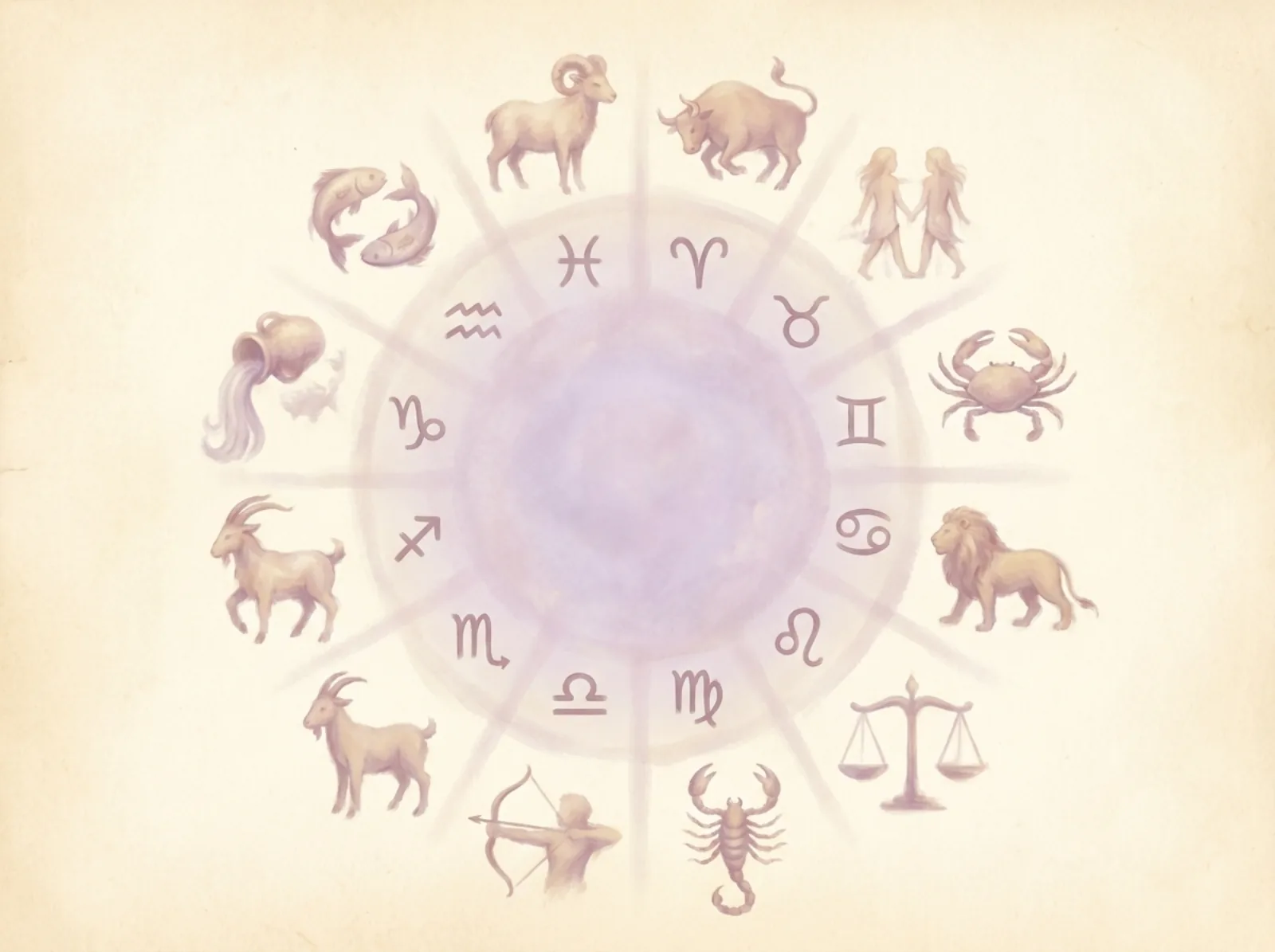
Black Moon Lilith through the twelve signs
Sign colors the style of your Lilith — the flavor of what gets exiled and what gets reclaimed. Keep in mind these are themes to sit with, not sentences handed down. The point of a Lilith reading is to find the one that makes you flinch in recognition.
- Lilith in Aries — anger as the thing you weren't allowed to show. Reclamation looks like clean, direct anger instead of simmering apology.
- Lilith in Taurus — body, pleasure, and resources as the exiled zone. Reclamation is slow, embodied enjoyment without having to earn it.
- Lilith in Gemini — your actual voice got edited. Reclamation is saying the thing without softening it into a question.
- Lilith in Cancer — your needs were 'too much.' Reclamation is asking without the apology attached.
- Lilith in Leo — visible wanting was shamed. Reclamation is taking the stage without pretending you don't want it.
- Lilith in Virgo — your competence was weaponized against you. Reclamation is refusing to be useful on cue.
- Lilith in Libra — niceness as a cage. Reclamation is losing people's approval and surviving it.
- Lilith in Scorpio — sex, grief, and intensity got labeled dangerous. Reclamation is letting depth stay depth.
- Lilith in Sagittarius — your beliefs got silenced to keep the peace. Reclamation is naming your actual worldview out loud.
- Lilith in Capricorn — ambition in your assigned role looked threatening. Reclamation is taking authority without flinching.
- Lilith in Aquarius — your refusal to belong got pathologized. Reclamation is being odd on purpose.
- Lilith in Pisces — your sensitivity was called weakness. Reclamation is letting the water in without drowning.
If more than one of these feels painfully specific, you're probably reading your Lilith sign and the sign on your Lilith's house cusp. That overlap is normal and the two will usually rhyme.
Black Moon Lilith through the twelve houses
If sign tells you the texture of your Lilith, house tells you the arena. This is where the pattern plays out in your actual life — the room in the house of your biography where she keeps the lights off.
- 1st house — your face, your body, your presence. People read you as 'a lot' before you've done anything.
- 2nd house — money, worth, and body as asset. Shame around wanting more or being paid fairly.
- 3rd house — speech, siblings, early schooling. You learned early that your voice was dangerous.
- 4th house — family of origin. The exile started at home, often with one specific parent.
- 5th house — pleasure, play, sex, creativity, children. Your delight is where the shadow lives.
- 6th house — work, service, health routines. Overgiving and under-receiving as default setting.
- 7th house — one-to-one partnership. You attract (or become) the person other people exile.
- 8th house — intimacy, death, shared resources. Classic placement; everything taboo lives here already.
- 9th house — belief, higher education, travel. You were told your worldview was wrong before you'd finished forming it.
- 10th house — career and public role. The world sees your Lilith whether you want it to or not.
- 11th house — friendships, groups, chosen family. Collective dynamics push your exile button hard.
- 12th house — the unconscious. You may not even know what you've buried until midlife, and that's not a failure, it's the placement doing its job.
If you don't know your birth time, you can't be sure of your Lilith house. Read the sign first, make peace with that reading, and come back to the house question later when you've got a reliable time.
What Lilith reveals about repressed power
I've been reading charts long enough to notice something: when a client tells me 'I don't know what my gift is, but I know what my shame is,' those two things are usually the same thing. That is Lilith's whole job. She is the hinge where the hidden thing becomes the useful thing, if you're willing to look at it directly.
Here is how I actually use the placement in a reading. Three lenses:
1. The permission that was never granted
Lilith names the specific permission you weren't given growing up. Permission to be angry. Permission to be sexual. Permission to want visibility. Permission to leave. Permission to need things. Whatever shape it takes, the sign and house pair it with a theme you can actually point at. The naming itself is often half the work.
2. The thing you overcompensate around
You can usually tell where someone's Lilith sits by what they insist they are not. 'I'm not an angry person.' 'I'm not materialistic.' 'I'm not needy.' 'I don't care what people think.' The emphatic denial is often a Lilith tell. Not always — but often enough to listen for it, especially when the denial is louder than the question deserved.
3. The authority you're being invited to reclaim
This is where I think most popular writing on Lilith goes wrong. She isn't just a wound. The reclamation side is real, and often it's the main story once you're out of your twenties. The person who grew up being told their anger was ugly tends to become, in adulthood, extremely good at knowing when something is actually wrong. The person whose sexuality got labeled dangerous often develops a lie-detector for consent and bad faith. The person whose ambition was pathologized often ends up building the thing. The exile sharpens something — the question is whether you ever get to use the sharp edge, or whether you keep it hidden in a drawer for the rest of your life.
If you want to see what your own Lilith is pointing at, open a journal — paper or in Raka — and finish this sentence without editing: 'The version of me I was told was too much is actually the version that...' Keep writing until you surprise yourself. Three paragraphs minimum. The first two will be the surface answer. The real one shows up around sentence seven.
Celebrity Lilith placements worth looking at
Celebrity astrology is dicey because birth times are often estimated and chart data gets copied wrong across websites. I'm sticking to placements where the sign is stable across the day of birth regardless of time, so even an uncertain birth time doesn't move the sign. Treat these as case studies in how a Lilith theme reads in public — not psychoanalysis of real people, who are more than their charts.
- Beyoncé — Black Moon Lilith in Taurus. Taurus Lilith is embodied, sensual, slow, and refuses to be rushed. The entire Lemonade and Renaissance arc — explicit ownership of her image, her body, her masters, her timeline — reads as a Taurus Lilith reclamation project playing out in public, with a side order of 'you will wait for the album until I decide it is finished.'
- Madonna — Black Moon Lilith in Scorpio. Scorpio Lilith is sex, taboo, and power concentrated into a single beam. An entire career spent weaponizing exactly the material women her age were told to retire from. The 'Sex' book in 1992 is a Scorpio-Lilith document whether she'd call it that or not.
- Lady Gaga — Black Moon Lilith in Capricorn. Capricorn Lilith is ambition without apology. Her early-career interviews — the 'I will be famous, say it louder' material — are textbook Capricorn Lilith refusing the 'sit down and wait your turn' script that gets handed to young women trying to build something.
- Rihanna — Black Moon Lilith in Pisces. Pisces Lilith blurs the line between sensitivity and defiance. Her refusal to be legible on a predictable release schedule — the long silences between albums while she builds other empires on her own terms — is a Pisces Lilith move. She disappears, and then she doesn't.
- Taylor Swift — Black Moon Lilith in Cancer. Cancer Lilith is 'my needs were too much.' The entire re-recordings project, taking back the masters song by song, is a Cancer-Lilith reclamation: going back to the home that was taken and claiming the deed.
You'll see other sources list different placements for the same people. Usually that's the mean-versus-true distinction, or an uncertain birth time pushing Lilith across a sign cusp. When in doubt, pull their chart yourself on Astro.com with 12:00 noon as the fallback time and look at both the mean and true positions.
How to actually work with your Lilith placement
You cannot 'fix' Lilith. She is not a wound to close. She is a point you integrate — which usually looks less like a breakthrough and more like slowly refusing to flinch at your own real preferences. The work is quiet, repetitive, and far less dramatic than the astrology internet makes it sound.
Four things that actually move the needle
- Name the exile out loud. Write down the specific sentence you were told, or absorbed, about this part of yourself. 'Women in my family don't ask for things.' 'Smart girls aren't attractive.' 'If I want it that badly I shouldn't have it.' 'Nobody likes a show-off.' Specificity breaks the spell. Vague affirmations don't.
- Find the sharpened edge. What skill, instinct, or sensitivity did you develop because this part of you got exiled? That edge is real. It is yours. It is the gift that came out of the wound, and keeping it is non-negotiable. Lilith integration is not about becoming a person who was never exiled — it's about becoming a person who can finally use what the exile taught them.
- Practice taking up slightly more space than feels safe. Not a leap. A notch. Say the thing in the meeting. Charge the full rate. Ask for the thing you were going to pretend not to want. Lilith integration is incremental, and the increments are tiny on purpose, because small risks you can actually survive teach the nervous system more than big ones you can't.
- Journal the transits. When transiting Sun, Moon, Venus, or Mars crosses your natal Lilith, the material gets loud. Note what shows up on those days — the memory that surfaces, the person who annoys you more than they should, the sudden craving — and you'll see a pattern inside three months.
I'll add the obvious: none of this is therapy, and Lilith placements that connect to real trauma deserve an actual trained human, not an app, not an article, not an astrologer. Raka is a reflection and journaling companion. It's good at the pattern-noticing, the prompt-asking, the keeping-track-across-months part. It is not a therapist, and I would never pretend it is. If this material opens something that needs real care, go get real care.
Lilith in synastry: the shadow pull in relationships
Synastry is the practice of laying two charts on top of each other to see how they interact. Lilith in synastry is one of the most magnetic — and most frequently misread — contacts in the whole system, and the misreadings tend to cause real damage because they get used to justify staying somewhere you shouldn't.
When your Lilith touches another person's planet (within about three degrees for the tight stuff, five for the looser version), you tend to activate the exiled material in them, and they tend to activate it in you. That activation can read as 'finally, someone sees this part of me.' It can also read as 'this person keeps hitting my shame button on purpose.' Often both, from the same contact, on different days of the same week.
The common Lilith aspects to watch
- Lilith conjunct Sun — their core identity rhymes with your exile theme. Potent, often unsettling, and usually mutual.
- Lilith conjunct Moon — the emotional pull is immediate. Also the aspect where projection runs hottest; you can mistake 'they feel like home' for 'they feel like my unresolved mother.'
- Lilith conjunct Venus — the 'I shouldn't want this and I absolutely do' aspect. Classic affair chemistry, also classic 'we're finally honest about desire' chemistry. Context decides which.
- Lilith conjunct Mars — sexual charge and conflict charge, often indistinguishable in the early months. Fights that turn into sex, sex that turns into fights.
- Lilith conjunct Ascendant — you walk in reading like their exile made flesh. Instant recognition, instant risk, instant 'where have you been my whole life' before either of you has done anything to earn that line.
I want to be careful here, because Lilith synastry gets used to justify a lot of things it shouldn't justify. A hot Lilith aspect does not mean the relationship is destined, karmic, inescapable, or safe. It means the material is live. What you do with it is a separate question — and that question is almost always about your own integration work, not theirs.
If you're in a Lilith-heavy connection and you can't tell whether it's chemistry or compulsion, the honest test is simple: outside the intensity, do you like how you behave in this relationship? Do you recognize yourself? Lilith integrated feels like becoming more yourself in the connection. Lilith unexamined feels like disappearing into it, over and over, with a different story each time about why this one is different.
Frequently asked questions
Is Lilith a real planet, or just made up?
Neither, honestly. Black Moon Lilith isn't a physical body — it's the empty focus of the Moon's elliptical orbit around Earth, a geometric point calculated the same way for every chart. It's as real as any other mathematical point in astrology, which is to say: as symbolically useful as you let it be. The Dark Moon (Waldemath) was a proposed second moon that doesn't actually exist. Asteroid Lilith (1181) is a real rock, discovered in 1927, but it carries a different flavor of symbolism than Black Moon Lilith and most popular astrology writing isn't using it when they say 'Lilith.'
What's the difference between Mean and True Black Moon Lilith?
The Moon's orbit wobbles, so the empty focus wobbles with it. Mean Lilith is a smoothed, averaged position — slow-moving and stable. True (or osculating) Lilith tracks the actual wobble and can shift signs several times in a single year. Most apps and websites default to mean, which is the version I usually read from. If your two Liliths land in different signs, pull both and see which one actually describes your lived experience better. One will usually feel truer than the other.
Is Lilith inherently negative or 'dark'?
No, and the framing is the problem. Lilith marks the place you were told to make yourself smaller — the material itself (your anger, your sexuality, your ambition, your voice, whatever shape it takes in your chart) isn't negative. What was done to it was. Reading Lilith as a purely 'dark' placement usually just repeats the exile under new vocabulary. I read her as the point of reclaimed authority, and the shadow language only makes sense once you understand that the shadow is cast by something that was originally light.
How do I find my Lilith placement?
Any serious free chart site will plot her. On Astro.com, mean Lilith is labeled 'Lilith' or 'h13' and true Lilith is 'h21.' Cafe Astrology, the AstroTwins' chart tool at astrostyle.com, and Chani Nicholas's chart calculator all show her by default. You need an accurate birth date; birth time helps for the house placement but isn't required for the sign. If you don't know your birth time, read Lilith by sign and leave the house question open until you can get the time from a parent, birth certificate, or hospital record.
Does Lilith by transit matter?
Transiting mean Lilith moves slowly — about nine months per sign — and personally I don't track it the way I track inner-planet transits. What I do track is when transiting Sun, Moon, Venus, or Mars crosses your natal Lilith point. Those are the days the material gets loud: a conversation triggers you harder than it should, a memory surfaces, you suddenly notice a pattern you've been ignoring for years. Journal those days. You'll see a pattern inside three months.
Is Lilith only relevant for women?
No. Lilith is a point about exiled power and shamed desire, and every human has material there regardless of gender. The myth is coded female because the culture that produced it coded refusal-of-submission as a female transgression, but the astrological point reads for everyone. In charts of men I read, Lilith tends to show up around permission to feel, permission to want, permission to be sensitive without losing status, and permission to want things that the version of masculinity they were handed didn't make room for.
Can my Lilith placement change meaning as I get older?
The placement itself doesn't change — your relationship to it does. Most people I read find their Lilith theme gets noticeably louder in their late twenties, peaks in some form of reckoning in their thirties (often around a Saturn return or a major relationship ending), and softens into usable authority in their forties. The shadow doesn't go anywhere. It becomes something you can finally see without flinching, and eventually something you can point at in other people's lives with warmth instead of fear.