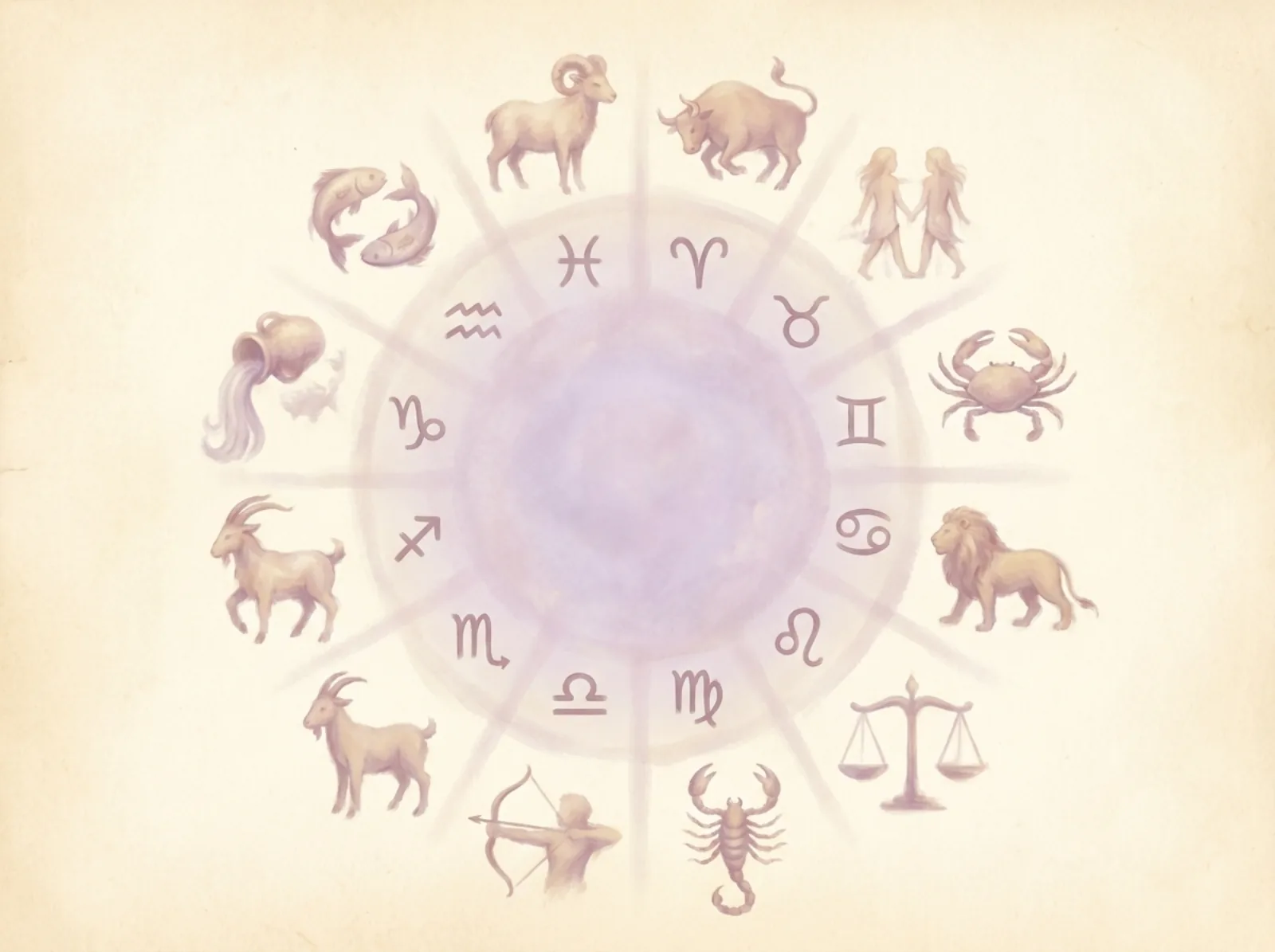
The Cancer Spirit Animal: Why the Crab Is Only the Beginning
The textbook answer is the crab. Specifically, in Greek myth, it's Karkinos — the giant crab Hera sent to help Hydra fight Heracles. Karkinos lost. Heracles crushed him. Hera, feeling bad, placed the crab among the stars as the constellation we now call Cancer. It is, I'll admit, one of the less heroic origin stories in the sky. The crab's whole claim to fame is dying for a cause and getting a consolation prize. But that's exactly the point, and it's where the symbolism gets interesting. Karkinos didn't win. He showed up anyway. He pinched a demigod's heel because loyalty to Hera mattered more than survival odds. If you've ever stayed loyal to someone past the point of logic — a family member, a friend, a cause, a version of yourself — the Karkinos myth is already resonating. Cancer isn't the sign of winning. It's the sign of showing up. I want to be clear about something before we go further. 'Spirit animal' is a phrase that gets thrown around loosely, and it means different things in different traditions. In Western astrology and modern pop spirituality, a zodiac spirit animal is a symbolic creature associated with your sign — a kind of archetypal mirror, closer to Carl Jung's idea of the inner animal than to anything ceremonial. That's how I'll be using it here. If you're from a tradition that uses 'spirit animal' in a sacred ritual sense, this article isn't about that, and I'll say more about why in the Native American zodiac section below. So, back to the crab. Why does astrology hand this specific creature to Cancer? Three reasons: it lives in water (Cancer is a water sign), it carries its home (Cancer rules the fourth house of home and family), and it has a hard shell protecting a soft inside (I don't need to spell that one out for any Cancer reading this). The crab is efficient symbolism. But it's not the only animal that fits, which is why the rest of this piece exists.Why the Crab Fits Cancer (and Where the Metaphor Breaks)
Let me say the obvious parts first, because they are genuinely true. The hard shell and soft body is a near-perfect metaphor for how most Cancers I know move through the world. There's an outer composure — sometimes a shyness, sometimes an edge — and a deeply felt interior that doesn't come out until you've been let in. Cancers test you. The shell exists for a reason. The 'carrying home with you' part is just as accurate. Hermit crabs famously relocate their shells, and even true crabs are deeply territorial about the burrows and nooks they occupy. Cancer rules the fourth house, which in astrology is home, family, roots, and the inner emotional world — not just the physical house you live in, but the sense of belonging you carry inside you. Cancers tend to make nests. Give a Cancer twenty minutes in a hotel room and there will be a candle, a book, a mug, and a scarf draped somewhere strategic. The ability to make anywhere feel like somewhere is deeply Cancerian. Then there's water. The crab lives at the edge of two worlds — ocean and land, conscious and subconscious. Cancers tend to live at a similar edge. They feel the undertow of a conversation. They clock the mood of a room before the host has stopped greeting them at the door. If you've ever been told you're 'too sensitive' by someone who should have been more sensitive, you understand the crab's amphibious intelligence. But — and I think this matters — the crab metaphor also has limits. Crabs walk sideways. Cancers, in my experience, don't actually avoid things sideways; they often go very directly toward what they care about, just quietly. Crabs also pinch, which is the pop-astrology version of the 'Cancer is passive-aggressive' stereotype, and I think that's lazy. A Cancer who has learned to use their emotional radar well isn't passive-aggressive; they're one of the clearest communicators in the zodiac. The crab's defensiveness, when it shows up, is a learned response, not a personality trait. If you're a Cancer who has done the work, your shell is a door, not a wall. The molting part is where it gets genuinely useful. Crabs grow by shedding their shell and spending a vulnerable period before the new one hardens. Cancers, if they're growing, do the same thing. There are stretches where you can't armor up because you're between selves. Those stretches are uncomfortable and important. The crab's whole life cycle says: you cannot grow and stay protected at the same time. You have to pick a stretch of soft.Five Secondary Spirit Animals That Resonate With Cancer Energy
Here's where I lose the pop-astrology framing a little, because in my years of reading cards for Cancer friends and clients, the crab is almost never the only animal that keeps surfacing. These five do, over and over. **1. The Moon-Howling Wolf.** This one surprises people because wolves are a cliché for lone-wolf aesthetics, but Cancers are not lone wolves — they are pack wolves. Wolves hunt, raise young, and travel in family units. They howl at the moon, which is Cancer's ruler. A Cancer who connects to wolf energy is usually someone with a tight inner circle they would absolutely bite someone for, metaphorically speaking. **2. The Otter.** Playful, deeply social, and almost entirely water-based. Otters hold hands while they sleep so they don't drift apart. If that doesn't describe the emotional attachment style of every Cancer I've ever read for, I don't know what will. The otter is the version of Cancer energy that is tender, mischievous, and family-first. **3. The Elephant.** Matriarchal, grieving, deeply memory-bound. Elephants mourn their dead and remember watering holes from decades ago. Cancers remember everything — the time you were kind, the time you weren't, who said what at Thanksgiving in 2019. Elephant energy is the version of Cancer that holds the family's emotional history, often without being asked. It can be heavy. Elephants are also fiercely protective of their young, which, again — the Cancer parent is a specific breed of lioness-in-mom-jeans. **4. The Turtle.** Grounded, slow, and self-contained. Turtles carry their home, which rhymes nicely with the crab, but turtle energy is less defensive and more patient. A Cancer with turtle energy is the one who outlasts the crisis, who doesn't react to the first provocation, who just keeps walking. If you are a Cancer whose friends describe you as 'the calm one,' you may be more turtle than crab. **5. The Owl.** Nocturnal, intuitive, watchful. Owls do not interrupt. They observe for a long time and then move precisely. Cancers who have refined their emotional intelligence often develop owl energy — the ability to read a situation deeply before saying anything at all. The owl is also linked to the moon in many mythologies, which keeps us circling back to Cancer's ruling body. These aren't fixed assignments. You don't pick one and stop. They are five mirrors, and most Cancers will see themselves in several at different seasons of life. The crab is the archetype you were handed; these are the archetypes you grow into.How Your Cancer Spirit Animal Shows Up in Dreams
I want to be careful here because dream interpretation is where woo-woo spirituality starts making medical and psychological claims it has no business making. I am not a sleep researcher, I am not a therapist, and your dreams are not predictions. What dreams *are*, well-documented in dozens of sleep studies, is your brain doing emotional housekeeping. Spirit-animal imagery in a dream is a useful journaling prompt, not an oracle. With that said, here is what Cancers consistently tell me they dream about. **Water.** Any kind. Ocean, lake, flooded hallway, bathtub overflowing, swimming without being able to see the bottom. The specific flavor of the water usually tracks with the specific flavor of the emotion. Calm water usually means you're integrating something peacefully. Turbulent water usually means there's something you haven't let yourself feel yet. **Hiding.** Cancers dream about shelters a lot — childhood homes, closets, caves, under tables, inside shells. If the shelter in the dream feels safe, it often means you're processing a need for rest. If the shelter feels like a trap, it's usually worth asking what in your waking life is starting to feel more like armor than protection. **Carrying something heavy.** This one is quietly common. Backpacks, suitcases, bags of groceries, infants, grief. Cancers tend to carry other people's emotional luggage without realizing it, and the dream version is often very literal. **Moonlight.** If you're dreaming of moonlit scenes — even if you're not noticing the moon directly — it's worth logging. The moon is Cancer's ruler, and lunar imagery in dreams often correlates with cycles of emotional release. **Animals specifically.** If a crab, wolf, elephant, otter, turtle, or owl shows up in a dream and sticks in your memory for more than a day, that's your sign to spend ten minutes journaling about it. Not because the animal is a messenger from some external realm. Because your brain picked that image out of thousands of possible images for a reason, and the reason is almost always something you already half-know. The journal is where the half-knowing becomes a sentence.Meditation and Journaling With Your Totem
This is the practical section. I'm not going to tell you to light a candle and visualize your crab spirit — well, I am, but I want to be honest about what that actually does, which is give your nervous system a cue to slow down enough to think clearly. The ritual is a container. The container matters, but it is not magic. Here's a meditation I use with Cancer friends who want to work with their totem. Sit somewhere you won't be interrupted for ten minutes. Hands on your thighs, feet on the floor. Close your eyes. Breathe in for four, out for six — longer exhales calm the vagus nerve, which is a boring scientific reason this works. Picture an animal that keeps showing up for you. Not the one astrology assigned you; the one that keeps appearing in dreams, media, conversations, random daydreams. Notice what it's doing. Notice what posture it's in. Notice whether it's looking at you. Now ask it, silently: 'What do I already know that I'm not letting myself admit?' Wait. The answer will come in a sentence or an image. Write it down. That's the entire practice. If you do it for seven consecutive days, you will have seven journal entries that, read in sequence, will tell you something true about where you are. I promise. I've watched it happen dozens of times. Journaling prompts, if you prefer paper to visualization: - When was the last time I felt genuinely safe? Who was there? - What am I protecting right now that doesn't actually need protecting? - Which of my shells is a door, and which is a wall? - If my spirit animal spoke to me today, what would it ask me to stop pretending about? - What's one feeling I've been carrying for someone else? Pick one. Write for ten minutes without editing — no crossing out, no censoring, no stopping to make it sound smart. You'll be surprised how often the crab, or the owl, or whichever one you're sitting with, has a very specific thing to say that you were going to miss on a normal Tuesday.When to Call on Your Animal Totem (and When to Just Call a Friend)
I want to make something clear: spirit-animal work is a reflection tool. It is extremely good at helping you figure out what you already feel and what you already know. It is not a substitute for therapy, medical care, or an honest conversation with a human being who loves you. Call on your totem when you need to slow down and listen to yourself. Call on your totem when you're facing a decision and you can't tell whether your hesitation is wisdom or fear. Call on your totem when something keeps nagging at you and you want a container for figuring out what it is. These are the uses that work, and they work well. Do not call on your totem instead of calling a therapist when you're in crisis. Do not call on your totem when a doctor has given you a treatment plan and you're looking for a reason not to follow it. Do not call on your totem when the real move is to pick up the phone and apologize to someone. Spirit animals are great at pointing at the door. They are not great at walking through it for you. The best spiritual tools I know — tarot included — are the ones that are honest about what they can and can't do. A card can show you a pattern. It cannot pay your rent. An owl can tell you to listen harder. It cannot make the person you're trying to listen to say the thing out loud. Your animal totem is a mirror. Mirrors are not substitutes for the real room.Cancer and the Chinese Zodiac: The Sheep/Goat Connection
Western and Chinese astrology are two different systems. Cancer is a Western sun-sign assigned by birthdate within one year, while the Chinese zodiac assigns an animal based on your birth year across a twelve-year cycle. They don't map onto each other one-to-one, which is why asking 'what's the Chinese version of Cancer?' is a slightly off question. But there is a correspondence that keeps coming up in syncretic astrology, and it's worth exploring. The Chinese zodiac animal most often paired with Cancer energy is the Sheep, sometimes called the Goat or Ram depending on translation — in Mandarin, the character 羊 (yáng) covers all three. Sheep in the Chinese tradition are considered gentle, artistic, deeply family-oriented, nurturing, sometimes anxious, and attuned to beauty. That is, functionally, a near-perfect transliteration of Western Cancer traits into another astrological language. The hours of the Sheep in Chinese astrology are 1 to 3 PM, which has no particular link to Cancer, but the broader personality mapping is uncanny. If you were born in a Sheep year — 1955, 1967, 1979, 1991, 2003, 2015 — and you're also a Western Cancer, there's a particular doubling-up of nurturer energy that most syncretic astrologers would read as a very strong water-and-earth emotional constitution. You feel things. You care for people. You probably also need a lot of quiet to recover. If you were born in a different Chinese year, don't panic. The system isn't additive the way some apps want you to believe. Your Chinese zodiac animal is its own portrait of you, not a modifier on your Western chart. I find it more useful to read them as two translations of the same person rather than as a composite score. One cultural note I want to make: the Chinese zodiac is a living tradition with deep roots in East Asian cultures. If you're borrowing from it for personal reflection, that's lovely — zodiac systems have always traveled — but it's worth reading one of the sources at the end of this piece to understand its actual origins before you start quoting it as if you grew up with it.Native American Zodiac: The Woodpecker — With Respect and Context
I'm going to be careful here, and I'd like you to be careful with me. If you Google 'Native American zodiac Cancer,' you will find a lot of articles that confidently tell you the Cancer equivalent is the Woodpecker. The Woodpecker, these articles say, is nurturing, protective, communicative, and resourceful. Which is lovely. Which is also, bluntly, not from any single Indigenous tradition. The 'Native American zodiac' that circulates online is a modern Western compilation, often attributed to twentieth-century authors who synthesized elements loosely inspired by various tribes. It is not a traditional system practiced by Indigenous peoples. There are more than five hundred federally recognized tribes in the United States alone, each with their own cosmologies, animal relationships, ceremonies, and spiritual practices. Treating them as one monolithic 'Native American zodiac' flattens all of that. So: if you want to resonate with the Woodpecker as a symbol — a bird that drums into bark to find what's hidden, that nests in hollows, that is deeply attached to its young — go for it as a reflective image. The Woodpecker is a beautiful animal to sit with. It fits Cancer energy well in that it is persistent, protective, and attuned to small sounds other animals miss. What I'd ask you not to do is call it your 'Native American spirit animal,' because that phrase borrows from a sacred relationship that is not ours. If you want to engage respectfully with Indigenous animal cosmology, the move is to read work by actual Indigenous authors, support Indigenous-led spiritual spaces, and not pretend the pop-astrology version is the real one. The Woodpecker, as a reflection prompt, is yours. The ceremonial frame around it is not, and it never was. That's the honest version. I'd rather lose a reader for saying it than let the easier version stand.Celebrity Cancers and the Animal Energies They Channel
I enjoy this part because it makes abstract ideas concrete, and also because celebrities are the one place pop astrology is pretty safe — we're just reading public personas, not making calls about real inner lives. **Tom Hanks (July 9, Cancer).** Elephant energy. The matriarchal, memory-keeping, deeply protective version of Cancer. Hanks's whole public persona is dad-protector, keeper of civic warmth, and someone who shows up for a cause and stays with it. If you want to see Cancer-elephant in action, read any interview where he talks about his family or his co-stars. It's loyalty as a worldview. **Meryl Streep (June 22, Cancer).** Owl energy. The watchful, deeply observant, says-less-than-she-knows version. Streep's acting is Cancer-owl: she listens on screen more than most actors speak. Her ability to be inside a character is partly technical, partly the kind of nervous-system calibration you get from a lifetime of noticing. **Ariana Grande (June 26, Cancer).** Crab energy, textbook. The hard shell / soft body combination is public in her case — the glossy pop persona wrapped around a deeply emotional interior, and the willingness to shed shells publicly (her sonic reinventions, her personal evolutions). Grande's career is essentially a series of molts. **Selena Gomez (July 22, Cancer-Leo cusp).** Otter energy. Playful, family-first, deeply social, publicly affectionate with her friends and family. The Cancer-cusp placement adds Leo warmth, which reads as the mischievous, group-hug otter rather than the solitary crab. **Lana Del Rey (June 21, Cancer-Gemini cusp).** Wolf energy, specifically the moon-howler. Her whole discography is lunar Cancer — nostalgia, yearning, water imagery, family mythology, the way she writes about love as if it's a tide. If you've ever played Norman Fucking Rockwell on a bad night, you've met a wolf howling at the moon. None of these are literal. All of these are useful. The exercise isn't to decide which celebrity you most resemble — it's to notice that Cancer energy has range, and that your version of it is yours.Journaling Your Spirit Animal With Raka — Honestly
I'll keep this short, because I don't love over-pitching the thing I built. Raka Tarot is a reflection app I made because I wanted a space that treated card readings and spiritual self-inquiry the way they deserve to be treated: as mirrors for self-understanding, not as prediction engines. You can pull cards for a specific question, journal the response, and come back to your reflections later in a format that reads like a diary rather than a feed. For spirit-animal work specifically, I use it in a very simple way. I pull a daily three-card spread, I pick whichever card most reminds me of an animal — some decks make this easy, like the Wild Unknown or the Spiritsong Tarot — and I journal to the animal rather than to the card. 'If I were the wolf in this card, what would I say to myself today?' You get surprisingly honest answers. The feature I'd point you to if you want to try this is the journaling prompt layer, which lets you save reflection questions tied to a specific card or theme. 'What is my shell protecting that no longer needs protection?' is one of mine. 'What do I remember today that my elephant self is still carrying?' is another. The app doesn't do the thinking for you. Nothing good does. But it holds the space, and the space turns out to matter. If you're a Cancer who already journals, you'll like it. If you're a Cancer who has been meaning to journal and keeps not starting, it might be the structure that gets you going. Either way, I built it for people who want to think about themselves honestly, not people who want to be told the future. A last word, since this piece is almost done. The Cancer spirit animal — crab, wolf, otter, elephant, turtle, owl, woodpecker, sheep, whichever one has made you nod while reading — is a mirror. Not a message from the cosmos. Not a prophecy. Not a reason to do or not do a thing in your real life. The crab did not choose you. You are choosing to see yourself in the crab, and that is actually a more interesting act than being chosen. Treat these symbols with respect. The ones that come from traditions you weren't raised in deserve more than a scroll-through. The ones from your own tradition deserve the same attention. And the ones you make up for yourself, the private totems your dreams keep handing you — those deserve to be written down. Whatever you do with this, do it with the softness and the shell. Both are yours.Frequently asked questions
What is the main spirit animal for Cancer zodiac?
In Western astrology, the primary spirit animal for Cancer is the crab, drawn from the Greek myth of Karkinos — the giant crab Hera placed among the stars as the Cancer constellation. The crab mirrors Cancer's hard-shell / soft-interior nature, its loyalty, and its deep connection to water and home. Many Cancers also resonate with secondary totems like the wolf, otter, elephant, turtle, or owl, each of which reflects a specific facet of Cancer energy — pack loyalty, playful nurturing, matriarchal memory, patient groundedness, and watchful intuition. Part of our astrology guide hub.
Can my Cancer spirit animal change over time?
Yes, and most people's do. A spirit animal is a reflection tool, not a fixed assignment. The crab might speak to you in your early twenties when you're building your first real boundaries, and then the owl might take over in your thirties when you're learning to listen before reacting. Pay attention to which animal keeps appearing in your dreams, journaling, and the random corners of your attention — that's usually the one your inner life is working with now.
Is a Cancer spirit animal the same as a totem or power animal?
In modern Western pop spirituality, the terms 'spirit animal,' 'totem,' and 'power animal' are often used interchangeably to mean a symbolic creature you connect with for reflection. In traditional contexts — especially Indigenous ones — these words have specific ceremonial meanings and are not interchangeable. If you're using the terms casually for self-inquiry, that's generally fine. If you want to engage with the original ceremonial meanings, seek out teachers and sources from those traditions directly rather than treating pop-astrology terms as the real article.
What animal represents Cancer in Chinese astrology?
Chinese astrology doesn't map one-to-one onto Western zodiac signs, but the animal most often paired with Cancer energy in syncretic readings is the Sheep (also translated as Goat or Ram). The Sheep is considered gentle, artistic, family-oriented, and nurturing — a close personality match for Western Cancer. If you were born in a Sheep year (1955, 1967, 1979, 1991, 2003, 2015) and are also a Cancer, many astrologers would read that as a particularly strong nurturer-emotional constitution.
How do I know if the crab is really my spirit animal?
You don't need external validation. The crab is 'yours' if the symbolism resonates — the shell-and-softness, the home-carrying, the water-edge intuition, the loyalty-past-logic quality from the Karkinos myth. If none of that resonates, the crab is still Cancer's traditional symbol, but it might not be the specific animal you want to work with. Try sitting with the five secondary animals in this article — wolf, otter, elephant, turtle, owl — and see which one feels like it's already been following you around.
Can I have more than one spirit animal as a Cancer?
Absolutely. Most Cancers I know work with a cluster — maybe the crab as a foundation, the owl for decision-making, the wolf for family dynamics, and the turtle when they need patience. Different seasons of life call for different mirrors. The important thing is that you're using them to reflect on what you already feel and know, not to predict the future or justify a choice you'd rather not examine too closely.
Is believing in spirit animals cultural appropriation?
It depends on how you're engaging. Using the phrase 'spirit animal' casually to describe a symbolic creature you relate to is generally considered pop-spirituality, not appropriation. Where it crosses lines is when people claim Indigenous ceremonial relationships they haven't been invited into — calling an animal their 'Native American spirit guide,' performing imitation ceremonies, or treating pan-Indigenous syntheses as if they're real living traditions. Respect means reading Indigenous authors, supporting Indigenous-led spiritual spaces, and not pretending the pop version is the sacred one.