What AstroGPT Is, In Plain Language
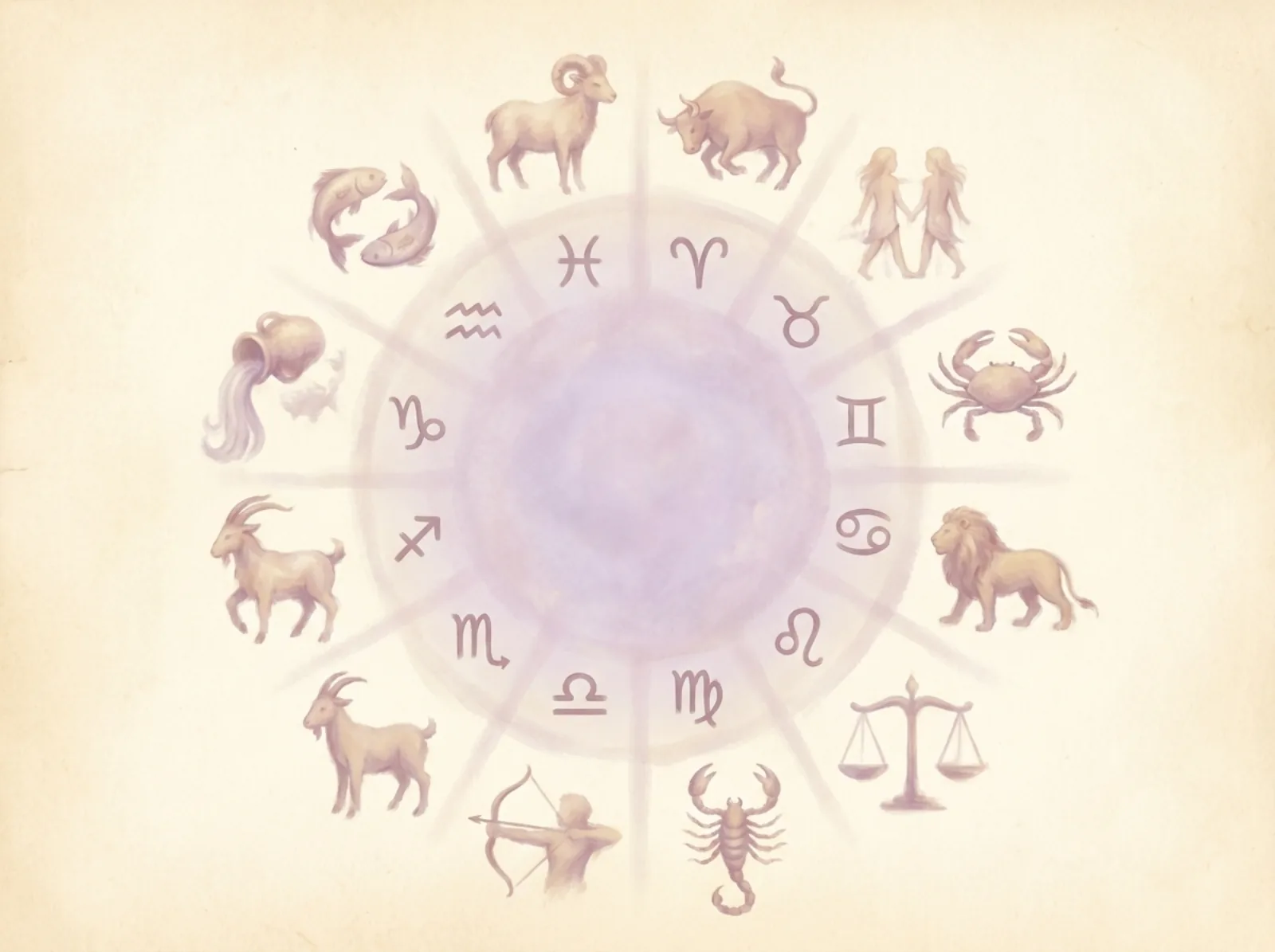
AstroGPT is an AI astrology chatbot that generates personalized readings by combining an ephemeris — the astronomical table that tells us where every planet sat at your moment of birth — with a large language model trained on astrological text. You type your birth date, time, and place, and it produces interpretations of your natal chart, current transits, or specific questions you ask. Part of our download Raka. Explore the full library. Part of our astrology guide hub.
It sits inside a broader wave of AI astrology tools that emerged after ChatGPT's public launch made conversational AI mainstream. Publicly available information suggests AstroGPT is Western tropical in orientation, meaning it uses the twelve familiar zodiac signs anchored to the equinoxes, not the sidereal Vedic system used in Indian astrology. See our best AI astrology app guide for a full breakdown.
The target user, based on how the product is positioned online, is a curious layperson — someone who has read a few horoscopes on Instagram, knows their sun sign, and now wants to go deeper without paying two hundred dollars for a professional consultation. Reviewers have reported that the tool leans casual and exploratory rather than technical. See our guide. See our best natal chart app guide.
To be direct: this article is a review, not a sales page. I am the senior astrology editor at Raka, a competing app, and I have tried to keep this fair. Where I am uncertain about a specific claim — exact founder, exact price, exact model architecture — I hedge, because fabricated specifics do you no good.
Who Built AstroGPT And What That Tells Us
Attribution for AI astrology tools is genuinely tricky. Several products use similar names, wrappers around OpenAI or Anthropic models are cheap to spin up, and founding teams often stay quiet to focus on distribution rather than press. As of 2026, I have not seen credible, verifiable public information about a single named founder or company behind AstroGPT that I am confident enough to reprint here.
What matters more than the founder's name, honestly, is the operating philosophy behind any AI astrology tool. Ask yourself: does the product treat astrology as a serious symbolic language or as content marketing? Does it hire astrologers to write the prompts and evaluate outputs, or does it lean entirely on the base model's absorbed knowledge?
The best AI astrology products I have seen — and I have tested dozens for competitive research — pair engineers with astrologers who have spent decades in practice. Chani Nicholas, for example, is a working astrologer who published her book You Were Born for This before her app existed. The Pattern's team has spoken publicly about the years they spent tuning their personality descriptions.
When you cannot verify the team, treat outputs with an extra layer of skepticism. Beautiful AI astrology text is easy to generate; astrologically responsible AI astrology text is not.
How AI Astrology Chatbots Actually Work
Under the hood, every AI astrology chatbot — AstroGPT, Raka, or any competitor — is doing roughly the same three-step dance. First, it takes your birth data and calls an ephemeris library, most commonly the Swiss Ephemeris, which is derived from NASA JPL data. That calculation is deterministic and settled science: your Mars really was at 14 degrees Scorpio when you were born, or it was not.
Second, it converts those raw positions into structured data — planet, sign, house, aspect, degree. Some tools do full chart-shape analysis (grand trines, T-squares, yod configurations); others stop at planets in signs and houses. This is where product depth starts to diverge, and where a lot of AI astrology tools quietly cut corners.
Third, that structured chart data gets fed into a large language model, alongside your specific question and a system prompt written by whoever built the product. The model then generates text. This is the step where quality varies most, because the same raw chart data can produce a paint-by-numbers reading or a genuinely insightful one depending on how the prompts are engineered.
AstroGPT, from publicly available demos, appears to follow this same pattern. It is not, to be clear, doing anything mystical the base LLM is not already capable of. The real product work is in the prompt engineering, the astrologer training data, and how carefully the output is bounded away from irresponsible claims.
AstroGPT Features Based On Publicly Available Information
Feature lists for AI astrology tools shift monthly, so treat what follows as a snapshot rather than a spec sheet. Based on public demos and reviewer write-ups, AstroGPT appears to offer natal chart interpretation, transit readings for what is happening in the sky now, and conversational Q&A where you can ask follow-up questions in plain language.
Some AI astrology chatbots offer relationship synastry — the comparison of two charts — and composite charts. Whether AstroGPT does this depends on the current version. Reviewers have noted that synastry features tend to appear on paid tiers because they require more chart calculations per query.
Daily and weekly horoscope generation appears standard across the category. The AstroGPT variant, if it follows category norms, will generate a fresh horoscope on request rather than serving a canned monthly forecast. This is one of the genuine advantages of AI-generated astrology: it can respond to today's exact planetary configuration, not last week's.
What I have not seen consistently in AI astrology chatbots, including AstroGPT based on public information, is deep progressed chart work, solar arc directions, or predictive techniques like secondary progressions and firdaria. If those techniques matter to you, you likely need a specialist tool like Astro-Databank or a human astrologer, not a chatbot.
Also missing across most AI astrology apps: Vedic techniques. Dashas, nakshatras, ashtakavarga, divisional charts (D9, D10), and yogas require an entirely different interpretive framework. AstroGPT, being Western-leaning, is not the tool for that work.
AstroGPT Pricing And What Reviewers Have Reported
Pricing on AI tools moves constantly, so anything I write here has a shelf life of a few weeks. Publicly available information suggests AstroGPT operates on a freemium model — a limited free tier that gives you a taste, and paid tiers that unlock deeper readings, more queries per day, or premium features like synastry.
The category norm for AI astrology apps in 2026 sits somewhere between four and fifteen US dollars per month for premium tiers, with annual plans typically discounted. Chani, for context, has historically sat at the higher end because it includes original writing from a working astrologer. Co-Star and The Pattern have leaned toward free with in-app purchases or freemium subscriptions.
Reviewers have reported that AstroGPT's free tier is useful for a first look but constraining for anyone who wants a full natal-chart walkthrough. This is typical of the category — free tiers are marketing, not the product. If you are considering paying, run at least three or four sample queries first to see whether the interpretive voice matches what you want.
Before you enter card details, read the current pricing page directly. AI tool pricing genuinely changes month to month, and any specific dollar amount I quote here will likely be outdated by the time you read it. Look for a clear cancel path, transparent auto-renewal terms, and a stated data-retention policy.
The Honest Limitations Of AI Astrology (Not Just AstroGPT)
Here is where I need to be direct, because the AI astrology category has real limitations and pretending otherwise does you no favors. First, large language models hallucinate. They can confidently produce interpretive statements that are astrologically wrong — misplacing a house rulership, misreading an aspect, forgetting a retrograde. AstroGPT is not immune to this; no chatbot is.
Second, AI astrology tools do not know you. A skilled human astrologer holds context across sessions: your career pivot last year, the sibling situation you mentioned in passing, the health scare in 2023. An AI chatbot re-reads your chart cold every conversation. Some products add memory features, but persistent chart-plus-life context at professional depth does not yet exist in this category.
Third, and most importantly, astrology itself is a symbolic reflection tool, not a fortune-telling machine. Neither a chatbot nor a human astrologer can tell you whether you will get the job, whether your relationship will last, or whether you should have surgery. Any tool — AI or human — that promises specific predictions is either mis-selling or misunderstanding what astrology is for.
Fourth, the interpretive voice of an AI can drift toward the generic and reassuring. Barnum statements — 'you are sometimes outgoing but need alone time' — are the low-effort default of language models. Good AI astrology products fight this tendency with careful prompt engineering; the mediocre ones do not.
How AI Astrology Apps Differ From Human-Consulted Astrology
There is a real, meaningful difference between running your chart through AstroGPT and sitting for an hour with a working astrologer like Susan Miller, Chani Nicholas, or a local Jyotishi. Understanding that difference is essential to using AI astrology well rather than treating it as a substitute for the deeper practice.
A skilled astrologer brings pattern recognition trained across thousands of consultations. When Susan Miller writes her monthly forecasts, she is drawing on forty-plus years of watching how specific planetary configurations have played out in her readers' lives. An LLM can approximate the language of that experience but cannot replicate the judgment behind it.
A human astrologer also holds ethical responsibility. They know when to soften a reading because the client is in crisis, when to push back on a self-defeating narrative, when to refer someone to therapy or medical care rather than another chart consultation. AI chatbots have safety guardrails, but they do not have practitioner judgment.
Finally, human astrology is dialogic. You ask a question, the astrologer clarifies what you are actually asking underneath, and the conversation deepens across the hour. AI chatbots simulate this but do not truly participate in it. Use AI astrology for daily reflection and quick chart lookups; use a human for pivotal, high-stakes life questions.
That said — human astrology consultations often cost between one hundred and five hundred US dollars per hour, which puts them out of reach for many. AI astrology's genuine gift is accessibility, and I do not want to gatekeep that. Both layers of the practice can coexist.
AstroGPT Vs Raka, Chani, Co-Star, Sanctuary, The Pattern
Here is a fair comparison, and I need to be transparent that I work on Raka, so treat my framing accordingly. I have tried to keep the comparison honest rather than promotional.
AstroGPT is a Western tropical AI astrology chatbot focused on conversational chart Q&A. Its strength is accessibility and the natural conversational interface. Its weakness, based on publicly available information, is that its depth relative to specialist products is unclear, and its team and pricing are less transparent than category leaders.
Chani is a Western astrology app with daily horoscopes and audio content authored by Chani Nicholas, a working professional astrologer with a published book. Its strength is genuine astrological voice from a named human expert. Its weakness is that it is less conversational than a chatbot and iOS-first, so Android users are underserved.
Co-Star is a design-forward Western astrology app that uses NASA ephemeris data and lets you compare charts with friends. Its strength is the social layer and clean aesthetic. Its weakness, as many reviewers have noted, is a sometimes brutal or blunt tone that not everyone wants first thing in the morning.
Sanctuary combines an app with paid live human astrologer readings — a hybrid model. Its strength is the option to escalate from AI content to a real reader. Its weakness is that the live-reading marketplace pricing can escalate quickly, and quality varies by practitioner.
The Pattern is a personality-focused astrology app that de-emphasizes traditional zodiac language in favor of trait descriptions. Its strength is approachable framing for people put off by astrology jargon. Its weakness is that serious astrology students may find it too surface-level.
Raka — where I work — is an integrated tarot, astrology, and numerology app currently on Google Play, published by Vyve Health Tech. It is Western tropical and self-reflection framed. Its honest strengths: multi-modality (three practices in one app) and privacy-first design. Its honest weaknesses: not iOS-first (Android only at time of writing) and less brand recognition than Chani or Co-Star. It is one option among several, not universally superior.
Who Should Consider Using AstroGPT
AstroGPT, or any AI astrology chatbot, makes sense for a specific type of user, and it does not make sense for others. Being honest about the fit will save you money and disappointment.
You are a good candidate if you are astrology-curious but new, and you want a low-commitment way to explore your natal chart without committing to a paid consultation. Chatbot interfaces are forgiving of beginner questions in a way that some professional consultations are not. Ask 'what does my Saturn placement mean' as many times as you need. Related: KundliGPT review.
You are also a good candidate if you already know some astrology and want a quick, on-demand tool for looking up transits, checking a friend's chart, or brainstorming interpretations before you formalize them yourself. Working astrologers I know use AI tools this way — as scratch pads, not as final authority.
You are a good candidate if you value conversational interfaces. Some people learn better through dialogue than through reading a static chart report. If typing questions and getting written answers matches how your brain works, a chatbot is a natural fit.
Finally, you are a good candidate if you understand upfront that the output is a reflection prompt, not a prediction. Users who arrive with that framing tend to get real value from AI astrology; users who arrive expecting fortune-telling tend to feel disappointed no matter which tool they pick.
Who Should Skip AstroGPT
Being equally honest about the anti-fit matters. If you are in any of the following categories, AstroGPT probably is not for you, and I would tell you the same thing about Raka or any other AI astrology tool.
Skip AI astrology if you are seeking Vedic astrology. Jyotish is a different tradition — sidereal zodiac, nakshatras, dashas, divisional charts — and Western-leaning tools like AstroGPT are not built for it. Find a qualified Vedic astrologer or a specialist Jyotish app.
Skip AI astrology if you are facing a major life decision — a medical procedure, a divorce, a bankruptcy — where you need judgment, not just information. A chatbot cannot hold that weight. Book time with a working human astrologer, and, more importantly, work with the appropriate professional (doctor, therapist, lawyer, financial planner).
Skip AI astrology if you are prone to reading confirmation into ambiguous statements, especially at a vulnerable moment. AI-generated astrology text can produce beautifully worded Barnum statements that feel personal but are not. If you notice yourself using astrology to avoid direct human conversation or professional help, it is time to step back.
Skip AI astrology if privacy of your birth data is a significant concern and the tool's privacy policy is unclear. Birth date, time, and place are personally identifying. If you cannot find a clear retention and sharing policy on the AstroGPT site, either ask them directly or choose a tool with more transparency.
Skip AI astrology if you are hoping for definite predictions about the future. That is not what astrology is, and no tool — AI or human — can honestly deliver it.
Reflection Questions Before You Sign Up
Instead of jumping to try AstroGPT because a review recommended it, sit with these questions first. They will save you both money and the disappointment of choosing the wrong tool.
What am I actually looking for — daily quick guidance, deep natal-chart understanding, relationship insight, career reflection, or spiritual community? Different tools serve different needs, and the best-known name is not always the best fit for your specific goal.
Do I prefer conversational chat, structured reports, audio content, or short daily notifications? AstroGPT is chat-first. Chani is audio and daily-notification first. Co-Star is short daily notifications. The Pattern is structured trait descriptions. Match the interface to your actual reading habits.
How much am I willing to pay per month, and for how long? If you are not sure you will still be interested in three months, avoid annual plans. If you know astrology is a long-term interest, annual plans usually offer meaningful savings.
Am I working with, or considering, a human astrologer or therapist for anything the AI tool might touch? If yes, treat the AI as a supplement, not a substitute. Bring your AI-generated insights to the human professional and let them help you sort useful from noise.
Is AI Astrology Accurate, Really
Here is the honest, nuanced answer, because 'is astrology accurate' is a bigger question than most reviews handle well. The astronomical layer of AI astrology is accurate — the planets really are where the ephemeris says they are, to within arc-seconds. That part is settled science.
The interpretive layer is a different animal. Astrology is a symbolic system, not a predictive science, and its accuracy depends on what you mean by accurate. If you mean 'does the description resonate with my lived experience' — that is a subjective standard, and both AI astrology and human astrology can hit or miss depending on the reader, the practitioner, and the moment.
If you mean 'does astrology make specific, testable predictions that outperform chance' — the peer-reviewed research, including the Carlson double-blind study published in Nature in 1985, has generally not supported this claim. Astrology as fortune-telling does not survive scientific scrutiny.
But astrology as a reflection framework — a symbolic language for thinking about your inner life, timing, and archetypal patterns — is a different use case, and one where AI astrology tools can genuinely add value. The question is not 'is it real' but 'is it useful for the kind of thinking I want to do'.
The most honest framing I can offer: AstroGPT and its peers are journaling prompts with a cosmological theme. If that framing helps you self-reflect, they are worth the price of admission. If you need certainty about the future, no astrology tool — AI, human, ancient, or modern — is going to give you what you want.
Real Astrologers And Books To Read Alongside
If you use AstroGPT or any AI astrology tool, ground your practice by reading working astrologers whose thinking you can trust. This will help you spot when an AI response is off, and give you the interpretive vocabulary to push back on generic outputs.
Chani Nicholas's You Were Born for This is a strong entry-level book that treats astrology as a tool for self-inquiry and social awareness. Her voice is direct, values-forward, and unafraid to name that astrology is a symbolic practice rather than divination.
Steven Forrest's The Inner Sky is a longer, more traditional deep-dive into evolutionary astrology and is widely respected across the field. His approach — which he has taught for decades — treats the natal chart as a map of soul intentions rather than a fixed personality description.
For a historical view, Nicholas Campion's academic work on astrology (published by Continuum and Bloomsbury) traces the intellectual history of the practice across cultures. This is worth reading if you want to understand how astrology relates to astronomy, religion, and philosophy over two thousand years.
For Vedic astrology specifically — which AstroGPT does not cover — David Frawley's Astrology of the Seers is a common English-language entry point, though many Jyotish practitioners recommend studying under a qualified teacher rather than through books alone.
Verdict — Should You Use AstroGPT
AstroGPT is a reasonable AI astrology chatbot if you are looking for casual, conversational, Western tropical chart exploration and you understand what you are buying. It is not a replacement for a human astrologer, it is not a Vedic tool, and it is not a fortune-telling engine. Framed correctly, it can be a useful reflection prompt.
If I had to give one recommendation for the average curious reader: try the free tier of AstroGPT and one or two alternatives — Chani, Co-Star, or Raka depending on your platform and tradition — before committing to a paid subscription. Compare the interpretive voice. Ask each the same three questions and see which resonates.
If you are on Android and want tarot plus astrology plus numerology in one app, Raka is worth a look — I work on it, so factor that in, but I would rather be honest than pretend I am neutral. If you are on iOS and want a professional astrologer's voice, Chani has a real claim to that ground. If you want design-forward and social, Co-Star.
Whatever you choose, treat the outputs as journaling prompts, not verdicts. Astrology, at its best, is a mirror for self-understanding — and the best use of AI astrology is to help you ask better questions of yourself, not to hand you answers you should be earning through lived experience.
This article is educational and reflective in nature. It is not medical, therapeutic, financial, or legal advice. If you are facing a serious life decision, please consult a qualified professional in the relevant field alongside — not instead of — any spiritual or reflective practice.
Frequently asked questions
What is AstroGPT?
AstroGPT is an AI-powered astrology chatbot that generates personalized astrological interpretations using a large language model layered over ephemeris (planetary position) data. Users typically enter their birth date, time, and place, then ask questions about their chart, transits, relationships, or life themes. Based on publicly available information, it is Western tropical in orientation and geared toward casual seekers rather than professional astrologers.
How does AstroGPT work?
AstroGPT combines two things: an ephemeris that calculates where planets sat at your birth, and a large language model that turns those raw positions into readable text. When you ask a question, the system feeds your chart data plus your prompt into the model, which generates an interpretation trained on astrological writing. It is pattern-matching wrapped around real astronomy, not divination.
Is AstroGPT free?
Publicly available information suggests AstroGPT offers a limited free tier with paid upgrades for deeper features, though the exact pricing model appears to shift over time. Free AI astrology tools generally cap the number of questions or the depth of interpretation, and monetize through subscriptions. Always check the current pricing page before entering payment details, since AI tool pricing changes frequently.
Is AstroGPT accurate?
AstroGPT accurately calculates planetary positions because ephemeris math is settled astronomy, but its interpretations are only as accurate as the astrological writing its underlying model was trained on. The tool is not clairvoyant, cannot predict specific future events, and sometimes produces confident-sounding text that a professional astrologer would refine. Treat outputs as prompts for reflection, not verdicts.
Is AstroGPT safe with my birth data?
Birth data is sensitive because your date, time, and place uniquely identify you. Before using AstroGPT or any AI astrology tool, read the privacy policy for retention, sharing, and training-data use. Reviewers have reported varying levels of transparency across AI astrology apps. If in doubt, use a slightly generalized birth time or avoid entering your real full name alongside your chart.
What are the best AstroGPT alternatives?
Popular alternatives include Chani (feminist, values-forward daily horoscopes by astrologer Chani Nicholas), Co-Star (design-forward with NASA ephemeris data), Sanctuary (live human readings plus app), The Pattern (personality-focused), and Raka (integrated tarot, astrology, and numerology on Android). Each serves a different niche — pick based on tradition, depth, and whether you want AI, human, or hybrid interpretation.
Can AI astrology replace a human astrologer?
No — AI astrology can extend access and remove cost barriers, but it cannot replace a skilled human astrologer for anything beyond casual exploration. Professional astrologers like Susan Miller or Chani Nicholas bring lived experience, timing sensitivity, ethical framing, and the ability to hold complex human context that a chatbot cannot replicate. Use AI for daily reflection, humans for pivotal life questions.
Does AstroGPT use Vedic or Western astrology?
Based on publicly available information, AstroGPT appears to lean Western tropical, meaning it uses the twelve zodiac signs anchored to the seasons rather than the sidereal fixed-star system used in Vedic (Jyotish) astrology. If you are specifically seeking Vedic dashas, nakshatras, or divisional charts, AstroGPT is likely not the right tool — look for a dedicated Jyotish app or a qualified Vedic astrologer instead.