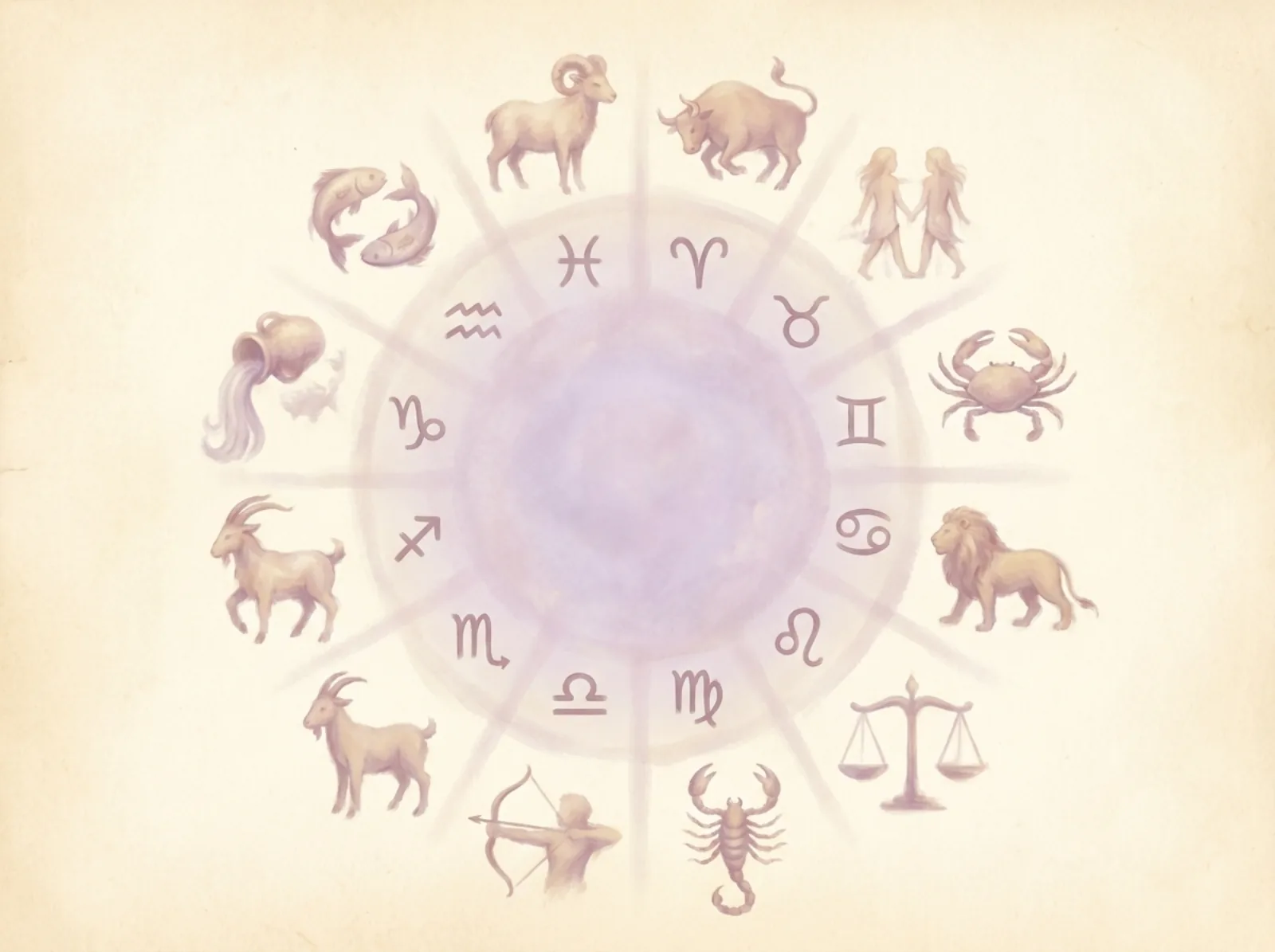
The primary Sagittarius birthstone: turquoise, with topaz as runner-up
If you want the short answer: turquoise is the traditional Sagittarius birthstone, blue topaz is the modern one, and citrine shows up constantly as a third because it covers the November-December overlap when Sagittarius season starts. Turquoise got the Sagittarius slot in older European and American birthstone lists — the kind you'd find printed inside the lid of your grandmother's jewelry box. December was turquoise's month long before the modern commercial charts rearranged everything, and turquoise has been dug out of mines in Iran, the American Southwest, and the Sinai for roughly six thousand years. It is one of the oldest gemstones humans have cared about. The American Gem Society lists it as a December birthstone, which anchors it to the Sagittarius window of November 22 through December 21. Blue topaz is the modern upgrade, added to the standard list by the Jewelers of America in 1912 (yes, this is a trade association invention; most "traditional" birthstone lists are younger than you think). It's cheaper, more plentiful, and comes in that clean sky-blue that photographs well on Instagram. If you've been given a December birthstone ring in the last fifty years, odds are high it's blue topaz. And then there's citrine. Citrine is officially a November stone, but November 22 through 30 is Sagittarius territory, so a lot of Sagittarius-leaning folks claim citrine as theirs. I don't argue with them. If you were born in that last week of November and citrine feels like yours, it's yours. The zodiac doesn't check receipts. My honest take, after years of this: pick the one you'd actually wear. The "correct" Sagittarius birthstone is the one that doesn't live in a drawer. The one you keep at your desk, the one that goes in your pocket when you have a hard call to make — that's the real birthstone, regardless of what any chart says.Why these crystals got linked to Sagittarius in the first place
The matching of stones to zodiac signs isn't ancient-ancient — the clean one-stone-per-sign system is largely a nineteenth and twentieth century project. But the symbolic logic is older than that, and it's worth knowing where it comes from so you can decide what to take seriously. Sagittarius is a fire sign ruled by Jupiter. In classical astrology, Jupiter is the planet of expansion, travel, foreign places, higher learning, and — this is important — optimism that occasionally outruns reality. The Sagittarius archetype is the Archer: aim far, shoot straight, worry about the landing later. The element is fire, which in the elemental system means warmth, motion, and the kind of enthusiasm that burns through social obligations. Turquoise got attached to Sagittarius partly because of geography and partly because of what the stone was already culturally doing. Turquoise was carried by travelers — Persian horsemen, Pueblo traders, Egyptian merchants — as a protective amulet on long journeys. If you were going somewhere far, you brought turquoise. Sagittarius is the zodiac's long-distance traveler. The symbolic fit was easy. Blue topaz connects to Sagittarius through the Jupiter association in older gemological texts, where topaz (then meaning any yellow gem, not the modern chemically-defined topaz) was linked to Jupiter's expansive, truth-telling qualities. The language survived even after the stone got reclassified. Citrine's Sagittarius connection is pure vibes: it's gold-yellow, it looks like fire, it looks like Jupiter in color-correspondence tables, and it's cheerful in a way that matches the Sagittarius reputation. Citrine is the sign's hype stone. Is any of this "true" in a scientific sense? No. These are symbolic languages — folk traditions stacked on each other over centuries. But symbolic languages are useful. They give you a vocabulary for things you're trying to notice about yourself. The Archer, the fire, the Jupiter-sized optimism, the blue of a far horizon — those are legitimate images to hold while you figure out why you keep saying yes to trips you can't afford.Four secondary Sagittarius crystals, and what people actually use them for
Beyond the main three, there's a working rotation of secondary stones that get recommended for Sagittarius energy. Here are the four I see most often, with what people actually use them for — stripped of the medical nonsense you'll find on half of crystal websites. **Lapis lazuli** — Deep ultramarine, flecked with pyrite. Historically used in Egyptian funerary art and later ground into the ultramarine pigment Renaissance painters used for the Virgin Mary's robes. It gets paired with Sagittarius for its connection to truth-telling and philosophical thinking — both Sagittarius strengths and, when overcooked, Sagittarius problems. People use lapis as an anchor when they're writing something hard, having a direct conversation, or trying to say what they actually think instead of what's socially convenient. **Amethyst** — Purple quartz, abundant and relatively cheap. Technically the February birthstone, but it rotates onto Sagittarius lists because of its traditional link to clarity, sleep, and (in older European texts) sobriety. Sagittarius people have a reputation for over-doing: too many drinks, too many plans, too many commitments. Amethyst gets handed to Sagittarius as a come-down stone — something to hold at the end of a loud week. **Sodalite** — Darker blue, slightly duller than lapis, and much cheaper. Used as a focus stone for study, writing, and long-form thinking. Sagittarius is a mutable sign, which in practice means a lot of us start things and don't finish them. Sodalite gets associated with the dull, undramatic work of sitting with one project until it's done. I keep one on my desk. Does it do anything? Who knows. I finish more pieces when it's there, which could be the stone or could be the fact that putting the stone there is a ritual that says *I am working now.* **Labradorite** — Grey-green, flashes blue and gold when you tilt it under light. Mined mostly in Labrador, Canada, and Madagascar. Gets paired with Sagittarius for travel and transition — the stone-of-the-threshold reputation runs through most modern crystal books. If you're moving, changing jobs, ending a relationship, or starting a new chapter of life, labradorite is the one people suggest. I bought a chunk the week I quit my corporate job. I still have it. I don't credit it with the career change, but I remember exactly where I was standing when I bought it, and that memory is useful. None of these will fix anything on their own. All of them can serve as physical bookmarks for decisions you're trying to make. That's the honest version.How Sagittarius people can actually use these crystals (as journaling anchors, not magic)
Here is the part most crystal content gets wrong: it tells you to "program" the stone with intention, place it under moonlight, and expect your life to change. That's not how any of this works. What crystals can genuinely do is give your attention something to land on while you do the actual work. For Sagittarius specifically — a sign that lives at a thousand miles an hour and tends to think *about* feelings instead of *through* them — this matters. We are not a sign that pauses easily. We'd rather plan the next trip than sit with the one that just ended. Here's how I actually use mine, and what I'd suggest if you're starting: **One: assign a stone to a question, not a wish.** Instead of "I want a new job," try "What am I avoiding about my current one?" Pick up the stone when you sit down to journal that question. Put it down when you're done. Over a month, the stone becomes a trigger for the question. You'll find yourself picking it up and sitting with the question even on days you don't feel like it. **Two: use the stone to end a scroll session.** Sagittarius minds spiral online. If you keep a stone next to your phone and hold it before you unlock, you'll notice (sometimes) that you were about to doom-scroll past something you actually wanted to think about. It's a one-second interrupt. One second is enough. **Three: carry one when you're having a hard conversation.** Not for protection — for a tactile reminder. Hands in your pocket, thumb on the stone, keep breathing. You'd be amazed how much slower you talk when you have something to hold. **Four: journal with Raka's zodiac reflection prompts while the stone's on the table.** We've got Sagittarius-specific journaling prompts over at Raka that pair naturally with any of the stones above — questions about where you're over-committing, what you're running from, what fire you're actually serving. The stone isn't doing the work. The question is doing the work. The stone is just keeping you in the chair. That's it. That's the method. Anyone selling you more than that is selling you more than that.Where to buy ethically sourced Sagittarius crystals
This is the part of crystal culture that got me to stop buying crystals for about three years, and the part that got me to start again — carefully. The crystal supply chain is a mess. Most crystals come from mines in Madagascar, the Democratic Republic of Congo, Brazil, Myanmar, Pakistan, and Afghanistan. Many of these mines are small, informal, under-regulated, and sometimes involve child labor or hazardous conditions. The Guardian ran a detailed investigation of Madagascar's rose quartz and labradorite mining in 2019 that is still worth reading. The term "ethically sourced" gets thrown around on crystal websites with roughly the same meaning as "natural" on a cereal box. Here's what I actually look for now: **Named provenance.** A seller who can tell you *which mine* or at least *which region* their turquoise came from. "Sleeping Beauty, Arizona" is a real answer. "Natural turquoise" is not. If the seller can't name a region, assume they don't know, which means you don't know. **Direct relationships with miners.** Some small sellers buy directly from independent artisanal miners and will tell you so, with photos. These stones cost more. The cost is the honesty. **Fair-trade certifications where they exist.** The Fairmined and Fairtrade Gold certifications exist for precious metals; the gemstone equivalent is thinner, but Moyo Gems (which handles tanzanite and some other African gems with women miners in Tanzania and Kenya) is one real program. Pala International publishes mine information. The Responsible Jewellery Council has standards, though they're imperfect. **Vintage or secondhand.** The most ethical crystal is one that's already out of the ground. Estate jewelry stores, antique shops, and your grandmother's drawer are all legitimate sources. A piece of turquoise from a 1970s silversmith has done its environmental damage already. Buying it again doesn't create new damage. **Avoid dyed, stabilized, or "reconstituted" turquoise unless it's labeled.** A huge share of commercially sold turquoise is actually howlite dyed blue, or genuine turquoise fragments crushed and glued back together with resin. Both are legal products. Neither is what you think you're paying for if the seller doesn't tell you. I buy less now, and when I do, I ask the seller three questions over email before I buy: where did it come from, how do you know, and can you show me a photo of the raw stone before cutting. If they can answer all three, I buy. If they can't answer any, I don't.Crystals for Sagittarius's shadow side
Every zodiac write-up tells you the sunny version of your sign. Sagittarius is "adventurous, honest, philosophical." True. Also true: Sagittarius is tactless, restless, allergic to commitment, prone to "brutal honesty" that is often more brutal than honest, and sometimes uses the next big trip as a way to avoid the small boring work of a real relationship. If you're Sagittarius and offended by any of this, that's the shadow side introducing itself. Here's which stones get recommended for which Sagittarius failure modes, and why: **For saying things you'll regret: amazonite.** Pale blue-green, cheap, abundant. Gets recommended as a "filter stone" — a reminder to pause before the mouth opens. Not because the stone does anything. Because the physical act of touching it before you speak builds a half-second gap. Sagittarius talks fast. A half-second gap can be the difference between landing a joke and losing a friend. **For restlessness: hematite.** Heavy, grey, metallic. Gets recommended as a "grounding" stone, which in practical terms means it's physically heavy in your hand. If you're the kind of Sagittarius who can't sit through a two-hour movie or a difficult conversation, a weighted stone in your palm is a tactile anchor. It's the same logic as a weighted blanket, scaled down. **For over-committing: smoky quartz.** Translucent brown-grey. Gets paired with Sagittarius for its "release" reputation — in modern crystal books it's the stone of letting go. I don't believe it does any letting-go for you. But if you hold it while you say no to the fourth thing you've been invited to this week, it marks the no. Marked nos are easier to keep. **For avoiding emotional work: rose quartz.** The cliché stone. Pink, soft, mass-produced. Everyone has one. Here's why Sagittarius should actually consider it: we're a fire sign that intellectualizes feelings. We'd rather debate love than feel it. Rose quartz, with all its Hallmark-store energy, is a thumb-sized reminder that the heart stuff is still waiting. It's embarrassing on purpose. The embarrassment is the point. I own all four. I use the amazonite most. Make of that what you will.Crystals to pair with for love, career, and grief
The one-stone-per-everything model is a sales pitch. In practice, people stack stones for specific life moments. Here's how I'd pair them if you're Sagittarius and dealing with one of the big three. **For love.** Pair your turquoise (or topaz) with rose quartz. Keep the pair somewhere you'll see both every day — a bathroom shelf, a windowsill, a bedside tray. The symbolism is the pairing itself: Sagittarius travels far, loves wide, and sometimes forgets to come home. Rose quartz is the come-home stone. If you're dating or in a long relationship as a Sagittarius, the honest work is less about finding love and more about staying soft when you've found it. The two-stone pair is a visual reminder: both of these are mine. **For career.** Pair sodalite (focus) with citrine (confidence) and keep both on your desk. The sodalite is for the slow unglamorous hours. The citrine is for the moments when you need to send the pitch, make the ask, or walk into the room. Sagittarius careers tend to look chaotic from the outside — we switch, we zigzag, we chase the interesting thing over the stable thing. The two-stone pair is a reminder that both energies are legitimate. You need the focus to finish the project, and you need the confidence to put it in front of someone. **For grief.** Pair labradorite (threshold) with apache tear or black obsidian (release). Grief is Sagittarius's hardest terrain. We're built to move forward, and grief refuses to let us. The two-stone pair is a reminder that both are needed: labradorite for the slow transition into whatever this new version of life is going to be, and apache tear for the simple hard fact that this hurts and will keep hurting for a while. I kept this pair on my dresser for most of 2023. I'm not saying they fixed anything. I'm saying I'm glad they were there. If you want to go deeper on any of these, you can pull a tarot card alongside — Raka has a free Sagittarius-specific spread for love, career, and grief that pairs well with any of these stones. The point isn't that the card or the stone has the answer. The point is that you set a chair, a stone, a card, and ten minutes aside to actually look at the thing you've been running from. That's the practice. The stones are furniture for the practice.How to cleanse and charge your crystals (the sane version)
You will read, on hundreds of websites, that you need to "cleanse" and "charge" your crystals or they'll absorb negative energy and stop working. I'm going to give you the sane version of this. First: there is no scientific evidence that stones store or emit energy in any detectable way. If a stone "stops working," it's your relationship with the ritual that's gone stale, not the stone's capacity. That said, cleansing rituals do something real for *you* — they re-set your relationship with the object, which is the actual mechanism by which the stone has ever done anything. So. Here are the methods people use, with notes on what to actually do: **Running water.** Hold the stone under cool running water for a minute. Works for most hard stones. **Does not work for:** turquoise, lapis lazuli, selenite, malachite, calcite, pyrite, hematite, and anything porous or water-soluble. Turquoise especially — real turquoise is porous and can discolor or crack in water. If your "turquoise" survives a soak, it may not be turquoise. **Sunlight.** A few hours in sunlight will "recharge" most quartz-family stones. **Does not work for:** amethyst, rose quartz, citrine, fluorite, and most purple or pink stones — they fade in prolonged sunlight. I learned this the hard way with a chunk of amethyst that spent a summer in a south-facing window and came out looking like weak tea. **Moonlight.** Full moon, overnight, outside or on a windowsill. Safe for every stone. Does nothing physically detectable. Does a lot symbolically — if you believe the moon is doing something, the act of putting the stones out resets your attention to them. If you don't believe the moon is doing anything, it's still a nice ritual. **Smoke.** Pass the stone through smoke from sage, palo santo, or incense. **Note on sage:** white sage from California is over-harvested and sacred to multiple Indigenous nations, including the Chumash. If you want to smoke-cleanse, use garden sage, rosemary, or incense you got consensually. Don't buy wild white sage from Amazon. **Sound.** Ring a bell or singing bowl near the stone. Harmless, lovely, works on every stone. Mostly a reset for you — the sound bath is for your attention, not the quartz. **Burial.** Put the stone in a bowl of dry salt or dry earth overnight. Salt can corrode some soft stones, so dry earth or rice is safer. This one has a quiet dignity to it. I use it when a stone has been with me through something hard and I want a longer reset. Honest version: cleanse your stones whenever the ritual feels useful, and don't when it doesn't. The stones don't keep score.Five Sagittarius celebrities who've actually talked about their crystals
Celebrity crystal content is mostly nonsense, but there are a handful of Sagittarius-born public figures who've gone on record about using stones. Here are five whose quotes are documented, not invented by a Pinterest board. **Miley Cyrus** (born November 23, Sagittarius). Has repeatedly mentioned carrying crystals in interviews — Marie Claire ran a 2015 piece in which she described keeping rose quartz and other stones in her bag for grounding during tour. She's been more private about it in recent years, but the on-record references are real. **Katie Holmes** (born December 18, Sagittarius). Has talked in interviews about using meditation and small daily rituals, including crystals, through her thirties and forties. Not a flashy practice — the kind of once-a-week acknowledgment that fits the Sagittarius thinker type well. **Scarlett Johansson** (born November 22, Sagittarius on the cusp). She's spoken about her skincare rituals in Vogue and mentioned keeping stones in her studio. Not a crystal-first spiritual practice, but she's acknowledged the ritual aspect. **Nicki Minaj** (born December 8, Sagittarius). Has posted on social media about crystals and candles as part of a pre-performance ritual. The specifics shift. The on-record acknowledgment is there. **Jay-Z** (born December 4, Sagittarius). Famously wore a pyramid-shaped medallion with a sapphire for a long stretch and has spoken in interviews about Hindu and Buddhist-adjacent practices. Not a crystal-shop regular, but a Sagittarius whose stated worldview makes room for symbolic objects. I left out the celebrities who sell crystals, because selling them is a different relationship than using them. If you want the full list of celebrity crystal mentions, cross-reference the interviews yourself — the ones above are the five where I could find a quote or clear on-record reference. Everyone else is Pinterest fan fiction.The honest note: crystals are reflection tools, not medicine
This is the paragraph I'd put in every crystal article if it were up to me, so let me put it here properly. Crystals are not medicine. They do not cure illness, treat depression, kill cancer cells, balance your hormones, protect you from radiation, or absorb anybody's "negative energy" in any way that can be measured. The scientific research on crystal healing is clear: in controlled studies, people report the same effects from fake crystals as from real ones. The effect, where it exists, is placebo — which is to say, the effect is coming from your brain, not the stone. That doesn't make the stones useless. Placebo effects are real effects. Rituals, attention, and physical anchors are legitimate tools in a thinking person's toolkit. I would not have built a Sagittarius-journaling practice without them. But if you are sick, see a doctor. If you're in a mental health crisis, call a hotline, see a therapist, call someone you love. The stone on your dresser can wait. The stone will be fine without you for an afternoon. You might not be, and the stone cannot help with that. The reason I'm being this blunt is that crystal culture has, in the last decade, started quietly selling itself as alternative medicine. It isn't. The vendors who make medical claims are either misinformed or lying, and either way, they're dangerous to anyone who takes the claim seriously enough to delay real care. So use your Sagittarius birthstone — turquoise, topaz, citrine, whichever feels like yours — the way a reader uses a bookmark. It holds your place. It reminds you where you were in the thinking. It is not the book, and it is not the plot, and it is definitely not the ending. You still have to read, and you still have to live. The stone just sits there, in your pocket, catching the light, when you remember to notice it. That is enough. That is, in my experience as a Sagittarius who's been doing this for the better part of a decade, actually a lot.Frequently asked questions
What is the official Sagittarius birthstone?
There isn't a single "official" one — the traditional Sagittarius / December birthstone is turquoise, the modern commercial list (set by the Jewelers of America in 1912 and updated since) names blue topaz, and citrine often rotates in for the late-November portion of Sagittarius. Pick the one that feels like yours; the zodiac doesn't check receipts. Part of our tarot library.
What is Sagittarius's lucky stone?
In most modern crystal books, turquoise is listed as Sagittarius's lucky stone — it has a long historical association with safe travel, which maps naturally onto the sign's adventurer archetype. Citrine is the other frequent choice, usually described as a stone of confidence and good humor. Neither will make you lucky in a measurable sense, but either can serve as a solid reflection anchor.
Can Sagittarius wear diamond?
Yes. The idea that certain signs can't wear certain stones comes mostly from Vedic astrology, where gemstone recommendations are personalized to your full birth chart, not just your sun sign. Western crystal culture doesn't have this restriction. If you're drawn to diamond as a Sagittarius, wear it — just know that "zodiac-correct" stones are a modern Western invention, and a Vedic astrologer might have a different recommendation entirely.
Can turquoise get wet?
Real turquoise is porous and should not be soaked or washed under running water for long — it can discolor, crack, or lose its polish. A quick rinse is usually fine, but prolonged water exposure will damage the stone. Many commercial turquoise pieces are "stabilized" with resin, which protects them from water, but if you don't know whether yours is stabilized, assume it isn't and keep it dry.
Are crystals a form of alternative medicine?
No, and anyone marketing them that way is being misleading. Controlled studies show no measurable medical effect from crystal healing beyond placebo. Crystals can be useful as journaling anchors, ritual objects, and attention aids — all legitimate uses — but they do not treat illness. If you're dealing with a health or mental health concern, please see a doctor or therapist. The stone on your dresser is not an alternative to real care.
How can a Sagittarius use crystals without feeling silly?
Treat them as physical bookmarks for questions you're trying to think through, not as magical objects. Assign a stone to a journaling question, keep it where you'll see it, and pick it up when you sit down to write. The ritual is the practice. The stone just holds your place. For Sagittarius specifically — a sign that lives at speed and avoids pausing — a small physical anchor can slow you down enough to notice what you actually think. That's useful whether or not you believe in any of the metaphysical claims.
What's the best Sagittarius birthstone jewelry to buy as a gift?
For most giftees under about forty, blue topaz jewelry is the safe default — it's the modern birthstone, it's affordable, and it looks like what people expect. For someone with more traditional or vintage taste, go turquoise, ideally with named provenance (Sleeping Beauty, Kingman, or Persian turquoise, depending on budget). For the Sagittarius who's into the symbolism itself, a small raw citrine or turquoise cabochon pendant tends to land better than a polished department-store piece. Ask the recipient's silver vs. gold preference first; turquoise traditionally sits in silver, topaz looks better in either.