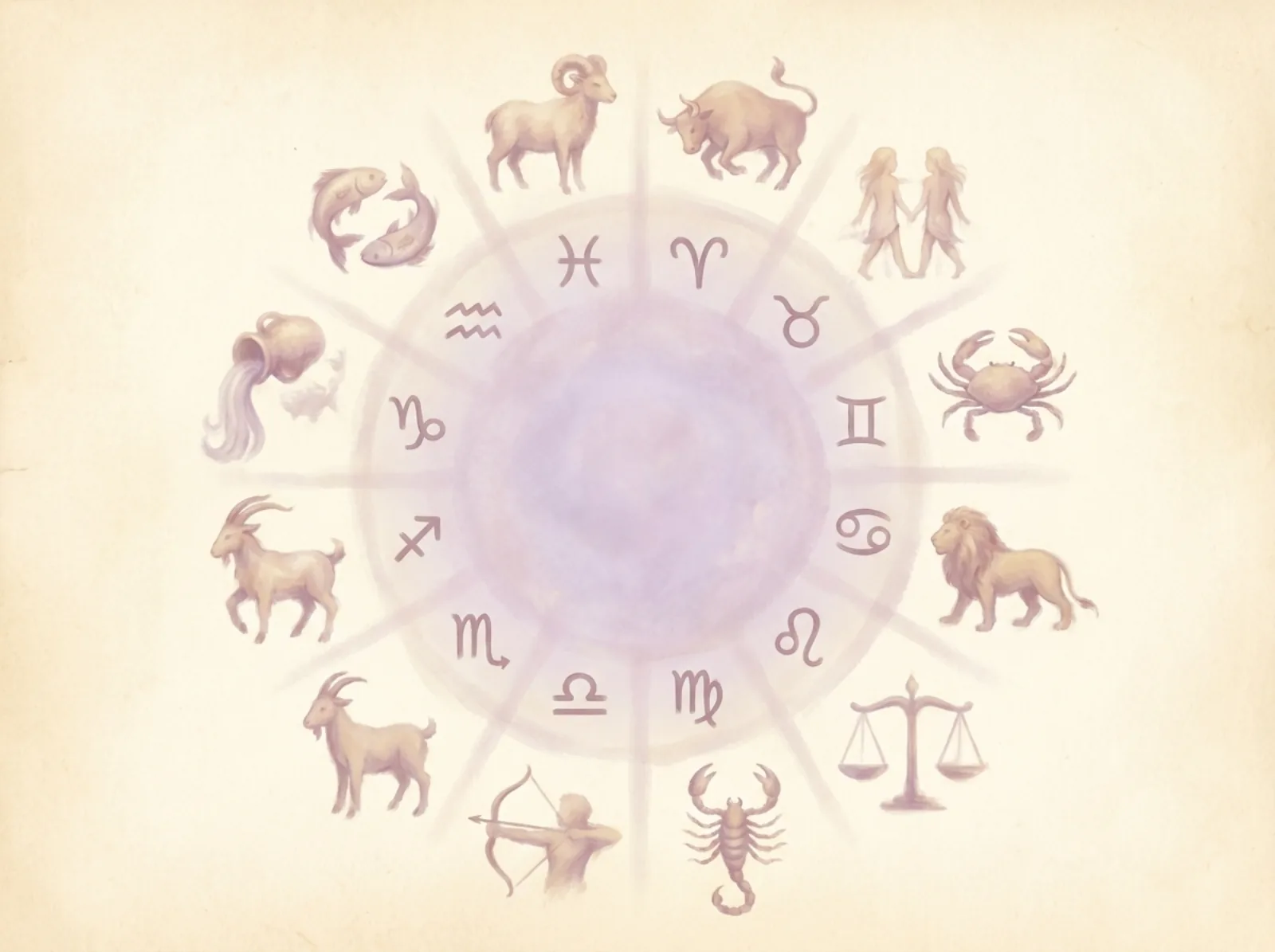
The primary Capricorn birthstone: garnet, with a modern asterisk
If you ask the American Gem Society what January's birthstone is, they'll say garnet, full stop. If you ask a tarot shop in Brooklyn what the Capricorn stone is, they'll usually say garnet, then start adding things. Both answers are useful. One is the formal designation. The other is the lived tradition — and Capricorn sits exactly between the two. Garnet is actually a whole family of silicate minerals, not a single stone. The deep red version most people picture is almandine or pyrope. There are also orange ones (spessartine), green ones (tsavorite and demantoid), rhodolite in warm raspberry, and colour-shifting varieties that look blue indoors and purple outdoors like a very expensive mood ring. The Gemological Institute of America publishes a readable breakdown of the main species. Once you've seen a tsavorite in direct sunlight, you'll stop assuming garnet only comes in blood red. For Capricorn specifically, the deep red almandine or pyrope is the one most tradition books point to. It's the stone you'll see in antique Victorian mourning jewellery and in Georgian carbuncle rings. Both aesthetics — restrained, slightly funereal, built to outlive you — are extremely Capricorn, which is probably not an accident. Modern birthstone lists have made things a little messier. The Jewelers of America standard from 1912, still the backbone of most US charts, keeps garnet as January's stone. Some updated lists now add rose quartz as a January alternate or 'modern' option. For the Capricorn sign specifically — which spans roughly December 22 to January 19 and therefore straddles two 'birth months' — you'll also see onyx, obsidian, and occasionally ruby cited as secondary stones. More on those below. If you want the shortest possible answer: the Capricorn birthstone is garnet, preferably a deep red one. I keep a small pyrope on my desk, set in a cheap brass ring I bought in Jaipur for the rupee equivalent of about six dollars. It does nothing supernatural. It is the thing I look at when my shoulders have climbed up to my ears. For a Capricorn, that may be the only property that matters.Why garnet is linked to Capricorn: earth, Saturn, and winter folklore
Astrology is a system of correspondences. It assigns each sign an element, a ruling planet, and a bundle of traditional associations — colours, metals, plants, and yes, stones. For Capricorn, those are earth, Saturn, and a cluster of winter-coded imagery that quietly points at garnet. Capricorn is the first of the three earth signs, which also include Taurus and Virgo. The earth element in astrology isn't about dirt; it's shorthand for the practical, the material, the slow-build. Earth signs are stereotyped as the people who actually finish their taxes. Garnet, as a dense, hard, surprisingly common silicate found on every inhabited continent, is textbook earth-element in that reading: durable, grounded, not showy from a distance. Saturn is Capricorn's traditional ruling planet. In older astrology Saturn is the planet of structure, limits, discipline, and the slow lessons of time — the taskmaster, the one who hands you a bill. Red stones, in a lot of pre-modern European folklore, were connected to blood, courage, and endurance under strain, which is Saturn's whole brand. In Victorian jewellery, garnet showed up in mourning rings and in rings exchanged by soldiers before deployment — both situations about enduring something hard. Then there is the winter angle. Capricorn runs from the winter solstice through to mid-January in the Northern Hemisphere. It is the season of short light. Garnet, from the Latin granatus for 'seed-like' (it was named for its resemblance to pomegranate seeds), carries a persistent folk association with the Persephone myth — the pomegranate seed, the descent into winter, the slow return of warmth. Whether or not you buy any of that, it's a lovely bit of symbolic housekeeping for a sign that begins in the darkest week of the year. None of this is a scientific claim. Astrology is a symbolic language, not a lab result, and the correspondences are useful mainly because they're consistent. When I'm writing a Capricorn reading on Raka and I mention garnet, I'm not promising geological magic. I'm using a shared shorthand: red stone, earth element, Saturn's long patience, the winter you have to walk through to get to spring. If that language helps you focus, it helps. If it doesn't, use a different one.Five secondary crystals for Capricorn energy
If garnet is Capricorn's main stone, there's a short list of supporting cast members that come up constantly in both modern crystal books and older zodiac tables. I'll walk through five, with the actual, grounded reason each one gets paired with the sign — and what you might reasonably use it for. Black tourmaline. Dense, matte, almost architectural in person, black tourmaline is probably the most-recommended 'grounding' stone in modern crystal practice, period. For Capricorn, it comes up because Capricorns are famously bad at putting work down. People use black tourmaline as a desk stone — the physical cue to not take calls past 7 p.m. It isn't going to block anything. It can be a reminder, which for a Capricorn is often enough. Smoky quartz. Translucent and tea-coloured, smoky quartz is quartz that has been exposed to natural radiation over geological time. It gets associated with Capricorn mostly through the earth-element link and a reputation (in modern crystal writing) as a 'release' stone — something you handle when you need to let go of a grudge, a project, or a résumé line that no longer fits. For Capricorns who hoard problems and call it strategy, that's useful framing. Obsidian. Volcanic glass, usually jet black, sometimes with silvery sheen or mahogany banding. Obsidian is cold, heavy, and reflective — and in older folklore it was used for scrying mirrors (yes, like the Dr. Dee one in the British Museum). Modern writers associate it with Capricorn's shadow side: ambition that curdles into control, work that becomes avoidance. Holding a piece of obsidian and asking 'what am I actually avoiding right now' is one of the more honest uses of a crystal I know. Lapis lazuli. Deep ultramarine with golden pyrite flecks, lapis is one of the oldest ritual stones on earth — ground into pigment for ancient Egyptian funerary art, carved into Assyrian cylinder seals, worn as a mark of office. For Capricorn, it's a status-and-wisdom stone. Not status in the Instagram sense; status in the 'you've earned a seat and you can stop proving yourself every meeting' sense. Useful for the Capricorn in middle management who still argues like a junior. Onyx. Banded chalcedony, usually in black or black-and-white. Onyx shows up on some modern Capricorn lists as an alternate January stone and it carries a long association with endurance, especially in Greek and Roman tradition — Roman soldiers reportedly carried it in the field. For a Capricorn, it reads as the stone for 'this project is three years long and you can only control this quarter.' The long haul, in object form. Pick one. You do not need all five. A Capricorn with five special stones in a velvet pouch is already overcomplicating things, which is on-brand but counterproductive. One intentional stone beats a drawer full of forgotten ones every time.How Capricorns can actually use crystals (as journaling anchors, not spells)
This is the section where I'll lose some of you. If you've come looking for a guide that tells you to meditate on a garnet to attract a promotion, this isn't going to be it. Here's what crystals are actually useful for, in a non-magical frame: they are small, physical, extremely tactile objects that interrupt the autopilot loop in your head. That's it. That's the whole mechanism. For Capricorns, who run almost everything on autopilot — meetings, meals, 'how are you' answers — this is more valuable than it sounds. A ritual object sitting on your desk is a trip wire. You see it, you handle it, and for about ten seconds you are not thinking about the quarterly report. That ten seconds is where most useful self-reflection actually happens. Here are four grounded ways to use a Capricorn stone that don't require you to believe in anything beyond your own attention span. The morning pause. Keep the stone on your bedside table. In the morning, before you touch your phone, pick it up and ask one question: 'What am I actually anxious about today?' Answer in one sentence, out loud. Put the stone down. Pick up your phone. That is a thirty-second practice and it will do more for a stressed Capricorn than most meditation apps. The journaling anchor. Keep the stone next to your notebook. Before you write, set it on the page. The physical gesture of placing it is a signal to the body that this is a different mode than inbox-answering. I pair this with a daily tarot pull — I use Raka because I built it with exactly this use case in mind — but any single-card draw works. The point isn't the card or the stone; it's that you've made a tiny ceremony of starting. The meeting reset. Keep it in your left pocket at work. When a meeting goes sideways and you can feel yourself gearing up to say something you'll regret, close your hand around the stone for three seconds. That's it. You are not drawing on crystal energy. You are using a physical object as a circuit breaker, which is a well-documented technique in behavioural psychology regardless of what the stone is made of. The decision pause. For bigger decisions — should I take the offer, should I end this, should I move — hold the stone in your palm and give yourself five full minutes before you say yes or no to anything. Capricorns are famously bad at pausing before they commit, and famously worse at pausing before they bail. Five minutes with a cold object in your hand is often enough to find out which one you're doing. None of this requires magic. All of it requires the stone to be present. That's the actual difference between a crystal that works and one that lives at the bottom of a drawer.Where to buy ethically sourced crystals without getting scammed
This is the section the crystal industry would quietly prefer you to skip. The honest truth about the global gemstone and crystal trade is that a non-trivial amount of it is tangled up in child labour, unsafe artisanal mining, smuggled stones from conflict zones, and lab-grown material being sold as natural. Capricorn is the sign of accountability, so let's be accountable. A few concrete rules for buying crystals you can feel good about. Ask where it was mined. A reputable dealer will know, or they will tell you honestly that they don't. 'The universe sent it' is not an answer. Myanmar, in particular, has had export restrictions and documented human rights concerns tied to its gem trade; several Western jewellers have voluntarily paused Burmese ruby and jade sourcing in recent years, and you should ask. Ask whether it's been treated. Many commercial garnets, lapis, and quartz pieces have been heat-treated, dyed, or stabilised. Treatment isn't inherently bad — most emeralds you'll ever see have been oiled — but you have the right to know. The Gemological Institute of America publishes disclosure standards for exactly this reason. Check the price against reality. A fist-sized 'natural obsidian sphere' for twelve dollars is almost certainly glass. A hand-sized 'natural citrine' is almost certainly heat-treated amethyst (actual natural citrine is rare and expensive). Being a Capricorn should mean you don't buy things that don't make financial sense. Buy from named small sellers when you can. Independent lapidaries, geology-school rock shops, and museum gift shops are often more transparent than Instagram crystal boutiques with aesthetic lighting and vague sourcing. The Smithsonian's gem gallery, for example, is a good reference for what real quality looks like, even if you're not buying there. Avoid 'rare, charged under the eclipse, only three left in the world' marketing. If a stone is genuinely rare, it has a gemmological certificate and a price tag to match. If it's not, you're buying a story. There's no shame in buying stories — I buy them all the time — but know what you're paying for. Lab-grown is fine, honestly. Lab-grown stones are chemically identical to natural ones, usually ethically unambiguous, and often more affordable. If what you want from the stone is the colour, the hardness, and the reminder to pause, a lab-grown garnet does the job. If you want the folklore, buy natural and ask where it came from.Crystals for Capricorn's shadow side
Every sign has a shadow — the version of its strengths taken too far until they become a problem. For Capricorn, the shadow is predictable and well-documented: workaholism, emotional unavailability, cynicism dressed up as realism, control masquerading as leadership, and a particular talent for turning rest into a moral failure. If you're Capricorn-adjacent, you already recognise some of this. If you're not, go ask a Capricorn how their last three weekends went. Crystals, used as reflection prompts rather than spells, can be a surprisingly honest tool for working with the shadow side. Here are three pairings I come back to. For workaholism: smoky quartz. The traditional language is that smoky quartz 'releases' and 'grounds,' which in secular English translates to: this is a stone you handle when you cannot physically bring yourself to log off. Set it next to your laptop. When you close the lid, pick it up. The ritual is doing the work your willpower is tired of doing. For cynicism and control: obsidian. Obsidian is the mirror stone. It's used in old folklore for scrying because it is literally reflective. For a Capricorn who has slid from healthy skepticism into 'nothing works, nobody is competent, everything is on me,' obsidian is the stone that forces the uncomfortable question: how much of this is accurate, and how much of it is my need to be the one holding everything? Hold it, ask the question, answer honestly. Nobody has to see the answer but you. For emotional unavailability: rose quartz, which is not a traditional Capricorn stone and that is exactly the point. Capricorns tend to over-index on the earth-element stones that reinforce what they already do well — endurance, discipline, holding the line. Rose quartz, pale pink and famously 'soft,' is on the opposite side of the stone cabinet, and that friction is useful. The point of a shadow stone isn't to double down on the sign; it's to introduce the quality the sign is skimping on. None of this is going to fix a diagnosable issue, and I will say this plainly: if your workaholism is wrecking your health, your relationships, or your sleep, a stone on your desk is not treatment. A therapist is. Use the crystal as a check-in, not a substitute.Crystals to pair with your Capricorn stone for love, career, and grief
The point of a 'pairing' isn't that one stone cancels another or that they vibrate at compatible frequencies. The point is that different stones become shorthand for different modes of attention. A Capricorn carrying only a garnet all year is going to default to Capricorn mode — build, hold the line, do more. Adding a second stone for a specific season of life is a way of giving yourself permission to think about something other than the climb. For love. Pair your garnet with rose quartz. This is almost cliché in modern crystal practice, but the cliché is useful because the pairing is a direct contradiction. Garnet is 'show up, follow through, honour the commitment.' Rose quartz is 'soften, express, make space to be adored.' A Capricorn in a long relationship — especially one that's slid into logistics rather than feeling — can use the two side by side as a reminder that both halves are the job. If you prefer a less pink option, moonstone (adularescent, silvery) does similar work. For career. Pair your garnet with pyrite or lapis lazuli, depending on what the career problem actually is. Pyrite — the brassy 'fool's gold' — is the stone most modern writers associate with ambition and attracting opportunity, which is useful if the problem is that you're invisible at work. Lapis is the authority stone — useful if the problem is that you've been promoted and you still argue like a junior. Capricorns are often one or the other. Figure out which one you are. Pick accordingly. For grief. Pair your garnet with apache tear (a soft, translucent form of obsidian) or black onyx. Both are stones traditionally associated with mourning, and both are visually dark enough to carry the weight of the thing. The pairing isn't a healing claim — grief does not care what's in your pocket — but it's a way of giving the loss a physical placeholder outside your body. For Capricorns, who tend to grieve by scheduling more work, a visible object that represents the loss can make it harder to pretend it isn't there. A note on tarot pairings. I'll own my bias here: I run Raka, which is a tarot app, and I use it with crystals constantly. The pairing I'd suggest for Capricorn is simple: pull one card in the morning, place your stone next to the card, and journal one sentence. For love, pair with the Lovers or the Two of Cups. For career, the Emperor or the Eight of Pentacles. For grief, the Five of Cups or Death — not as prediction, but as a prompt to actually name what's happening. The stone keeps you in the chair long enough to write the sentence.How to cleanse and charge your crystals (without ruining them)
'Cleansing' and 'charging' are the two most common instructions you'll see in crystal books, and they generate a lot of confusion. Here's what they actually mean, in a non-magical frame, and here's how to do them without accidentally dissolving your stone. Cleansing is the practice of resetting an object you've been using in a specific mode. In secular terms: you've been handling this garnet during a stressful work month, you have built up a strong association between the stone and work-stress, and you want to break that association. That's cleansing. You're not removing cosmic debris; you're resetting the symbolic charge. How to do it: Running water works for hard stones like garnet, quartz, and obsidian. Do not do this with soft, soluble, or metal-containing stones. Selenite will literally dissolve. Lapis can fade. Pyrite can rust. If you don't know the stone's hardness and solubility, skip water. Moonlight: leave the stone on a windowsill overnight, ideally during a full moon. There is no scientific mechanism, but it is a free and harmless practice and it marks the ritual with a calendar event, which is the actual useful part. Sunlight: works for most stones but can fade coloured ones over time. Amethyst, in particular, loses colour in direct sun. Short sessions are fine; week-long windowsill exposure is not. Sound: a tuning fork, a singing bowl, or just a clap over the stone. The physical vibration is the point. Smoke: palo santo, sage, or incense. Important ethical note: white sage is a culturally significant plant for several Indigenous Californian nations and has been overharvested commercially. Rosemary, cedar, or incense from a reputable source are good alternatives. Charging is the second half: setting a new intention for the next cycle. Pick the stone up, name — out loud, in one sentence — what you're going to use it for in the coming month. 'This stone is my log-off cue.' 'This stone is my grief marker.' 'This stone is my meeting pause.' You've charged it. You can skip the moon-phase chart. Once a month is plenty. More often is a hobby.Celebrity Capricorns and the slightly messy truth about their crystals
Any article like this is supposed to end with a list of famous Capricorns who swear by their birthstone. The honest version is that celebrity crystal reporting is often secondhand, often from magazine captions, and sometimes made up by someone trying to sell a necklace. So here's a more careful version: five real Capricorns whose public personae line up strongly with the stone tradition, with what's actually on the record. Kate Middleton (January 9, Capricorn). The Princess of Wales has been photographed over the years in garnet jewellery — notably in several vintage pieces during official appearances — and her stylistic signature of restrained, slightly Victorian, slightly funereal elegance is almost perfectly Capricorn. Does she use garnet ritually? Nobody has said so on the record. Does the stone sit on her exactly the way the tradition would predict? Yes. Michelle Obama (January 17, Capricorn). Not known publicly for crystal practice, but a repeat advocate for grounding routines, journaling, and structured mindfulness in interviews around her books. The Capricorn use-case for a crystal — as a tool for structure, not a magic charm — maps directly onto what she's described about her own daily practice. Dolly Parton (January 19, Capricorn). Dolly has often spoken about her faith and about the practical, grounded habits that keep her working into her eighties. Whether crystals are specifically in that mix isn't on the record. The sign-level pattern — small, personal, repeatable rituals used for stamina across a long career — is textbook Capricorn, which is the point. John Legend (December 28, Capricorn). Publicly documented, alongside Chrissy Teigen, as a fan of home rituals, saunas, and intentional wellness practice. Whether crystals are specifically on that list isn't clear. The Capricorn tendency to systematise self-care — scheduled, repeated, tracked — fits the broader pattern cleanly. LeBron James (December 30, Capricorn). His well-documented, highly-engineered body-recovery routine is in a league of its own. Nobody has quoted him on crystals specifically. He is on this list because he is maybe the most on-brand Capricorn alive — the sign's slow-build, high-discipline, long-horizon pattern made flesh — and because the point of this section is to look at how the Capricorn pattern expresses itself in public life, not to put words in anyone's mouth. If a magazine ever quotes him on his garnet collection, I'll update this.An honest note: crystals are mirrors, not medicine
I'll end where I should probably have started. A crystal cannot treat depression. A crystal cannot cure cancer. A crystal cannot lower your blood pressure, your blood sugar, your cholesterol, your cortisol in any way that would show up in a lab, or your risk of any disease. If anyone — anyone, including me — tells you that a specific stone 'heals' a specific illness, close the tab, close the shop, and go talk to a licensed clinician. What crystals can do, as I've tried to show through this piece, is function as physical ritual anchors. They are tactile objects that interrupt autopilot. They are the kind of visible, hold-able reminders that behavioural psychology has been quietly recommending for decades, under different names, for everything from habit formation to intrusive-thought management. The crystal does not have the properties. The ritual around the crystal does. For a Capricorn, in particular, that distinction matters. Capricorn is the sign of structure, and structure is extremely good at absorbing a new tool and making it functional. A crystal in the hands of a Capricorn can become a genuinely useful part of a journaling practice, a meditation, a decision-making pause, or a weekly reflection. A crystal in the hands of a Capricorn who's using it to avoid therapy, avoid a doctor's visit, or avoid a hard conversation is going to disappoint everyone involved. The way I use them with the readers who come to Raka is simple: as prompts. Pull a card. Hold the stone. Write a sentence. Decide what you're actually going to do today. That's the whole practice. The garnet is not working on your behalf. You are, and the garnet is helping you remember to show up. If that sounds too small to be useful, consider this: most people, Capricorn or otherwise, do not have a single ritual in their day that forces them to stop and reflect. One stone, used honestly, can be that ritual. That's not nothing. That's actually quite a lot. Just don't ask it to be a doctor.Frequently asked questions
What is the main birthstone for Capricorn?
Garnet, specifically the deep red almandine or pyrope variety, is the stone most consistently associated with Capricorn in both the American Gem Society's birthstone chart and modern zodiac tradition. Secondary stones often cited include onyx, obsidian, black tourmaline, and lapis lazuli, but garnet is the one you'll see across the broadest set of sources. Part of our tarot library.
Can non-Capricorns use Capricorn crystals?
Yes, without hesitation. Zodiac stone correspondences are symbolic shorthand, not sign-restricted. A Pisces who needs to work on discipline, long-term structure, or professional boundaries may find a garnet or black tourmaline just as useful as a Capricorn would — maybe more. Pick the stone for the quality you need to practice, not just for the birth month.
Do crystals actually work?
Not the way crystal marketing often suggests — crystals do not emit energy that physically alters you, your bank account, or your health. What they can do is function as reliable ritual anchors: tactile objects that interrupt autopilot and prompt reflection. That behavioural mechanism is real and useful, especially for Capricorns, who tend to run almost everything on autopilot.
What crystal should a Capricorn avoid?
There aren't 'bad' stones for a sign, but Capricorns are often best served by adding softer, less earth-coded stones — rose quartz, moonstone, amazonite — rather than doubling down on more dense, serious ones. The friction is the point. A sign already strong in discipline doesn't need extra discipline on the desk; it needs the counterweight.
How often should I cleanse and charge my crystals?
Once a month is more than enough for most people. The new moon or the first of the month works as a trigger — any repeating calendar event does. The ritual isn't scientific; it's a reset signal that marks the end of one use cycle and the start of the next. More often than monthly becomes a hobby, not a requirement.
What's the difference between a birthstone and a zodiac stone?
Birthstones are tied to calendar months — January is garnet — and come from the formal Jewelers of America list standardised in 1912. Zodiac stones are tied to astrological signs — Capricorn is garnet, onyx, and obsidian — and come from older esoteric and folk traditions. For Capricorn specifically the two overlap heavily because the sign straddles January, but they are different systems.
Where should I keep my Capricorn crystal?
Wherever the ritual is going to live. If you're using it as a morning pause, keep it on the bedside table. If you're using it as a logoff cue, keep it next to your laptop. If you're using it for grief, keep it somewhere that forces you to see it every day. The location is the trigger; a stone forgotten in a drawer is a stone that isn't working for you.