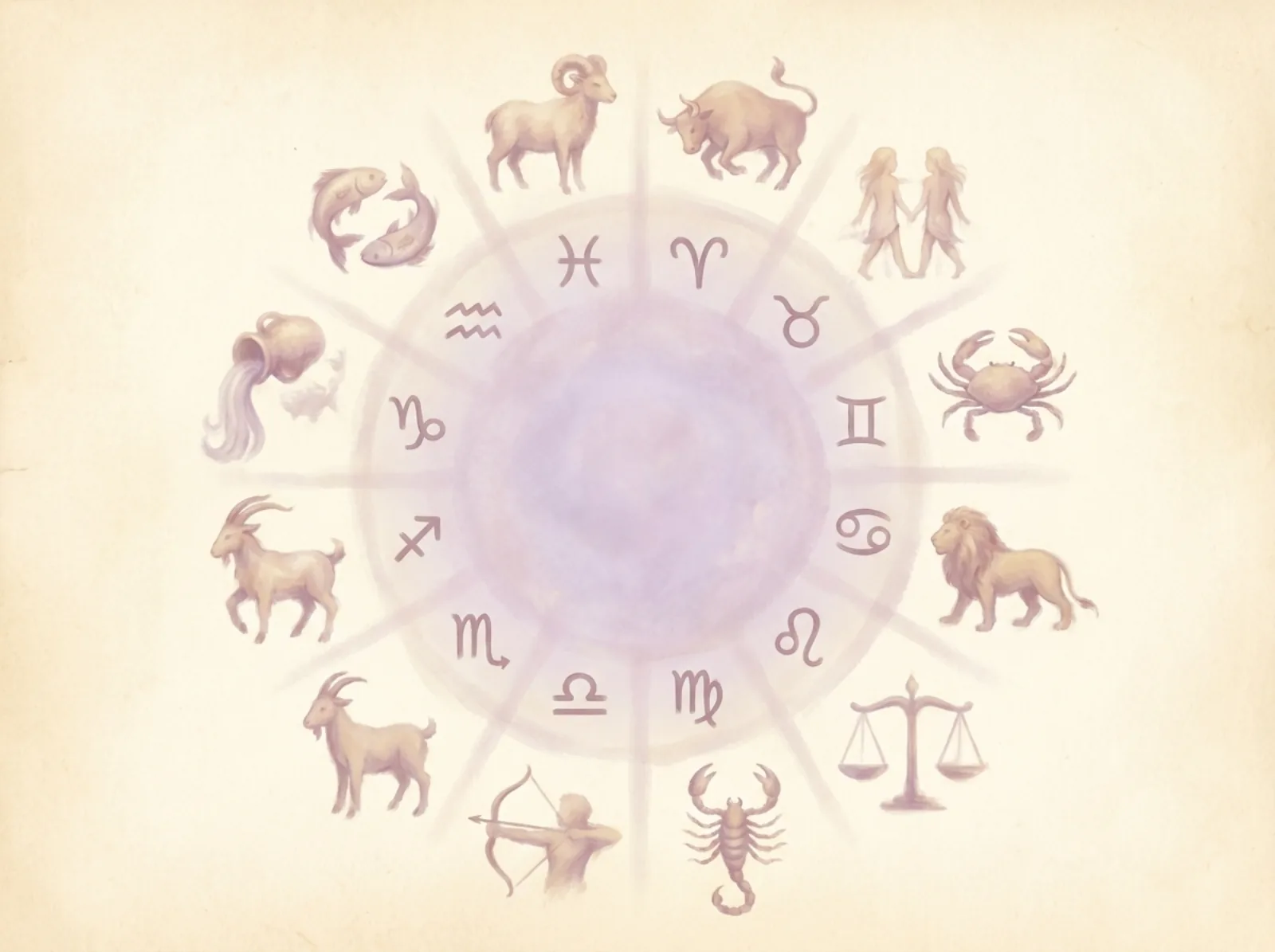
What a Decan Actually Is (And Where It Came From)
The word decan comes from the Greek dekanos — "ten" — and the system itself is older than Greek astrology by a long way. Egyptian astronomer-priests of the Middle Kingdom tracked 36 decanal stars, each one marking a ten-day segment of the solar year by rising above the horizon just before dawn. These were timekeeping stars first, mythological figures second. Sothis — Sirius — was the most famous of them, and its heliacal rising timed the Nile flood with an eerie reliability. When Hellenistic astrology absorbed Babylonian and Egyptian traditions in the last few centuries BCE, those 36 stars were rebuilt as 36 ten-degree arcs — three to each sign — and the time-markers became personality markers. The Chaldean order of planets (Saturn, Jupiter, Mars, Sun, Venus, Mercury, Moon) was wrapped around the zodiac so that each decan picked up a planetary sub-ruler. For a sign's first decan, that sub-ruler is almost always the planet that already rules the sign — which is why Leo's first decan gets a double hit of Sun. There are two main modern methods: the Chaldean order (just described) and the triplicity method, which assigns the three decans of a sign to the three signs of the same element in a rotation. Both are legitimate; most modern astrologers use the Chaldean. Austin Coppock's modern treatment in 36 Faces blends classical and modern readings and is one of the better English-language guides. Why does this matter for a self-reflection practice? Because sun-sign astrology smashes 2.5 billion people into twelve archetypes. Decans don't fix that — nothing short of a full chart does — but they add a layer. Instead of "I'm a Leo," you can say, "I'm a Sun-flavoured Leo born in the first ten days." The texture gets sharper. The horoscope-app vagueness that makes people roll their eyes starts to lift, because now the system is actually making a specific claim about you that you can agree or disagree with. I treat decans the way a tailor treats measurements: not identity-defining, but useful. Nobody is "a decan." You are a person who happens to be born inside one, and knowing that gives you a particular mirror to look into.Where the First Decan of Leo Sits (July 23–August 2)
The first decan of Leo covers 0° through 9°59' of Leo. In the tropical zodiac — the one Western astrology uses — that corresponds roughly to July 23 through August 2, with birthdays on the edges (July 22–23 or August 2–3) sometimes falling in a neighbouring sign or decan depending on the year and the exact time of day you were born. Why the wobble? The tropical zodiac starts at the moment the Sun crosses the celestial equator at the vernal equinox. Leo starts exactly 120° of ecliptic longitude later. That moment doesn't land on the same clock-time every year, because the solar year isn't a tidy 365 days. In practice, if you were born in a leap year, or right at a cusp, the safest thing to do is pull your actual birth chart and look at the degree of your Sun. Any free tool — Astro.com, TimePassages, our own Raka Tarot — will show you. A note for readers used to Vedic astrology: this is not that system. Vedic (sidereal) astrology uses a different zodiac that currently sits about 24° behind the tropical one, so a tropical Leo born on July 24 is likely a sidereal Cancer. Both systems are internally consistent; they're measuring different things. The decan descriptions in this article are tropical. If you follow Vedic astrology, use your sidereal degree in Leo instead. Degree matters more than date for anyone born on an edge. The first decan is strictly 0.00° to 9.99° of Leo. A Sun at 10.01° Leo is technically second decan — Jupiter's territory — even if your birthday is "obviously August 2." I say "technically" because astrology isn't a vending machine; a chart with the Sun at 9.9° versus 10.1° isn't a different person. But for a self-reflection framework, the distinction gives you more specific journal prompts, which is what we're here for.The Sun's Double Rulership and Classical Dignity
The sign ruler of Leo is the Sun. The sub-ruler of the first decan of Leo is also the Sun. This stacking is unique to the first decan of every sign, but Leo is the one where it hits hardest, because the Sun in Leo is in domicile — the astrological equivalent of being in your own living room with the heat set exactly how you like it. Classical astrology assigns each planet a sign where it is "at home." The Sun is at home in Leo. Nowhere else. That means every expression of the Sun's archetype — vitality, visibility, pride, generosity, creative output, parenthood, kingship, warmth, drama — operates in Leo at full strength. Put a Sun-ruled decan on top of a Sun-ruled sign, and you get first-decan Leo: an astrological signal with the volume knob at the top of the dial. Dignity is a classical astrology term for how comfortable a planet is in the position it occupies. The Sun has maximum dignity in Leo, and the first decan of Leo compounds that: Sun ruling the sign, Sun ruling the decan. In classical terms, this is one of the strongest Sun placements available. Nothing is formally debilitated here — debility is specific to the opposite sign, so the Sun is in detriment and faces its weakest expression in Aquarius, not in Leo. The practical read: whatever the Sun stands for in a chart gets amplified in this slice. The complication is that strong dignity isn't automatically good news. A very strong placement is a very loud placement, and loud placements need skilled handling. A Sun this strong will push its themes into every corner of a life: career, relationships, sense of self, health (classical medical astrology associates the Sun and Leo with the heart). The lesson most first-decan Leos end up learning the hard way is that having a strong Sun is more responsibility than gift. You have to spend it well. Dignity is raw material; what you do with it is a separate conversation. The Egyptian decan historically overlapping with these degrees was called "the Lion" in some traditions and was associated with gold, kingship, and the heart. Austin Coppock calls this decan "the Shield" in 36 Faces, emphasising protection and the defended ego. Both images are useful: there's the glowing side (gold, radiance) and the defended side (shield, guard). First-decan Leos usually recognise themselves in both.Core Traits of First-Decan Leo
If you line up ten first-decan Leos, you'll see personality variance of course — rising sign, Moon, Venus, Mars and everything else differ — but a few threads tend to run through them. Warmth, first. Not just niceness. A particular quality of attention that makes the person you're talking to feel noticed. First-decan Leos tend to be very good at remembering details about people they care about, and very good at making those people feel like protagonists in their own lives. The warmth is not performative, though it often performs; it's genuinely how they move through the world. Generosity, second. These are people who overpay for your coffee, who send gifts out of nowhere, who throw the dinner party and absorb the cost. The generosity is tied to a sense of personal abundance — they feel rich in attention, time, or affection, so they can afford to spread it. When they feel scarce, the generosity contracts first. A need for recognition, third — and this is where first-decan Leos get unfairly maligned. Needing to be seen is treated like a flaw. It isn't. It's a baseline. The question is whether the person has built a life where that need is met honestly (visible meaningful work, real relationships, creative output) or dishonestly (chasing applause, performing identity, inflating accomplishments). First-decan Leos with their need met are generous and warm. First-decan Leos starved of real recognition can be exhausting. Loyalty, fourth. Once you're in, you're in. First-decan Leo friendships are often decades long. First-decan Leo partnerships are often intensely committed. The shadow is that the loyalty is partly about dignity — being someone who honours commitments — which means first-decan Leos sometimes stay in situations past their expiry date because leaving would feel like admitting a mistake. A dramatic streak, fifth. Not drama as chaos; drama as weight. First-decan Leos tend to feel their emotions in HD, and they tend to describe their lives in slightly larger-than-life terms. This is where the actors and performers come from. It's also where the exhausting-at-dinner-parties stereotype comes from. The gift and the risk are the same reflex. Confidence, sixth. Native. Not always well-earned, which is the work of a lifetime.How This Differs From Leo's Second and Third Decans
If you've ever read a horoscope and thought "that's half right, half not," you may be running up against decan differences. Here's how the three Leo decans split: First decan — July 23 to August 2 — Sun sub-ruler. Pure, concentrated Leo. Visibility, warmth, pride, dignity, loyalty. The archetypal Leo most people picture when they hear the word. Second decan — August 3 to August 12 — Jupiter sub-ruler. Leo plus a layer of expansion, philosophy, teaching, generosity-at-scale, and sometimes faith. These are the Leos who become mentors, publishers, coaches, religious leaders, people who want to be seen for their ideas as much as for themselves. Barack Obama (August 4) sits here. The need for recognition is routed through influence and impact rather than attention per se. Third decan — August 13 to August 22 — Mars sub-ruler. Leo plus edge, drive, physicality, and creative risk. These are the Leos who look more like warriors or athletes than kings. Madonna (August 16) and Robert De Niro (August 17) sit here. The pride is sharper. The creativity is combative. There's often a willingness to break things to make them. First-decan Leo is the one that feels most like the stereotype because the stereotype is largely built from this slice. If you've met a Leo who confused you — too philosophical, too combative, too mystical — the odds are good you were meeting a second- or third-decan Leo and comparing them against a first-decan template. For self-reflection: if you're first-decan and the generic Leo horoscope has always felt a bit on-the-nose, that's why. For second and third decan readers, the generic Leo horoscope is only partly yours — the sign-ruler layer is Sun, but the decan ruler is Jupiter or Mars, and those planets ask different questions. Jupiter asks "where are you growing?" Mars asks "where is your edge?" Sun asks "where are you shining — and from what source?" Mirror prompt: Which decan does your closest Leo-friend fall into, and how does the decan math line up with what you've seen in them?Love and Relationships for This Decan
First-decan Leo in love is… a lot. In the best way, usually. The baseline is big. These are people who do grand gestures without irony — spontaneous trips, handwritten letters, surprise dinners, meeting-the-parents moves well before most would consider them. They love being in love. They love declaring it. They love being chosen in a way that lets them choose back visibly. The core relationship need is admiration. Not flattery — admiration. First-decan Leos want to be with someone who finds them impressive and says so. The reason the "Leo needs attention" trope exists is that first-decan Leos withering in a relationship where they feel invisible is a real pattern. If you've ever watched a first-decan Leo friend go quiet in a partnership, nine times out of ten they've stopped feeling admired. The reciprocal — and this is the part people miss — is that first-decan Leos are generous admirers. They're often the loudest supporters of their partner's career, the first to brag about their accomplishments, the ones who show up to every event. The admiration they want is admiration they're prepared to give. Where it goes sideways: Possessiveness. The loyalty flavour can tip into "mine." First-decan Leos sometimes struggle with partners having rich lives independent of them, not because they consciously want control, but because they want to be central and anything that decentres them registers as threat. Pride-based fights. First-decan Leos lose arguments badly. The sting isn't being wrong; it's being seen as wrong. Which means they'll sometimes extend a fight past its natural end rather than concede. The partner's job isn't to argue harder — it's to give them a dignified exit. Mirror questions worth sitting with: - Do I love this person, or do I love how they reflect me? - When I give, am I giving freely, or am I collecting admiration-debt? - Can my partner have an evening, a project, a friendship that doesn't include me without me feeling abandoned? - Where in this relationship am I confusing being central with being loved? If you're dating a first-decan Leo, the shortest advice I have is: tell them you're proud of them, out loud, often, and specifically. It costs nothing and it builds the foundation they're actually trying to find.Career and Work for This Decan
First-decan Leos are built for visible work. This doesn't automatically mean fame — plenty of them run small businesses, lead teams, teach classes, or are the person at the office everyone goes to. What's constant is that their work needs to be seen, by somebody, in some real way, and attributed to them. The careers that tend to feel right: - Founder / CEO / anything where the role has a name on the door - Performer — actor, musician, speaker, stand-up - Teacher at any level, especially subjects they're passionate about - Senior creative in advertising, film, design — but with credit - Any role involving presentation, pitching, representing - Entrepreneurship, especially the kind where their taste shapes the product What rarely works long-term: - Deep anonymous back-office work with no visible attribution - Rigid hierarchies where their input is routed through two layers of someone else's name - Any environment that systematically takes credit for their contributions The shadow version of first-decan Leo at work is the credit-seeker — the person who routes every team success through themselves, who presents group work as individual accomplishment, who name-drops. This is a first-decan Leo whose core need (recognition) is being met in cheap, performative ways because it isn't being met in substantive ones. The healthy version does the opposite: they shine so publicly on their own real work that they can afford to give credit generously to their team. When first-decan Leos are secure, they're the best team leaders — they give the credit back, they make juniors feel seen, they build loyalty. For self-reflection, the key career question for first-decan Leo isn't "am I ambitious enough?" — the answer is almost always yes. The question is: "What am I ambitious for? Is it recognition, or is it the work itself?" Those are different foundations, and only the second one holds up over a thirty-year career. Mirror prompt: Think of the last project you were most proud of. Was the pride in the work, or in being recognised for it? Both are legitimate; it's useful to know which one you were really chasing. First-decan Leos who build careers around the work itself tend to end up with the recognition anyway — it's a quieter path and a sturdier one.Celebrities Born in the First Decan of Leo
These are useful not as proof of a decan's power — individual charts are far more complex than one placement — but as a texture library. Reading the same Sun placement across multiple people helps the archetype become legible. Jennifer Lopez — July 24, 1969. The textbook first-decan Leo: dancer, actress, singer, mogul, visible across four decades, famously driven, famously controlled about her public image. The relationship history reads like a first-decan Leo case study — grand, public, loyal while it's working, dignified in exits. Her career has been a long demonstration of what visibility-as-work looks like when it's done at the top of the dial. Daniel Radcliffe — July 23, 1989. A different kind of first-decan Leo: cast in a role at age eleven that would define most people, and then spent his twenties and thirties very deliberately choosing weird, specific projects to avoid being defined by it. That's a Leo move — dignity-of-self over easy applause. He also talks publicly about anxiety and sobriety, which complicates the "all confidence" stereotype and is a reminder that first-decan Leos can be deeply shy underneath the warmth. Sandra Bullock — July 26, 1964. Warmth is her brand. The run from Speed through Miss Congeniality to The Blind Side is a long demonstration of the first-decan Leo gift of making audiences feel they know you personally. She's also famously private about her kids — the Leo instinct to protect what's yours playing out quietly rather than loudly. Mick Jagger — July 26, 1943. First-decan Leo at the maximum front-man setting. Six decades of being watched on stage, and still at it. The stamina required to do that is a Leo thing — not raw energy, but the appetite for visibility. Jason Momoa — August 1, 1979. The warmth, physicality, loyalty profile is almost caricature. Public devotion to family, big-personality public presence, visible generosity. Arnold Schwarzenegger — July 30, 1947. Bodybuilding champion, action star, two-term governor. The first-decan Leo trajectory of parlaying visible excellence in one domain into visible excellence in the next, over and over, with the brand always his own. The pattern across the group: visibility sustained for decades, strong personal brand, careers built on being themselves on-camera more than disappearing into roles. That's what the Sun-doubled first decan tends to produce. Individual charts fill in the rest.Shadow Side Specific to First-Decan Leo
Every astrological placement has a shadow, and the shadow is usually a bent version of the gift. Here's what tends to go wrong when first-decan Leo isn't tended. Pride that curdles into vanity. The gift is dignity — a reasonable concern for how you carry yourself. The shadow is the same concern, metastasised, until it governs decisions. Vanity isn't about looking in the mirror; it's about never being willing to look stupid, which closes down most of the paths to actual growth. First-decan Leos who refuse to be beginners again at anything after thirty-five tend to be stuck in this. Needing to be seen replacing being known. These are different things. Being seen is public. Being known is intimate. First-decan Leos who have optimised for the first can wake up at forty with a large audience and no one who really knows them. The remedy is unglamorous — ongoing therapy, long friendships maintained through unflattering seasons, a partner who sees you on your worst day. Loyalty that becomes possession. Covered in the relationships section, but it bears repeating because it's one of the hardest shadow dynamics to see in yourself. If you keep finding your partner's independent life — their friendships, their hobbies, their family of origin — slightly threatening, that's this. Difficulty admitting fault. First-decan Leos sometimes build a self-concept so bound to being competent and admirable that any admission of error feels like identity collapse. The irony is that nothing restores admiration faster than a clean, un-defensive apology. The ones who learn this get respected more; the ones who don't get quietly resented. Confusing the stage for the substance. If your career, your relationships, your spiritual practice all depend on being watched to feel real, you've drifted. First-decan Leos tend to run this check less often than they should. Mirror questions for the shadow: - Where in my life am I protecting my image at the cost of actually being known? - When was the last time I let myself look stupid on purpose, in service of learning something? - Who in my life sees me when I'm not performing? And when did I last make space for them to? - Is my loyalty freely given, or is it a leash I've handed someone? None of this is a reason to feel bad about being a first-decan Leo. The shadow isn't the sign; it's the sign unexamined. Examining is the whole move.Journal Prompts for First-Decan Leo
Pick two or three. Don't do all of them at once; they're not a checklist. These are for sitting with. 1. What's one place in my life where I perform warmth I don't actually feel? What's the cost of keeping that up? 2. If no one applauded, which of the things I'm currently working on would I still do? Which would I quietly let go? 3. Who in my life knows me well enough to call me on my pride, and when did I last let them? 4. Where do I confuse being central to someone with being loved by them? 5. What's a thing I'm not good at that I've been avoiding because I don't want to be seen as a beginner? What would it cost me to try it badly, in front of people, this week? 6. Who are the people I've been loyal to past the point where the loyalty was mutual — and what story am I telling myself about why I'm still there? 7. If I had to describe my dignity — what it is, what maintains it, what erodes it — in two sentences, what would I say? 8. When was the last time I apologised cleanly, without hedging, without explaining, without a counter-complaint? 9. Where in my life am I living in sunlight — real, warm visibility — versus performing in stage light? Can I feel the difference? 10. If my Sun is doubled, what's happening in the quieter rooms of my chart — the Moon, the rising, Venus, Mars? When did I last tend them? The reason I keep returning to journal prompts rather than predictions is that the chart doesn't do anything to you. It describes a tendency. The work — the only work astrology can actually point at — is noticing where the tendency is running your life unconsciously, and deciding whether that's still what you want.Frequently asked questions
What dates fall in the first decan of Leo?
The first decan of Leo runs from roughly July 23 to August 2 in most years. The exact boundaries can shift by a day because the Sun's entry into Leo isn't locked to the same clock-time annually. If you were born on July 22–23 or August 2–3, pull your actual chart and check your Sun's degree — anything from 0.00° to 9.99° of Leo is first decan. In Raka Tarot's astrology tools and free sites like Astro.com, that degree sits on the main chart screen. Part of our astrology library.
Why is the first decan of Leo called the Sun decan?
In the Chaldean order of planets — the one most Western astrologers use for decans — a sign's first decan gets its sub-ruler from the sign's own ruler. Leo is ruled by the Sun. So the Sun rules the sign and also the first decan. That double dose of solar energy is why first-decan Leo reads as the most archetypal, textbook Leo of the three decans.
How is a decan different from a cusp?
A cusp is the boundary between two signs — the handful of days when the Sun is transitioning from one zodiac sign into the next. A decan is a ten-degree subdivision inside a single sign. There are twelve cusps in the zodiac and thirty-six decans. First-decan Leo is unambiguously in Leo; it's just the first slice of it. Cuspy births happen at both ends of a sign, not inside one.
Can my decan contradict my sun sign?
No — your decan modifies your sun sign, it doesn't override it. A first-decan Leo is still fundamentally a Leo. The decan adds a flavour: in this case, a double-Sun flavour that intensifies the typical Leo traits. The second and third decans of Leo bring in Jupiter and Mars respectively, which can shift the feel noticeably without changing the underlying sign.
Does the first decan of Leo have a specific tarot card?
In the Golden Dawn system, which maps the thirty-six decans to the minor arcana, the first decan of Leo is associated with the Five of Wands — Strife. Austin Coppock and other modern decan writers use similar correspondences. The Five of Wands here is less about outright conflict and more about the exertion of asserting your voice in a crowded room — very on-brand for the double-Sun placement.
Is the first decan of Leo the strongest Leo?
Classically, yes — because the Sun has maximum dignity in Leo, and the first decan compounds that dignity by making the Sun the decan sub-ruler too. Strongest doesn't mean best, though. It means loudest, most concentrated, hardest to ignore. First-decan Leos get the full solar signal, which is a gift and a responsibility. Second- and third-decan Leos get the same sign ruler but with Jupiter or Mars adding texture, and those versions can be equally effective in the world.
How do I actually use my decan if I don't follow astrology closely?
Treat it as a mirror, not a prediction. Read the traits and shadow side slowly. Mark the ones that feel accurate and the ones that don't. Pick two or three journal prompts and sit with them for a week each. The point isn't to confirm your identity — it's to get a specific-enough vocabulary that self-reflection has somewhere to go. Raka Tarot's journaling features are built around exactly that use case.