What the lunar nodes actually are (and why they matter more than your sun sign)
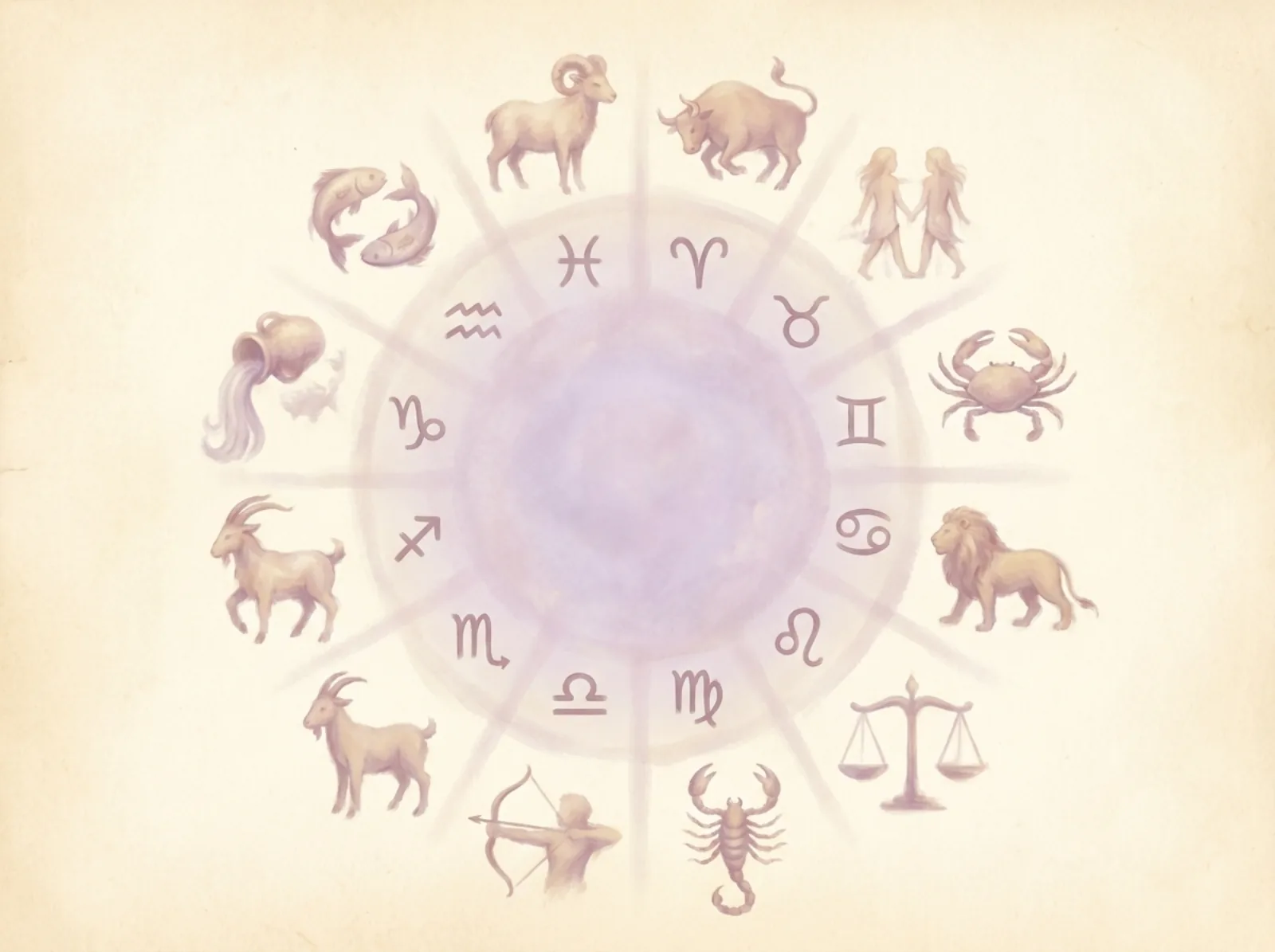
Before we get into Gemini specifically, let's ground this. The lunar nodes aren't planets. They're mathematical points — the two spots where the Moon's orbit crosses the ecliptic, which is the apparent path of the Sun across the sky from Earth's perspective. NASA tracks them because they're the geometry behind every eclipse. Astrologers track them because, well, we've been tracking them for about two thousand years and the symbolism refuses to stop working. Your North Node and South Node are always exactly opposite each other, 180 degrees apart. If one sits in Gemini, the other sits in Sagittarius. There's no exception, no edge case, no 'well, mine's different.' They move backward through the zodiac at roughly one sign every 18 months, which means an entire cohort of humans shares the same nodal axis. The nodes you were born with are a generational marker as much as a personal one. What makes them feel personal is the house they fall in and the aspects they make to your other planets. In traditional Vedic astrology they're called Rahu (North Node) and Ketu (South Node), and they're treated as full-blown planetary forces. In Western astrology they're more like a compass. South Node is where you came from — the lifetimes behind you, the gifts you've already developed, the patterns that feel so familiar you don't even see them anymore. North Node is where you're headed — the uncomfortable, slightly-wrong-fitting direction that your soul actually came here to practice. The trick most people miss: the South Node is not a villain. It's not something to amputate. It's the muscle you've already built. You get to keep it. What you don't get to do, if you want to grow, is live there. Living on the South Node feels like coasting in a car on a flat road — you're moving, technically, but you're not getting anywhere new.South Node in Gemini: the core growth direction, and the Gemini-Sagittarius axis
Here's the whole placement compressed, and then we'll unpack it. If your South Node is in Gemini, your soul has already done many lifetimes of being clever. You've been the scribe, the messenger, the merchant, the journalist, the student who read everything, the sibling who could talk circles around the family. You can gather information faster than most people can decide what they want for lunch. You can hold five contradictory ideas in your head and feel comfortable with all of them. This is your inheritance, and it's genuine. The growth isn't about getting dumber. It's about noticing that you keep using the gift to avoid landing. Every nodal axis is a dialogue between opposites, and the Gemini-Sagittarius one is maybe the most on-the-nose. Gemini is mutable air. Its job is to collect, connect, name, and relate. It asks 'what?' and 'how?' and 'what about this other angle?' Sagittarius is mutable fire. Its job is to interpret, mean, believe, and expand. It asks 'why?' and 'what does this all add up to?' and 'what am I actually here for?' If you have South Node in Gemini, you've mastered the data-gathering side. You know how to research, converse, pivot, and keep options open. The Sagittarius muscle — synthesizing all that data into a worldview you'll actually stake something on — is the one that feels harder, slower, almost suspicious. Making a bold claim feels reckless when you can already imagine the four smartest counterarguments. Picking a career path feels claustrophobic when you can see twelve other interesting ones. Deciding what you believe about God, meaning, or the point of all this feels embarrassing because you can already hear yourself sounding naive. That embarrassment is the growth edge. The Sagittarius you're growing toward isn't a swaggering know-it-all. It's someone who has done the work of landing on a few deeply held truths and letting those truths shape how they move through the world. The irony is that South Node Gemini people often end up being some of the most trustworthy teachers and philosophers once they let themselves commit — because they already know how to see the counterargument, they just stop letting it stop them. I've found tarot's Hanged Man card to be a surprisingly good shorthand for this axis. The Gemini mind wants to turn the question over, over, over. Sagittarius surrenders to a perspective shift and lets the picture complete itself. If you pull it in a Raka reading and you've got this nodal axis, pay attention — the universe is being on the nose with you.Common life themes you'll recognize if this is you
I polled my own notebooks and about forty readings I've done for South Node Gemini clients, and the same handful of patterns show up over and over. See which of these land: You have at least three unfinished creative projects right now, and the reason none of them are finished is not that you lack time. It's that finishing requires picking one version and killing the others, and that feels like dying. You'd rather have four live options than one real thing. You read a lot. Possibly too much. You've been told you're 'well-read' your whole life and you've started to notice that reading has become a way to postpone deciding. If you just read one more book on habits, you'll finally change. If you just finish one more podcast on relationships, you'll finally know what you want. The data is not the bottleneck. You already know. You are a world-class texter but a difficult-to-pin-down friend in person. You maintain a huge communication web and genuinely care about the people in it, but the thought of a weekly standing dinner with one person for a year makes your skin itch slightly. Breadth has always felt safer than depth. You change your mind in public. You'll argue a position passionately at a party and then quietly adopt the opposite one two weeks later and genuinely not feel contradictory about it. Both were true when you said them. You learn languages, hobbies, and skills quickly, hit about 70 percent fluency, and then move on. You have a graveyard of apps and instruments and half-finished courses. The acquisition is the fun part. Mastery, which requires staying with one thing past the plateau, feels like punishment. Your nervous system runs on input. Silence is harder than noise. A quiet afternoon with no new information coming in can feel almost physical, like the air has thinned. This is the Gemini South Node's hum — the sense that if you stop collecting, something bad will happen. None of these are flaws. All of them are the muscle doing exactly what it was trained to do over many lifetimes. The invitation is to notice them, not punish them, and to practice the Sagittarius move: pick one thing and go deeper than feels safe.Love and relationships: why depth feels like a trap (and why it's the medicine)
This is where I see Gemini South Node show up most painfully in readings, and I say that as someone who had to learn it the hard way. Relationships with this placement tend to follow a shape: you're wonderful at the beginning. The chemistry of a new person — new jokes, new context, new topics, new ways of seeing — is genuinely electric for you. You're a brilliant early-stage partner. The problem starts around month six to eighteen, when the novelty of the information exchange runs out and what's left is the slower, less-articulate work of actually being with another person. At that point the Gemini South Node has a few favorite escape hatches. You might start keeping the relationship interesting by introducing drama or ambiguity — basically generating new information artificially. You might stay physically present but mentally scatter, maintaining five adjacent friendships or flirtations that keep your attention diffuse so no single bond gets to claim too much of you. You might convince yourself that your partner is boring now, when really the two of you have just reached the depth where talking is no longer the medium of connection. Presence is. The North Node in Sagittarius medicine here is almost unbearably simple: stay. Stay in the room when the conversation gets slower. Stay in the relationship when the data stops being new. Trust that the depth of one bond, cultivated over years, has gifts in it that twenty breadth-level connections will never produce. This doesn't mean staying in a bad relationship — it means not using 'I need more variety' as a cover for 'I'm scared of being known.' I should also say: if you have this placement, you often attract Sagittarius-energy partners. Big-picture people, teachers, foreigners, people with strong worldviews. Pay attention to them. They're mirrors. The parts of them that feel 'too much' — too opinionated, too settled, too committed to one path — are often exactly the parts you came to grow into.Career and vocation: the generalist's dilemma
Nobody has a more impressive career-pivot story at a dinner party than a Gemini South Node person. Journalist to UX designer to therapist to real estate to startup founder, with a sommelier certification in the middle. Each pivot was real. Each one was legitimately interesting. And yet, I've watched clients in their late thirties and forties sit across from me and quietly admit that the variety has started to feel less like freedom and more like a problem. The reason is that mastery compounds and generalism doesn't, at least not the way we're sold. Being 70 percent competent at twelve things is less valuable, both financially and spiritually, than being 95 percent at one. Your Gemini mind resists this because mastery requires the plateau — the long, boring stretch after you've stopped getting better quickly but before you've broken through to a new level. The plateau is Sagittarius territory. It's where meaning lives. Gemini wants to swap to a fresh skill before the plateau arrives. I'm not telling you to pick one job for life. That's not what Sagittarius means. The growth is in picking one theme, one through-line, one body of knowledge you're willing to be in dialogue with for a decade or more. A journalist who stays with one beat for fifteen years and becomes the person people call about it. A therapist who goes deep on one modality instead of adding another certification every year. A writer who stops starting new novels and finishes one. The careers that tend to be most fulfilling for Gemini South Node people, in my experience, are ones that let the gift stay useful — teaching, writing, interpretation, bridging work — but inside a frame that forces commitment. A tenured professor is a happier Gemini South Node than a freelancer, even though freelancing seems like the obvious fit. The container is the medicine.The shadow trap of Gemini: when cleverness becomes a hiding place
Let's talk about the dark side, because every placement has one and this one is particularly good at disguising itself as a virtue. The shadow of Gemini South Node is using intelligence to avoid vulnerability. It's being so quick-witted that nobody, including you, can ever get a clean look at what you actually feel. It's making a joke two seconds before the moment would have gotten real. It's deflecting with a question when a question is being asked of you. Watch for these in yourself: You argue positions you don't actually hold just because you can. This feels like intellectual play but it slowly erodes your sense of what you believe. Over years, you can lose the thread entirely of what you actually think, because every opinion has become a performance. You gossip, and you call it analysis. The Gemini mind loves pattern-recognition about other people. There's a thin line between understanding human behavior and using 'understanding' as a socially acceptable way to talk about everyone's business. You research in lieu of acting. You can tell yourself with a straight face that you need to understand the market better before launching the thing, understand your attachment style better before being in a relationship, understand enlightenment better before meditating. All of this reading is doing something, but it's not the thing it's pretending to do. You use language to control emotional situations. When your partner cries, you explain. When your friend is struggling, you offer a framework. When you yourself feel something messy, you narrate it before it can land. This is a kind of armor, and it works, which is why it's so hard to put down. The way through all of this is not to stop being smart. It's to notice when your intelligence has become a defense mechanism rather than a tool. The question I ask myself and my Raka readers is: if you couldn't make a clever observation about this moment, what would you have to actually feel? That gap, between the clever observation and the raw feeling, is the Sagittarius growth edge.Celebrities with South Node in Gemini: five real examples
I want to be careful here because celebrity astrology can get lazy fast. These are placements verified from reliable birth-time databases, and I'm using them to illustrate patterns, not to psychoanalyze people I don't know. **Taylor Swift** (born December 13, 1989) has her nodal axis along Gemini-Sagittarius with South Node in Gemini. Watch how this plays out in her career: an astonishing output of lyrics, a legendary memory for interpersonal detail, a documented love of re-telling her own story from multiple angles. The 're-recordings' project is almost a textbook Gemini South Node move — rewriting the record, literally. Her North Node growth has shown up in the way she's steadily committed to a bigger, more Sagittarian narrative over time: the Eras Tour as a single mythological arc, the long-form documentary work, the willingness to stake public positions she used to keep private. **Barack Obama** (born August 4, 1961) also carries this nodal axis. The Gemini South Node is visible in his famously facile intellect, his comfort moving between cultures and registers, his love of books and conversation. The Sagittarian growth was him committing to one enormous public story — the arc of a presidency, a single long marriage, a single legacy project — rather than the easier path of staying endlessly interesting. **Angelina Jolie** (born June 4, 1975) has South Node in Gemini. Early career: fast, mercurial, famously many relationships and personas. Later career: a sustained commitment to humanitarian work, long projects, a settled identity as a mother and director. The movement from breadth to depth is almost diagrammatic. **Prince Harry** (born September 15, 1984) carries this axis too. The Gemini South Node shows in the restless early life, the moving between roles. The Sagittarius North Node has pulled him toward a single, committed worldview — his writing, his advocacy, his willingness to stake public positions that make his life harder but more meaningful. **Johnny Depp** (born June 9, 1963) rounds out the list. Classic Gemini South Node career arc: enormous range, a different character every project, an avoidance of being pinned down. The painful chapters of his later career can be read, from a nodal lens, as what happens when a Gemini South Node refuses the Sagittarius work of landing on a stable identity and letting it be known. Use these examples the way I use them in Raka readings — as pattern illustrations, not predictions. Your chart is yours. These people just happen to share one piece of geometry with you.Nodal return and transits: when this placement gets loud
The nodes do a full cycle every 18.6 years, which means every 18.6 years your transiting South Node returns to your natal Gemini position. Mark these dates: roughly ages 18-19, 37-38, 55-56, and 74-75. These are nodal returns, and they tend to be major course-corrections. If you're in one, you'll know — life keeps serving you the exact lessons you've been avoiding, with increasing volume. There's also the nodal half-return, roughly ages 9-10, 27-28, 46-47, and so on. These show up as pivot points where you have to choose between the comfortable Gemini path and the harder Sagittarius one. The late-twenties one often lines up with the Saturn Return, which is why that period feels so decisive. Transits to pay particular attention to if you have this placement: **Jupiter transits to your natal Sagittarius North Node** are usually gift windows. Jupiter rules Sagittarius, so when it hits your North Node, growth feels less like forcing and more like a current you can lean into. Big-picture opportunities, teachers, travel, publishing, or genuine faith experiences often cluster here. **Saturn transits to either node** are commitment demands. Saturn is not asking politely. It wants you to pick a path and build on it. If you keep flaking during a Saturn-to-node transit, you'll feel it as frustration, closed doors, or a growing sense that your options are narrowing. They are — in a good way. Narrowed options are how depth gets built. **Eclipses on your nodal axis** happen about every nine years and are usually life-restructuring. The Gemini-Sagittarius eclipses of 2020-2022 were a big nodal return window for people with this placement; the next one lands around 2039-2040. If you're reading this during an eclipse season on your axis, pay close attention — the universe is editing your life, and the Gemini-Sagittarius story is on the page.Journal prompts for landing in Sagittarius without betraying Gemini
I don't believe in generic journal prompts, so these are ones I've actually used with Raka clients and with myself. Pick two or three. Sit with them for a week each. Don't research anything before answering. What is one belief I hold that I've never argued the opposite side of? Why have I protected this one? If I had to pick one subject to spend the next decade going deeper on, with no option to pivot, what would it be? What's my first reaction to that question — relief, panic, or something else? Name three relationships in my life where I've chosen breadth over depth. What would it cost me to go deeper in one of them? What would it cost me not to? What's one piece of knowledge I keep acquiring that I already have enough of? What am I postponing by continuing to collect? When was the last time I said something I believed, in public, without hedging? How did my body feel after? If no one would ever read it, what would I write? What does it mean that I'm still asking the question? The Gemini mind will want to answer all of these quickly, cleverly, with footnotes. Resist. The point of these prompts is not to have good answers. It's to let yourself sit next to the question long enough that the answer stops being clever and starts being true.South Node in Gemini versus South Node in Sagittarius: the mirror image
Just to make sure the axis makes sense, let me flip it. If someone has their South Node in Sagittarius (and therefore North Node in Gemini), they've got the opposite lifetime of mastery. They came in knowing the big picture — the belief, the meaning, the overarching framework. Their comfort zone is being the one who sees it all, who teaches, who declares the truth of the matter. The growth for them is the opposite of yours. Where you're learning to commit to one meaning, they're learning to tolerate not knowing. Where you're releasing the habit of endless gathering, they're learning to actually ask questions, to sit with specifics, to not generalize so fast. Their shadow is dogmatism; yours is dilettantism. Their medicine is curiosity; yours is conviction. Same axis, opposite directions on it. I mention this because people with Gemini and Sagittarius nodes often end up in each other's lives — as partners, friends, teachers. You will drive each other crazy in exactly the way you're meant to. Their refusal to look at the details will enrage your Gemini, and your refusal to pick a damn stance will enrage their Sagittarius. If you can hold the tension long enough to actually learn from each other, you both grow faster than you would alone. The gift of understanding your nodes is that it stops being personal. You stop thinking your partner is a stubborn mystic and you stop thinking your partner is a scattered skeptic. You both become people doing exactly the growth your souls came in to do, in exactly the way it was always going to feel. The relationship becomes the curriculum.Frequently asked questions
Is South Node in Gemini considered a difficult placement?
No placement is objectively difficult, but Gemini South Node has a specific challenge: the gift (fast thinking, communication, versatility) is socially rewarded, which makes it harder to notice when it's keeping you stuck. It's not difficult the way a Saturn-heavy chart is difficult — nobody's handing you obvious hardship. It's difficult because the trap is comfortable. Part of our tarot reference.
Does South Node in Gemini mean I was a writer or scholar in a past life?
Possibly. The traditional reading is that your soul developed strong Gemini-ruled skills in previous lifetimes — writing, teaching, trading, messaging, siblinghood, local travel, early learning. I don't take past-life claims literally in a scientific sense, but I do find the framing useful. Whether or not reincarnation is real, the pattern of 'I was already good at this before I got here' is observationally true for most Gemini South Node people.
Should I work against my South Node?
No, and this is where a lot of pop astrology gets it wrong. The South Node isn't a curse to overcome. It's the muscle you already have. The growth is not amputation, it's redirection — keep the Gemini skills, use them in service of a Sagittarian commitment, rather than using them to avoid commitment entirely. Think integration, not rejection.
How is Vedic Ketu in Gemini different from Western South Node in Gemini?
The symbolism overlaps substantially — both treat it as the point of past mastery and release. Vedic astrology adds more weight to Ketu as an active, almost planetary force, and often reads it as spiritually significant in its own right rather than just a compass. Vedic charts also use a different zodiac (sidereal vs. tropical), so your Western Gemini South Node might fall in a different sign Vedically. If you want both readings, get both — they're not contradictory, they're different lenses.
What if my South Node in Gemini is also conjunct a planet?
That intensifies and specifies the pattern. South Node conjunct Mercury doubles down on the mental-gathering pattern. Conjunct Venus suggests the breadth-over-depth pattern plays out in love and aesthetics. Conjunct Mars means the restlessness has a drive-energy to it. Conjunct Saturn is actually one of the more useful configurations because Saturn's commitment energy helps counterbalance the Gemini scatter. Look at which planet it is and read the growth edge through that lens.
How do I know when I'm genuinely growing versus just intellectualizing growth?
The honest tell is action over time. If a year from now your life looks structurally the same — same number of half-finished projects, same breadth-over-depth relationship patterns, same reading-instead-of-doing loop — then you've been intellectualizing. If you can point to one commitment you've stayed with past the plateau, one relationship that's gotten deeper rather than wider, one project you actually finished, that's the Sagittarius muscle developing. Grace, with this placement, is measured in follow-through.
Can a Raka Tarot reading help me work with this placement?
I built Raka partly to serve exactly this question. The deck's framing — tarot as self-reflection rather than fortune-telling — fits the Gemini South Node growth edge well, because it forces you to sit with one image, one question, one layer of meaning rather than skating across many. A three-card reading on your North Node direction, done honestly, can be more useful than three more books on the subject. The point is not what the cards 'say.' It's that pulling them makes you commit to a question long enough to actually hear yourself.