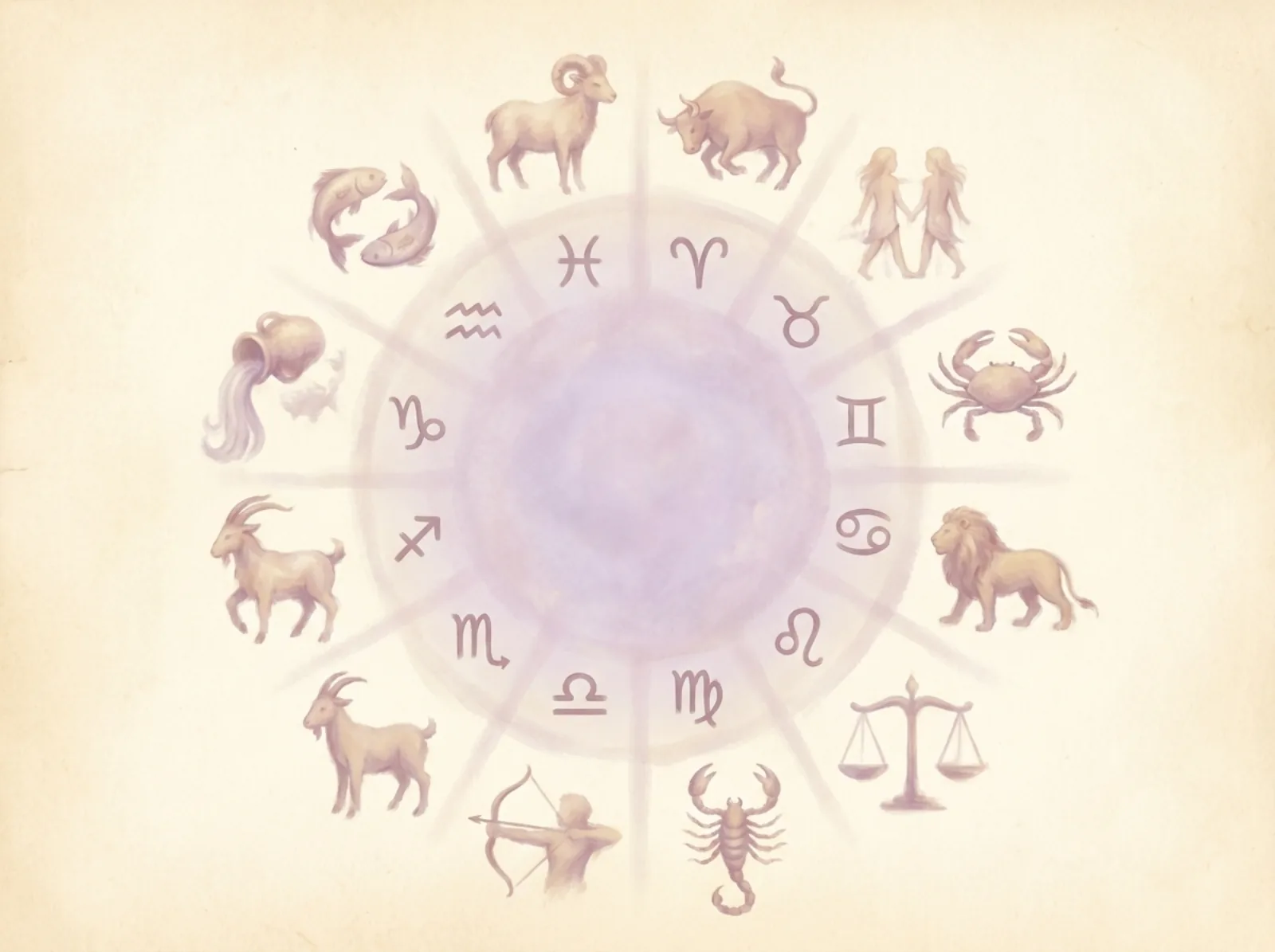
A note before the ephemeris: why Jupiter stopped me from quitting astrology
I almost closed my practice in the winter of 2017. Nine years in, I was tired of being the woman at the dinner party who got asked to explain Mercury retrograde between the salad and the main course. Then a client, a hospice chaplain in Portland, came in for a chart reading on a Tuesday I remember mostly because the heater was broken and we both kept our coats on. She had natal Jupiter conjunct her Sun in the ninth house, and when I started describing what that meant, she started crying. Not the usual client tears. She said, 'That is the sentence I have been trying to write about my own life for forty years.' Part of our astrology guide hub.
That was Jupiter doing its actual job. Not promising her a lottery win. Not predicting a trip to Italy. Just handing her a frame big enough to hold what she already knew. I kept the practice open. This article is my attempt to give you the same kind of frame, which is why it runs long and refuses to flatten the planet into 'the lucky one.'
Jupiter in astrology is the archetype of meaningful expansion, the principle in a birth chart that governs how you grow beyond your origin story. It rules higher education, long-distance travel, publishing, religion and philosophy, the law, foreign languages and cultures, and the quality we loosely call luck but which is really a trained appetite for yes. Where Jupiter sits in your natal chart is where you tend to think bigger than your evidence, which can be the saving grace of a timid life or the undoing of an already grandiose one. See our best AI astrology app guide.
This guide walks through its mythology, its glyph, its behavior in each of the twelve signs and houses, its major aspects to other planets, the retrograde periods you keep hearing about, famous charts worth studying, and the shadow versions nobody puts on the Instagram infographic. If you want to skip ahead and find your own Jupiter sign first, the section called 'How to find your Jupiter placement' has the steps.
What Jupiter actually rules (and what people keep getting wrong)
In Western tropical astrology, Jupiter is the traditional ruler of Sagittarius and the classical co-ruler of Pisces, before Neptune was discovered in 1846. Its areas of influence cluster around what the Greeks called the ninth-house themes: the search for meaning, the stretch beyond the local, the systems of thought we use to make sense of a confusing world. That includes organized religion and personal spirituality, philosophy, higher education and anything that happens after secondary school, publishing and broadcasting, the practice of law and the writing of law, long journeys both physical and intellectual, and relationships with foreigners or foreign cultures.
It also governs a cluster of qualities that look like a personality but function more like a muscle: optimism, generosity, benevolence, the ability to see the bigger picture, moral conviction, humor, and what Howard Sasportas in The Twelve Houses called 'the search for a transcendent principle around which to organize one's life.' On the body it has traditional rulership over the liver, the thighs, and the processes of growth and metabolism, which is why old medical astrology texts link Jupiter transits to weight gain and the occasional gout flare.
What Jupiter is not: a guarantee, a lottery ticket, a replacement for consent, or a reason to take a 'yes from the universe' as a license to behave badly. The modern wellness industry has flattened Jupiter into a kind of cosmic cheerleader, which both oversells what the planet does and undersells how dangerous its shadow can be. A strong Jupiter without a well-developed Saturn can produce the con artist, the televangelist, the influencer who sells a certification program they themselves do not hold.
The classical texts call Jupiter the Greater Benefic, Venus being the Lesser Benefic, but even seventeenth-century astrologer William Lilly in Christian Astrology warned that an afflicted Jupiter 'promises much and performs little.' Richard Tarnas in Cosmos and Psyche describes the Jupiter archetype as the principle of 'expansion, elevation, success, abundance, magnanimity, enthusiasm, and buoyant optimism,' but notes it also carries 'inflation, excess, extravagance, and self-importance.' Both faces are the same planet.
The glyph and the mythology (why this matters for interpretation)
Jupiter's astrological glyph looks like a stylized number four or a cursive capital Z crossed with a horizontal line. The classical reading is that it is the Greek letter zeta, the first letter of Zeus, placed above a cross of matter. Translated: higher principle elevated above material concern. A more practical reading, offered by Liz Greene in The Astrology of Fate, is that the glyph shows the human mind reaching upward, which is why Jupiter so often shows up in the charts of teachers, judges, and anyone whose job is to lift the particular toward the general.
Mythologically, Jupiter is the Roman name for Zeus, king of the Olympian gods, father of a chaotic pantheon of children both divine and mortal, wielder of the thunderbolt, and serial seducer in a long list of swan, bull, and golden-shower disguises. This matters because the planet carries the whole myth, not just the shiny parts. Zeus was generous and he was also entitled. He gave magnificent gifts and he also took whatever he wanted. Both are encoded in the archetype.
In Vedic astrology this planet is called Guru or Brihaspati and is treated as the preceptor of the gods, the teacher. The Western tradition, by contrast, keeps the kingly, patriarchal, slightly dangerous flavor of Zeus closer to the surface. When you read your Jupiter placement, both faces are available. The question your chart keeps asking is which one you are feeding.
Carl Jung, whose work still underpins most archetypal astrology, treated the Zeus figure as the Self archetype in its expansive, principle-generating mode. In Jungian terms, a healthy Jupiter is how you keep your psychological ceiling from pressing down on your actual life. A pathological Jupiter is inflation, the ego claiming to be the Self.
How to find your Jupiter placement in five steps
You do not need an app subscription to find this. You need an accurate birth time, a free chart calculator, and about ten minutes.
Step one: locate your birth certificate or hospital record and find the time stamp. If the time says exactly on the hour (7:00, 8:00) treat it with mild suspicion since those are often rounded. If you cannot find a time, you can still get a reliable Jupiter sign, but your Jupiter house will be unreliable because the house system depends on the exact minute.
Step two: go to a reputable free chart calculator. Astro-Seek, Astrodienst (astro.com), and the Chani app all produce accurate natal charts. Enter your birth date, time (use 12:00 noon if unknown, understanding houses will be approximate), and the city of birth.
Step three: in the chart wheel, find the symbol that looks like a stylized 4 or a Z with a crossbar. That is Jupiter. Note the sign it sits in (the zodiac sign on the outer wheel at that position) and the house number (the pie slice it occupies).
Step four: check for aspects. Reputable calculators will list aspects between Jupiter and other planets, usually as a table beneath the chart. Note any conjunctions (0 degrees), oppositions (180), trines (120), squares (90), or sextiles (60).
Step five: write down Jupiter in [sign] in the [house], then list its aspects. Example: Jupiter in Scorpio in the 4th house, trine Sun, square Mars. That one sentence is your map for the rest of this article.
Jupiter through the twelve zodiac signs
Jupiter takes about twelve years to circle the zodiac, spending roughly one year in each sign, which means your Jupiter sign is shared by millions of people born in the same twelve-month window. That is not a flaw, it is a feature. Jupiter signs describe a generational texture of belief, a shared appetite that gets personalized by house placement and aspects. Here is the brief version of each.
Jupiter in Aries grows through initiative. Faith shows up as courage; the shadow is the person who confuses impulsivity with destiny. Jupiter in Taurus expands through steady accumulation, land, body, food, and the sensual world; shadow is complacency dressed up as patience. Jupiter in Gemini is the voracious reader, the podcaster, the connector of unlikely facts; shadow is knowing a little about everything and nothing in depth.
Jupiter in Cancer grows through family, heritage, and emotional containers; shadow is sentimental overreach and defending the clan at the cost of the truth. Jupiter in Leo expands through creative self-expression and dramatic generosity; shadow is the attention-seeking that mistakes applause for meaning. Jupiter in Virgo (classically considered its fall) grows through craft, service, and painstaking refinement; shadow is the moral perfectionism that calls itself humility.
Jupiter in Libra expands through partnership, diplomacy, and aesthetic philosophy; shadow is the fence-sitter who moralizes about balance while refusing to take a stand. Jupiter in Scorpio grows through psychological depth, shared resources, and encounters with the taboo; shadow is the fixer who uses other people's crises as self-education. Jupiter in Sagittarius (its traditional domicile) is Jupiter at full volume, the preacher, the long traveler, the professor; shadow is the dogmatic worldview that cannot imagine being wrong.
Jupiter in Capricorn (classically its detriment) grows through institutions, ambition, and long-game strategy; shadow is the person who uses rules to avoid risk. Jupiter in Aquarius expands through community, systems thinking, and futurism; shadow is the detached intellectual who loves humanity in theory and dislikes humans in practice. Jupiter in Pisces (its traditional co-rulership) grows through compassion, mysticism, art, and surrender; shadow is the spiritual bypasser who mistakes dissociation for enlightenment.
If you want more depth on any one of these, Steven Forrest's The Inner Sky treats the sign placements with far more nuance than any 300-word summary can offer. His chapter on Jupiter is one of the best starting points in print.
Jupiter through the twelve houses: where your life gets bigger
If sign tells you how, house tells you where. House placement is often more immediately readable than sign because it points to a specific territory of life. For an accurate house, you need an accurate birth time.
Jupiter in the 1st house gives a physically or socially expansive presence; these are the people who walk into a room and change the air pressure. Jupiter in the 2nd house grows through earning, possessions, and the slow work of valuing oneself; it can also indicate boom-and-bust spending. Jupiter in the 3rd house expands through writing, teaching, siblings, short trips, and the daily mind; many journalists and essayists.
Jupiter in the 4th house grows through home, lineage, and the inner life; the family either gave an abundance of resources or an abundance of story. Jupiter in the 5th house is the creative, the gambler, the parent who treats children as co-creators; shadow is the compulsive risk-taker. Jupiter in the 6th house expands through routine, service, and health work; many healers but also workaholism.
Jupiter in the 7th house grows through partnership, often marrying a foreigner, a teacher, or someone wealthier or more established; shadow is projecting one's own largeness onto the partner. Jupiter in the 8th house expands through shared resources, inheritance, intimacy, and encounters with death; many therapists, hospice workers, and estate attorneys. Jupiter in the 9th house (its joy, the house it is said to be happiest in) is the classical philosopher, publisher, long traveler, academic.
Jupiter in the 10th house grows through public reputation and career; these are often leaders in their field, though the shadow is the person whose public image swallows their private life. Jupiter in the 11th house expands through friendships, networks, and causes; many organizers and community builders. Jupiter in the 12th house grows through solitude, retreat, hospitals, prisons, monasteries, and the unconscious; many contemplatives, researchers of inner life, and quiet philanthropists.
A quick cross-check: your Jupiter sign tells you the flavor, your Jupiter house tells you the field, and the aspects tell you which other parts of your psyche this expansion is in conversation with.
The big four aspects: conjunction, trine, square, opposition
Aspects are angular relationships between planets, measured in degrees of the zodiac. The four most consequential for Jupiter are the conjunction, the trine, the square, and the opposition. Each describes a different relationship between Jupiter and whichever planet it is talking to.
A Jupiter conjunction (0 degrees, allow about 8 degrees orb) fuses the two energies. Jupiter conjunct Sun gives a natively confident, principled self; Jupiter conjunct Moon gives emotional generosity but can tip into mood inflation; Jupiter conjunct Mercury makes the mind large and the tongue sometimes louder than the room needs. Oprah Winfrey has Jupiter conjunct her Moon in Sagittarius, which Chani Nicholas has written about as a signature of her ability to make private feeling feel universally generous.
A Jupiter trine (120 degrees, orb about 7) is the easy aspect. The two planets share an element, and the energy flows without friction. This is also why trines can be lazy; the gift arrives without being asked for, so it is often unexamined. Jupiter trine Venus is the aesthete who assumes beauty will show up because it always has. Jupiter trine Mars is the athlete who wins through enthusiasm.
A Jupiter square (90 degrees, orb about 7) is friction, the aspect most of my clients come in complaining about. Jupiter square Saturn is the classic overcommit-undercommit oscillation, the entrepreneur who alternates between grandiose vision and crushing self-doubt. Jupiter square Moon can be emotional overreach, the drama of feelings expanded past their actual weight. Squares are not punishments. They are the aspects that force growth because nothing else gets your attention.
A Jupiter opposition (180 degrees, orb about 8) puts the two planets across the chart from each other. The task is integration rather than resolution. Jupiter opposite Saturn, which recurs in the sky every 20 years, is often the aspect of institutional change, both personal and collective. Jupiter opposite Sun can be the person who sees their own gifts most clearly through other people's eyes.
The sextile (60 degrees) and quincunx (150 degrees) matter too but are secondary. For a thorough treatment of aspects, Sue Tompkins's Aspects in Astrology remains the standard reference.
Jupiter retrograde: what it actually does
Jupiter goes retrograde for about four months every year. This is apparent motion, not actual, since Jupiter does not physically reverse course. From Earth's perspective, as our faster orbit laps Jupiter's slower one, the giant planet appears to loop backward against the stars.
The experience, in my client work, is less dramatic than Mercury retrograde but more internally consequential. Transiting Jupiter retrograde periods are good for revisiting a worldview rather than expanding into a new one. People who signed up for a philosophy class in direct Jupiter often quit it or redirect it in retrograde Jupiter. People who said yes to too many opportunities in direct Jupiter often spend retrograde Jupiter learning which ones to keep.
Natal Jupiter retrograde, in the birth chart, is a different animal. Richard Tarnas treats it as a Jupiter that must be earned inwardly before it is expressed outwardly. People born with Jupiter retrograde often report feeling less obviously lucky than their peers early in life, then growing into a kind of deep, considered expansion in their thirties and forties. The faith is real, it just arrives on a longer timeline.
Upcoming Jupiter retrograde periods: the planet is retrograde roughly from November 2026 through March 2027, in Cancer. Check the ephemeris in your chart app for exact dates, since they shift year to year.
The Jupiter Return: your 12-year growth marker
Jupiter takes about 11.86 years to circle the zodiac, which means every twelve years or so, transiting Jupiter returns to the exact degree of your natal Jupiter. Astrologers call this your Jupiter Return. The classical ages are approximately 12, 24, 36, 48, 60, 72, and 84.
In my practice, these are often the quiet milestone birthdays, the years people enroll in school, launch something, travel for the first time, convert to or walk away from a religion, publish a book, marry someone from a different culture, or finally say yes to the version of themselves they have been circling for a decade.
The first Jupiter Return at 12 often maps onto the start of secondary school and the first serious encounter with ideas larger than the family of origin. The second at 24 lines up with early career launch or graduate school. The third at 36 is one of the most consequential, often paired with the Saturn opposition that happens around 44, bracketing the mid-thirties as a reorientation decade. The fifth at 60 is the classical wisdom threshold.
A Jupiter Return is not a guarantee of visible luck. It is a permission slip to grow. People who take the permission tend to describe the year afterward as one of the best of their lives. People who refuse it often describe the year as flat, which is itself diagnostic.
Famous charts: Oprah, Branson, Pope Francis, Elon Musk
Four public figures with Jupiter prominent in different ways, each illustrating a different face of the archetype.
Oprah Winfrey, born January 29 1954, has Jupiter in Gemini in the 11th house, conjunct her Moon in Sagittarius across the 11th-5th axis (depending on source for exact birth time). The 11th house signature of mass audience and the Gemini-Sagittarius Jupiter-Moon dialogue reads as someone whose emotional honesty travels at the speed of broadcast media. The gift version, visible for decades. The shadow version would be the celebrity whose moralizing outpaces their self-knowledge, a line Oprah has mostly stayed on the right side of.
Richard Branson, born July 18 1950, has Jupiter in Pisces, in a chart dominated by Cancer energy. Jupiter in Pisces is the dreamer-entrepreneur, the person who starts an airline because flying felt magical, not because the market research supported it. The Virgin empire is Jupiter in Pisces made visible, with the shadow being the serial overextension that has included several failed ventures the public mostly forgets.
Pope Francis, born December 17 1936, has his Sun in Sagittarius conjunct Mercury, with Jupiter in Capricorn. This is Jupiter working through institution rather than against it, a reformer inside a 2,000-year-old structure. Capricorn Jupiter grows through the long game, which fits a man who waited until age 76 to become the first Jesuit pope.
Elon Musk, born June 28 1971, has Jupiter in Scorpio in the 1st house (with Ascendant estimated from his claimed time). Jupiter in Scorpio is the person who grows through controversy, intensity, and the willingness to say the quiet part loud. The gift version is the entrepreneur who takes serious technical risks. The shadow version is the man who uses his platform as a weapon. The same placement, two different lives.
If you want to study chart analysis more rigorously, the public Astrodatabank entries at astro.com include birth data with reliability ratings for most of these figures.
The shadow Jupiter: what nobody puts on the infographic
Every astrology infographic sells you gift Jupiter. The actual planet, in the actual chart, comes with a cost sheet.
Shadow Jupiter looks like overpromising, the person who commits to five things on Monday and cannot deliver three of them by Friday. It looks like self-righteousness, the moral certainty that curdles into contempt for anyone who disagrees. It looks like bloat, financial, physical, verbal, emotional. It looks like dogma, the frozen worldview that stopped learning somewhere around year three.
In medical terms, Jupiter's traditional rulership over the liver and growth processes maps onto conditions of overgrowth, from benign tumors to the metabolic consequences of long-term excess. I am not qualified to give medical advice and neither is your astrologer, but it is worth noting that the classical texts treated Jupiter transits as periods to be moderate rather than periods to overindulge.
The psychological shadow, following Jung and later Liz Greene, is inflation. The ego claims the authority of the Self. The person who had a genuine spiritual experience at 23 spends the next thirty years monetizing it. The teacher who was once a student forgets how it felt to not know. Shadow Jupiter is why the spiritual-industrial complex produces so many predators.
The repair is not to shrink Jupiter but to pair it with Saturn, the planet of structure, limit, and accountability. A Jupiter without Saturn is a sail without a keel. A Saturn without Jupiter is a keel without a sail. Both planets together make a usable life.
What NOT to confuse Jupiter with
Jupiter is often conflated with other placements that produce overlapping-but-distinct outcomes. Three worth separating.
Jupiter is not the Sun. The Sun is your core identity, your vitality, your sense of self. Jupiter is how that self expands and what it believes about its possibilities. A strong Sun with a weak Jupiter is competent but small-visioned. A strong Jupiter with a weak Sun is visionary but ungrounded.
Jupiter is not the Moon. The Moon is emotional need, inner weather, what feels like home. Jupiter is meaning. The confusion comes when people mistake emotional comfort for spiritual significance, which is a Jupiter-Moon problem specifically.
Jupiter is not the Part of Fortune or the North Node. The Part of Fortune (Lot of Fortune) is an Arabic Parts calculation that marks a point of material and physical well-being. The North Node is a karmic growth direction in evolutionary astrology. All three have 'lucky' or 'destiny' flavors in popular writing, but they describe different mechanisms. Jupiter is expansion through belief. The Part of Fortune is material good fortune. The North Node is soul-level growth direction. Confusing them produces vague, generic readings.
Jupiter is also not Rahu, the Vedic North Node, which operates on a different system entirely. If a reading mixes systems without naming it, be skeptical.
When to consult a professional (and when astrology is not the right tool)
Astrology, done well, is a reflective practice. It is not a replacement for medical care, legal counsel, financial advice, or mental health treatment. A good astrologer will tell you this on the first call.
If you are experiencing a major life transit, a Saturn Return, a Uranus opposition at 42, a Pluto square to your natal Pluto in your late thirties, or a Jupiter Return that feels disorienting, a professional astrologer can help you contextualize the pattern. The International Society for Astrological Research and the Organization for Professional Astrology maintain directories of certified practitioners.
If you are experiencing suicidal ideation, acute anxiety, a trauma response, or symptoms of a serious mental health condition, please contact a licensed therapist, a psychiatrist, or a crisis line (988 in the US, Samaritans at 116 123 in the UK, Lifeline at 13 11 14 in Australia). Astrology can be a useful adjunct to therapy. It is not a substitute for it.
A survey by the Pew Research Center in 2018 found that 29 percent of US adults believe in astrology, a figure that has held relatively steady since. That is tens of millions of people, which is why the quality of what gets published matters. If an astrologer tells you something that contradicts your doctor, your lawyer, your accountant, or your therapist, listen to the professional, not the chart.
Putting it together: your personal Jupiter sentence
The exercise I give every client at the end of a Jupiter session is to write what I call their Jupiter sentence. It has three parts: the sign (how), the house (where), and the aspects (in dialogue with what else in you).
A sample. 'My Jupiter is in Virgo in the 10th house, trine my Moon in Capricorn and square my Mars in Sagittarius.' Translated: I grow through meticulous craft (Virgo) in the public professional sphere (10th house). My emotional life supports this growth easily (trine Moon). My drive and ambition sometimes fight with the slow pace this growth requires (square Mars).
Once you have the sentence, the useful question is not 'what will Jupiter give me,' but 'where in this sentence am I already investing, and where am I underinvesting?' The planets do not do your life. You do your life, with the planets as a map of the terrain.
Jupiter, more than any other planet, rewards participation. The sky is not going to drop a book contract or a plane ticket or a philosophy degree on your front step. But if you walk toward the door Jupiter has placed in your chart, open it, and keep walking, the planet does something that looks, in retrospect, remarkably like luck. That has been true in the charts I have read for the last eighteen years. I expect it will continue to be true in yours.
Frequently asked questions
What does Jupiter represent in astrology?
Jupiter in astrology represents expansion, growth, higher learning, meaning-making, long-distance travel, publishing, religion, philosophy, law, and the quality of optimism trained into luck. It is the planet of your worldview, showing where you naturally think bigger than your evidence and where life tends to reward your willingness to say yes to opportunity. Classical astrology calls it the Greater Benefic.
How long does Jupiter spend in each sign?
Jupiter spends approximately one year in each zodiac sign, completing its full orbit through all twelve signs in about 11.86 years. This 12-year cycle is why your Jupiter sign is shared by millions of people born within the same twelve-month window, and why Jupiter Returns happen approximately every 12 years at ages 12, 24, 36, 48, 60, and 72.
Is Jupiter really the lucky planet?
Jupiter is classically called the Greater Benefic, but modern astrology treats its luck as a trained appetite for opportunity rather than a passive guarantee. A well-aspected natal Jupiter correlates with people who notice doors others miss and walk through them. An afflicted or ignored Jupiter can produce the opposite: missed chances, overreach, or self-sabotage dressed as optimism.
What is a Jupiter Return?
A Jupiter Return is the moment transiting Jupiter arrives back at the exact degree it occupied at your birth, which happens approximately every 12 years. The classical ages are 12, 24, 36, 48, 60, 72, and 84. Astrologers treat these years as growth thresholds, often marked by travel, education, publication, major career launches, or significant shifts in worldview.
What does Jupiter retrograde mean?
Jupiter retrograde is the roughly four-month annual period when Jupiter appears to move backward from Earth's perspective. It is typically interpreted as a time to revisit, refine, or question a worldview rather than expand into a new one. Natal Jupiter retrograde in a birth chart suggests growth that must be earned inwardly first, often arriving on a longer timeline than peers.
Which Jupiter sign is considered strongest?
Jupiter is strongest in its traditional domiciles, Sagittarius and Pisces, where it operates with its full flavor. It is considered weakened in its detriment, Gemini and Virgo, and in its fall, Capricorn. However, modern astrology treats these dignities as starting conditions rather than fixed judgments. A Capricorn Jupiter can produce major institutional reformers, as seen in Pope Francis's chart.
How is Jupiter different from the Sun in a chart?
The Sun represents your core identity, vitality, and sense of self, while Jupiter represents how that self expands and what it believes about its possibilities. A strong Sun with a weak Jupiter can be competent but small-visioned. A strong Jupiter with a weak Sun can be visionary but ungrounded. Both planets together describe a usable combination of selfhood and growth.
Can Jupiter in astrology have negative effects?
Yes. Shadow Jupiter shows up as overpromising, self-righteousness, dogma, financial bloat, and spiritual inflation where the ego claims the authority of hard-won wisdom. The classical warning from William Lilly in Christian Astrology was that an afflicted Jupiter 'promises much and performs little.' Pairing Jupiter's vision with Saturn's accountability is the traditional repair.