The Capricorn Work Style: Cardinal Earth, Explained Without the Jargon
Every zodiac sign has two switches: an element and a modality. Capricorn is earth and cardinal. Earth means practical, embodied, interested in things that produce tangible results. Cardinal means initiating; cardinal signs start seasons, start projects, start eras. Put them together and you get the person who does not just dream of building something, but actually breaks ground. In career terms, this is why Capricorns tend to be the ones who draft the five-year plan while everyone else is still debating whether to apply for the role. You are not waiting for conditions to be perfect. You are quietly moving the furniture while the room is still being decorated. Your edge is not raw speed, charisma, or novelty. It is sequencing. You understand that step three cannot happen until step one is actually done, and that most people skip step one and then wonder why nothing stabilizes. Saturn, your ruling planet, is the planet of time, limits, structure, and consequence. If you want a one-sentence version of Capricorn work style, try this: you treat your career like a long construction project, and Saturn is both the deadline and the inspector. That is why you keep showing up to meetings prepared, why you distrust shortcuts, and why you are suspicious of anyone who says it will just work itself out. In your experience, nothing has ever just worked itself out. Someone did the work.Best Careers for Capricorn: 12 Specific Roles That Actually Fit
I am going to resist the usual astrology-blog tendency to list every job vaguely associated with ambition. Here is a tighter cut, with a reason for each. 1. Chief Executive Officer or Chief Operating Officer. The classic Capricorn fit. You like holding the whole org chart in your head, and you can tolerate the loneliness of final-call responsibility longer than most signs. 2. Chief Financial Officer or Controller. Numbers that build on themselves over decades. Saturn loves compound interest. 3. Surgeon or specialist physician. Long training arc, visible mastery, high-stakes outcomes, strict protocols. Capricorns thrive when precision is required and respected. 4. Judge or senior litigator. Authority, procedure, consequence, dignity. You already dress for it. 5. Architect or structural engineer. Literal building. Projects that outlast you. A Capricorn walking past something they designed 30 years ago is a quietly happy person. 6. Policy director in government or a serious NGO. Slow-moving institutions where patience and credibility compound. 7. Head of operations at a growing company. The person who turns chaos into process without killing the fun. Underrated Capricorn superpower. 8. Investment banker or private equity principal. Deals, structure, due diligence. The lifestyle is punishing, but the work maps to how your brain already thinks. 9. University professor with administrative ambitions. Tenure is basically a Saturn return in academic form. 10. Founder of a legacy business. Not a venture-backed moonshot, but a profitable, boring, 50-year-old company your grandkids could run. Think specialty manufacturing, professional services, regional real estate. 11. Senior editor, publisher, or managing director in media or publishing. You understand that reputation is a currency and you spend it carefully. 12. Project management or program leadership at scale. Government infrastructure, hospital systems, large construction. The chaos of coordinating a thousand moving parts is weirdly where you feel calm. What ties these together is not that they are prestigious, though many are. It is that each one rewards time. The 25-year veteran is substantially more valuable than the three-year hire. For many signs, that is a drag. For you, it is the whole point.Worst Careers for Capricorn: Where Your Gifts Get Wasted
You can succeed at anything with enough discipline, so take this list as friction indicators, not forbidden zones. These are roles where Capricorns tend to burn out, feel invisible, or quietly resent their life. High-churn sales floors with no clear ladder. You will outwork everyone and still feel the quota reset to zero every month. That is Sisyphus energy, not Saturn energy. Influencer, vibes-based creator, or anything where income depends on constant visibility and personality. You can learn the game, but the daily cost of selling your face is high for an earth sign that values privacy. Startup roles with endless pivots and no measurable output. The ones where titles change every quarter and the mission statement rewrites itself. Capricorns need the horizon to be stable enough to walk toward. Creative roles with no production discipline. If the job is pure improvisation with no deliverable, no deadline, and no audience accountability, you will feel unmoored. You can thrive in creative fields, but you need a brief and a shipping date. Anything that requires you to be relentlessly charming on camera for a living. Some Capricorns pull this off, but most of us go home exhausted in a way that compounds. Seasonal gig work with no advancement. Not because the work is beneath you, but because your nervous system needs to know what next year looks like, and gig life refuses to tell you. Notice the pattern. The common thread is not difficulty. Capricorns love difficulty. The thread is vagueness. Where there is no measurable result, no visible structure, and no promotion path, you will feel like you are walking in sand.Capricorn as a Boss: Fair, Demanding, Sometimes Scary
If you have ever worked for a Capricorn and thought, this person expects a lot but I actually know where I stand, that is the archetype on a good day. Capricorn bosses tend to be clear about expectations, consistent in standards, and allergic to drama. You will not get blindsided by vibes-based feedback. You might get a dry one-liner that haunts you for a week, but you will know what you need to fix. Capricorn managers also tend to protect their team from above, taking the political hits so their people can do the work. On a bad day, the Capricorn boss can tip into coldness. Praise feels rationed. Mistakes feel permanently remembered. The team starts whispering that nothing is ever good enough. If you are a Capricorn leader reading this, that is your warning light. Your standards are not the problem. The problem is that you forgot the standards include warmth, acknowledgment, and letting people see you be human. The fix is not to pretend to be a sunny extrovert. It is to be specific about what someone did well, in writing, in public, within 48 hours of the win. For a Capricorn boss, that one habit changes everything. Your team will walk through walls for you if they feel seen, and they can only feel seen if you say the words out loud. Your silence is not neutrality to them. It is a verdict.Capricorn as an Employee and Entrepreneur: Two Faces of the Same Spine
Here is the thing nobody tells you about Capricorn employees. We are rarely the loudest voice in the room, but we are almost always the one managers trust with the actual money. We show up. We finish things. We will tell you the honest answer about whether the deadline is realistic, which almost no one else will do. Capricorns tend to be observing the organization constantly. Who has influence. Who is leaving. Which executive is really calling the shots. We are not plotting, exactly. We are mapping. We want to understand the terrain before we commit to a direction. That is why Capricorns can seem reserved early in a job and then, around month six, suddenly become indispensable. The quiet scoreboard is the shadow. If you are a Capricorn, pay attention to this. We remember who was fair and who was not. We remember who passed us over. We can carry a professional grudge for a decade in a way that is not healthy. The grudge rarely explodes outward. It usually corrodes inward and makes us bitter, which then shows up on our face in meetings. If you notice yourself keeping a mental file on a colleague who wronged you three years ago, that is Saturn asking you to grieve it and let it go. Now the entrepreneur face. The Silicon Valley script says founders should be young, loud, charismatic, and willing to burn through investor money to grow at any cost. That script was not written for Capricorns. The Capricorn entrepreneur usually looks different. We tend to start a business later, with real revenue, with lower capital requirements, in categories that are not sexy. Specialty manufacturing. Professional services. Software with a boring but reliable P&L. A clinic. A law firm. A niche publication. A production company. A real-estate holding business. Things that compound. We are also unusually comfortable with the parts of entrepreneurship most people hate. Tax structure. Legal entities. Insurance. Payroll. Succession planning. We find the operations layer energizing because it maps to how our mind already works. The part we struggle with is marketing that requires us to be loud about ourselves. If you are a Capricorn founder, your single biggest unlock is finding a marketing style that does not require constant self-promotion. Case studies. Long-form writing. Credentialed partnerships. Industry speaking. Those convert for you because they match your voice. I know Capricorn founders who are quietly running eight-figure businesses out of a small office in a city nobody writes about. No podcasts. No founder cult. Just margin, team, and a product people actually need. That is the archetype at its best. The world does not always applaud it, but Saturn does.Capricorn Career Pitfalls and Shadow: Not Laziness, Something Worse
Let me name the shadow directly, because sun-sign content rarely does. The Capricorn shadow is not laziness. We would almost be healthier if it were. The shadow is grim duty. It is the belief that life is a long march, that joy is suspicious, that rest must be earned through productivity, and that anyone who disagrees is a bit soft. This belief is sticky because for a long time it works. It makes us competent, respected, promotable. Then around age 35 or 50 we look up and realize we have been climbing a ladder leaning against the wrong wall, and we have forgotten what we actually enjoy. The second shadow is status obsession that outruns satisfaction. The title becomes the point. The next title becomes the next point. We hit the executive role we spent 15 years chasing and feel almost nothing, so we assume the problem is that we need a bigger role. The problem is actually that we never defined what the goal was in service of. The third shadow is cynicism calcifying into contempt. When you are the person who always sees how things fall apart, it is tempting to decide most people are foolish or lazy. That contempt will show up on your face. It will make younger colleagues avoid you. It will make your partner feel judged in their own home. Cynicism is a form of grief that got frozen. Thaw it, and you get your warmth back. The fix for all three is the same, and it is more Saturn, not less. Discipline includes rest. Discipline includes play. Discipline includes defining what you are optimizing for and checking whether it still fits. That is the mature Capricorn arc, and it tends to arrive in the second half of life if we let it.Famous Capricorn CEOs and Leaders: Seven Real Examples
A few sun-sign Capricorns who built something at scale. I am picking from different fields on purpose, because the archetype plays out across industries. Jeff Bezos, born January 12. He built Amazon with a famously long-horizon, infrastructure-obsessed approach. Reinvest. Build the warehouse. Patience as a weapon. Classic Capricorn. Michelle Obama, born January 17. Lawyer, author, hospital executive, and a First Lady who used the role to build decades of institutional work on nutrition and education. The Capricorn ability to turn a short-term platform into long-term legacy is textbook. Muhammad Ali, born January 17. Different field entirely, but watch his career arc. Disciplined training, political conviction that cost him three prime years, and a late-career comeback that cemented his legacy. Sun in Capricorn, Saturn energy in his bones. Dolly Parton, born January 19. Yes, really. She is one of the most strategically disciplined artists in American history. Her publishing catalog, Dollywood, her literacy foundation, her refusal to let others own her masters. The warm Capricorn archetype at its most generous. Martin Luther King Jr., born January 15. The strategic patience of the civil rights movement, the understanding that moral victory requires institutional change, and the willingness to shoulder consequence. Saturn-ruled leadership in its highest expression. Stephen Hawking, born January 8. Decades of disciplined scientific work under physical constraints most of us cannot imagine. Capricorn as the sign of endurance made legible. Mary J. Blige, born January 11. A 30-plus-year career in a music industry that eats most artists in five. She survived by taking her craft seriously, controlling her brand, and refusing to perform youth forever. Watch any late-career interview of hers. The Capricorn gravity is right there. What these seven share is not that they are all nice or all easy. It is that each of them built something that outlasted the first wave of attention. That is the sign at work.The 10th House and Public Reputation: Where Capricorn Lives Out Loud
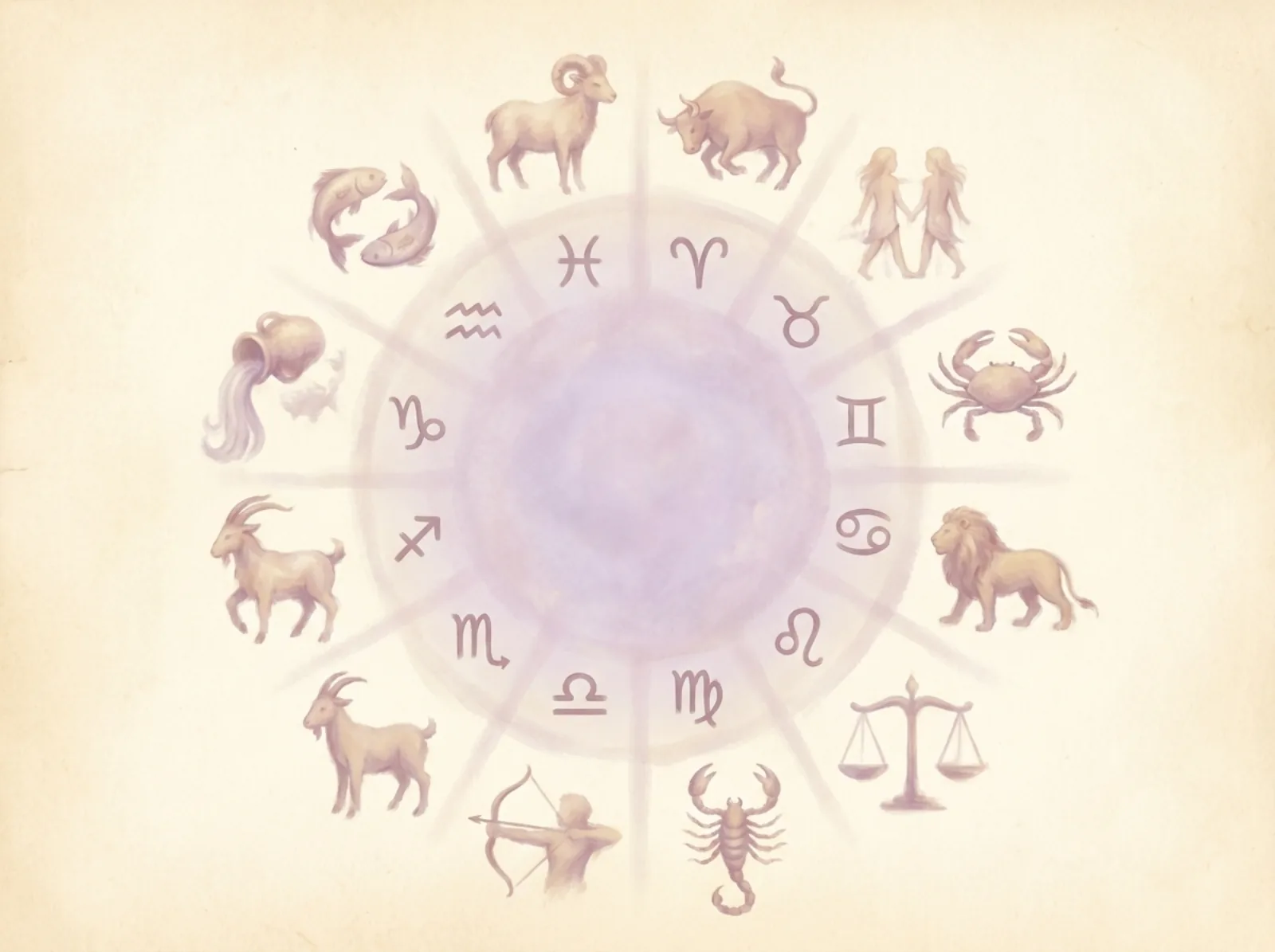
In astrology, the 10th house of a birth chart governs career, public reputation, legacy, and your relationship to authority. The standard zodiac wheel associates Capricorn with the 10th, which is why these ideas get tangled together. Here is the thing to know. Your personal 10th house is not necessarily Capricorn. It depends on your rising sign. If you are a Capricorn sun with a Pisces 10th house, your public image is more dreamy and artistic than people might expect. If you are an Aries sun with a Capricorn 10th, you have a lot of Capricorn career energy without being a Capricorn in the usual sense. For Capricorn suns specifically, the 10th-house theme runs loud because it doubles up with your sun. You tend to feel your life purpose through visible contribution. You want your work to be seen, respected, and remembered. This is not vanity. It is a legitimate psychological need, and ignoring it tends to make you depressed, not humble. The practical move is to pay attention to how you want to be known in 20 years. Not what title. What verb. Do you want to be known as someone who built, protected, taught, healed, judged, invested, created, led? Pick the verb and then audit your current role. If your day-to-day work does not express the verb you want associated with your name, that mismatch is probably why you feel restless, no matter how good the salary is. The 10th house will not accept salary as a substitute for meaning. It will keep asking the question until you answer it.Career Journaling with Raka: Prompts That Actually Move the Needle
You cannot read your way out of a career question. At some point the inquiry has to go inward, and that is where tarot earns its keep. I use Raka when I want a sharper mirror than my own anxious thoughts can provide. For a Capricorn working through career material, the point is not to ask the cards what to do. The point is to let the imagery pull up what you already know. Try this three-card spread the next time you are stuck. Pull one card for what is actually keeping you in this role. Pull one card for what you are afraid will happen if you move. Pull one card for the version of your work life that your 50-year-old self is quietly hoping you build. Then write for 20 minutes without stopping. Do not interpret the cards academically. Let them talk. The Capricorn mind will try to make this a logical exercise, which is exactly why the imagery helps. It bypasses your usual analysis. A few more Capricorn-shaped prompts worth running. What is the one professional ambition I have never said out loud, and why have I kept it quiet. If I knew for certain I had 25 more working years, what would I stop doing by Friday. Who taught me that rest had to be earned, and do I still believe them. What title am I secretly chasing, and who am I trying to prove it to. Raka is built so you can do this kind of work in short, low-pressure sessions. Pull cards during a lunch break, write a few paragraphs in a notebook, come back next week. The tool is useful because it refuses to pretend tarot predicts your next promotion. It positions the cards as prompts for self-reflection, which is the only honest frame. A Capricorn using tarot for prediction is wasting a good deck. A Capricorn using it for structured introspection can genuinely change their trajectory, because the barrier was never information. It was permission to feel what we already knew.When to Pivot: Saturn Return and Other Timing Windows
Capricorns tend to overweight willpower and underweight timing. We think we should be able to muscle through any career situation. Sometimes that is true. Sometimes the situation is actually asking for a pivot, and we are just too stubborn to see it. The single most important timing concept for Capricorn career is the Saturn return. Transiting Saturn takes roughly 29.5 years to orbit the sun, which means it returns to the position it occupied at your birth every 29-30 years. Your first Saturn return hits around ages 27-30. Your second lands around ages 57-60. For Capricorns, these windows are extra loud because Saturn is your ruling planet. The first Saturn return often forces a career audit. Wrong field. Wrong city. Wrong boss. Wrong relationship making the job unlivable. Many Capricorns pivot hard between 28 and 31 and look back at that stretch as the real start of their adult work life. The years before 28 were preparation. The years after were on purpose. The second Saturn return, around 57-60, tends to be about legacy and succession. Is the thing you built going to outlast you. Do you want to keep running it, or hand it off. Have you taught anyone what you know. This is also the window where many Capricorns leave corporate roles and start the business they have been thinking about for 20 years, or finally write the book, or move to the place they always meant to live. In between, pay attention to Saturn transits across your 10th house, your sun, and your Midheaven. Those are smaller but real career crunch points, typically lasting a year or two. You do not need to track these obsessively. You do need to notice that your resistance to a situation is not always just laziness or fear. Sometimes it is Saturn telling you that the structure you built no longer fits, and the honorable move is to redesign it rather than keep forcing yourself into clothes that stopped fitting a decade ago. That redesign is not a failure of discipline. It is discipline operating at a higher resolution. That is the Capricorn career path at its best.Frequently asked questions
What is the best career for a Capricorn?
There is no single best career, but Capricorns thrive in roles that reward long-term thinking, structural authority, and public accountability. Think CEO, CFO, surgeon, architect, judge, policy director, head of operations, or founder of a legacy business. Any job where the title compounds in value over 10-20 years tends to feel right. Capricorns tend to be miserable in roles with vague metrics, no promotion ladder, or constant improvisation without a plan. Part of our astrology library.
Are Capricorns workaholics?
Many are, and we often wear it as a badge until our body or relationships hand us the bill. The sign is ruled by Saturn, which likes limits and structure, so the real archetype is a sustainable worker, not a burned-out one. If you are a Capricorn clocking 70-hour weeks and calling it discipline, that is usually ambition in costume. Discipline includes rest; grind culture does not.
What is a Capricorn's Saturn return and why does it matter for career?
Your Saturn return happens around ages 27-30 and again around 57-60, when transiting Saturn comes back to the spot it occupied at your birth. For Capricorns, this is extra loud because Saturn is your ruling planet. First returns often force a career audit: wrong field, wrong city, wrong boss. Many Capricorns pivot hard in this window, and the choices made then tend to shape the next 29 years.
What is the 10th house, and why do people say Capricorn rules it?
The 10th house in a birth chart governs career, public reputation, legacy, and your relationship to authority. Capricorn is the sign naturally associated with the 10th in the standard zodiac wheel, which is why astrologers talk about it when discussing Capricorn careers. Your personal 10th house sign may differ from Capricorn, and that nuance matters more than sun sign alone when mapping your path.
Can a Capricorn be a successful entrepreneur, or are they better as employees?
Both, but the Capricorn entrepreneur usually looks different from the Silicon Valley hustle archetype. We tend to build slow, profitable, boring businesses that still exist in 20 years. Think law firm, holding company, specialty manufacturer, consultancy, or a software product with a real P&L. If a Capricorn is trying to vibe their way to a Series A with no revenue, something is misaligned.
What are Capricorn career weaknesses to watch for?
The big three are workaholism masked as virtue, cynicism that calcifies into contempt, and status obsession that outruns actual satisfaction. Capricorns can also be slow to delegate, slow to celebrate, and quick to assume everyone else is lazy. The shadow is not laziness; it is grim duty with no joy, climbing a ladder you forgot to check was leaning against the right wall.
Should I use astrology to pick my career?
Use it as a mirror, not a map. Your chart will not tell you to be a dentist versus a dermatologist. What it can do is show you the shape of work that will feel sustainable, the themes you keep repeating, and the timing windows where change is cheaper. The decision is still yours. Astrology is self-reflection with better questions, not a career oracle.