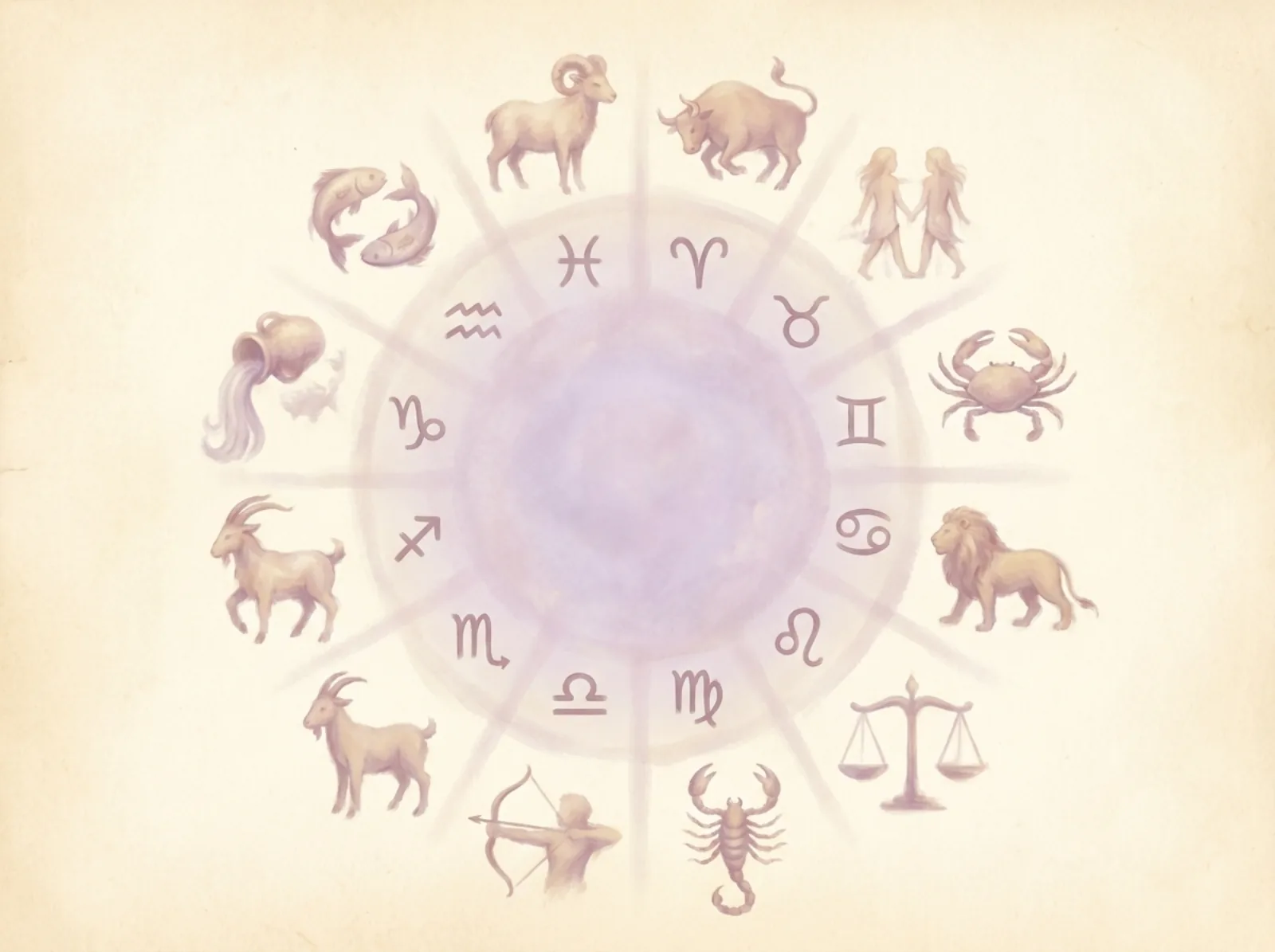
Cancer's Work Style: Water, Cardinal, and the Shell at Your Desk
Before we talk jobs, let's name the three ingredients the sign is actually made of, because almost every career question for a Cancer comes down to one of them being honored or ignored. First, Cancer is a water sign. In practical workplace terms that means you process reality through feeling before thought — the vibe of a Monday standup lands in your body a full ninety seconds before your prefrontal cortex catches up and explains why. You read micro-expressions the way other people read spreadsheets. You can tell when the client is about to churn two meetings before the dashboard notices. This is not weakness and it is not woo. It is an actual perceptual channel, and treating it like interference instead of signal is one of the fastest ways a Cancer builds career-length burnout. Second, Cancer is cardinal. Cardinal signs — Aries, Cancer, Libra, Capricorn — are the initiators of the zodiac. They start seasons. They start movements. Cancer starts the summer in the Northern Hemisphere; the sign is literally the beginning of something. Which means, despite the soft reputation, Cancers are not actually built to be junior-forever worker bees waiting for someone else to decide. The sign wants to be the one who proposed the new team, started the Slack channel, launched the side project, said "I'll just build it myself." If you have been a Cancer collecting dust in a role where nothing you initiate ever ships, the restlessness you feel is not a personal defect. It is the chart doing its job. Third, Cancer is ruled by the moon. The moon has phases. You have phases. This is why your output across a month looks less like a Capricorn's steady line and more like a wave — three days of profound focus, then a day where you cannot write a single email, then a week of quiet brilliance, then two days of weeping about a Pixar trailer. If your career setup punishes that rhythm — rigid daily quotas, no asynchronous hours, performance reviews that measure consistency over craft — you will spend thirty years hiding your actual working shape instead of designing around it. The Cancers I know who thrive have found roles that evaluate them on monthly or quarterly throughput, not Tuesday-at-11am productivity theater. Stack those three and the archetype is clear: a feeling-first, self-starting, cyclical worker whose superpower is noticing what everyone else is pretending not to notice. The whole career question is: which jobs actually pay you for that?Best Careers for Cancer: 12 Jobs Where the Shell Becomes an Asset
The jobs below are not the only good Cancer careers — plenty of my clients are thriving in roles I never would have predicted. But each of these has a built-in structural fit with the sign, so you can borrow their shape even if the title is wrong for you. 1. Pediatric or NICU nurse. The patient population is small, the contact is intimate and repeated, the care model is unapologetically emotional, and the parents will remember your face for the rest of their lives. Cancer's protective instinct toward the vulnerable is not performative here — it is the job. 2. UX researcher or user interviewer. Someone has to sit with the actual humans and hear the pauses in their sentences. Cancers hear those pauses. The best UX researchers I know file field reports that read like short stories; the engineering team ships better product because the researcher brought the user back as a person, not a persona. 3. Pastry chef, baker, or small-restaurant owner. Food is Cancer's native language — feeding people, remembering what they ordered last time, running a small kitchen that becomes a village. Richard Branson is famously Cancer and famously built Virgin on hospitality instinct before he built airlines on it. Chef Dominique Crenn (July 24, Cancer/Leo cusp) runs her Michelin kitchens on exactly this kind of felt-leadership. 4. Teacher or professor — especially early childhood through middle school. The classroom is a clan. You will know every family dynamic by October. You will be the adult a kid remembers at age forty. If you can tolerate the pay structure (and the Cancer talent for undercharging is real — ask for the senior scale), this role gives back for decades. 5. Boutique financial advisor or estate planner. People give money to the humans they trust with their grief. Cancer builds that trust by remembering the family story, not the ticker symbol. Firms with a hundred clients and a sixty-year tenure beat the volume shops in client retention, and Cancer advisors tend to run those firms. 6. Hospitality — hotel GM, boutique inn owner, concierge. Same principle as the restaurant, scaled to a building. The Cancer who runs a thirty-room inn in the Hudson Valley and knows every regular's dog's name is not a lifestyle cliché — she is a sign operating at full voltage. 7. Therapist, counselor, or social worker. The caveat is huge here: without ferocious boundary work this role will eat you. With it, Cancer therapists are often the ones clients stay with for a decade. Study internal family systems, somatic work, or any modality that uses the body — your intuitive channel will finally have a professional vocabulary. 8. Archivist, museum curator, or historian. Cancer is the sign of memory. Public memory, family memory, cultural memory — someone has to decide what gets kept. If you have ever lost an afternoon to your grandmother's photo album, consider this field. The pay is modest; the meaning is enormous. 9. Real estate — residential, not commercial. Cancer rules the home. Agents who close on buyers' first houses often get referrals for twenty years because they handled the emotional reality of the purchase, not just the paperwork. 10. Family-business leader or second-generation operator. If your family already owns the thing — the vineyard, the dental practice, the manufacturing floor — Cancer is unusually well-suited to becoming the steward who modernizes it without severing the lineage. The grief of changing something your parents built is real, and Cancers can hold it. 11. Content creator in parenting, home, food, grief, or mental health niches. The sign's native topics are a trillion-dollar content market. If you can tolerate the public-facing exposure, your voice will reach people the shiny optimizers never touch. 12. Nonprofit executive director or community organizer. The clan-leader instinct, applied to a mission. The best Cancer EDs I know treat their staff like family (good version, with therapy) and their donors like family they call back promptly. Notice the pattern: small groups, repeat contact, permission to care, legacy. Any job that gives you those four will fit the sign. Any job that strips them will slowly make you miserable regardless of salary.Worst Careers for Cancer (and the Myth of "Worst")
I want to defang this heading before I use it. There is no job a Cancer cannot do. I have Cancer clients killing it on sell-side trading desks, in corporate litigation, in oil-and-gas negotiations. The question is not capability; it is cost. Some roles make you pay in a currency the sign has very little of, and after enough years the overdraft becomes your personality. The hardest fits tend to share three features. First, forced emotional neutrality — jobs where you must process a steady stream of human pain or conflict and are structurally forbidden from doing anything about it. Think asylum adjudication, high-volume insurance claims, repossession, debt collection. The sign will try to care, be punished for caring, learn to suppress, and then develop stomach problems by thirty-four. Second, zero-attachment transactional sales — the pure cold-call commission floor where you talk to a stranger once, close or don't, and never see them again. Cancer sells beautifully when there is a relationship arc. Strip the arc and you are asking a water sign to behave like a sales-automation API, which it will do grudgingly and poorly. Third, cultures that treat burnout as a loyalty test. Big-four consulting at the junior level, biglaw associate years, surgical residency with no mentor who protects you, startup roles where "we are a family" is code for unpaid overtime. The sign already runs on devotion. Companies that weaponize devotion will extract more from a Cancer than from anyone else, and the Cancer will blame herself for the collapse. If you are already in one of these roles, the move is not necessarily to quit tomorrow. It is to name what the job is actually asking you to amputate, and to decide — with eyes open — whether the paycheck is worth the amputation and for how long. Three years of biglaw to pay off loans with an exit date on the calendar is a different conversation than fifteen years drifting because leaving feels disloyal to the first team that took a chance on you. Cancers mistake loyalty for destiny. It isn't.Cancer as a Boss, Employee, and Entrepreneur: Three Faces of the Same Shell
The sign shows up differently in each seat, but the engine is the same — initiate, protect, remember, build the long clan — so I want to walk all three in one place. As a boss, at best, Cancer is the closest a modern office gets to being raised. Your boss remembers your kid is sick before you remember to update your calendar. Your boss notices when you are quieter than usual in standup and checks in by DM, not in front of everyone. Your boss defends you to the executive team when the cross-functional partner tries to throw you under the bus, and you only find out six months later when someone from that other team mentions it over drinks. At worst, the shadow is favoritism, grudge-holding, and emotional opacity. The clan runs on who is in and who is out. The Cancer boss who has not done interior work will punish perceived disloyalty for years without ever naming the original injury out loud. If you are about to lead for the first time, install three things from day one. A written feedback cadence — monthly one-on-ones with structured questions — so you cannot drift into managing by vibe alone, because vibe-management rewards the people who feel like you and punishes the ones who don't. A sunset policy on grudges: if someone upset you in Q1, you owe them a direct conversation by end of Q2 or you let it go. And a peer who will tell you the truth when your protective instinct is making a bad business call. Branson has had a half-dozen of these across his career. You need at least one. As an individual contributor, you are probably the person the team secretly runs on. You are the one who remembered the client's anniversary and sent the card, which is why they renewed. You are the one who stayed late to help the new hire understand the deploy process. You are the one your manager Slacks when the whole project is on fire. The cost of being load-bearing without being named load-bearing is the signature Cancer career wound — you absorb more and more because the care is instinctive, the organization prices you accordingly, and the Leo in the next seat who announced one win in all-hands gets promoted. Two moves. Keep a running wins document, weekly, five bullet points, every Friday afternoon, in a doc you own and your manager can see. Not for ego — for memory, because your work is often emotional labor and process repair that is invisible by design. And learn to say the sentence "I'd like to be considered for X role, Y raise, or Z project" out loud, in an email, specifically. Cancer waits to be noticed; Cancer gets passed over; Cancer resents the organization for not reading her mind. Break the loop at the ask, not at the resentment. As an entrepreneur, Cancer founders tend to build companies that look weird on a VC pitch deck and make total sense in person — small-giant by design, private, slow-growing, with fifty employees who have been there a decade and a product that solves something real for a defined community. Richard Branson built Virgin's early reputation on exactly this hospitality instinct, and it compounded into an empire; Giorgio Armani ran a privately held fashion empire on his terms for fifty years. The pitfalls, listed with love: you will undercharge, because taking money from people you like feels indecent, so hire a pricing consultant or steal a Capricorn friend to set your rates. You will hire friends into roles they can't do and then be unable to fire them, so hire competent strangers who you then make into friends through good shared work. You will carry the business like a child, which means every bad quarter will feel like a parenting failure, so build an advisory board or a founders' peer group. And your first hire is not a marketer; it is the person who will tell you when the care model is about to bankrupt you. Fund that chair before anything else.Cancer Career Pitfalls and Shadow: Where the Crab Gets Stuck
Every sign has a shadow — the pattern that develops when the strength is unexamined. Cancer's shadow at work has four main shapes, and I would rather you see them in print now than discover them at a therapist's office at forty-two. One, the moat. You build such a strong inner circle at work — three colleagues who get you, one mentor, one direct report you've trained — that you stop reaching outside it. Promotions require sponsorship from people who are not already in your clan, and you have no infrastructure for that. The remedy is deliberate, scheduled, slightly uncomfortable networking with people who have not yet earned your trust. Treat it as a job skill. The sign is not naturally built for it; build it anyway. Two, the sideways crab. When Cancer is upset at work, the body often moves sideways instead of forward — passive-aggressive Slack messages, meaningful silences, sudden withdrawal from a project without explanation. The person who upset you often has no idea they did. The remedy is the direct conversation you don't want to have, scheduled within seventy-two hours of the injury. If you cannot have it in seventy-two hours, write the email and send it. Delay rots this sign. Three, the martyr arc. You take on more and more invisible labor, do not ask for compensation or credit, and eventually crack sideways — usually in the form of a resignation nobody saw coming or an emotional outburst in a meeting that becomes the story of your career at that company. Workplace martyrdom is not a virtue. It is a self-abandonment with a PR campaign. Journaling, therapy, an actual accountability partner — any structure that forces you to name what you are carrying before you snap — is the counter-move. Four, the past as a cage. Cancer rules memory, which is a gift and a trap. You remember every slight. You also remember every version of yourself. The thirty-eight-year-old who still identifies as the kid who got cut from the varsity team, the forty-four-year-old who is still mad at the manager from the 2017 role — this is the shadow eating the present. The remedy is a formal letting-go practice: ritual, letter-burning, a long walk with a specific intention, whatever your spiritual language is. Cancers who do not grieve the old versions of themselves get stuck in them.Famous Cancer CEOs and Leaders: Six Humans, Six Blueprints
I want to resist the astrology-for-clicks move of listing every Cancer celebrity as if their birth chart alone explains the career. It doesn't. But reading how six specific Cancer leaders built what they built is a cleaner way to see the archetype in motion than any trait list. Richard Branson, born July 18. The Virgin Group is the clearest example of Cancer leadership scaled: hospitality-first, employee-first, brand as extended family, an insistence on actually meeting customers and employees that persisted past the point when it made calendar sense. Branson's dyslexia pushed him into a felt, relational style of leadership rather than a data-first one, and the sign amplified every bit of it. Elon Musk, born June 28. This is the Cancer no one expects, and it is instructive. The sign's cardinal fire is unmistakable — Musk starts things obsessively, builds from zero, and the loyalty-and-grudge pattern is extremely on-brand. The shadow version of Cancer leadership is also fully visible: public emotional reactivity, favoritism and purging inside teams, the inability to let an old grievance go. Love or hate the man, he is a case study in both the generative and shadow faces of the sign at scale. John D. Rockefeller, born July 8. Standard Oil was built on exactly the long-game, generational, keep-building-after-everyone-else-quit energy Cancer excels at. Rockefeller also exemplified the sign's complicated relationship with giving — he became one of history's largest philanthropists while running one of history's most ruthless monopolies, holding both without apparent contradiction. The sign holds opposites like this better than it is credited for. Giorgio Armani, born July 11. Fifty years at the helm of a privately held fashion empire he refused to take public, resisted every sale, and ran with the same core team for decades. Armani's leadership is Cancer at its most patient — quality, tenure, taste, a refusal of the quarterly-earnings treadmill. If you want a model of Cancer in a creative industry, study the Armani decades. Nelson Mandela, born July 18. The reconciliation presidency is a masterclass in Cancer leadership applied to a nation — holding grief, refusing revenge, prioritizing the long clan over short justice, and leading with an emotional vocabulary most political analysts could not read. Twenty-seven years in prison would have hardened almost anyone; the Cancer capacity to metabolize feeling into protection, rather than retaliation, is part of why it did not harden him. The 14th Dalai Lama, born July 6. Spiritual leadership as a Cancer vocation, decades of exile, the whole life structured around protecting a people and a tradition without a nation-state to back it. The sign's protective instinct expressed at a civilizational scale. From pediatric nurse to Nobel laureate, the same sign. The shape is consistent — initiate, protect, remember, build for the long clan — even as the scope changes.10th House Themes for Cancer Risings and Suns: Public Reputation Made Tender
In astrology, your 10th house is your career in the full sense — vocation, public reputation, what strangers associate with your name. The sign on your 10th house cusp (your Midheaven or MC) and the planets that live there matter at least as much as your sun sign for career questions. If you are a Cancer rising, your 10th house cusp is Aries. Your public image is built through visible courage — going first, taking the risk nobody else would, being the one who said yes before it was safe. The sign on the inside (Cancer rising) is tender; the sign on the outside of the career (Aries MC) is bold. Many Cancer risings mistake the Aries demand for self-promotion as a betrayal of the gentle self and shrink from it. The reconciliation move is to go first on behalf of the people you protect — to make the Aries courage an expression of Cancer care, not a contradiction of it. If you are a Cancer sun, your 10th house sign is whatever it is in your actual chart, and this is where generic sun-sign-career articles stop being useful. Pull your chart. Note the 10th house cusp, note any planets in the 10th house, and read your Cancer sun as the engine room while that 10th-house signature is the costume. A Cancer sun with a Capricorn Midheaven will build a traditional, hierarchical, long-tenure career; a Cancer sun with a Sagittarius Midheaven will teach, publish, or travel for a living. The sun says what the career is for; the MC says what it looks like from outside. Both matter. A Cancer-dominant chart (sun, moon, or rising in Cancer, especially with 4th-house planets) will almost always find that the home and the work are structurally linked — you will work from home, or run a family business, or build a company that is a family, or have your actual family show up in your professional life somehow. Fighting this crossover rarely works. Designing it on purpose does.Career Journaling with Raka: Questions, Not Predictions
The way I use astrology and tarot in my own career decisions — and the way I built Raka to be used — is as a question machine, not an answer machine. A good career pivot does not come from a card telling you to quit. It comes from you sitting with a card long enough that you finally admit what you already knew. Try this. Open Raka, do a three-card pull with the question "what is the job actually asking me to carry?" Note the images, the first feelings that arrive, the memory that surfaces. Then, in a notebook (paper, not a doc — the hand slows the thinking), write for twenty uninterrupted minutes without editing. Start with "what I actually feel about my work right now is..." and let the sentence finish itself a hundred times. Do this weekly for a month before you make any big career move. By week four you will have a document that is more honest than any career coach could extract from you in six sessions, because the extraction was yours. The tool is a mirror. The decision is yours. For a Cancer especially — a sign that over-processes feeling and under-expresses it — making the private material external is half the career work.When to Pivot: Saturn Returns and the Three-Decade Cancer Cycle
If you are reading this at twenty-six and wondering whether you should quit the job that is clearly killing you, you are approaching your first Saturn return. If you are reading at fifty-eight and wondering whether to walk away from the thing you built, you are inside your second. These are not metaphors. Saturn returns to its natal position every 29.5 years, and the window around that return — roughly ages 28 to 30, and 57 to 60 — is when the entire chart renegotiates the relationship between what you are doing with your life and who you have become. Careers restructure under this transit whether you consent to it or not. Consenting is less painful than resisting. For Cancer specifically, the first Saturn return often shows up as a confrontation with the family story. You took the job your parents respected. You moved to the city they wanted you in. You trained in the field that was praised at the dinner table. Around twenty-nine, the self the sign was quietly building underneath the family blueprint shows up at the door and asks what you intend to do with the rest of your life. Many Cancer career pivots happen in a two-year window around this moment, and most of them are correct in retrospect even if they looked reckless from outside. The second Saturn return, in late fifties, is often a legacy pivot. The sign asks: what do I want the thirty years I have left to actually build, and who do I want to hand it to? Many Cancer founders transition the business, buy the long-dreamed-of boat and run charters, go back to school, write the memoir, start the foundation. Resisting this one often shows up as health problems; the body enforces the pivot the ego refused. Between the two Saturn returns, watch for outer-planet transits through your natal 10th house — Jupiter brings opportunity (12-month window), Saturn brings restructuring (two-and-a-half-year window), Uranus brings sudden exit (seven-year window), Pluto brings complete career identity death and rebirth (fifteen-plus years). You do not need to be an astrologer to use this. You need a chart, a calendar, and the willingness to notice when the structure of your work is being asked to change. The Cancer careers I have seen go the furthest were not the ones that followed a plan laid out at twenty-two. They were the ones built in rounds — a decade of training, a Saturn-return pivot, a decade of mastery, a mid-forties recalibration, a Saturn-return legacy move at sixty. The sign is cyclical. The career should be too. Permission to let it be is, honestly, the whole point of this article.Frequently asked questions
What is the best career for a Cancer sun sign?
There is no single "best" career — Cancer thrives in any role that lets you care for a defined group of people with full emotional presence, remember the small human details, and build long trust lines over time. That looks like a pediatric nurse to one Cancer, a boutique investment advisor to another, a bakery owner to the next, and a UX researcher to a fourth. The through-line is not the industry — it is the scale (small, intimate, repeat-contact) and the permission to feel. Jobs that demand you fake neutrality for eight hours a day will drain you faster than any workload. Part of our astrology guide hub.
Are Cancers good leaders at work?
Cancers can be exceptional leaders because the cardinal mode makes them initiators, not followers — Richard Branson, Nelson Mandela, and Elon Musk are all Cancer suns who built things from zero. The shadow is that Cancer leadership runs on loyalty and emotional memory, which can tip into favoritism, grudges, and quiet exclusion of anyone who ever bruised them. The strongest Cancer bosses are the ones who have done enough therapy or journaling to notice when a business decision is actually an old wound firing. Without that work, the clan becomes a cult.
What jobs should Cancers avoid?
Avoid roles that systematically punish emotional attunement — commission-only cold-call sales floors, high-frequency trading desks, roles that require you to deliver bad news to the same strangers every day with zero follow-up, and any culture that mistakes burnout for commitment. Also be careful with pure-prediction work (actuarial, forecasting) that strips the human story out of the numbers; it is doable, but you will go home empty. The real test is not the job title — it is whether you leave each shift feeling like a person or like a function.
Do Cancers make good entrepreneurs?
Yes, when the business is built around a story they actually believe in and a customer they genuinely want to feed, teach, or protect. Cancer founders often build "small giants" — companies that stay human-scale on purpose, prioritize staff tenure, and refuse growth that would compromise the care model. The pitfalls are undercharging (because taking money from people they like feels rude), hiring friends into roles they can't do, and refusing to fire anyone who has become family. Pair the Cancer heart with a Capricorn or Virgo cofounder for the ledger and the hard conversations.
When is the best time for a Cancer to change careers?
Astrologically, the two most reliable windows are the Saturn return (ages 28-30 for the first, 57-60 for the second) and any transit of Jupiter or Saturn through your natal 10th house — those are structural reorganization moments the whole chart is already pushing you through. Day-to-day, Cancers often pivot after a family event (a death, a birth, a parent falling ill) that physically rearranges what matters. Trust that signal. Cancer careers almost never move for logic alone; they move when the story at home has changed and the old role no longer fits the new life.
What does the 10th house mean for a Cancer in career astrology?
The 10th house is public reputation and vocation — what strangers know you for. For a Cancer rising, the 10th house cusp is Aries, so your public image is built through visible bravery, going first, and being seen as the one who took the risk. For a Cancer sun with the 10th in a different sign, read your actual 10th house sign and ruler for the shape of your career — your Cancer sun then tells you what the career is really for underneath that shape. The 10th house is the costume; the sun is the person wearing it.
How can I use tarot or astrology to make a real career decision?
Use it to ask better questions, not to outsource the answer. Pull a card or sit with your chart and ask "what am I actually afraid of here?" or "what would I do if the money were handled?" — then write for twenty minutes without editing. The decision is still yours; astrology just gives you a vocabulary slow enough to hear yourself. Apps like Raka are built for that kind of mirror-work rather than fortune-telling, and the Cancers I know get the most out of them when they treat each session as a conversation with their own gut, not a verdict from the universe.