The Primary Cancer Birthstone: Moonstone and Pearl
The short answer is that Cancer has two birthstones, and the one you'll be sold depends on which astrologer you ask. Modern Western astrology leans heavily on moonstone — a feldspar mineral with that unmistakable milky shimmer called adularescence (bless the person who named that). Traditional astrology, and the Vedic system my grandmother used, points to pearl, specifically a natural saltwater pearl. Both are tied to the moon, which is Cancer's ruling planet, and both have been worn by Cancer-born people for centuries without anyone needing to prove they do anything beyond look beautiful on a collarbone. Why two? Birthstones are a messy, modernised business. The commercial birthstone list most jewellers use was formalised by the American National Association of Jewelers in 1912 and quietly updated for marketing reasons every few decades. Astrological birthstones predate that by millennia, drawn from Vedic, Arabic, and Hellenistic traditions that assigned a gem to each planet, not each month. Cancer is ruled by the moon, so its gem is a lunar one. Which lunar gem? That depends on your tradition. If you want my personal take: moonstone is the easier starting point. It's affordable, forgiving, available in most independent crystal shops, and you can lose one without crying. Pearls are gorgeous and emotionally loaded (there's a reason mothers pass them down), but a decent natural pearl runs into real money, and the ethics of pearl farming are complicated enough to deserve their own article. Start with moonstone. Graduate to pearl when you know what you actually want it to mean to you. A note on colour: the moonstones most associated with Cancer are the pale, bluish-white kind — sometimes called 'rainbow moonstone' in the trade, which is technically labradorite but close enough that most sellers won't argue. Peach moonstone is a lovely alternative if you prefer warmer tones, and it's often cheaper because the market considers it less dramatic. I disagree. The warm ones look like candles.Why Moonstone and Pearl Belong to Cancer
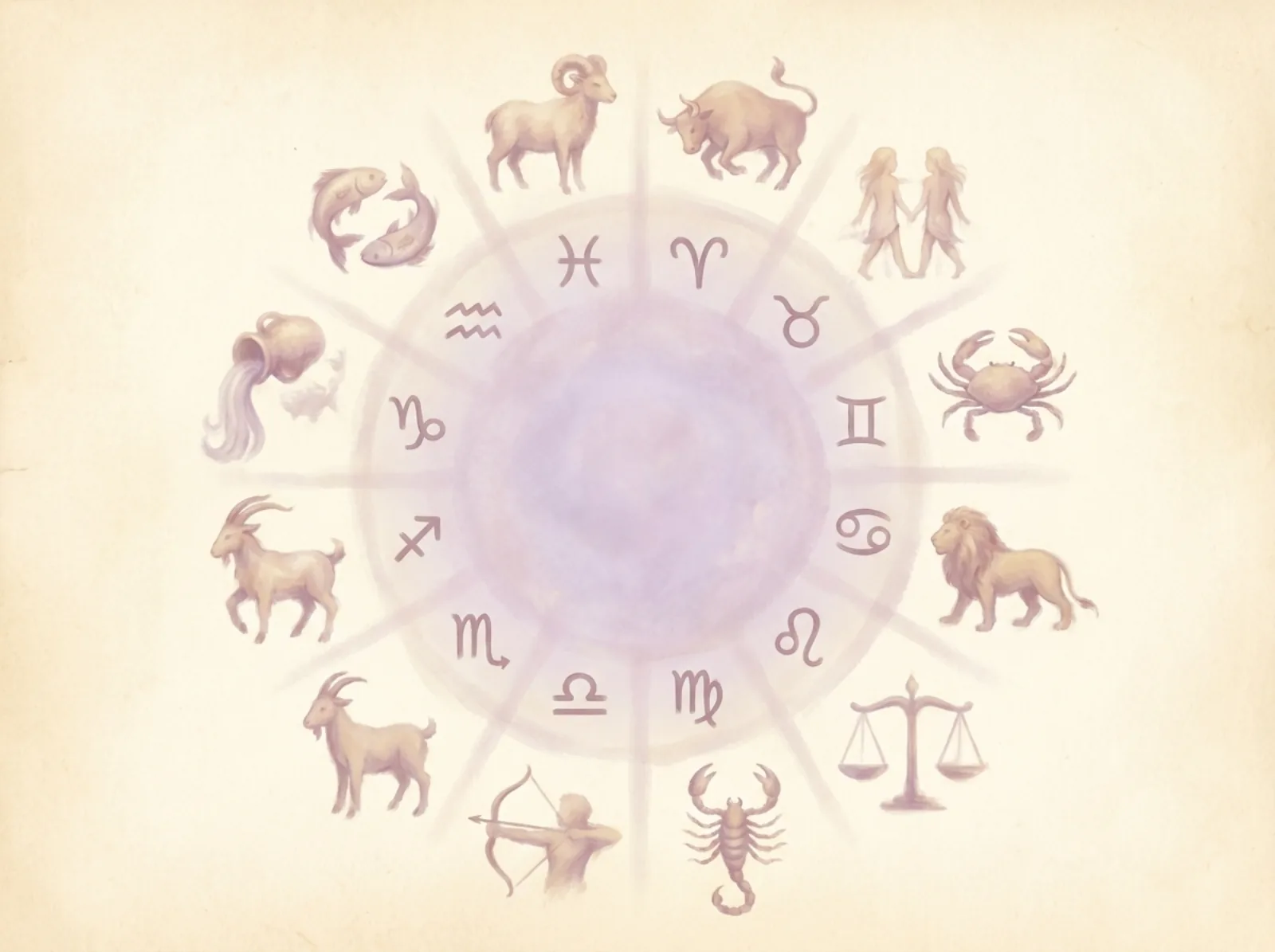
Cancer is a water sign ruled by the moon. In astrology, that's not a vague poetic flourish — it's a specific framework. Each sign has an element (fire, earth, air, water), a modality (cardinal, fixed, mutable), and a ruling planet or luminary. Cancer's trio is water, cardinal, moon. The gems assigned to Cancer have historically been chosen to echo those qualities: reflective rather than brilliant, soft in colour, with internal light rather than external sparkle. Moonstone fits because adularescence — the floating glow inside the stone — looks exactly like moonlight on water. Pearls fit because they come from water, grow slowly from a single irritation (which, if you've met a Cancer, is on brand), and have a luminous surface that reflects rather than refracts light. Diamonds dazzle. Moonstones glow. Cancers tend to prefer the latter. Folk traditions pile on more associations. In Roman mythology, moonstone was believed to be solidified moonlight, worn by travellers for safe passage on night journeys. In Sri Lankan tradition it is considered sacred and is still mined in Meetiyagoda. Hindu astrology (Jyotish) prescribes pearl — called 'Mukta' — for people whose natal Moon is poorly placed, as a remedy to steady emotional currents. Across cultures, the pattern is the same: the moon's gems are for people who need to come back to themselves. Here's the honest reframe. None of these traditions prove that moonstone does anything measurable. What they do prove is that for a very long time, humans have agreed that certain objects help them focus on certain internal states. That's not nothing. Carrying a moonstone because you want to be a steadier version of yourself is a form of self-signalling that behavioural psychologists would recognise as an implementation intention — a physical cue tied to a chosen behaviour. The stone doesn't change you. You decide to change, and the stone reminds you, every time you reach into your pocket, that you decided.Five Secondary Crystals Every Cancer Should Know
If moonstone and pearl are your anchors, these are the specialists you reach for when a particular situation needs attention. I keep all five on my desk. Not because they're magic. Because looking at them reminds me which part of my life I'm currently neglecting. Selenite — Named after Selene, the Greek moon goddess, selenite is a soft, translucent gypsum crystal that looks like frozen light. It's traditionally paired with moonstone as a 'clearing' stone — placed on top of other crystals to reset them, or kept near a journal to mark the start of a reflection practice. Selenite is water-soluble, so don't dunk it. A dry cloth and a few minutes under moonlight is all it needs. Carnelian — Cancer gets stereotyped as endlessly nurturing, which can tip into exhaustion. Carnelian, a warm orange-red variety of chalcedony, has been carried for millennia as a courage stone — Napoleon famously wore one. For Cancers who struggle to say no, carnelian is the 'put yourself on the list' rock. Keep it where you make decisions, which for most of us is next to the laptop. Rose quartz — The obvious one, and worth it. Rose quartz is the stone of self-compassion, which Cancers tend to extend generously to everyone except themselves. Keep a tumbled piece in your pocket on days when you're being hard on yourself. It won't make you kinder to you. It'll remind you to try. Labradorite — This is the crystal I recommend most often to Cancers who are tired of being told they're 'too sensitive.' Labradorite has an iridescent flash called labradorescence, and it's traditionally associated with psychic protection and intuition. In plain English: it's a stone for people who absorb other people's moods and need a visual reminder to put their own feelings first. If your family group chat drains you, keep a labradorite in your bag. Clear quartz — The all-purpose crystal, often called the 'master healer' in metaphysical circles. I prefer to think of it as the all-purpose amplifier — whatever intention you set near it, you're more likely to remember. A pointed clear quartz on your desk is a cheap, elegant focus tool. If you're new to crystals and only buying one secondary stone, this is the one. Mix and match. There's no rule about carrying only one, and no rule about carrying any.How Cancer Personalities Can Use Crystals (As Journaling Anchors, Not Magic)
This is the section where I lose the 'crystals cure anxiety' readers, so if that's you, thank you for making it this far, and please consider staying. Cancers are famously introspective. We rehash conversations in the shower for days. We write long texts and delete them. We hold grudges that could qualify for a mortgage. Crystals are useful for Cancers specifically because they give that internal churn a physical object to attach to — which, counterintuitively, helps you let it go. Here's the practice I actually use. I call it a 'stone check-in' and it takes about four minutes. 1. Pick a crystal. Not a magic one — the one that catches your eye today. If you have moonstone, start there. 2. Hold it. Feel the weight. Notice the temperature. Say out loud (or in your head, if you share a room) one sentence about how you're actually doing. Not how you're pretending to do. 3. Ask the stone a question. This feels silly. Do it anyway. 'What am I avoiding today?' is my go-to. The crystal doesn't answer. Your own voice does, usually within thirty seconds, because you finally gave your brain permission to tell you. 4. Write the answer down. One line in a notebook or your phone's notes app. Date it. Move on. That's it. The crystal is a prompt, not a priest. Over weeks, those one-line entries become a weirdly accurate map of your emotional patterns — which days you're kind to yourself, which weeks you're overcommitting, when you keep returning to the same unresolved thing. If you want more structure, pair the stone check-in with a daily tarot pull. On Raka I write about Cancer-friendly spreads that take under five minutes — the Moon-Water-Shell pull, for example, uses three cards and one crystal to track emotional weather across a week. The crystal gives the practice a tactile anchor. The cards give it a vocabulary. Neither predicts anything. Both help you notice. The one thing I'll ask you not to do: don't buy a crystal expecting it to replace therapy, medication, or a difficult conversation. It won't. It's a tool for noticing, which makes the real work easier, not optional.Where to Buy Ethically Sourced Cancer Crystals
The crystal industry has a sourcing problem that most sellers don't talk about. A huge percentage of the world's low-cost crystals — including moonstone, rose quartz, and quartz varieties — come from mines in Madagascar, Brazil, Myanmar, and the Democratic Republic of the Congo, where labour conditions are often poor and environmental protections minimal. A 2019 Guardian investigation documented child labour in several Madagascan rose quartz operations. Subsequent reporting on Myanmar's jade and gemstone trade has found similar patterns. This doesn't mean you should feel guilty for owning crystals. It means you should ask one question before buying: where did this come from, and how do you know? What good sourcing looks like: - Named origin. A reputable seller can tell you the country, often the region or specific mine, that a stone came from. 'Imported' is not a source. - Direct relationships. Smaller sellers who travel to mines, meet suppliers, and photograph the operations are more trustworthy than drop-shippers. - Fair-trade certifications. The Fair Trade Minerals and Gems Initiative and the Responsible Jewellery Council both maintain lists. Neither is perfect, but both are better than nothing. - Lab-grown alternatives. For clear quartz and some other varieties, lab-grown options are visually identical, significantly cheaper, and sourcing-neutral. I own both, and I cannot tell them apart without a loupe. Sellers I personally recommend (not affiliated, not paid): Moonrise Crystals in the US, The Little Crystal in the UK, Everyday Alchemy, and — if you're in India like me — The Crystal Hub in Bangalore for in-person browsing. Etsy is a mixed bag; filter for sellers who photograph their suppliers and answer sourcing questions directly. For pearls specifically: look for freshwater cultured pearls from certified farms. They're a fraction of the price of natural saltwater pearls and the farming practices are substantially better regulated. Mikimoto, the Japanese house that invented cultured pearl farming, is the gold standard if your budget stretches that far. Finally: secondhand. Vintage moonstone jewellery turns up constantly in estate sales, charity shops, and on eBay. A ring that already exists has no new mining footprint, often costs less than new, and comes with the quiet dignity of having belonged to someone else first. Deeply Cancerian energy. I own three vintage moonstone rings and none of them cost more than forty pounds.Crystals for Cancer's Shadow Side
Every sign has a shadow side. Astrologers who skip this part are selling you a horoscope, not a mirror. Cancer's shadows are specific: moodiness that curdles into withdrawal, nurturing that tips into martyrdom, loyalty that becomes clinging, and a long memory that becomes grudge-holding. Crystals won't fix these. But matching a stone to a specific pattern can turn an abstract bad habit into a concrete thing you're trying to work on. For withdrawal: sunstone. The literal opposite of moonstone — orange, warm, with internal glitter from hematite inclusions. When I feel myself ghosting people I love because socialising seems like too much, I move my sunstone to the top of my desk. It's a visual cue to send one text. Just one. That's often enough to break the retreat. For martyrdom: carnelian. Already mentioned, but worth repeating here. Carnelian is for the Cancer who makes everyone soup when they're sick and then has a breakdown because no one made them soup. The stone is a prompt to ask for what you need directly instead of resenting people for not reading your mind. If this sentence stung, you need the carnelian. For clinging: amazonite. A pale blue-green stone traditionally associated with the throat chakra and boundaries. Cancers often hold onto relationships, friendships, and situations well past their expiry date because leaving feels like betrayal. Amazonite is the 'it's okay to walk away' stone. Keep it near conversations that scare you. For grudges: smoky quartz. This is the one I use most. Smoky quartz is clear quartz with natural brown tinting from mild radiation exposure (yes, really, don't worry, it's safe to wear). It's traditionally the 'release' stone — associated with letting go of what you no longer need. When I notice I've been composing imaginary arguments with someone from 2019 for the fourth time this week, I pick up my smoky quartz and physically hand the grudge over. Silly? Yes. Effective? Weirdly, yes. The shadow work isn't about becoming a different sign. Cancers are supposed to be deep, loyal, nurturing, and emotional — those are features, not bugs. The crystals are tools for keeping those traits healthy instead of letting them calcify into their worst versions.Crystals to Pair With for Love, Career, and Grief
Not every life situation needs the same stone. Here are the pairings I reach for most often — your mileage will vary, which is the point. For love and relationships: Moonstone plus rose quartz is the classic Cancer love pairing. Moonstone for emotional attunement, rose quartz for self-compassion so you don't lose yourself in the relationship. Add rhodonite — a pink-and-black stone — if the relationship involves repair work after conflict. Rhodonite is traditionally associated with forgiveness, both of others and yourself. If you're navigating a breakup, swap rose quartz for mangano calcite, a soft pink stone known as the 'grief holder.' It's gentler than rose quartz and doesn't push you to feel grateful before you're ready. Breakups ask for stones that let you be sad on your own timeline. For career and ambition: Cancer's cardinal nature makes it a quietly ambitious sign — we lead, we just don't like admitting we want to lead. Pair moonstone with pyrite (fool's gold) for confidence in professional settings, or with tiger's eye for decisiveness when you're stuck in analysis paralysis. If you work in a caring profession — nursing, teaching, therapy, creative work that involves other people's feelings — add black tourmaline for emotional protection. You absorb enough during the day. The stone is a cue to stop at the door, not bring it home. For grief: Grief is the Cancerian emotion. We feel it longer and more publicly than most signs, and we often need permission to still be grieving months or years after everyone else has moved on. The pairing I recommend most: moonstone (for softness), apache tear obsidian (a translucent black stone traditionally used for mourning across many cultures), and a small natural pearl if you have one — the pearl often belonged to the person you're grieving, and that's part of the practice. Keep the stones somewhere specific. A small bowl on a bedside table. A tin in a drawer you open daily. The point is that grief, like all emotions, gets easier to carry when it has a physical container to live in some of the time. The stones aren't the container. The ritual of placing them there is. I write expanded versions of these spreads over on Raka if you want longer practices for any of them.How to Cleanse and Charge Your Crystals
This is the section where metaphysical shops will tell you five contradictory things and sell you a salt lamp. Here's the practical version. Cleansing and charging are two different practices, and whether you believe they do anything energetic, both have real behavioural benefits: they turn your crystals into a routine object instead of a dusty shelf decoration, and they give you a periodic reason to pay attention to your own practice. Moonlight charging. The traditional Cancer method. Put your crystals on a windowsill the night of the full moon. In the morning, they're 'charged.' Does the moon actually transfer energy into a rock? Unprovable. Does setting an intention under the full moon work as a monthly ritual? Absolutely, and it's one of the oldest spiritual practices on record. Sunlight charging. Fine for most stones, but avoid for amethyst, rose quartz, fluorite, and selenite — they fade in direct sun over time. If your rose quartz has gone pale, now you know why. Water cleansing. Works for hard crystals (quartz varieties, carnelian, moonstone briefly) but ruins soft or water-soluble ones (selenite, calcite, pearl, lapis). When in doubt, don't dunk. Sound cleansing. A singing bowl, a chime, or even a Spotify playlist of Tibetan bowls will do. The vibration is the point. Hold the crystal near the sound source for a minute or two. Smoke cleansing. Use palo santo (ethically sourced, which is a real conversation to have with your supplier) or dried herbs you can source locally. Many sage varieties sold online are harvested unsustainably, and in some cases from sacred Indigenous lands. If you want the smoke ritual, grow rosemary and dry it. Works identically. Better ethics. Selenite plate. A flat piece of selenite is the only cleansing tool you really need. Lay your other crystals on it overnight. It's traditionally considered self-cleansing, which conveniently means you never have to maintain it. How often? When you remember. There's no cosmic deadline. I cleanse mine on new moons as a monthly ritual, and spot-cleanse any stone I've been carrying through a hard week. If none of the above feels resonant, just hold your crystal under cold running tap water for ten seconds and tell it thank you. It will not know the difference. You will.Celebrities Who Talk About Their Cancer Crystals
Celebrity astrology is mostly nonsense, but a few famous Cancers have gone on record about their crystal collections with enough specificity that it's actually interesting. Ariana Grande (born June 26, Cancer sun) has mentioned carrying rose quartz and clear quartz in multiple interviews, including a 2018 piece where she described keeping crystals on stage during performances. She's not making medical claims. She's describing a comfort object. That's exactly the right register for celebrity crystal talk — mention it, explain what it means to you, don't claim it cured anything. Lana Del Rey (born June 21, Cancer sun on the Gemini cusp) has been photographed with moonstone jewellery and has spoken in interviews about her interest in witchcraft and crystal practice. Her 2020 spoken-word album Violet Bent Backwards Over the Grass references moonlight and water imagery heavily — on-brand for a Cancerian lunar aesthetic, and arguably the most Cancer artistic project of the last decade. Selena Gomez (born July 22, Cancer sun) has mentioned using crystals as part of her mental health routine, specifically alongside therapy, not instead of it — which is the model I wish more celebrities followed. In interviews she's talked about keeping amethyst and rose quartz by her bed. The pairing of crystals with professional mental health care is the only responsible framing for a celebrity with a large young audience, and credit to her for using it. Khloé Kardashian (born June 27, Cancer sun) is famously into crystal practice and has given tours of her crystal shelf on her app. Whatever you think of the Kardashians, Khloé's described practice — using crystals as journaling anchors during a difficult period — matches the 'reflection tool, not magic' framing almost exactly. Princess Diana (born July 1, Cancer sun) was photographed wearing moonstone jewellery multiple times and gifted moonstone pieces to friends. Diana was also a devoted journaler, and the pairing of lunar gems with reflective practice fits the pattern. Her sapphire engagement ring gets all the attention, but the moonstone pieces were the ones she chose for herself. What's notable about this list: most of these women talk about crystals in the context of mental health routines, therapy, or creative practice — not as cures or substitutes. That's the register that keeps crystal culture honest, and it's the one I'd recommend adopting.The Honest Note: Crystals Are Reflection Tools, Not Medicine
I'm closing with this because I'd rather lose a crystal sale than a reader's trust. There is no peer-reviewed scientific evidence that crystals heal physical illness, cure disease, treat mental health conditions, or produce measurable energetic effects. The handful of controlled studies that exist — most famously a 2001 double-blind experiment by Christopher French at Goldsmiths — found that people reported the same effects from fake plastic 'crystals' as from real ones. The benefit, where it exists, comes from expectation, ritual, and attention, not from the stone itself. That isn't a reason to throw your crystals away. It's a reason to be honest about why you're using them. What crystals genuinely do: - Provide a tactile object for mindfulness practice. - Mark time (full moons, new moons, seasons) in a way that makes abstract cycles feel physical. - Give you a cue to pause, breathe, and check in with yourself. - Carry sentimental and ancestral meaning when gifted or inherited. - Look beautiful, which is enough on its own. What crystals do not do: - Treat anxiety, depression, PTSD, or any mental health condition. Please see a licensed professional. - Cure or prevent physical illness. Please see a doctor. - Protect you from 'negative energy' in any way that would show up on a measurement. - Predict the future. - Replace medication, therapy, or a difficult conversation. If a seller tells you a crystal will heal your thyroid, your fertility, your grief, or your relationship — walk away. That seller is either lying or confused, and either way they're part of why crystal culture gets dismissed as nonsense when it has a much more interesting and defensible core: the practice of carrying a beautiful object as a reminder of your own attention. Cancer, of all signs, deserves tools for attention. We feel more, remember longer, and love harder than most. A moonstone in your pocket won't change that. But it will remind you, every time you reach for it, that your softness is a feature worth protecting — and that you decided to protect it, not the stone. That's the whole practice. The rest is pretty rocks.Frequently asked questions
What is the Cancer zodiac birthstone?
Cancer has two traditional birthstones: moonstone in modern Western astrology and pearl in Vedic and classical traditions. Both are tied to the moon, Cancer's ruling luminary. Moonstone is the easier starting point — more affordable, widely available, and forgiving if you lose one. Pearl is traditionally saved for people who want a more significant, often inherited or gifted, lunar gem. July-born Cancers also get ruby as a monthly commercial birthstone, but that's a jewellery-industry category, not an astrological one. Part of our astrology library.
What crystals should a Cancer wear every day?
Moonstone is the daily default — most Cancers I know wear it as a ring or pendant without thinking about it. If you want a second, add either rose quartz for self-compassion or carnelian for boundaries, depending on which you're currently neglecting. The point of a daily crystal is reminding you of a quality you're trying to practice, not stacking cosmic power. One stone done consistently beats ten stones in a dusty bowl.
Can crystals really help with Cancer's mood swings?
Not in a measurable, medical sense. Carrying a crystal can give you a physical cue for a mindfulness pause, which research supports as helpful for emotional regulation. The stone isn't doing the work; the habit of pausing is. If your mood swings are affecting daily functioning, please speak with a doctor or therapist. Crystals pair beautifully with therapy and medication. They are not a substitute for either, and anyone selling them as one is selling you something worse than a rock.
Is moonstone or pearl better for Cancer?
Depends on your tradition and your budget. Modern Western astrology leans moonstone; Vedic astrology prescribes pearl, specifically a natural saltwater pearl set in silver on the little finger of the dominant hand. Pearls carry more cultural weight and are often inherited, which gives them emotional density moonstone can't easily match. Moonstone is the better practical daily stone; pearl is the better ceremonial or inherited stone. Many Cancers end up owning both for different purposes.
How do I know if my crystal is real or fake?
Common fakes include glass sold as moonstone (look for the floating adularescence — glass won't have it), dyed howlite sold as turquoise, and plastic sold as amber. Reputable sellers will tell you the mineral name, country of origin, and whether it's natural, heat-treated, or lab-grown. If the price is suspiciously low, the stone is probably not what the label says. Lab-grown is not fake — it's chemically identical, just made in a controlled environment, and often more ethically sourced than its mined counterpart.
Can I give Cancer crystals as a gift?
Yes, and gifted crystals often carry more significance than ones you buy for yourself — there's a long tradition across cultures of lunar gems being given rather than purchased. Moonstone is the safe bet for any Cancer; it's affordable, meaningful, and almost universally liked. Avoid gifting high-ticket pearls to someone you don't know well — they're loaded with personal and family meaning. A small moonstone pendant, a tumbled rose quartz, or a palm-sized selenite wand is a lovely birthday gift for the Cancer in your life.