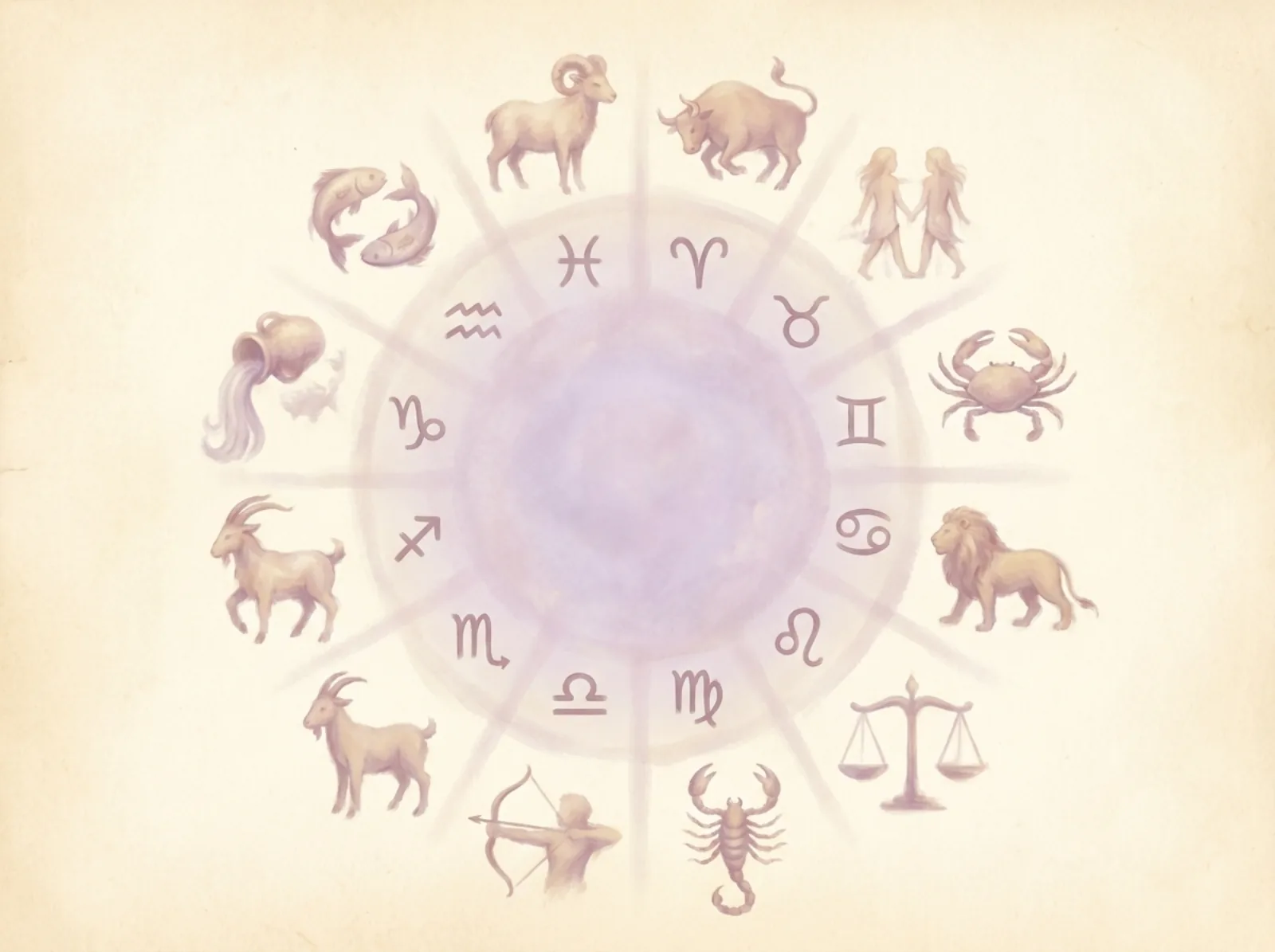
What Chiron Actually Represents in Your Chart
Chiron is one of the youngest tools in Western astrology. It's a small, icy body — technically a centaur, half comet, half asteroid — discovered in 1977 orbiting between Saturn and Uranus. Astrologers picked it up fast because the mythology hit a nerve: Chiron was the centaur wounded by a poisoned arrow, the healer who could cure everyone except himself, and who eventually traded his immortality to free Prometheus. He is the archetype of the wounded healer — the teacher who knows the territory because he's bled on it. Part of our tarot reference.
In your chart, Chiron marks the specific flavor of wound you came in with: the one that doesn't fully heal, no matter how much therapy or Saturn-return reckoning you put yourself through. But — and this is the part most beginner posts skip — Chiron isn't just a scar. It's the exact spot where you become, over time, extraordinarily useful to other people in pain.
The two things your Chiron tells you
- Where you got hurt early, usually before you had language for it.
- Where you're built to help, once you stop running from the wound.
The sign tells you the flavor of the wound; the house tells you the arena of your life where the wound keeps showing up; aspects to personal planets tell you which parts of you got tangled with it. In the Raka app I usually sit with people on all three at once, because the sign alone is a sketch, not the portrait. See our best natal chart app guide.
Chiron in Capricorn is the Capricorn flavor of this story — which means, buckle in, it's going to be about authority, achievement, and whether you believe you're allowed to be here.
Natal Chiron in Capricorn: The Core Signature and the Shadow
Capricorn is Saturn's home sign. It rules structure, authority, legacy, the public world, and time itself. It's the sign of the climb — the mountain goat going up alone, picking its footing, respecting the altitude. It's the father principle, the inner CEO, the voice that says earn it.
Put Chiron there, and you get a wound in the exact place a person is supposed to feel most legitimate: their standing in the world. Chiron in Capricorn is the astrology of never feeling like you've arrived, even when, by any outside measure, you've absolutely arrived.
What the signature feels like from the inside
- Chronic, low-grade impostor syndrome — the kind that doesn't go away with another promotion.
- A suspicion that your success is a trick of lighting, and someone is about to notice.
- Difficulty resting, because stopping feels like falling.
- A nervous system that goes quiet only when you're being useful.
- A deep, often unspoken fear of being seen as weak, lazy, incompetent, or (worst of all) a burden.
What makes Chiron in Capricorn specifically painful — and specifically healing — is that the Capricorn survival strategy for the wound is also the thing that keeps the wound alive. You hurt because you don't feel legitimate; you work harder to feel legitimate; the work doesn't fix the hurt; you decide you must not have worked hard enough; you work harder.
The shadow pattern, named out loud
- Workaholism as self-medication. Not because you love work, but because the alternative — sitting with yourself — is unbearable.
- Over-functioning. You handle other people's responsibilities, resent it, and then handle them again.
- Hyper-independence as a trauma response. You stopped asking for help so long ago you've forgotten it was ever an option.
- Rigid achievement goalposts. You hit the target, feel nothing, and immediately move it further out.
- Judgment of "weak" people. Translation: judgment of the parts of yourself you weren't allowed to have.
- Difficulty receiving. Compliments, help, love, rest — all of it feels dangerous.
Underneath all of it is the Capricorn core wound: I only belong here if I'm producing. The cruel part is that this strategy works, in a sense. People with Chiron in Capricorn often look, from the outside, like success stories. The shadow isn't visible until something cracks — burnout, illness, a relationship rupture, the Saturn return, the Chiron return — and the question finally surfaces: who am I if I stop performing?
How Chiron in Capricorn Shows Up in Childhood
Where does this wound come from? With Chiron you can't do pop-psychology one-to-one mapping, but there's a cluster of childhood dynamics that show up again and again in Chiron in Capricorn charts, and they're worth naming — not to blame your parents, but to recognize the shape of what happened so you can stop re-enacting it.
Common childhood dynamics
- A parentified role. You were the "little adult" — translating for parents, caretaking a sibling, managing an unstable household, or being emotionally responsible for a caregiver who couldn't regulate themselves.
- An absent, overworked, or unavailable father figure. Not necessarily cruel — sometimes just gone. The felt sense was: approval exists, but it's remote and conditional.
- A critical or achievement-focused environment. Praise came for grades, chores, performance. Being, by itself, didn't register as valuable.
- Precarity. Money was tight, status was shaky, immigration or class movement was involved, or the family's standing felt vulnerable. You grew up aware that things could collapse.
- A caregiver who was dignified but shut down. Someone who did everything right on paper and had no idea how to be a person with you.
If one or more of these lands, the wound makes sense. You adapted. You became competent, independent, and emotionally frugal — and those adaptations saved you, back then. The problem is that they've outlived their usefulness, and nobody told your nervous system.
None of this is a diagnosis of your family. It's a map of why a particular part of you got loud, early. The adult version of that part is probably reading this article right now, trying to figure out whether it's allowed to put the article down and go to bed. (It is.)
Chiron in Capricorn in Love and Relationships
Here is where Chiron in Capricorn gets lonely in a way that doesn't show up on anybody's Instagram.
In love, this placement does a few recognizable things. It picks partners who need something — rescuing, stabilizing, parenting. It confuses providing with loving. It cannot, for the life of it, be the one who needs. And it's often drawn, with uncanny precision, to partners who mirror the original caregiver — distant, achievement-focused, emotionally unavailable, or Saturnian in some way.
Patterns to watch for
- You end up as the responsible one in every relationship, including friendships.
- You find it easy to be depended on, nearly impossible to depend on anyone.
- You equate competence with worth, so you perform competence in your relationship — pay the bills, fix the problems, run the logistics — and then wonder why you don't feel loved.
- When a partner tries to take care of you, you panic. You either reject the care or get subtly contemptuous of the person offering it.
- You tend to date people who are, politely, projects.
- Vulnerability feels not like intimacy but like exposure.
The specific loneliness of this placement is that your partner can't quite reach you, and you can't quite tell them why. You weren't shown how to be loved when you weren't producing anything, so the state of "doing nothing, being held, being allowed to be" feels like being asked to speak a language you were never taught.
The medicine, which I'll come back to, is deeply uncomfortable: let yourself be known in the state Capricorn hates most. Tired. Scared. Not sure. Needing something. If you've never let a partner see you like that, the first time will feel like skydiving. It's also the only route to the kind of love that doesn't require you to earn it every morning.
Chiron in Capricorn in Career and Visibility
If relationships are where Chiron in Capricorn is quietly lonely, career is where the wound is loudest — and where it does the most legible damage.
Capricorn is the career house of the zodiac. Chiron here walks into the professional arena carrying a wound about that arena. The result is often somebody who is extraordinarily effective at work and extraordinarily miserable while being effective.
How the wound shows up on the job
- Punishing standards for yourself, forgiving ones for others.
- A terror of being "found out" — even in rooms where you are, objectively, the expert.
- Difficulty self-promoting. Visibility feels like inviting the arrow back in.
- Or the mirror image: compulsive overachievement, where you keep stacking credentials to feel safe.
- Resistance to a promotion, then overperformance in the new role, then resentment that nobody notices how hard you're working.
- A tendency to stay too long in environments that chew you up, because leaving feels like admitting failure.
I've watched people with this placement grind through two burnouts and a hospitalization before they'll consider that the job itself might be the problem. The Capricorn pride is strong, and the shame of "not being able to handle it" is stronger. So they handle it. And it costs them.
Here's the twist, and it's the part I love about this placement: once a Chiron in Capricorn person starts healing, they become one of the best mentors on the planet. The exact wound — "I had to figure out authority alone" — turns into the exact gift: the mentor who shows up, who makes room for younger people, who tells the truth about the climb and makes it less lonely for the next one up the mountain. The teacher Chiron eventually became.
I've seen this play out in Raka readings over and over. The person asking "why do I keep burning out?" is often the same person who, five years later, is quietly running the kind of team people fight to work for.
The Healing Path for Chiron in Capricorn
You can't out-perform Chiron. That's the whole thing. Any strategy that looks like "I'll just work harder on healing" is the wound driving the car. The healing path for this placement is slow, boring, and often invisible from the outside — which is itself part of the medicine.
What actually works
- Rest without justifying it. Not productive rest. Not optimized sleep. Rest that produces nothing. A nap you don't tell anyone about.
- Reparenting the child who had to be an adult. This is slow, lifelong work — therapy, inner-child work, somatic practices. The point isn't to fix the kid. The point is to tell her she's off duty.
- Letting someone take care of you, and sitting with the discomfort of it instead of immediately reciprocating.
- Grieving the childhood you didn't get. Not blaming your parents — grieving. These are different.
- Separating self-worth from output. One day a week where you measure the day by nothing. Build up from there.
- Receiving mentorship instead of only giving it. You need people older than you who are further down this road. Find them.
- Softening the inner critic — not silencing it (that's a Capricorn tactic), but asking it who taught it to talk that way, and whether that voice has your current best interests in mind.
- Small acts of being seen imperfect. One honest moment per week where you say you don't know, or you're tired, or you need help.
None of this is dramatic. Chiron in Capricorn doesn't heal through a breakdown and a yoga retreat. It heals through patient, repeated choices to stop earning yourself.
Chiron in Capricorn in Synastry: What It Means in a Partner's Chart
In synastry — the comparison of two charts — Chiron in Capricorn carries a particular charge, because Capricorn themes are already loaded for most adults. If you're dating, friends with, or working closely with someone who has Chiron in Capricorn, here's what to watch for.
When their Chiron hits your planets
- Their Chiron on your Sun or Moon: they may feel subtly judged by your confidence or your ease, even when you're doing nothing wrong. Pay attention to the moments they shut down after you share good news.
- Their Chiron on your Saturn or Capricorn planets: you'll feel the ache of their authority wound. You can become either a healing figure or a stand-in for whoever hurt them first. Both are heavy to carry.
- Their Chiron on your Venus or Mars: they may struggle to let you give to them, or over-perform in the relationship. It's worth naming out loud rather than guessing at.
If you both have Chiron in Capricorn
- You'll recognize each other instantly, which is a gift and a trap.
- You'll build an extremely competent life together.
- You'll have to be careful that the whole relationship doesn't become a mutual achievement engine with no softness in it.
- Scheduling rest together, out loud, is non-negotiable.
None of this is a verdict on compatibility. Synastry isn't a yes/no — it's a map of where you'll meet each other's wounds. Chiron contact can make a relationship profoundly healing, if both people are willing to work the ground.
Celebrities with Natal Chiron in Capricorn
Chiron spent long stretches in Capricorn roughly from late 1951 through early 1955 and again from late 2001 through early 2005. (It wobbles because Chiron's orbit is eccentric — always double-check your natal chart against an ephemeris before you commit to this placement.) A handful of recognizable people carry it, and watching how the signature plays out in public is one of the fastest ways to understand it.
Public figures with the placement
- Oprah Winfrey (b. January 29, 1954). Born into poverty, abuse, and instability — classic Chiron in Capricorn childhood terrain. Built a media empire from scratch and has spent her later career teaching other people what she had to figure out alone. Textbook wound-to-gift arc.
- Denzel Washington (b. December 28, 1954). A career built on quiet, dignified authority, roles that explore father wounds and standing-in-the-world, and a public persona of patient discipline. The Capricorn signature with the wound metabolized into craft.
- Angela Merkel (b. July 17, 1954). The East German pastor's daughter who became the longest-serving leader in modern Europe. Famously allergic to self-promotion, famously competent, famously carried a continent on her shoulders without ever looking like she enjoyed it.
- Howard Stern (b. January 12, 1954). A career built on exposing himself — and the Capricorn wound of "I'm not good enough" has been a public, recurring topic for him for decades. An interesting case study in using radical visibility as a form of healing.
- Olivia Rodrigo (b. February 20, 2003). From the second window. The achievement pressure of being a teen phenomenon, the public reckoning with authority (industry, father figures, the "good girl" trap), and the way her songwriting repeatedly circles perfectionism and worthiness — very on-brand for Chiron in Capricorn.
None of these are predictions and none of these are armchair diagnoses. They're pattern recognition. The signature expresses differently depending on everything else in a chart, and nobody is reducible to a single placement.
Journal Prompts and a Ritual for Working with This Placement
Reading about a placement does half the work. Writing about it is where it actually lands. Here are prompts I use with Chiron in Capricorn clients, usually one at a time, over weeks.
Journal prompts
- Who in my family had to be the strong one? What did it cost them?
- What age was I when I stopped being allowed to be a child?
- What does my inner critic sound like? Whose voice is that, really?
- When was the last time someone took care of me and I actually let them?
- What would I do with my life if I knew I was already enough? Not aspirationally — tomorrow.
- What am I achieving in place of what I actually want?
- If my worth were decoupled from my output, what would I stop doing immediately?
A small ritual: the "off duty" letter
- Pick a quiet evening. Light a candle. Pour something warm.
- Write a letter to the version of you that was ten years old.
- Tell her what she handled that she shouldn't have had to handle. Name it specifically.
- Tell her, out loud if you can, that she's off duty now. The adult has it from here.
- Promise her one small, concrete thing — a nap, an unproductive afternoon, saying no to one request this week — and keep it.
- Keep the letter. Reread it the next time you catch yourself white-knuckling your way through a task you could have asked for help with.
Rituals aren't magic. They're nervous-system cues. Chiron in Capricorn responds to small, repeated, embodied gestures far more than to grand declarations. The point of this one isn't the letter. It's the practice of being on your own side.
The Chiron Return and Transits Over Natal Chiron in Capricorn
Chiron's orbit is roughly 50-51 years, which means your Chiron return — when transiting Chiron returns to its natal position in your chart — happens somewhere between age 49 and 51 for most people.
For Chiron in Capricorn specifically, this transit tends to land right as professional life has reached a peak, and it has a way of exposing whatever you built as a defense against the original wound. The job that was supposed to make you feel safe may stop working. The identity you performed for 25 years creaks. People you expected to arrive by now haven't. You either look at the wound honestly, or you double down on the defense — and the defense tends to get more expensive to maintain every year after.
Transits worth being aware of
- Chiron return (around 49-51): the big one. A season to grieve, re-choose, and metabolize. Many Chiron in Capricorn people shift careers, re-partner, or move into mentorship around this window.
- Saturn transits to natal Chiron: every seven years or so, Saturn forms a hard aspect to your natal Chiron. These windows can bring the wound into practical focus — work friction, a parent's health, a reckoning with authority.
- Pluto in Aquarius (2024-2043): for people with natal Chiron in late Capricorn, Pluto's long run through Aquarius will form slow aspects to your Chiron. External structures — companies, pensions, institutions you leaned on — may feel less reliable, and the invitation becomes to source legitimacy internally rather than externally.
- Jupiter transits to natal Chiron: a window where the gift tends to surface. Teachers, students, and platforms often appear. Say yes to the ones that scare you.
If you're reading this and your Chiron return is coming, I don't have a tidy promise for you. What I will say is that every Chiron in Capricorn client I've sat with through this transit has, on the other side of it, become quieter, warmer, more themselves, and less interested in being impressive. If you'd like to walk through the specifics of yours — the return window, the houses involved, the aspects — Raka can run a transit timeline against your natal chart in a few minutes. The reading is a starting point. The work is the daily part.
Frequently asked questions
What years was Chiron in Capricorn?
Chiron spent long stretches in Capricorn from approximately late 1951 through early 1955, and again from late 2001 through early 2005. Because Chiron's orbit is eccentric, there's some back-and-forth at the sign changes, so if you're on the edge of one of those windows, pull a real natal chart (not a vibes read) to confirm. Raka's chart feature will give you an exact Chiron position in seconds.
Is Chiron in Capricorn rare?
Not rare at the generational level — anyone born in one of those windows has it — but less common than, say, Chiron in Aries, because Chiron moves more slowly through the earlier signs of the zodiac and faster through later ones. Capricorn is one of the shorter stays. If you have it, you share it with a sizable but specific cohort of people who tend to show distinctive public and private patterns around work and worth.
What's the difference between Chiron in Capricorn and Saturn in Capricorn?
Both are Capricorn-flavored placements, but they do different jobs. Saturn in Capricorn is strong and comfortable — Saturn is at home there, structuring your discipline, ambition, and sense of time. Chiron in Capricorn is a wound in Saturn's territory — it isn't about building, it's about why you can't stop building. Many people with both report a kind of double dose: extremely effective, and extremely unable to feel the fruits of their effectiveness.
Does Chiron in Capricorn make you a workaholic?
It gives you the raw material for it. Workaholism is one of the most common unconscious strategies this placement produces, because work is socially rewarded and quiets the "I'm not enough" ache temporarily. But not everyone with the placement is a workaholic — some swing the other way into chronic avoidance of ambition because success feels dangerous. Both are the same wound in different clothes.
When is my Chiron return?
Your Chiron return happens when transiting Chiron comes back to its natal position in your chart, usually between ages 49 and 51. It's not a one-day event — it's a window of a few months, often with the orb active for a year or more. For Chiron in Capricorn specifically, the return tends to coincide with a career or legacy reckoning. If you're in that age range, map it out ahead of time so you can meet it instead of being ambushed by it.
Can Chiron in Capricorn ever fully heal?
Honestly, no — and I think that's a feature, not a bug. Chiron is the wound that teaches. The point isn't to erase it; the point is to stop being run by it and to let it become a source of real usefulness to other people. The folks I've seen do this work well aren't scar-free; they're spacious about the scar. They can touch it without flinching, and they can help someone else touch theirs. That's the whole promise of the placement.